

August 14, 2026 · 5 min read
Why we don't recommend gutter guards in the Pacific Northwest
Gutter guards promise you'll never clean your gutters again. Under conifers, what they actually do is move the clog to the top and send the overflow somewhere much more expensive.
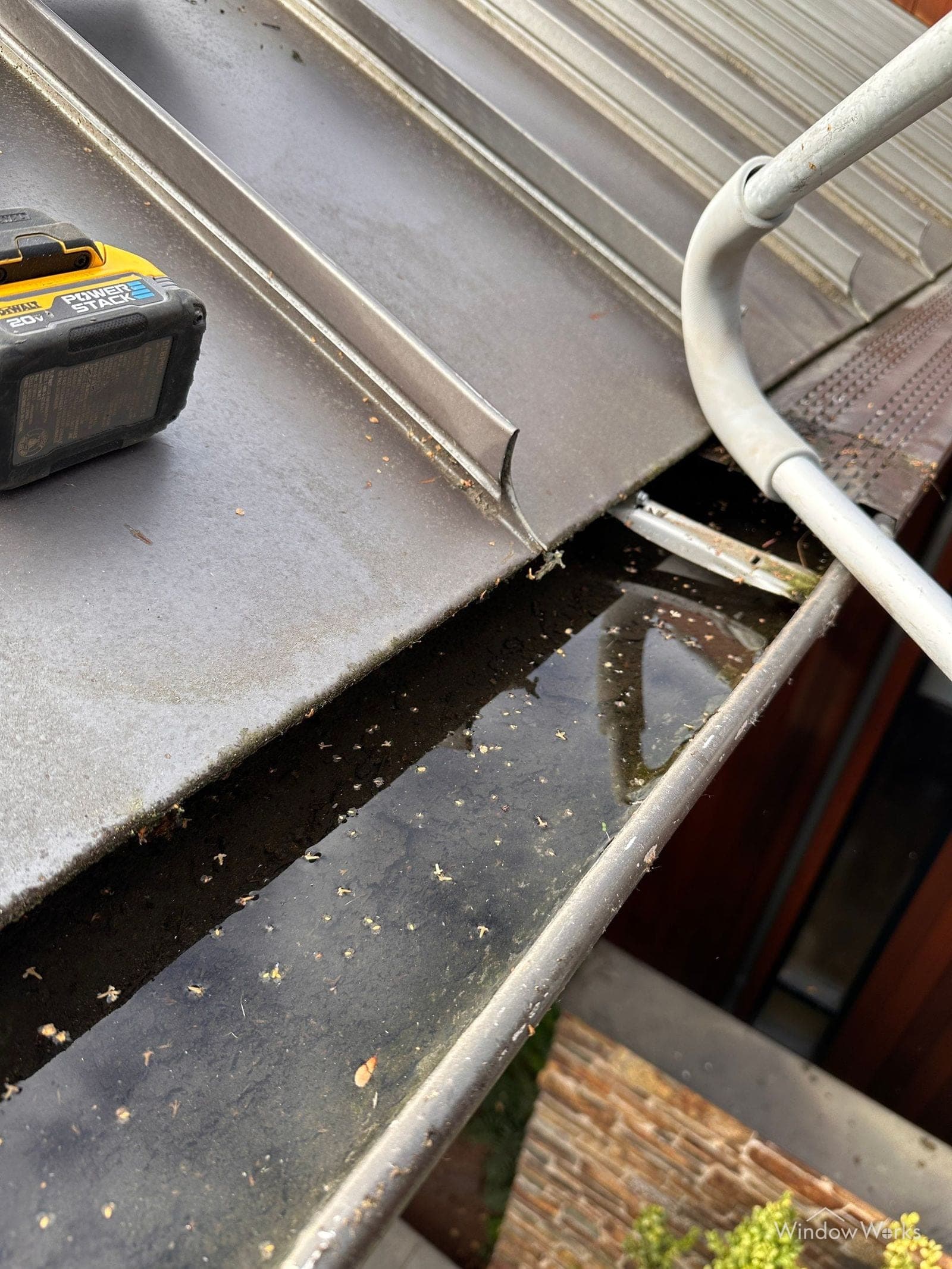
Gutter guards are sold on one promise: install them once and never think about your gutters again. In a climate with broadleaf trees and gentle rain, some designs get partway there. On the Eastside of Seattle, under hemlocks, firs, and cedars, they fail that promise almost universally, and the way they fail costs more than the cleanings they were supposed to replace.
We clean hundreds of guarded systems a year. We install none, and on most guarded homes we service, our honest recommendation is removal. That opinion did not come from a brochure. It came from standing on the roofline and looking at what actually happens up there.
Pine needles defeat every guard design
Guards are built for leaves. A leaf is wide and flat, so a screen can catch it and a hood can shed it. A conifer needle is a spike, and the Northwest drops them all year, not just in October. Every design we service loses to them in its own way.
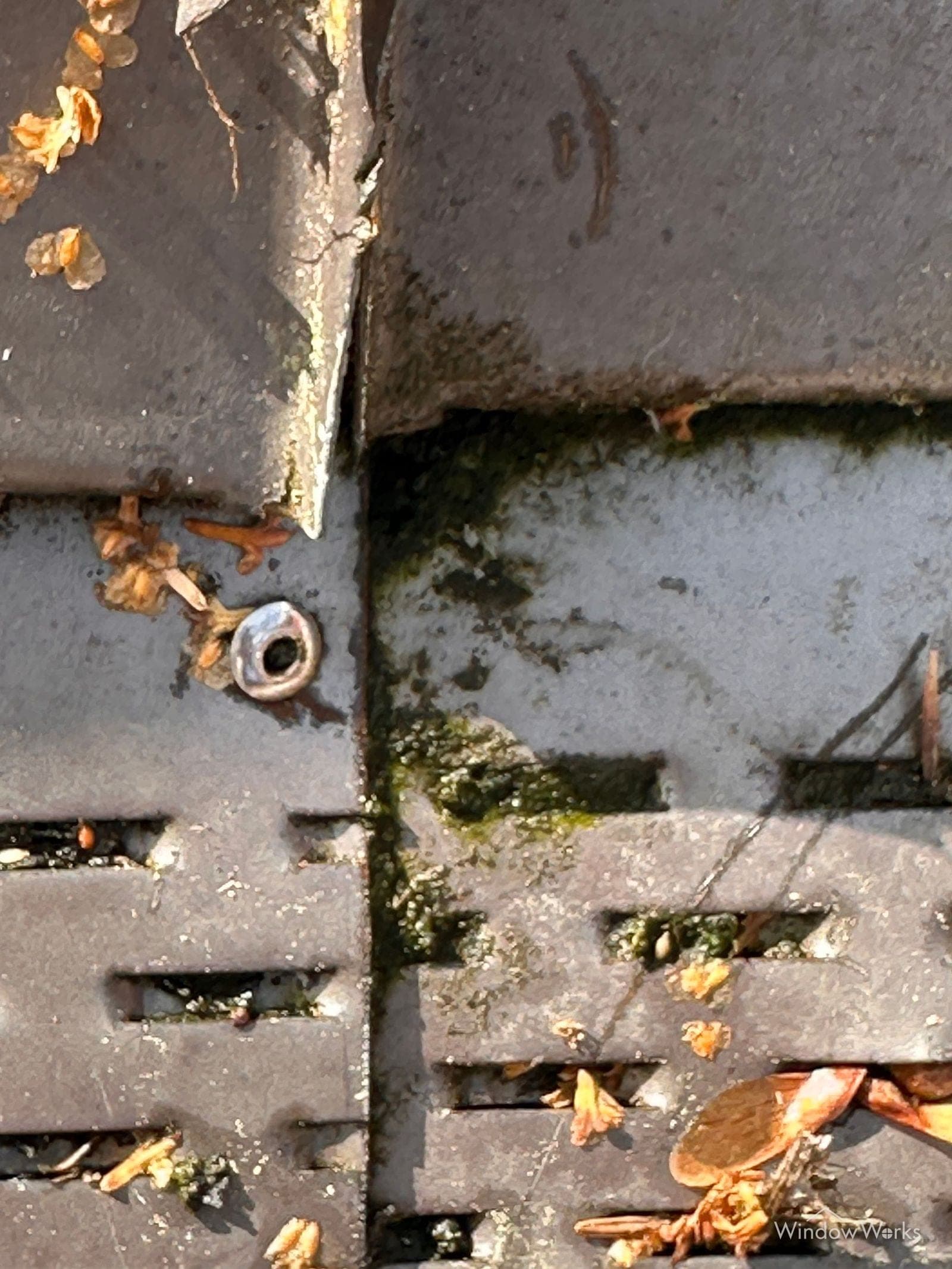
- Screens and perforated covers: needles thread through the openings tip-first, then mat across the top. The holes seal over with needles, fir flecks, and algae until the cover is a solid lid.
- Micro-mesh: the fine weave stops needles, so instead they pile on top, and the pollen, roof grit, and fir dust that make it through paste the mesh shut from both sides.
- Surface-tension hoods: needles ride the curved nose exactly the way the water does, and in a real Northwest downpour the water overshoots the slot entirely, guard clean or not.
- Foam and brush inserts: the worst of the set here. They hold moisture against the gutter, catch every needle, and sprout moss like a planter box.
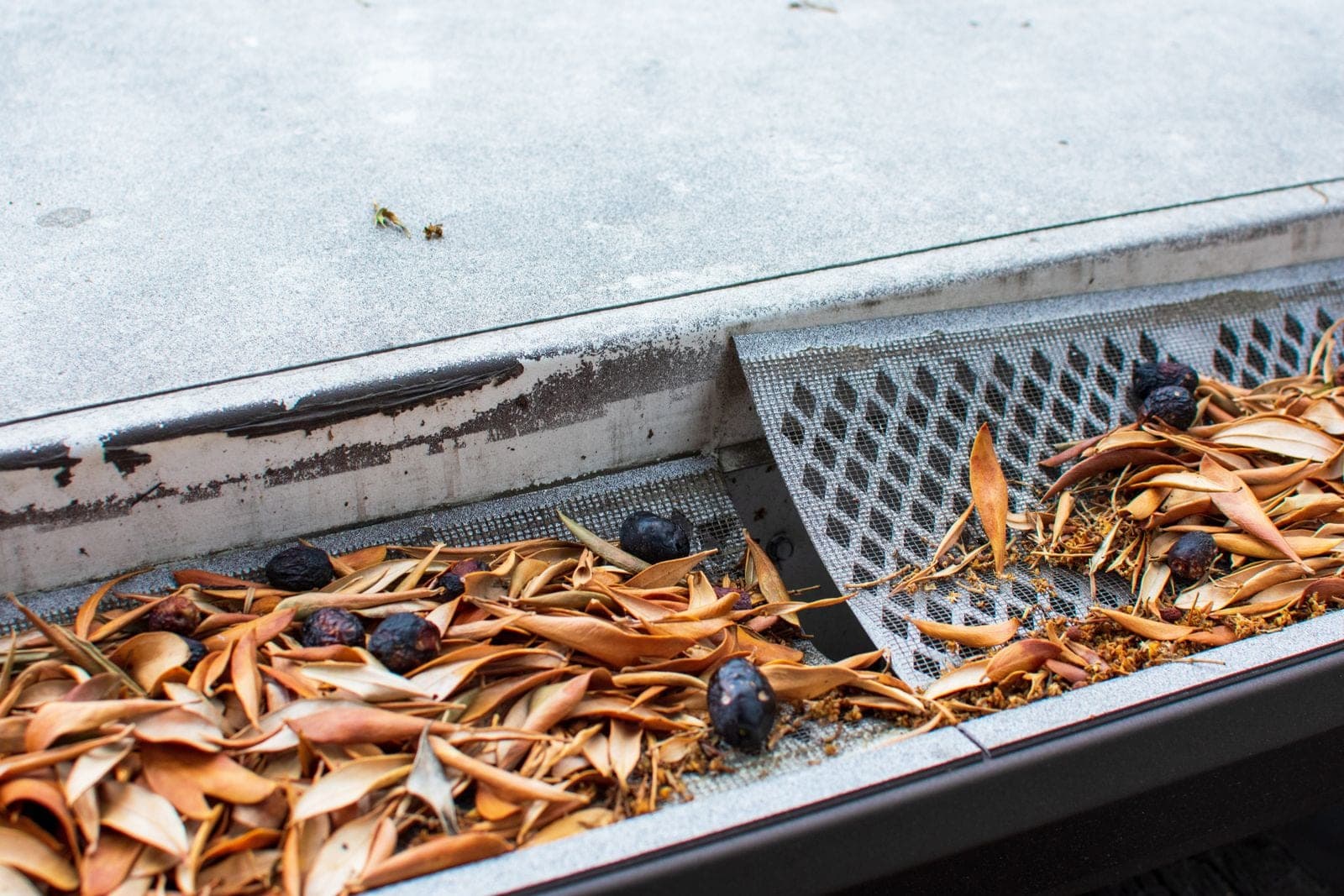
The clog doesn't go away. It moves where you can't see it.
The photo at the top of this article is what we find when we lift a guard section: a trough full of standing water and black sludge. Guards do not stop fine debris. Fir flecks, pollen, moss spores, and shingle grit wash straight through the openings, and once they are in, the guard holds the rain out just badly enough that the sludge never flushes. The trough becomes a sealed tray of compost and water.
Standing water under a guard is not just dead weight bending your hangers, though it is that too. It is a mosquito nursery in summer, an ice tray in a cold snap, and a constant damp line against the fascia board the gutter hangs from. And because the guard hides all of it, nothing looks wrong from the ground. An open gutter shows you its problems. A guarded one keeps them secret until the water finds its own way out.
Where the water goes instead
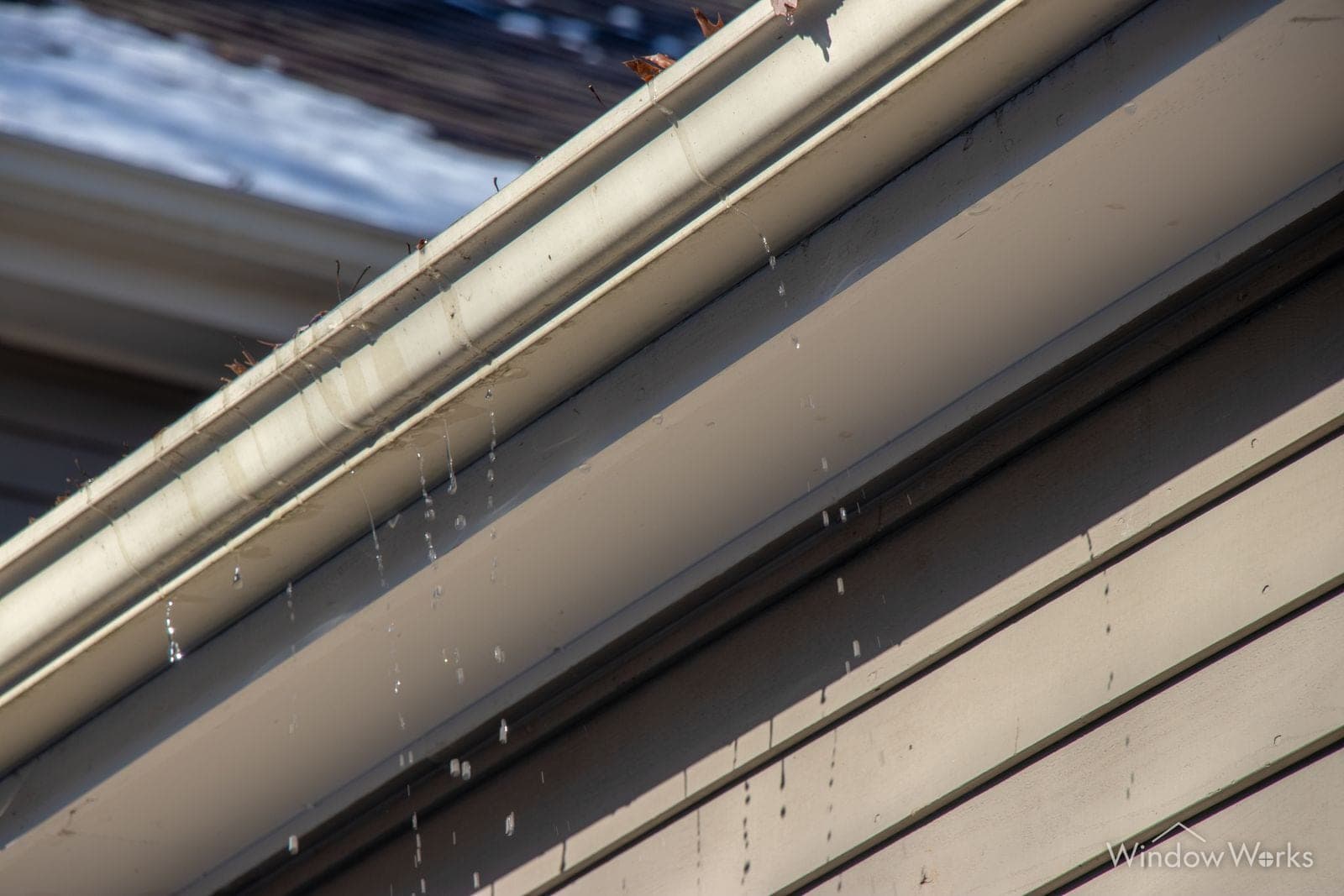
A gutter system has one job: catch the water coming off the roof and walk it away from the house. Roof, gutter, downspout, underground line, discharge. When the chain works, hundreds of gallons an hour move from your roofline to somewhere harmless. A plugged guard breaks the chain at the very first link, and the water takes the short way down.
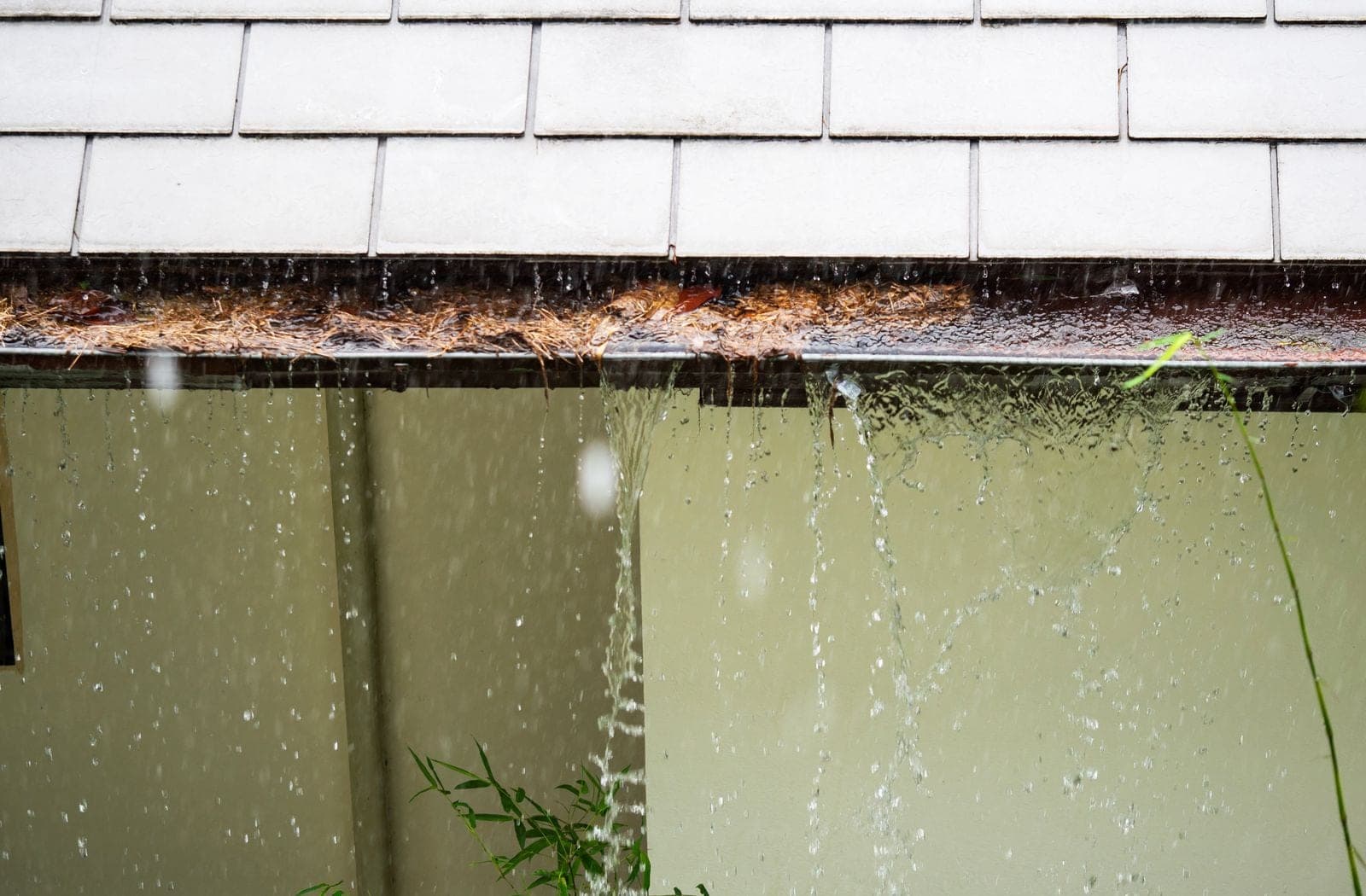
That water does not just make the ground wet. It breaks the foundation down. Storm after storm lands on the same line of soil beside the footing. Saturated soil swells and leans on the foundation wall. Every winter freeze wedges hairline cracks a little wider. Runoff slowly carries the soil out from under the footing until the concrete settles and cracks under the weight of the house. From there it is water in the crawl space, damp insulation, and a musty smell you eventually notice inside, years after the process started.
Foundation repair is one of the most expensive projects a home ever faces. A guard that causes it did not save you a cleaning bill. It converted one into a structural one.
The overflow doesn't announce itself. From the ground, a guarded gutter looks fine right up until you notice the trench line in the mulch, the streaks on the siding, or the damp line in the crawl space.
You still have to clean them, and now it costs more
Guarded systems still need service, usually at least once a year under tree cover, and in heavy needle areas many plug faster than the open gutters they replaced. The difference is what the service involves. Instead of clearing an open trough, a technician has to clear the top of the guard, unscrew or unclip sections where the design allows it, clean the sludge that got through anyway, and reseat everything without bending it. Some proprietary systems are not designed to come up at all. More time on the roofline means a bigger bill, for a system that was sold to eliminate exactly that bill.
To be fair about it: on a lot with no conifers overhead, only broadleaf trees, a well-fitted guard can genuinely stretch the time between cleanings. If that is your lot, keeping them can be the right call, and we will say so. We just service very few lots like that, because this is the Eastside, and the trees here drop needles.
What we recommend instead
Take the guards off. We remove and dispose of standard systems, and what that buys you is a gutter that can be actually cleaned, actually inspected, and actually trusted in a November storm. Put the guard money into simple, regular cleanings matched to your tree cover, twice a year for most lots with conifers, and every visit doubles as a roofline inspection with photos.
The one piece of protection we do stand behind is the Gutter Stick: a slitted PVC insert that sits in the downspout opening. Debris backs up at the downspout and stays in the trough, where it is easy to clear, while water keeps draining through the slits, so the gutter does not overflow in the months between cleanings. It protects the downspout and the buried line, the parts that are genuinely expensive to unclog, and it does not pretend the trough never needs cleaning. You can request Gutter Sticks right in your instant estimate.
Guards plugged, or ready to be rid of them?
See what it would cost.
Get a free estimate in minutes, or call and talk it through with a real person.