

The method behind everything we do
Everything you need to know about soft washing.
Where it came from, the chemistry that makes it work, what it cleans, what it means for the environment, and the lengths we go to around your property while we do it. Written to answer the questions we get every week, not to sell you anything.
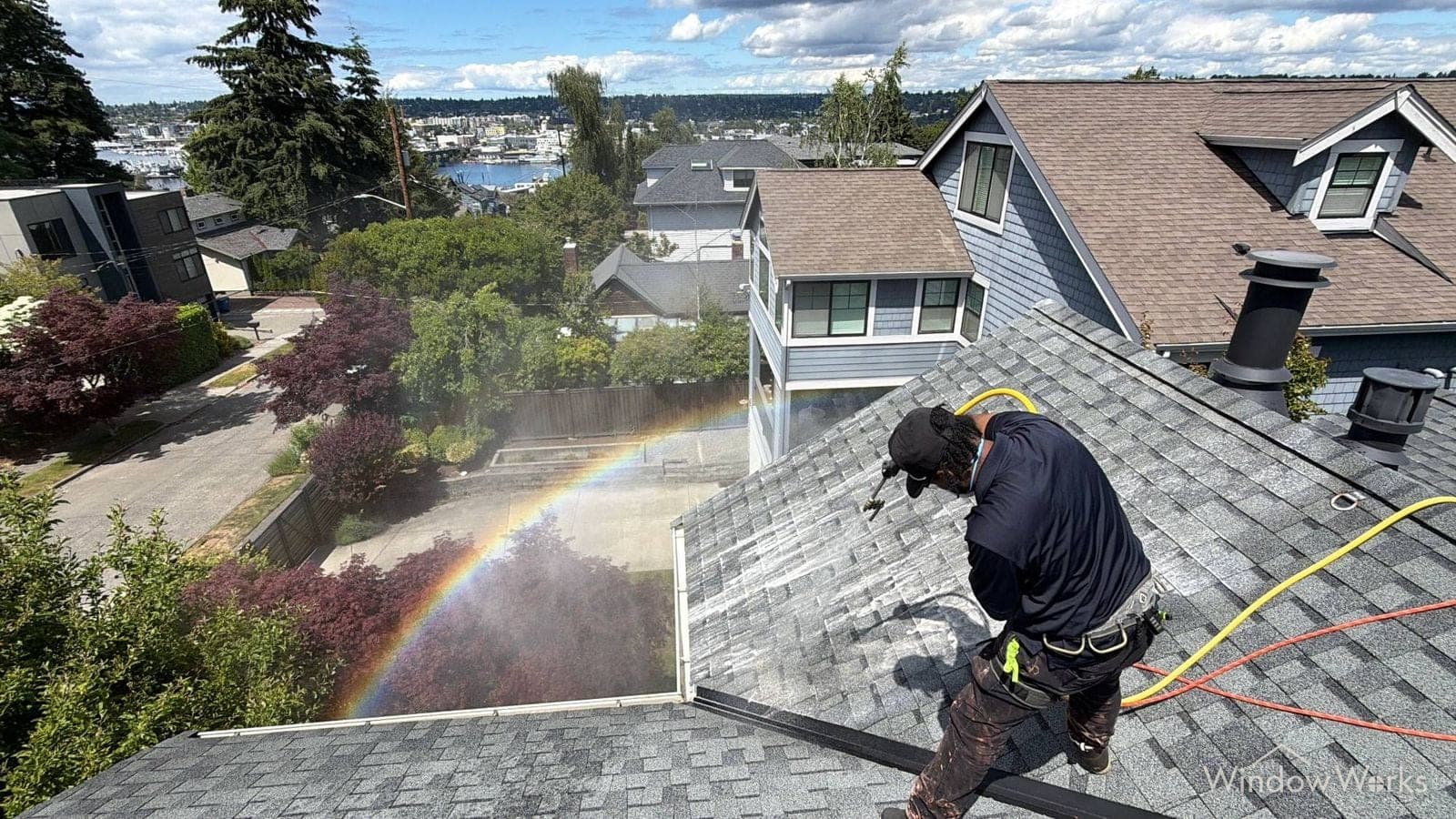
What soft washing is
Chemistry does the work. The water just carries it.
Soft washing is cleaning at roughly garden-hose pressure with a professional cleaning solution and patience. The solution breaks down the growth and loosens the grime, sits on the surface long enough to finish the job, then rinses off gently. Nothing is blasted.
A Garden Hose
40 to 60 PSI
What you water the garden with.
Soft Washing
100 to 300 PSI
Just enough to carry the solution to the surface and rinse it off.
A Pressure Washer
1,500 to 4,500 PSI
Right for concrete and stone. Wrong for almost everything else.
Where it came from
Soft washing started with Florida roof cleaners in the early 1990s, who rigged low-pressure agricultural sprayers to lay cleaning solution on tile and shingle roofs instead of blasting them. The growth died, the roofs survived, and an industry grew up around the idea, with formal training programs and trade standards following.
It is now the manufacturer-endorsed way to clean an asphalt roof. The Asphalt Roofing Manufacturers Association names low-pressure bleach washing as the right method, precisely because pressure washing strips the protective granules and shortens the roof's life.

Asphalt Roofing Manufacturers Association
The trade association for North America's shingle manufacturers. ARMA names a low-pressure sodium hypochlorite wash the most effective way to clean algae and moss from an asphalt roof, and warns against pressure washing, which strips the protective granules.
Why not just pressure wash it?
What high pressure does to the wrong surface.
A pressure washer is a cutting tool. On concrete that is exactly what you want. On a roof or siding, this is what it costs.
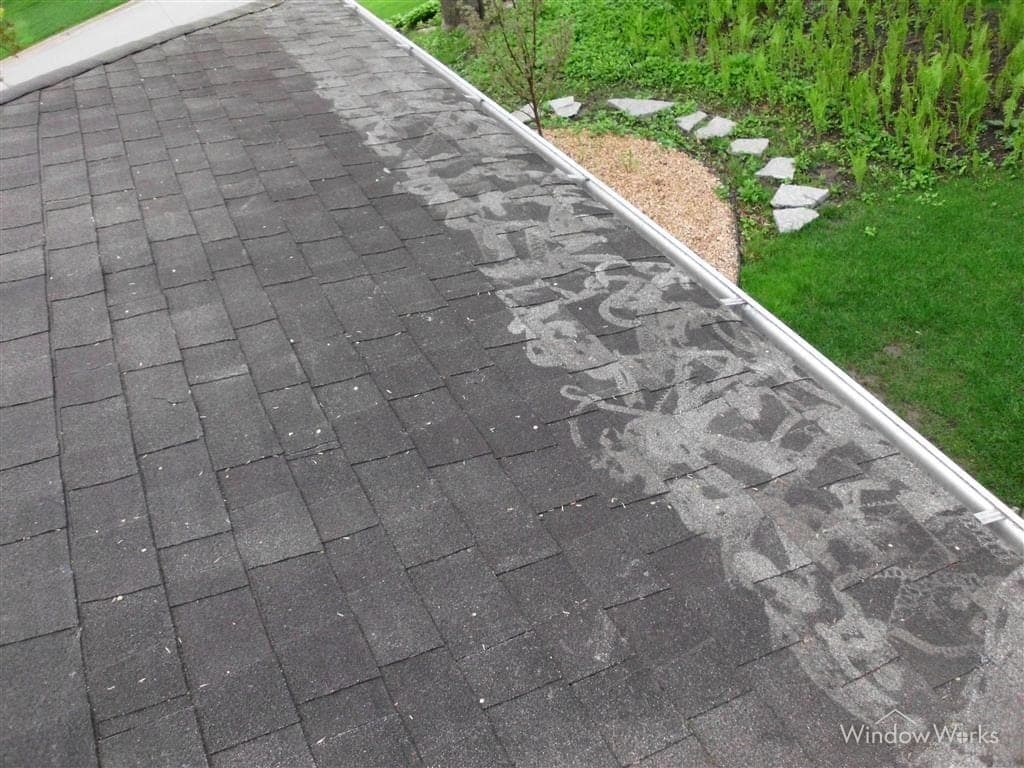
Stripped Granules
The ceramic granules on a shingle are its sunscreen. High pressure tears them off, and once they are gone the shingle ages in fast forward. The damage is permanent.
Voided Warranties
Most shingle manufacturers treat pressure washing as damage, not cleaning. One afternoon with the wrong contractor can end a 25-year warranty.
Water Where It Should Not Be
Thousands of PSI drives water up under shingles and behind siding, into the wall the cladding exists to keep dry. You will not see that problem until it has been growing for a while.
The Growth Comes Back Faster
Blasting shears moss and algae off at the surface and leaves the roots and spores alive. The surface looks clean for a season, then the survivors regrow into the damage.
The chemistry
What is actually in the tank.
No mystery products. Professional soft washing runs on a short list of chemistry used carefully, and knowing how it works is the best argument for it.
Sodium Hypochlorite
The working cleaner, the same active chemistry as household bleach at professional strength. It is an oxidizer: it does not push growth around, it breaks it down where it sits.
Surfactants
The soap. Surfactants drop the water's surface tension so the solution clings to vertical siding and creeps into every pore and shingle gap instead of running straight off.
Dwell Time
The solution sits on the surface for ten to twenty minutes and does the work pressure would otherwise do. Time replaces force.
How it actually works
Three things happen on the surface, in order.
- 1
The Surface Gets an Even Coat
The solution goes on deliberately, edge to edge, at garden-hose pressure. Surfactants hold that coat in place and wick it into every pore, seam and shingle gap, so coverage is complete in the places a brush or wand never reaches.
- 2
Oxidation Breaks the Cells Down
Active chlorine is an oxidizer. It strips electrons from whatever it touches, which ruptures the cell membranes of algae, moss and mildew and unravels the proteins inside. The growth dies in place, with nothing scraped loose to land somewhere else and start again.
- 3
It Reaches the Spores
Treating what you can see is not enough, because the surface is also seeded with survivors: thick-walled resting cells that ride out dry summers, and spores hardened with melanin against sun and drying. The even, full-surface coat brings the chemistry to those too, so regrowth has to start from new airborne arrivals, not leftovers.
With pressure
The surface is cleared, the biology underneath is alive, and regrowth starts from the leftovers within a season.
With soft washing
The chemistry finishes the whole colony, spores included. What remains browns, loosens and weathers off over the following weeks.
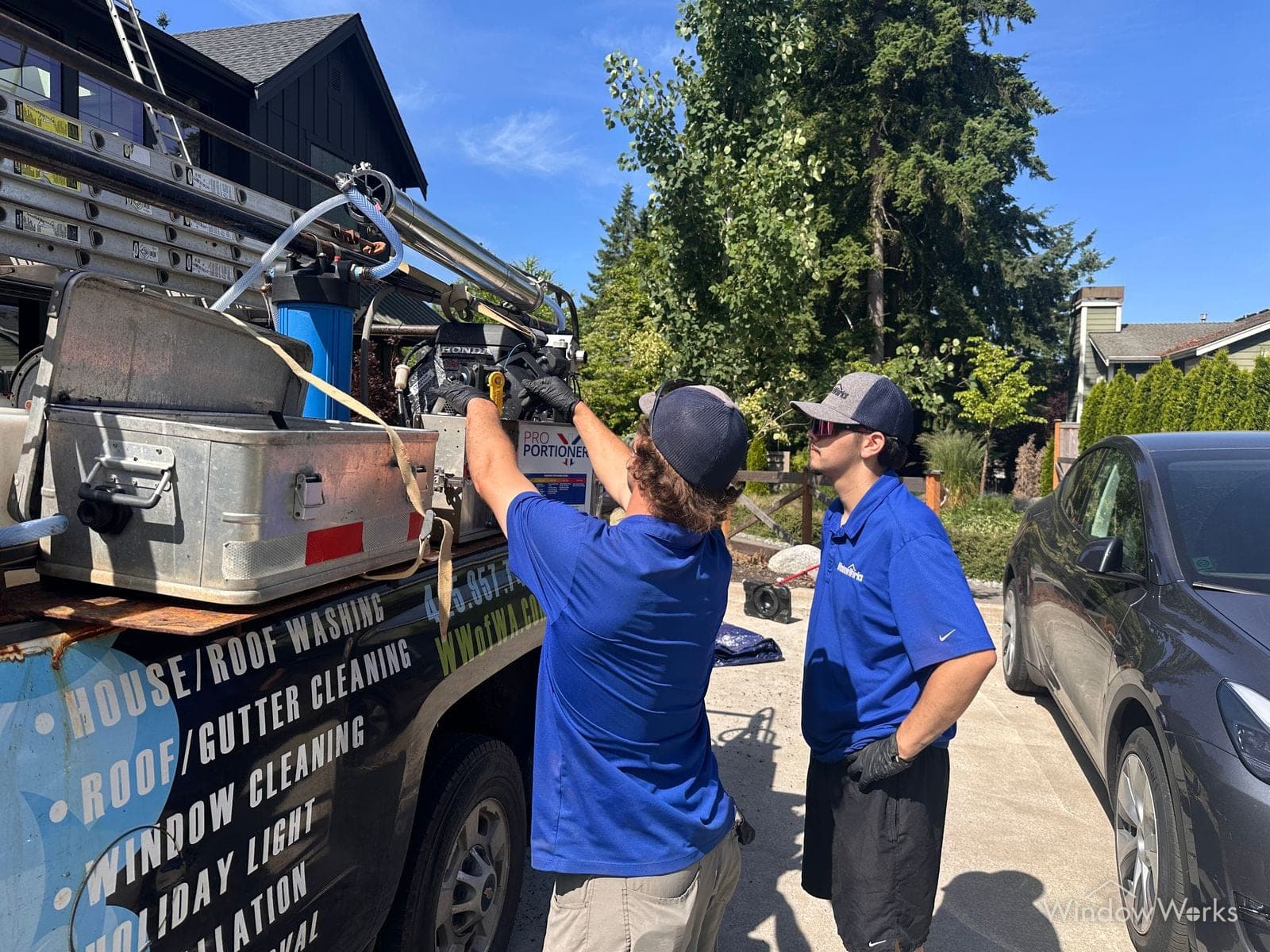
Dilution training at the truck. The mix is set per surface, measured, not eyeballed.
We publish the chemistry, not the recipes. Exact dilutions per surface stay in our technician handbook.
What it cleans
One method, most of your property.
Anywhere growth takes hold and pressure would do damage, soft washing is the answer. Each of these is its own service with its own page.
AGS, Cedar Shake & Concrete Tile Roof Washing
Low-pressure soft wash that kills moss and algae at the root and extends the life of your roof, no shingle damage.
3-Year Moss-Free Warranty
 Soft wash
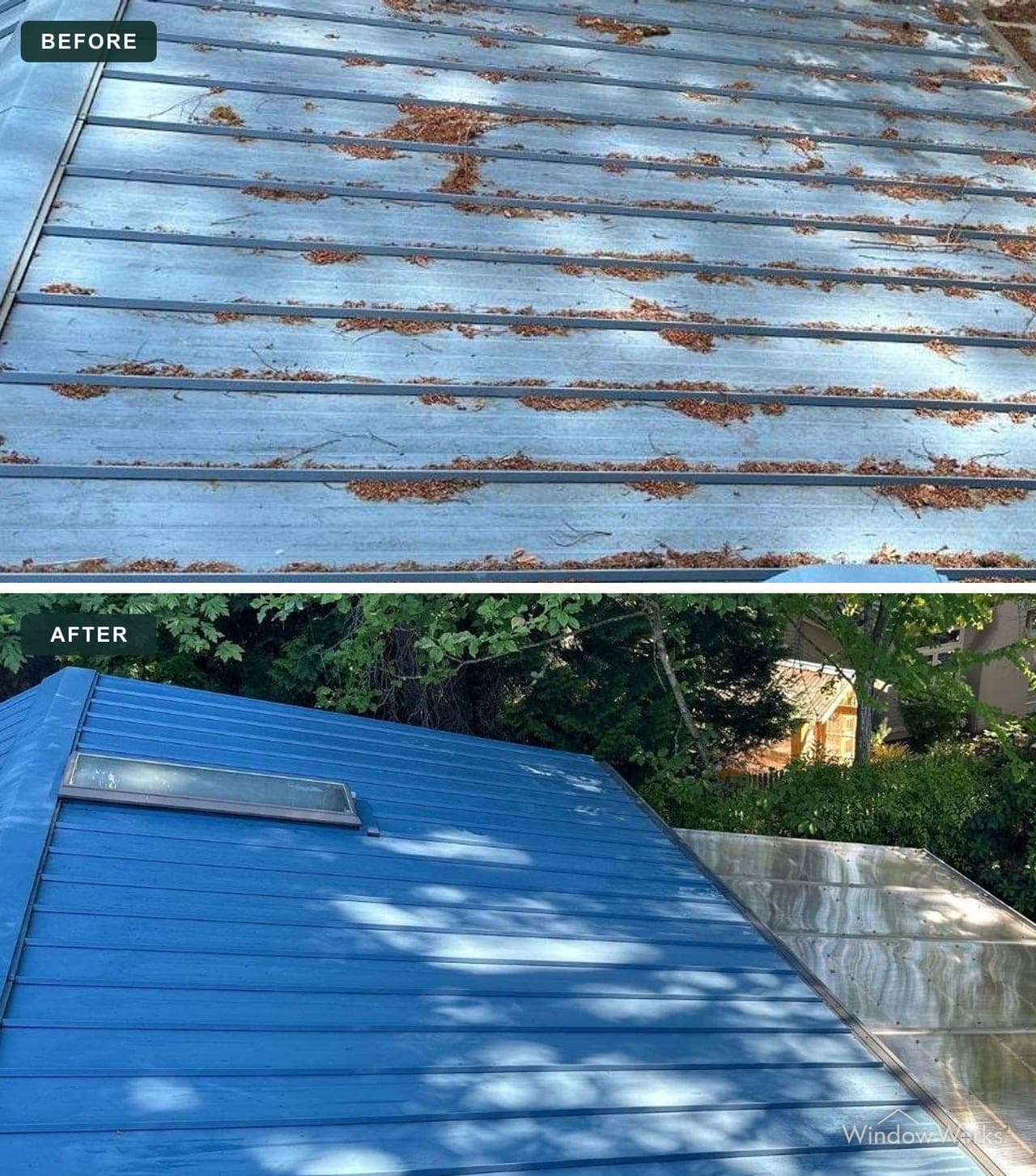
Membrane & Metal Roof Washing
One safe way to clean metal, TPO, PVC, and rubber roofs: a weaker mix and a light, low-pressure rinse that protects the paint, the seams, and your roof warranty.
House Washing
A soft wash that kills the algae and mildew feeding on your siding, or a water-only rinse for the years in between.
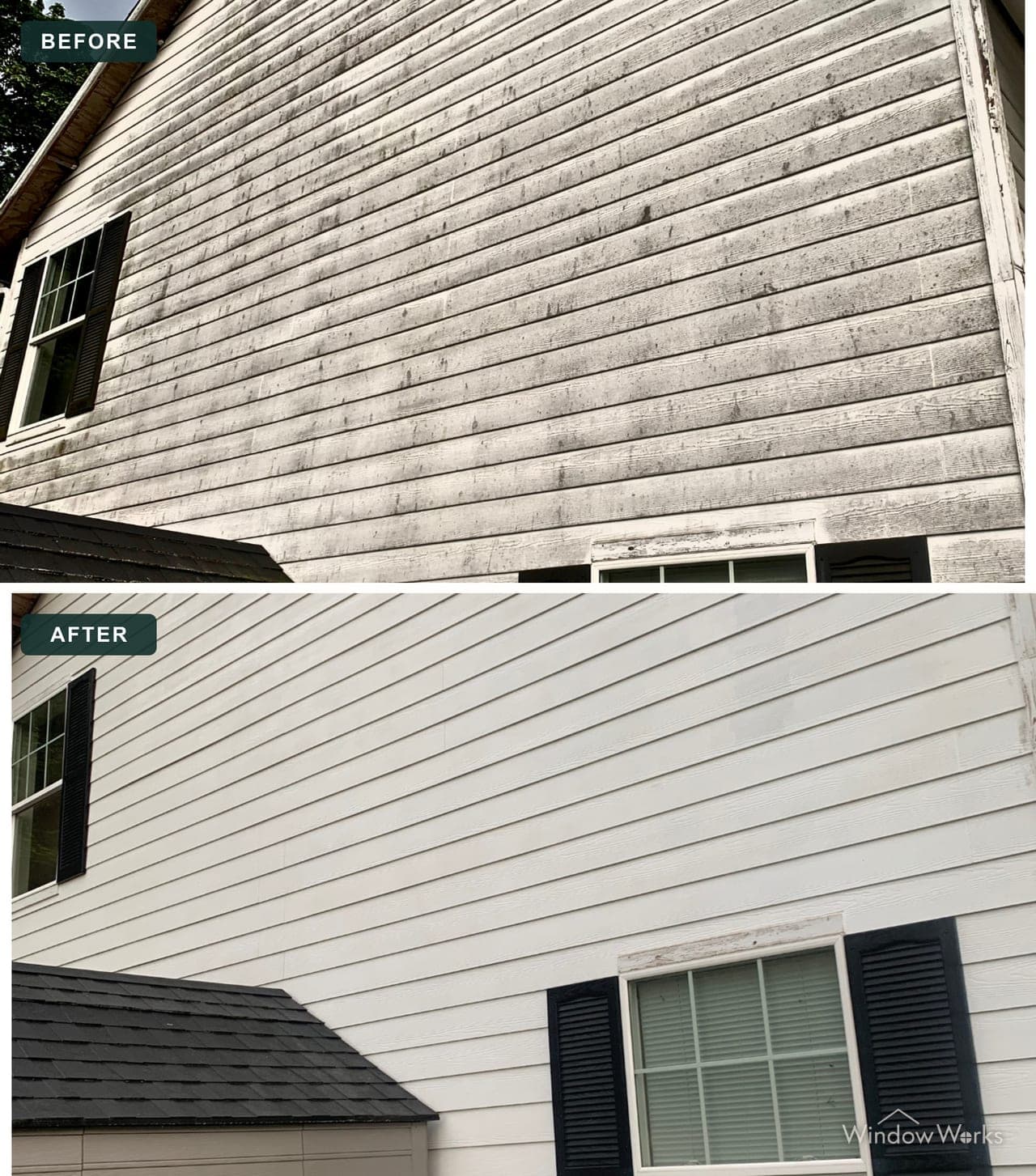 Soft wash
- Soft wash
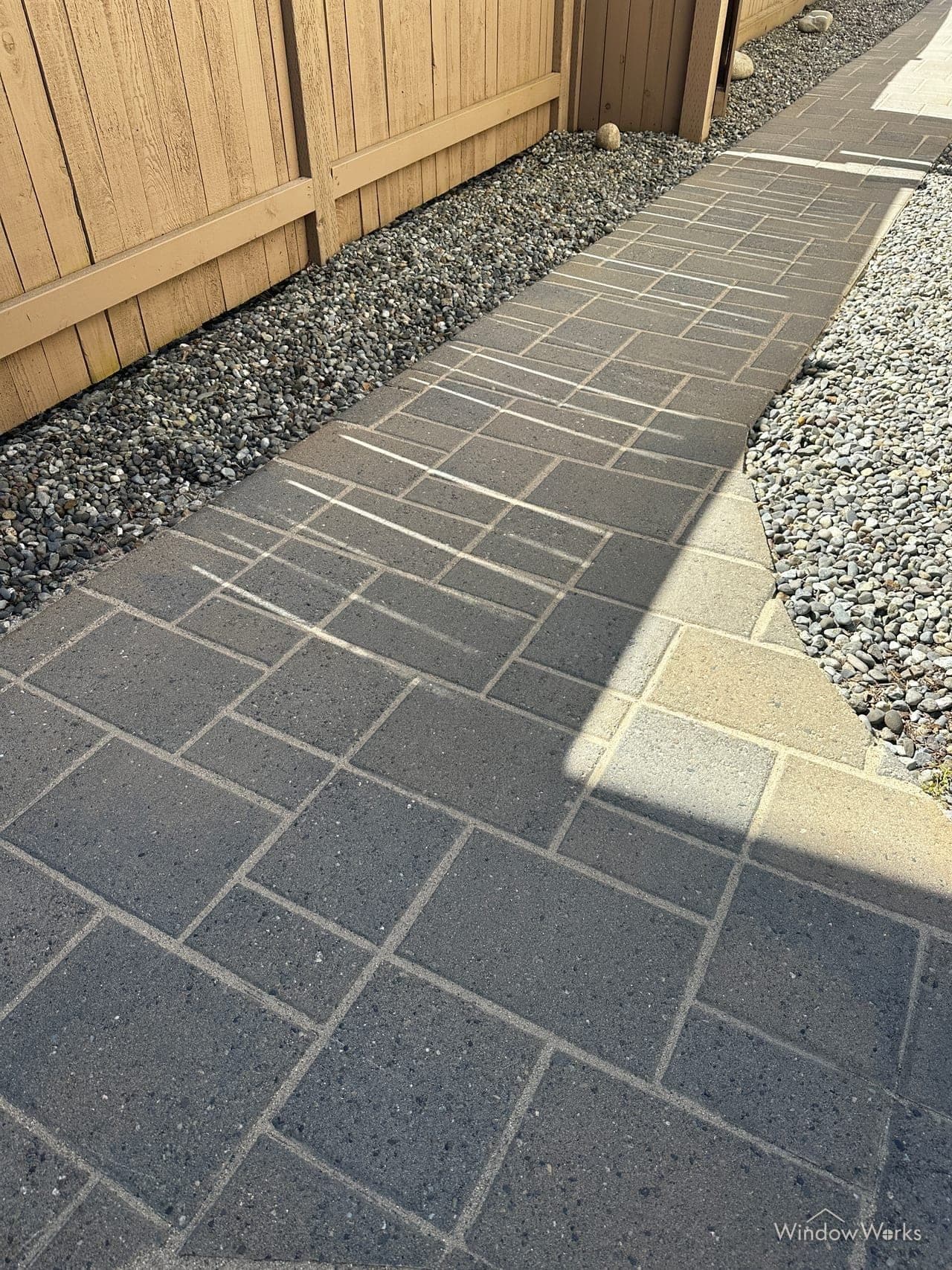
Paver Cleaning & Restoration
Scheduled soft washing that keeps joint growth from wrecking the sand, and a full clean and re-sand when it already has.
Wood Restoration & Paint Preparation
Old stain or paint stripped, the wood's pH rebalanced, and the surface left ready to take a new finish evenly, even going from dark to light.
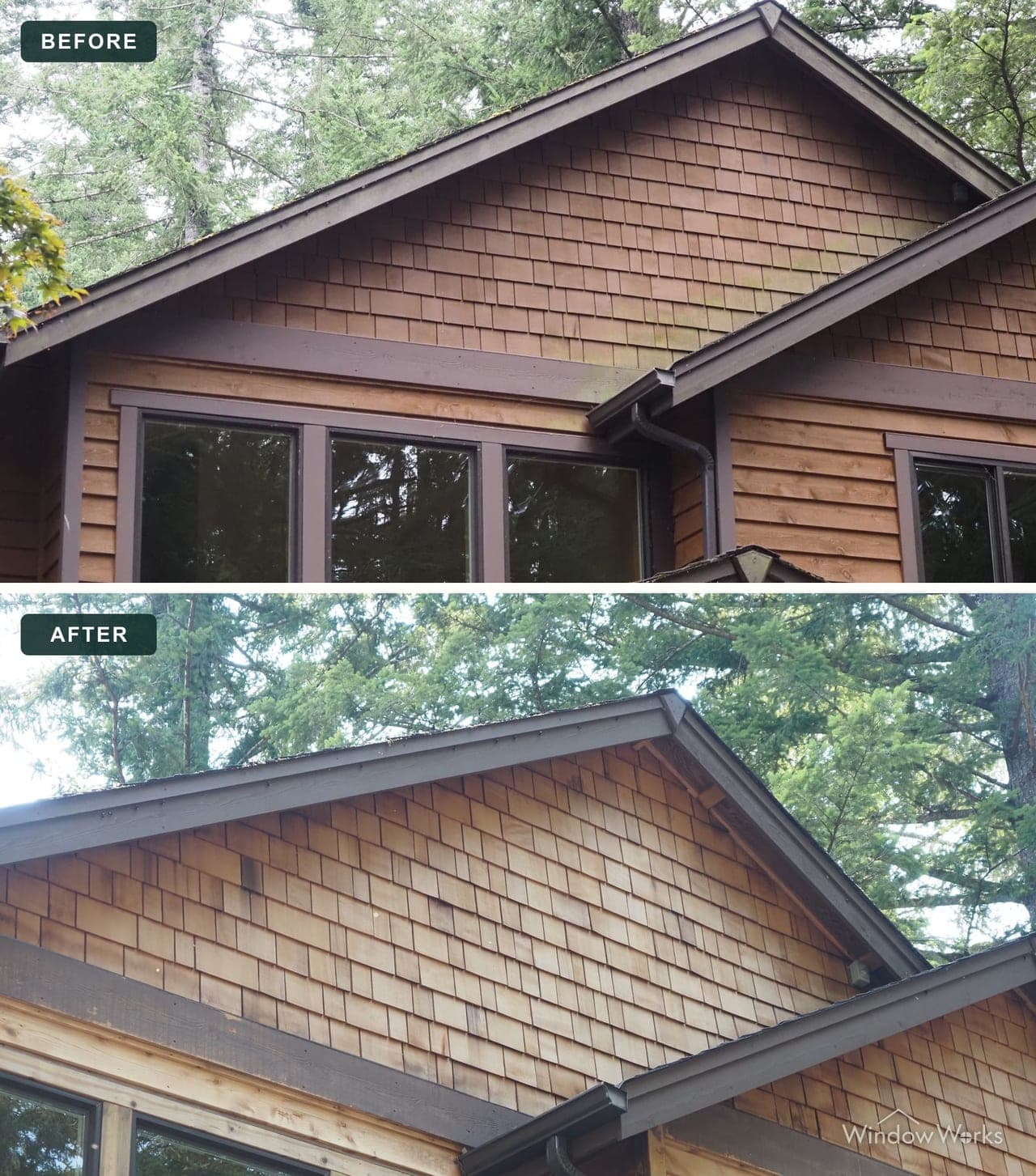 Soft wash
Deck & Fence Washing
Material-matched washes for wood, composite, and vinyl that clear the slick green from decks and fences and set up any recoat to last.
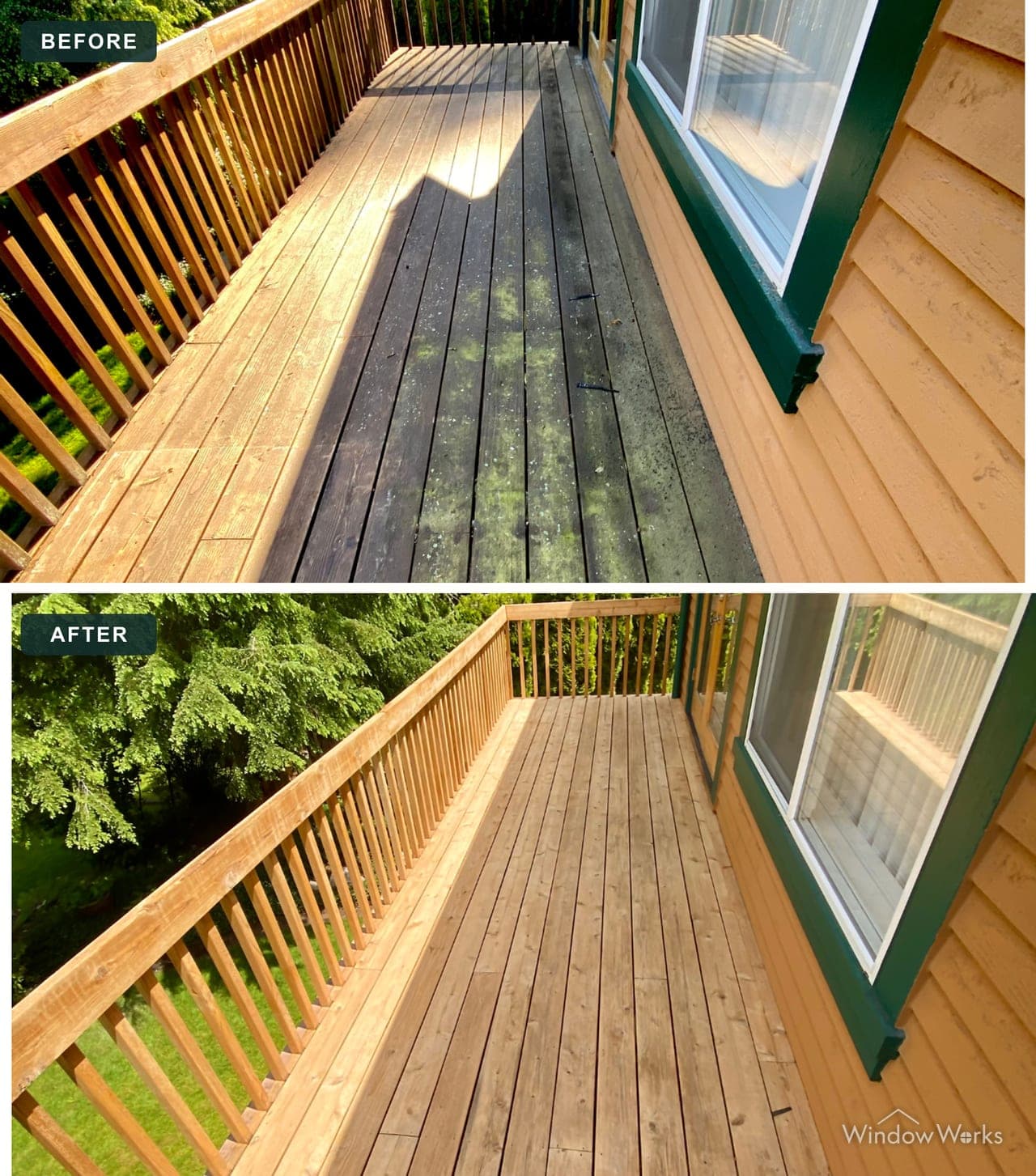 Soft wash
Beyond living growth
What soft washing does not remove.
Soft washing handles living growth. A stain that was never alive does not respond to it, and pretending otherwise is how surfaces get ruined. Here is the honest list, and what each one actually takes.
Rust
Iron staining bonded into the surface, usually from irrigation water, planters or fasteners.
Efflorescence and Mineral Deposits
White crusts and hard-water staining left behind by water carrying minerals through masonry or onto glass.
Tannin
Brown bleed from leaves, bark and wood that sat wet on concrete and stone.
Oil, Grease and Gum
Petroleum and gum do not react to the chemistry at all. They need heat.
Oxidation
The chalky film on older vinyl and metal siding. It is the finish itself breaking down, not something sitting on it.
Artillery Fungus
Mulch-born specks that bond so hard that removal often takes the finish with them.
What we use instead
Acid-Based Treatments
For rust, efflorescence, tannin and mineral staining. Acid chemistry dissolves the stain out of the material, applied measured, neutralized after, and matched to the surface so the fix does not become its own damage.
Hot Water
For oil, grease and gum. Hot-water pressure washing softens and lifts them off concrete and pavers in a way no cold process matches.
Assessment and Prevention
For oxidation, careful condition-driven work we price on the wall, not from the curb. For artillery fungus, prevention and early attention, because nothing removes it cleanly once it has set.
Want to dig deeper into what you are seeing?
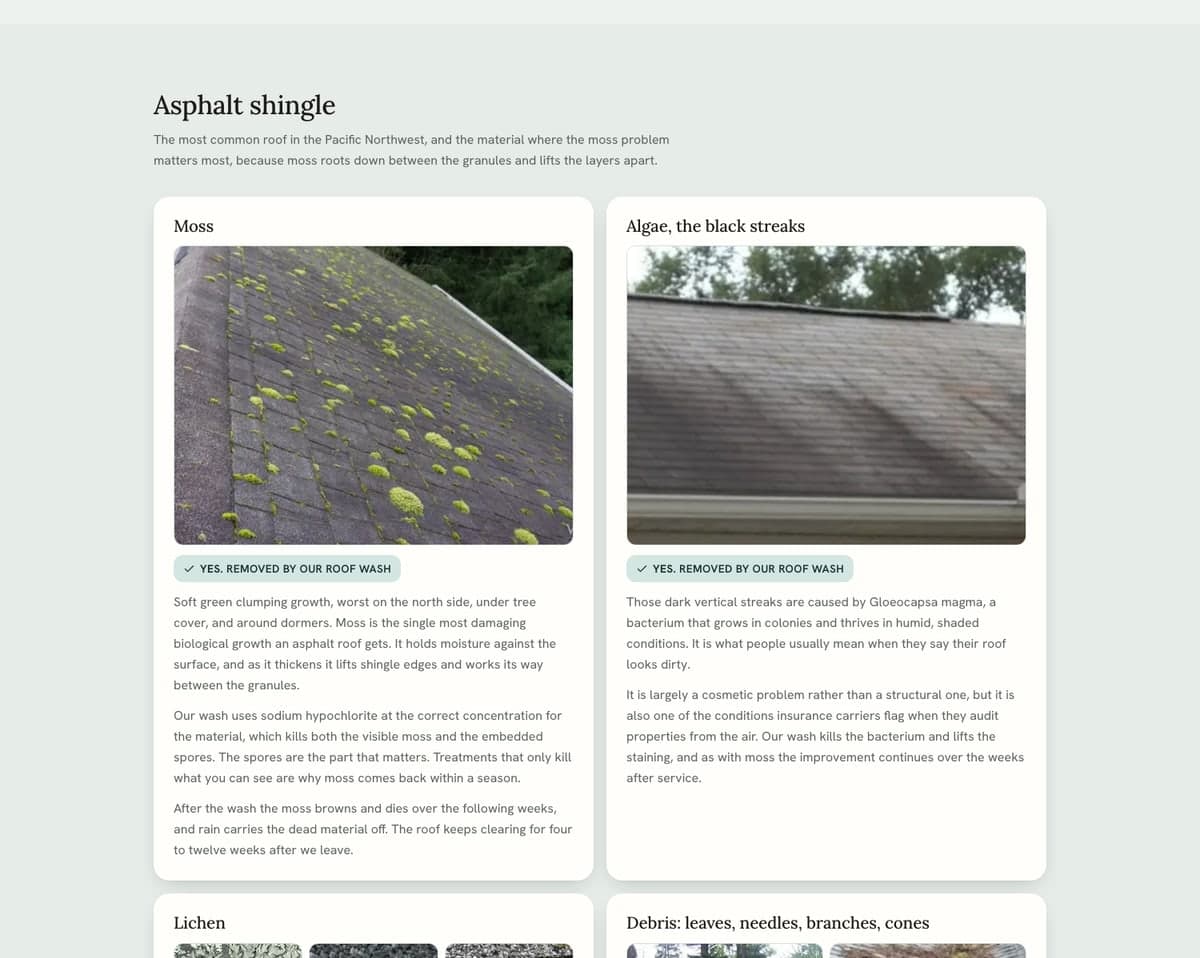
Check out our What's On My sheets: photo-by-photo guides to what that mark on your roof, siding or windows actually is, whether the standard wash removes it, and what to do when it does not.
The environmental question
Bleach sounds harsh. Here is what actually happens to it.
The fair question about soft washing is what all that solution does after it leaves the roof. The honest answer is better than most people expect, and better than the alternatives.
Hypochlorite Breaks Down in Hours
In sunlight and on contact with organic material, hypochlorite degrades rapidly into salt-based compounds. It does not accumulate in soil or waterways and it does not build up in the food chain. By the time we leave, most of what we applied has already stopped being bleach.
Zinc Never Breaks Down
The common alternative is zinc, as strips on the ridge or moss powders. Zinc is a metal: it does not degrade, it washes into waterways and stays there, and it is toxic to fish. It also only suppresses growth in the narrow path rain carries it, without clearing what is already established.
We Still Control Every Drop
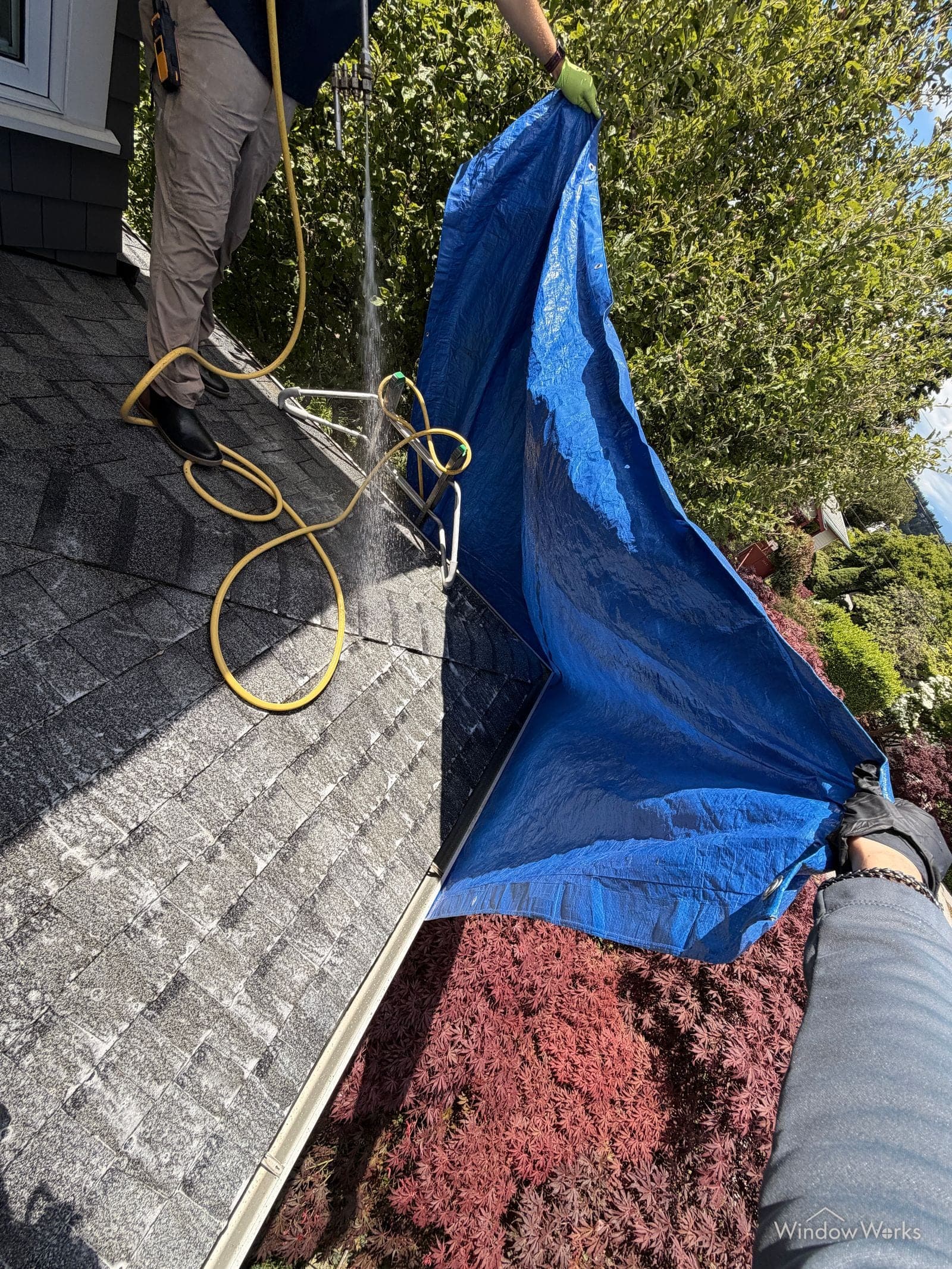
Degradable is not a license to be careless. We bag downspouts, steer runoff away from beds, storm drains and waterways, pre-soak and rinse plants before and after, and neutralize sensitive areas. That is written procedure, not good intentions.
Environmental fate per the US EPA hypochlorite salts fact sheet. Zinc effectiveness per Oregon State University Extension.
We went deep on this exact comparison, with the numbers on what chlorine, zinc, and copper each leave in the water:
Property protection
The manual we wrote before we let anyone spray.
Every WindowWorks technician trains on our Property Protection Field Guide for about a month before they are handed an applicator. It is a written, on-site protocol, run the same way at every house, and this is what is in it.
- 1
Identify
Walk the property before touching anything. Note sensitive plants and edible gardens, copper, brass, low-E glass, oxidized aluminum, fresh paint, pets and people.
- 2
Protect
Pre-soak and shield the plants, mask doors, cover outlets, bag the downspouts, tarp what cannot get wet, and pick the gentlest mix that still does the job.
- 3
Verify
Neutralize sensitive areas, rinse everything with fresh water, and walk the property again before we leave. It should be exactly as we found it, only cleaner.
From the Field Guide
- Pre-soak and shield sensitive plants (hydrangea, Japanese maple, rhododendron, ferns)
- Mask doors, cover outlets, and check for electrical hazards
- Protect reactive materials: copper, brass, oxidized aluminum, low-E glass
- Bag downspouts and steer runoff away from waterways
- Keep pets and people clear of the work zone
- Neutralize sensitive areas and finish with a fresh-water rinse
Why it matters more than looks
Your insurance company is already looking at your roof.
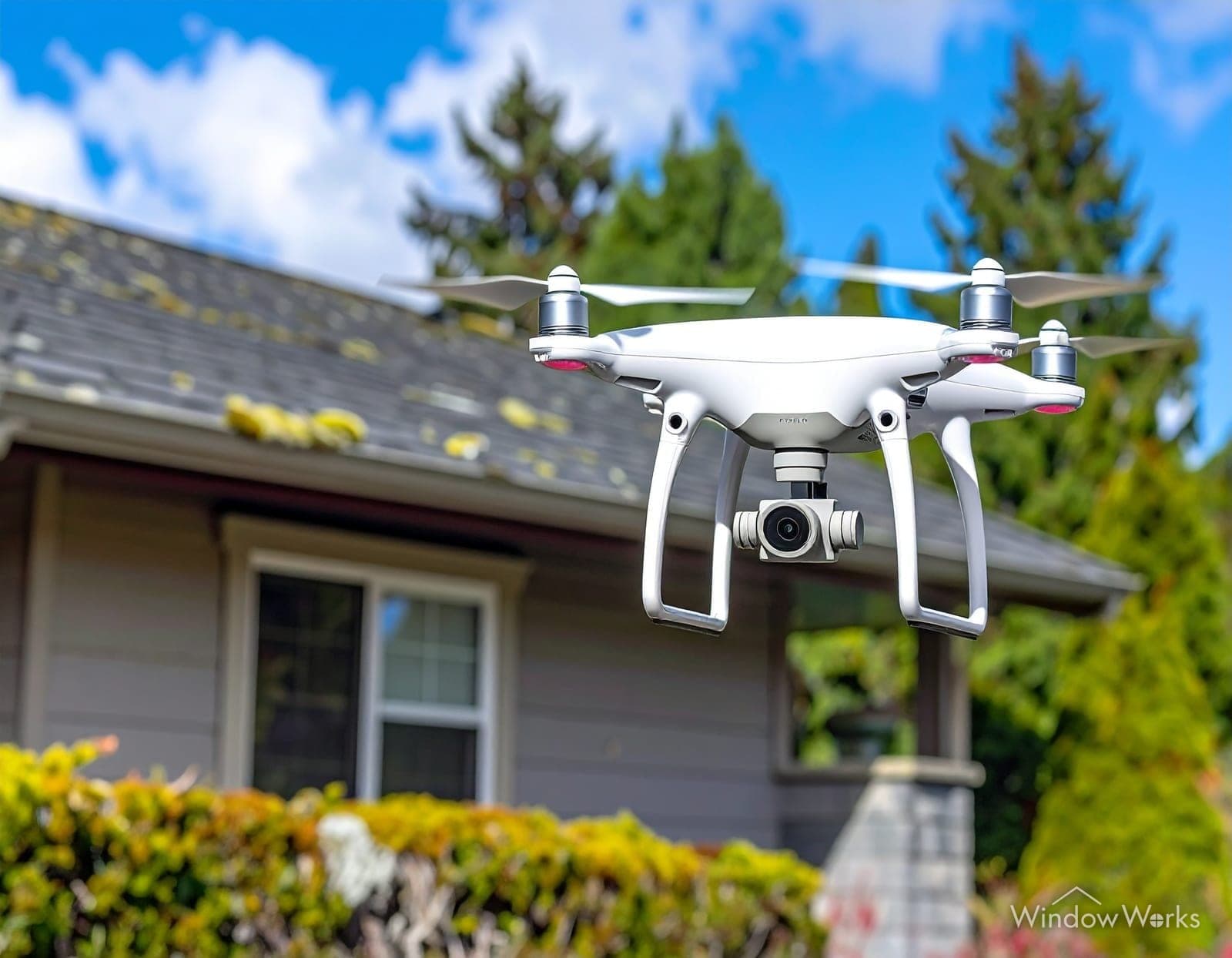
Washington insurers audit roofs from the street and the air, and moss is one of the things they flag. A soft-washed roof is not just a cleaner roof. It is a roof that photographs like a maintained one.
From our blog
How keeping your roof and siding clean could save your home insurance policy
The bad news: the state of your roof and siding could cost you your homeowners insurance. The good news: it's not too late to safeguard your policy, and your roof.
Read the articleThe other half of the truth
Sometimes a pressure washer is exactly the right tool.
Concrete driveways, paver walkways, stone patios: hard mineral surfaces want real pressure, usually paired with a treatment before or after so the clean lasts. The point was never that pressure is bad. The point is matching the method to the surface, which is why we carry both and know when to use which.
Now you know how it works
Want it done to your house?
Get a real estimate in minutes, or call and ask us anything about the method. We like talking about this stuff, which is probably obvious by now.