

Diagnostic guide
What's On My Windows?
And will it come off with a window cleaning?
Glass is the one surface where you notice every mark, and the one where it is hardest to tell a stain from damage. A spot that looks like dirt can be a mineral deposit welded to the surface, and haze that looks like film can be a window that has failed inside.
This guide sorts it out. Most of what lands on glass comes off. Some of it needs a different process than a cleaning. And some of it is damage to the glass itself, where the honest answer is that no cleaner can help you.
Please do not take a blade to your own glass
No blades, and no abrasive pads other than a white Brillo pad. Whatever you use, wet the window first and lubricate it with soap, because working on dry glass is what causes the scratches. We would rather you called us and let us take it off professionally.
Failed glass is often still under warranty
We point out every imperfection and every failed unit we find. If you are the original owner of the home, or the glass has been replaced since, a failed unit is most likely still covered. Worth checking before you pay for anything. If a piece does need replacing, we can refer you to a vendor we trust.
How to read this: This guide is organized by what happens next, not by what the mark looks like. Find your section and read down. Every item is marked YES or NO. YES means a standard window cleaning removes it. NO means it does not, and the entry tells you whether we have another process for it or whether the glass needs replacing.
Comes off with a standard window cleaning
A standard window cleaning takes off every kind of organic residue that lands on glass, with one exception: tree sap. Pollen, algae, webs, and droppings all come off on a normal visit. Most exterior glass is cleaned with a purified water-fed pole, and the rest by hand where that gives the better result.
Dirt, dust, and smudges
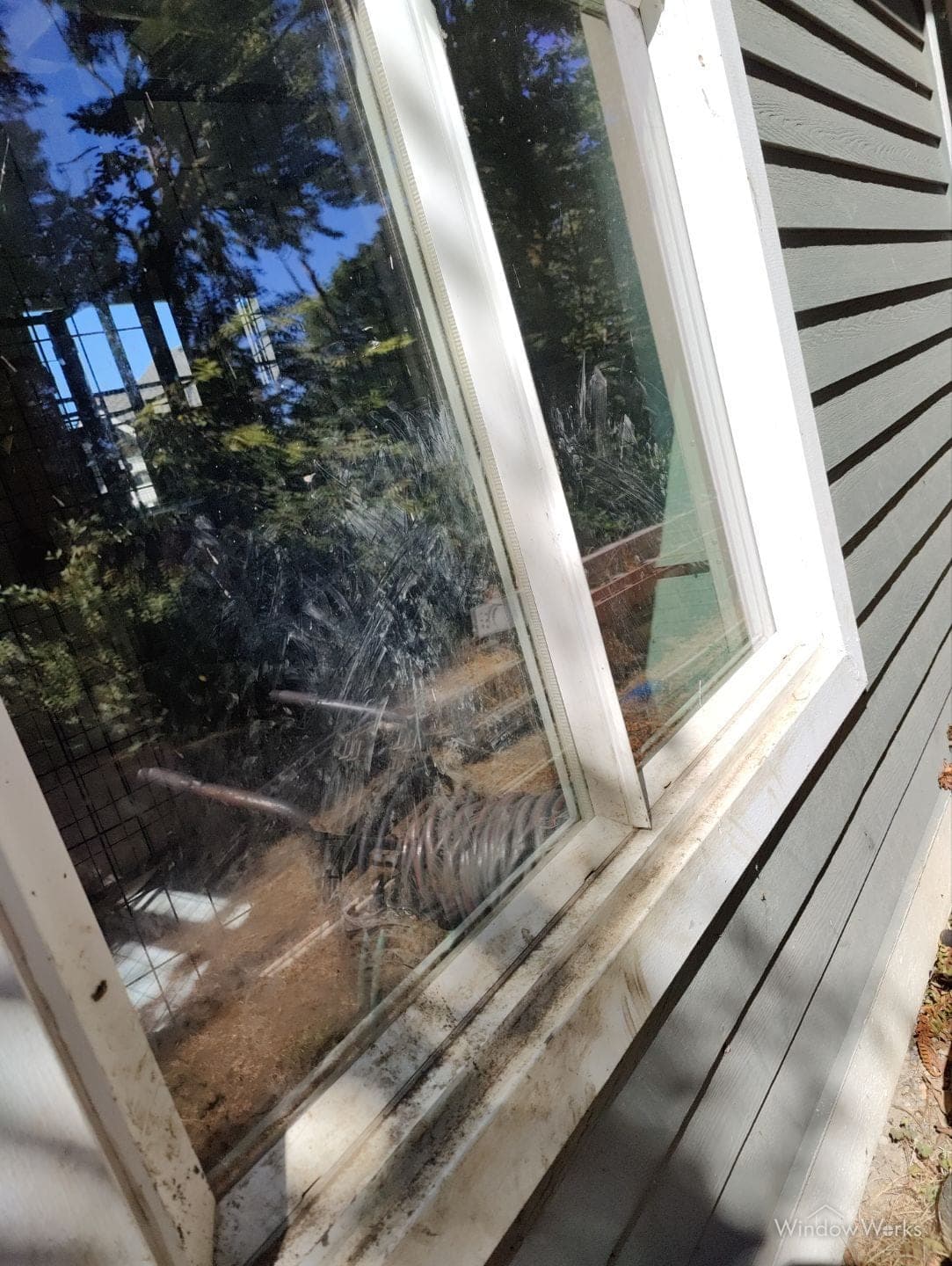
Yes. Removed by our standard window cleaning
The everyday layer: road dust, fingerprints, nose prints from dogs and kids, and the general haze that builds so gradually you stop noticing until it is gone.
This is the bulk of what a window cleaning removes, and it is the reason the difference is so obvious afterward.
Pollen
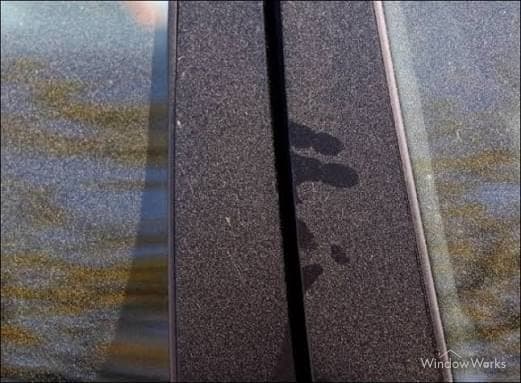
Yes. Removed by our standard window cleaning
Yellow to rust-colored dust that lands in waves through spring and early summer. Around here it arrives faster than most people can keep up with, and on a dark frame it shows immediately.
It washes off without difficulty. Worth knowing: pollen on the glass ends up inside the house every time you open the window, which matters if anyone in the house has allergies.
Algae film on shaded glass
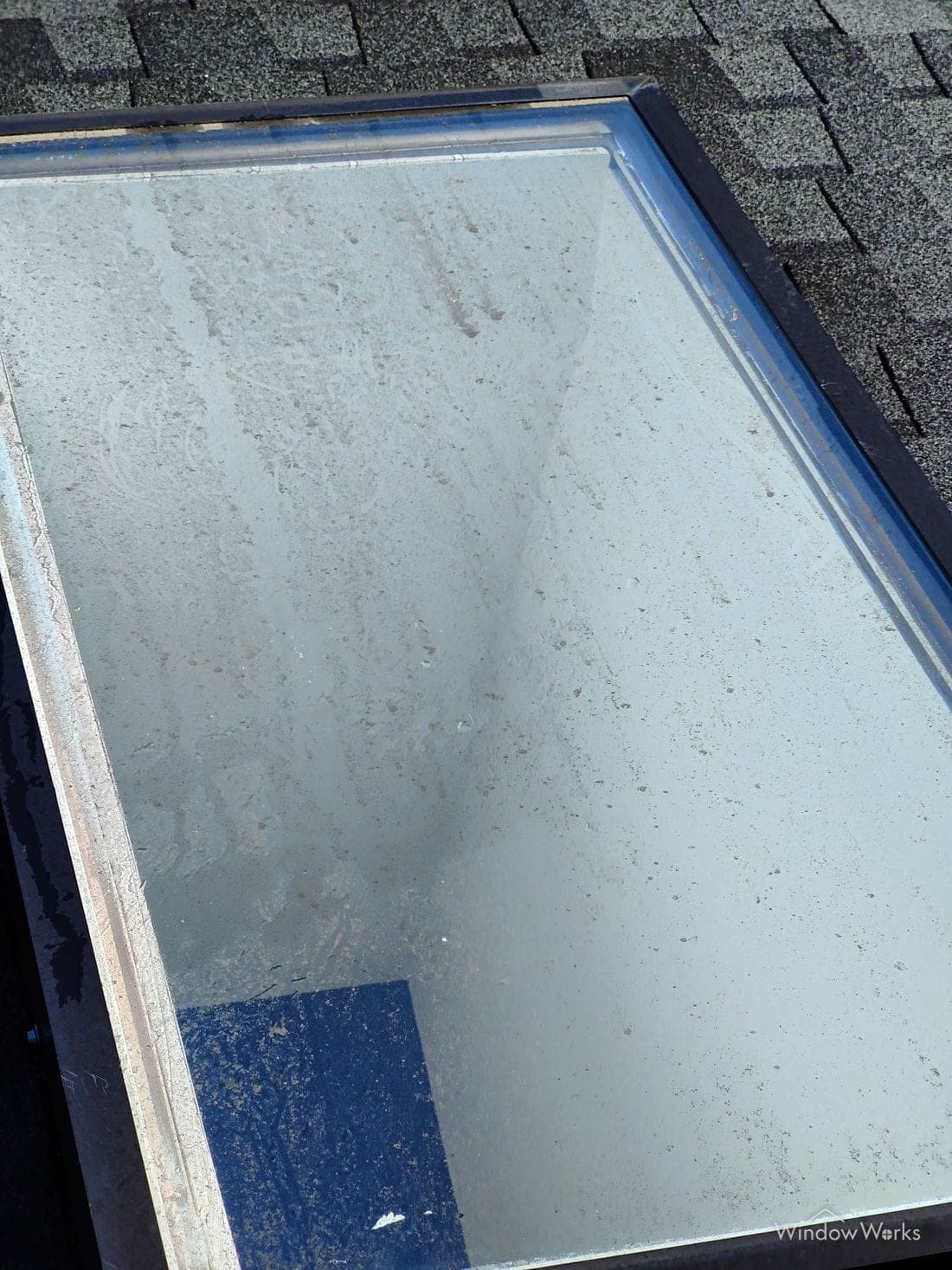
Yes. Removed by our standard window cleaning
A faint green cast on the panes that sit in shade, usually on the north side or under a deep overhang where the glass never fully dries.
It is a living film rather than loose dirt, so it bonds to the surface and a quick rinse does not shift it. Hand-cleaning with solution and dwell breaks it and takes it off.
Spider webs and bug debris
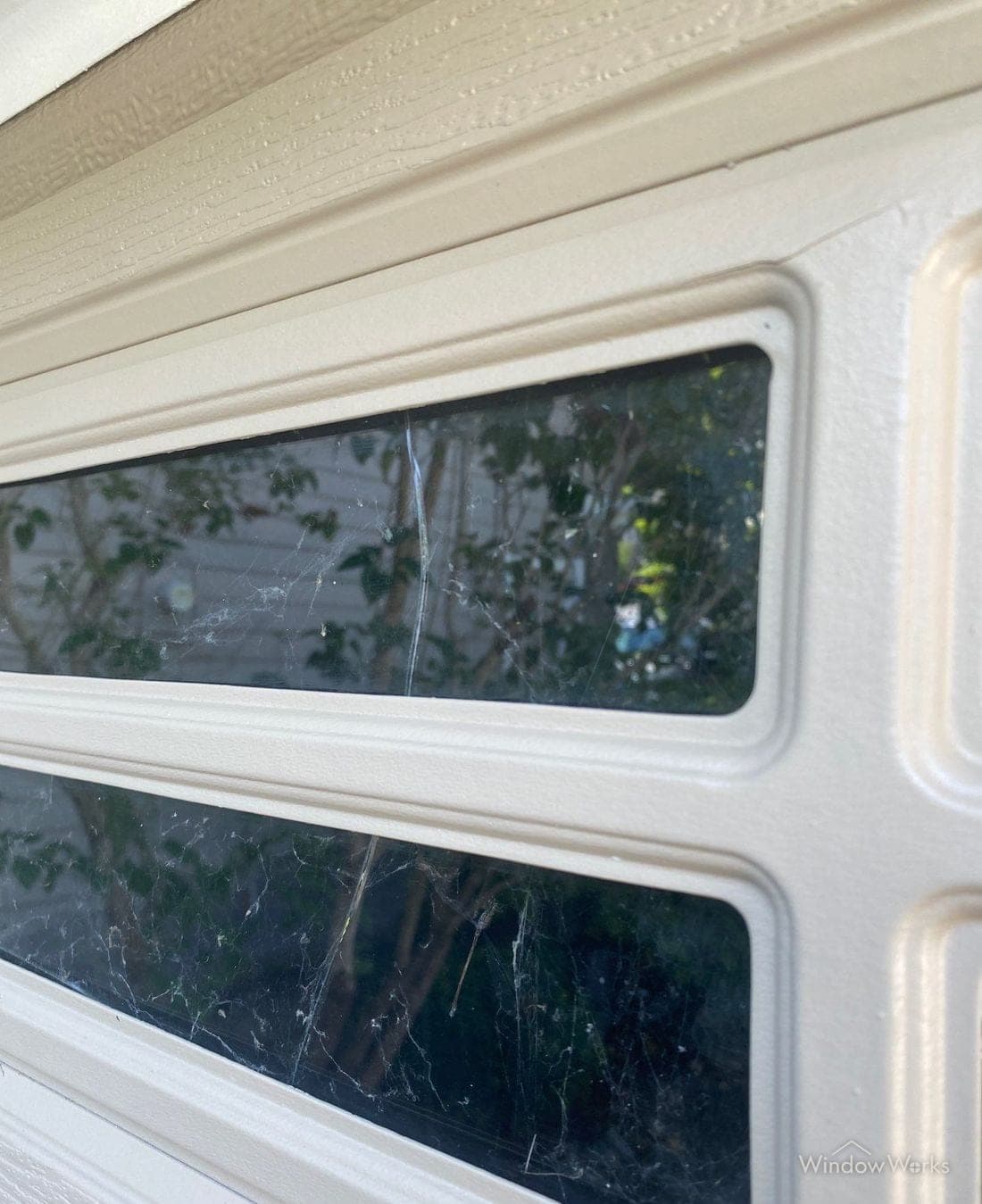
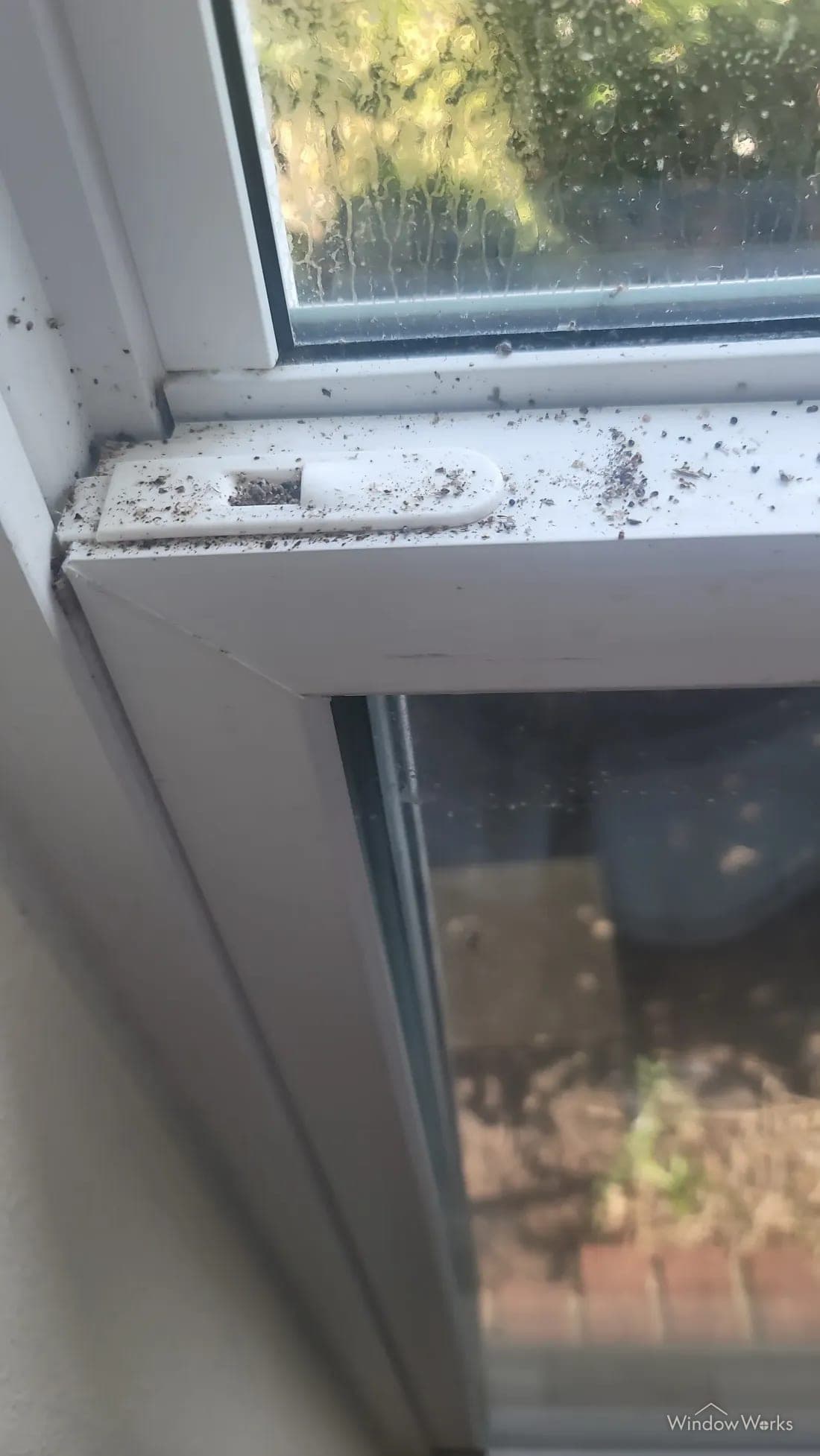
Yes. Removed by our standard window cleaning
Webs in the corners, egg sacs tucked under the sill lip, and the dark specks spiders leave behind on the frame.
Cleared with the glass. How far into the frame, track, and sill we go depends on the package you booked.
Bird droppings
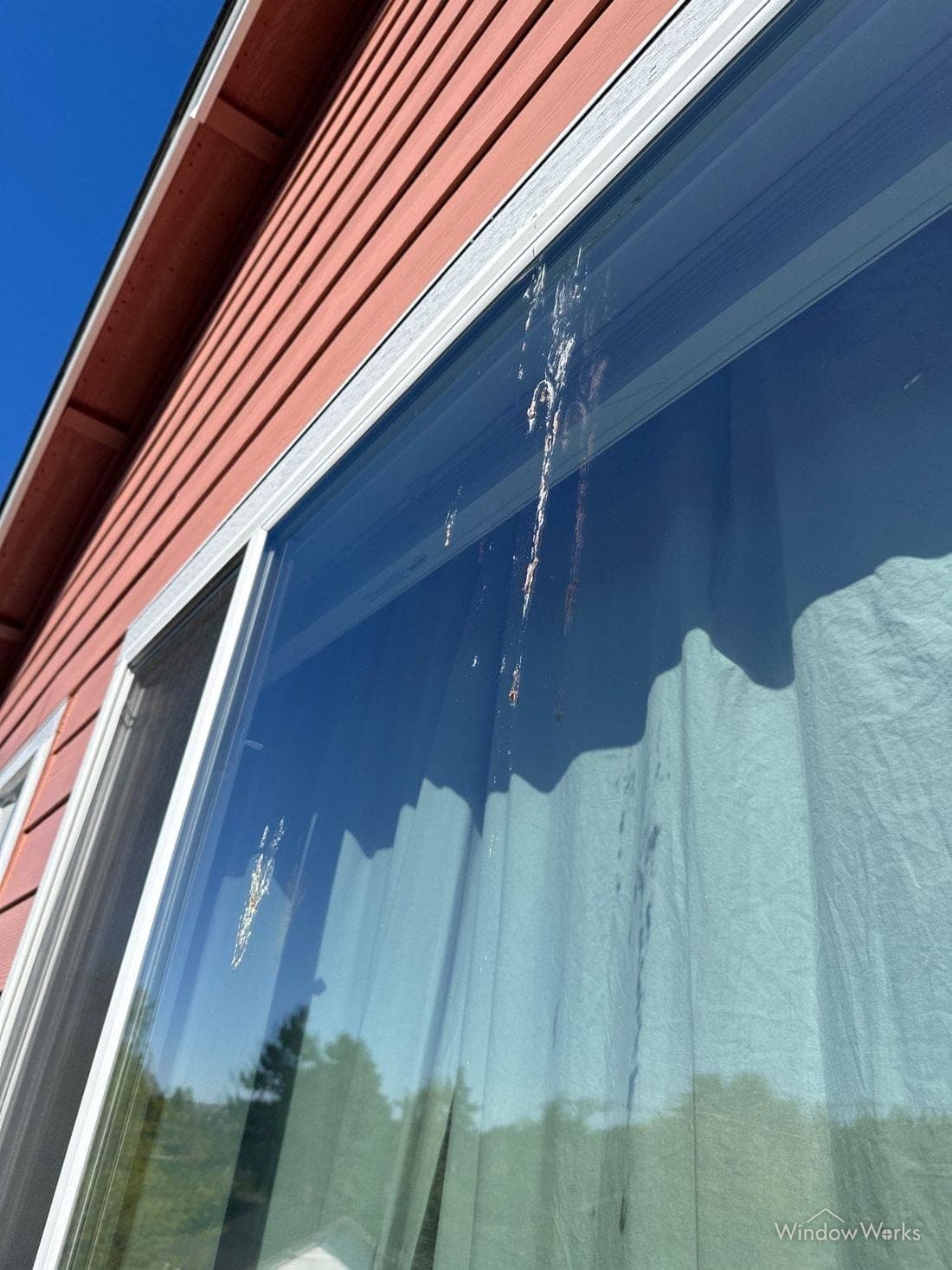
Yes. Removed by our standard window cleaning
If a dropping sat on the glass for weeks it can etch the surface, and a faint ghost outline stays after cleaning. See etched glass below.
The droppings themselves rinse off completely. They are acidic, so the sooner they come off the better the glass looks afterward.
Soap and window cleaner residue
Yes. Removed by our standard window cleaning
The cloudy film left by previous cleaning attempts. Household sprays, vinegar mixes, and dish soap all leave something behind, and each pass adds to it until the glass looks permanently dull.
Our solution and technique lift the old residue along with the current dirt, so the glass starts clean rather than one layer down.
Not sure which one you are looking at? Send us a photo and we will tell you.
Get a free estimateNeeds a different process than a cleaning
These are real conditions with real solutions. They are just not what a standard visit is built to do. Each one is a service we offer, quoted after we look at it.
Hard water and mineral spotting
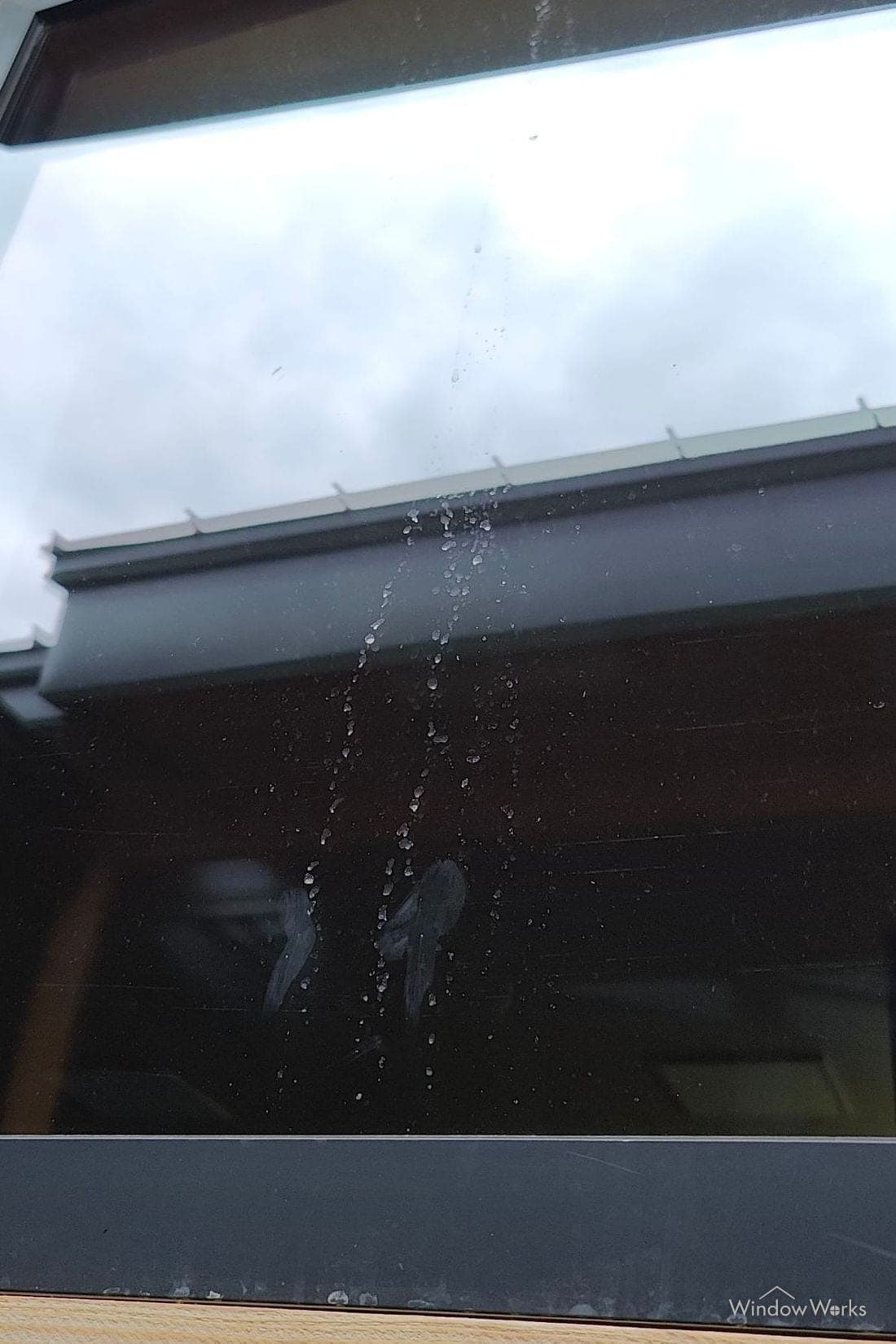
No. Not removed by a standard window cleaning
Yes. Removed with our Hard Water and Mineral Stain Removal
We test a small spot first and tell you what the glass will realistically look like before we treat the whole window. The treatment may require a signed waiver.
White or chalky spotting from sprinkler overspray, irrigation, or runoff off the roof and siding. These are dissolved minerals left behind as the water dries, and once they bond to the surface a standard cleaning stops being able to shift them.
The specialty treatment uses a compound made for bonded mineral deposits. It improves the appearance, sometimes dramatically. Be aware of the limit: where the minerals have actually etched into the glass, that part does not fully resolve, and any honest answer has to include that.
Prevention beats treatment here every time. Redirect the sprinkler head that is causing it, then keep the glass on a regular schedule so deposits never get the months of undisturbed sitting they need to bond.
Graying or greening screen mesh
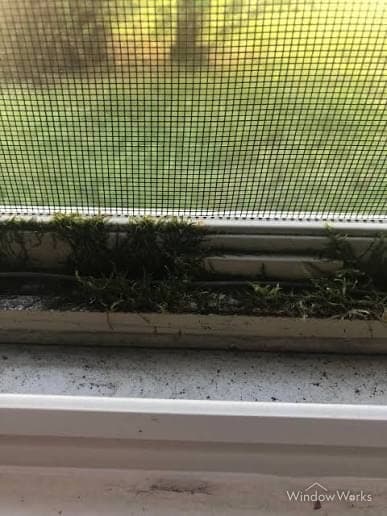
No. Not removed by a standard window cleaning
Yes. Removed with our Deep Screen Cleaning add-on
Deep screen cleaning is a separate add-on, worth doing about every couple of years.
Screens hold an enormous dust load, and in shade the mesh goes green with algae. It reads as a dark or dingy screen from outside and cuts the light coming in.
Every window cleaning package includes the screens, but that is a dust-off and wipedown. Mesh that is genuinely loaded, or that has gone green, needs the screens taken out, washed with detergent, rinsed, and the frames cleaned before they go back in.
Packed track debris
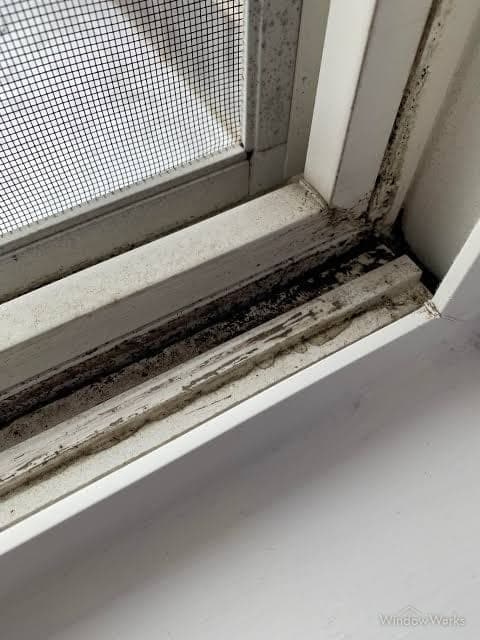
No. Not removed by a standard window cleaning
Yes. Removed with our Window Track Deep Cleaning add-on
Window track deep cleaning is a separate add-on for tracks that are past a wipe.
Grit, dead insects, and compacted grime in the bottom track, sometimes to the point where the window is hard to slide.
How much track work is in your visit depends on the package. Tracks that are genuinely packed need specialty tooling and enough labor that they do not fit inside a standard visit.
Screen damage
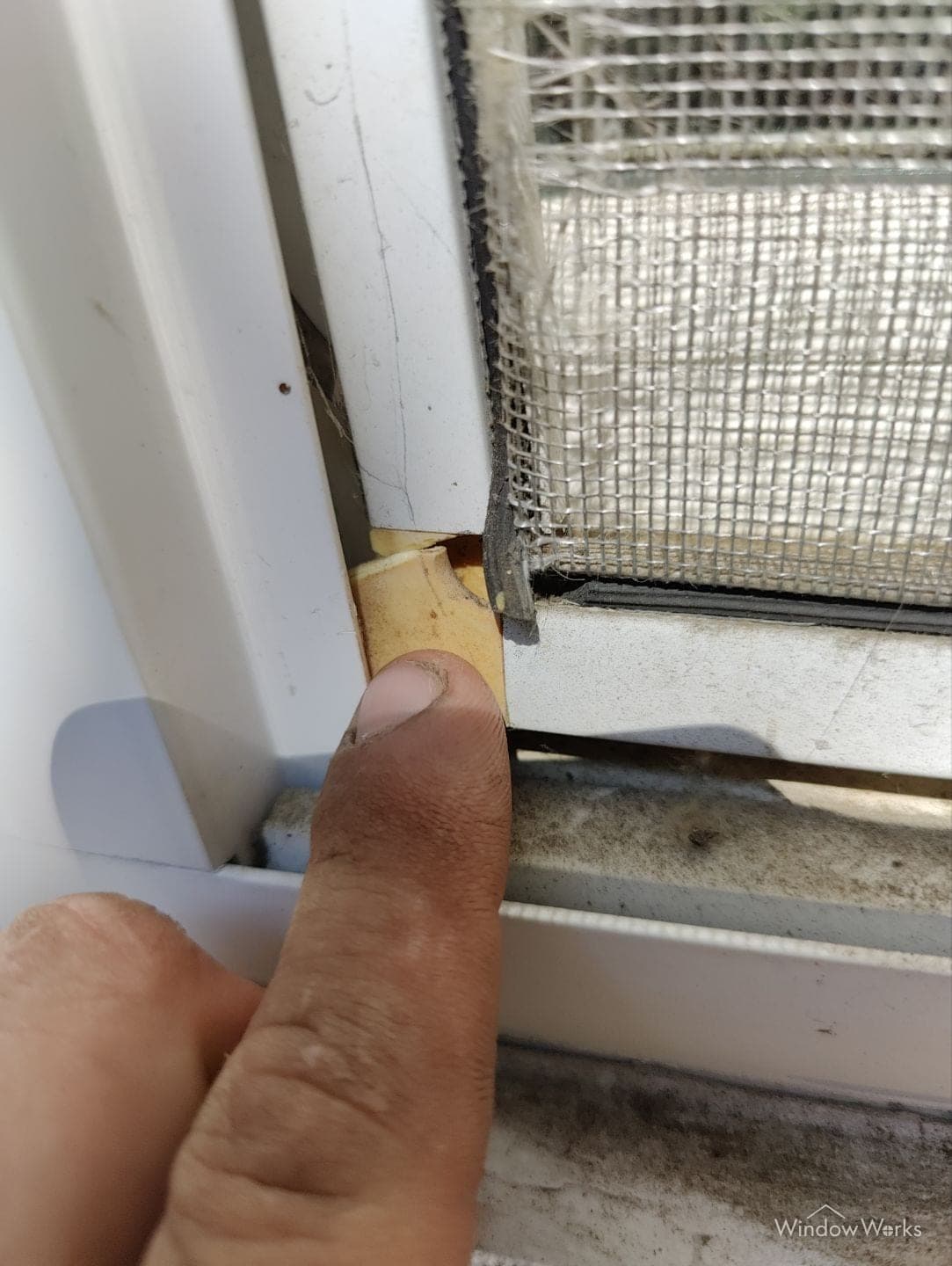
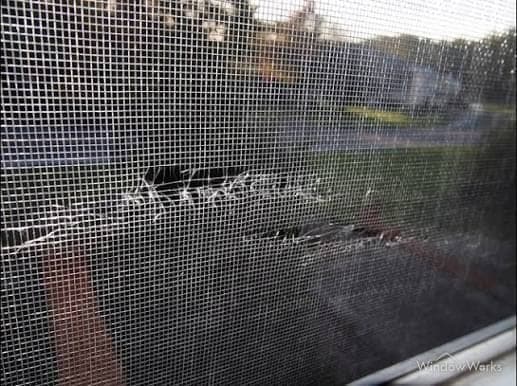
No. Not removed by a standard window cleaning
Yes. Removed with our screen building and rescreening service
Holes, tears, bent frames, and popped corners. Cleaning a screen does not repair it, and damage usually turns up mid-visit when the screens come out.
We rebuild and re-mesh screens as a separate service, quoted per screen after we measure. For a single common-size screen a hardware store is often the faster answer, and we will say so.
Not sure which one you are looking at? Send us a photo and we will tell you.
Get a free estimateComes off, but needs our Construction Window Cleaning
Everything here is bonded to the glass, which means it comes off with solvent and a blade rather than solution and a squeegee. That is a separate service with its own method, not a heavier version of a standard visit, and most of it has nothing to do with construction: tree sap and old sticker residue need the same treatment as paint overspray does. Blade work carries risks that technique alone cannot remove, so this service requires a signed scratch waiver before the first blade touches the glass. We explain all of that before we schedule anything. If this is a build or a remodel, timing matters more than most people expect. Book it once the last painter, glazier, and mason are done, because cleaning before that just means the glass gets contaminated again and the work gets done twice. After they finish, sooner is better for you: cured residue is far harder to remove than fresh.
Construction dust and splatter
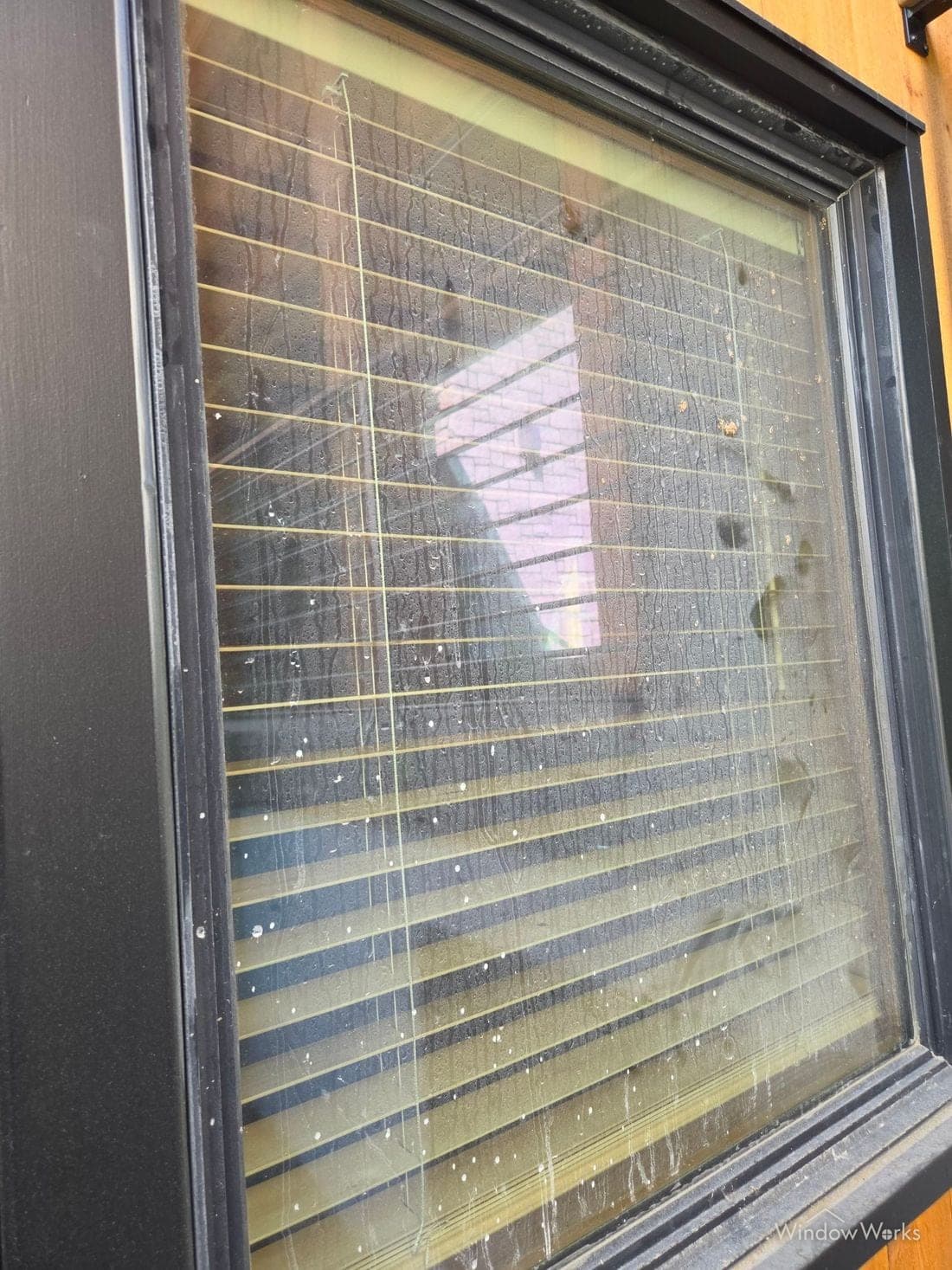
No. Not removed by a standard window cleaning
Yes. Removed with our Construction Window Cleaning
The film of drywall dust, grinding dust, and fine splatter that coats glass on an active site.
It looks like ordinary dirt and behaves nothing like it. The particles are hard and angular, so wiping a dusty pane the normal way drags them across the surface. That is why construction glass is its own service with its own method rather than a heavier version of a standard clean.
Tree sap
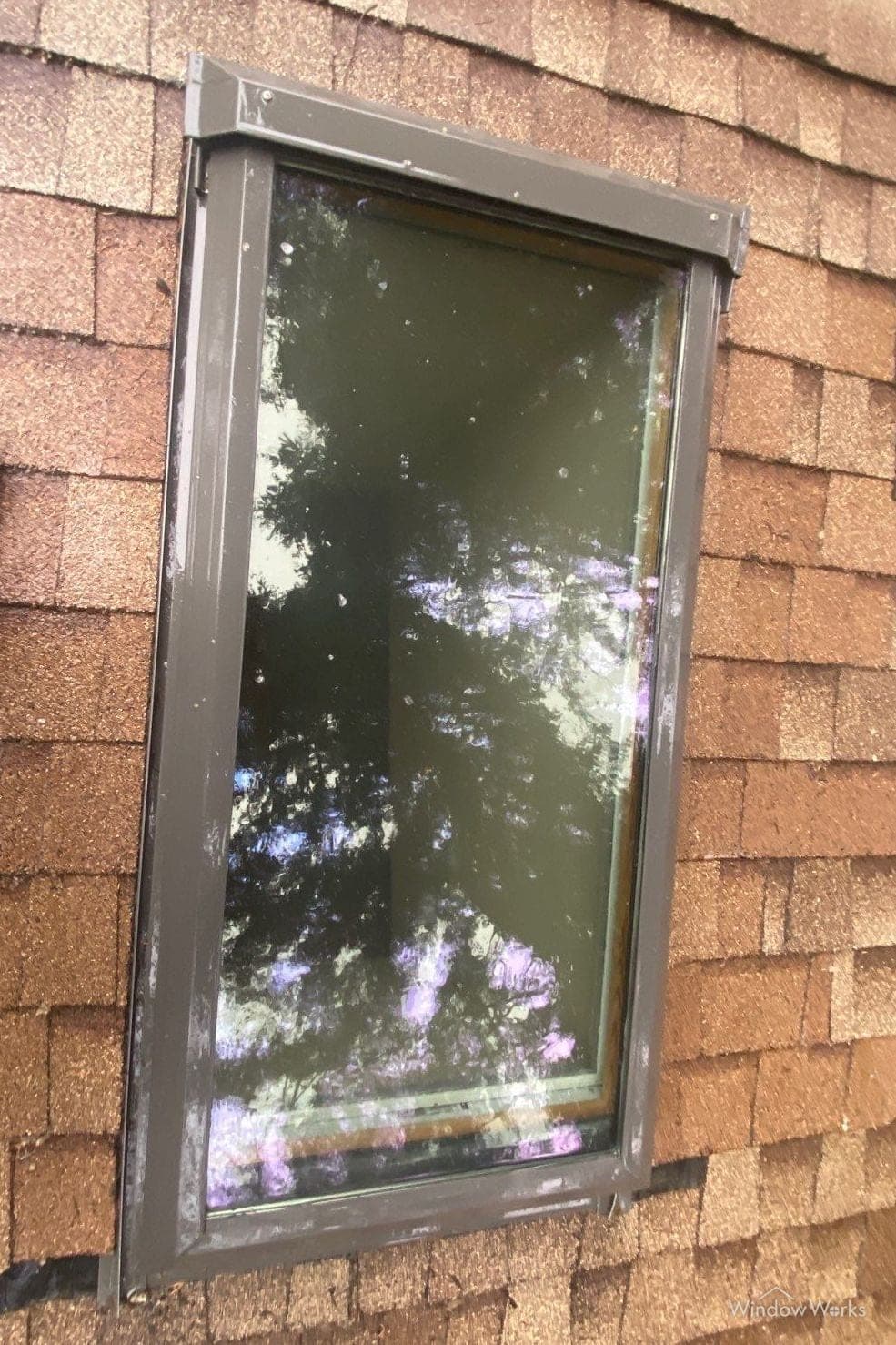
No. Not removed by a standard window cleaning
Yes. Removed with our Construction Window Cleaning
Skylights are the exception. Skylight cleaning covers organic matter but not tree sap.
Sticky drips and hardened beads from conifers overhead. Sap is the one piece of organic residue a standard cleaning does not take off, because getting it off means solvent and blade work rather than solution and a squeegee.
That is the construction glass method, so sap comes off under that service even when there is no construction involved.
Sticker, tape, and adhesive residue
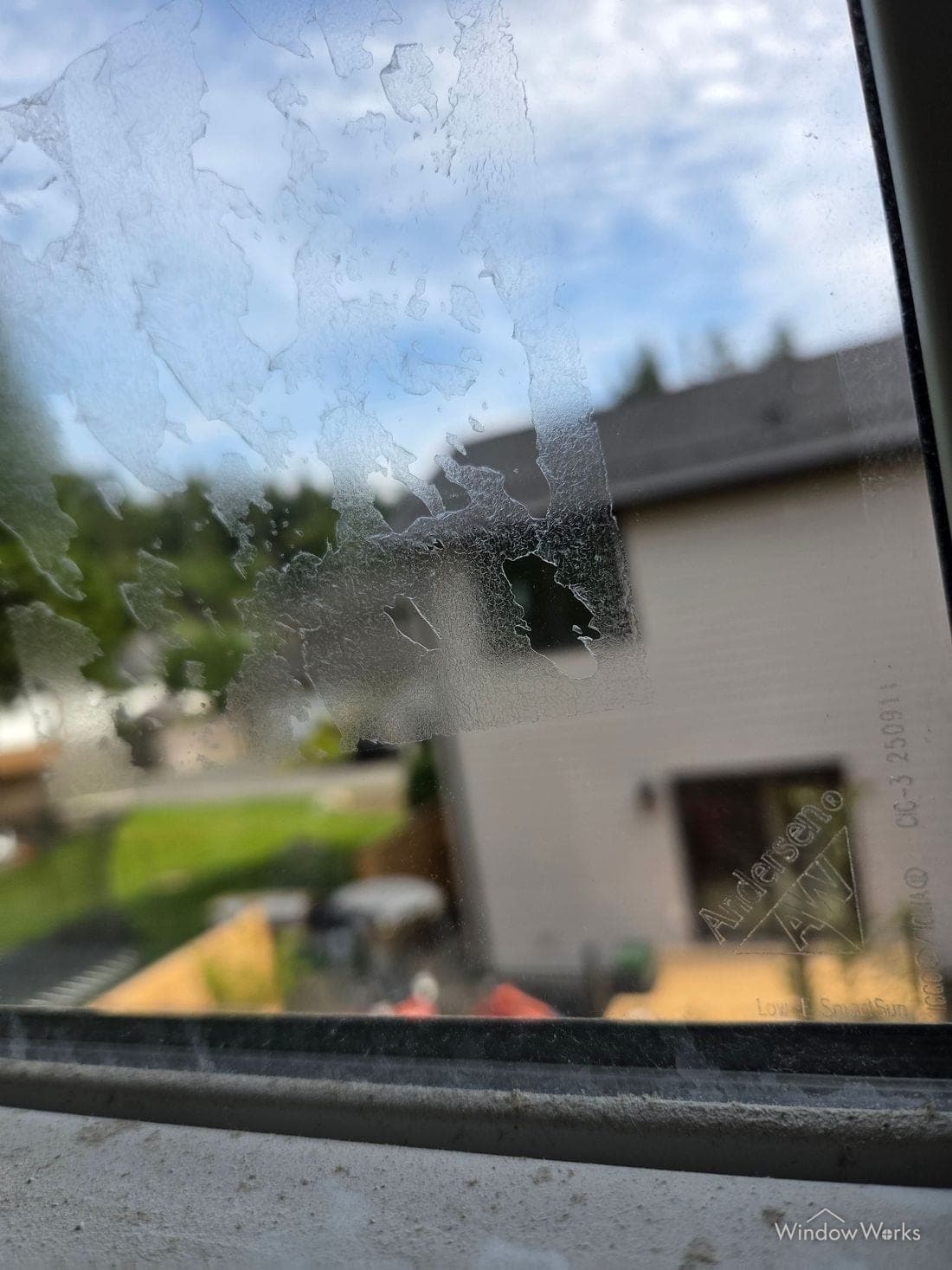
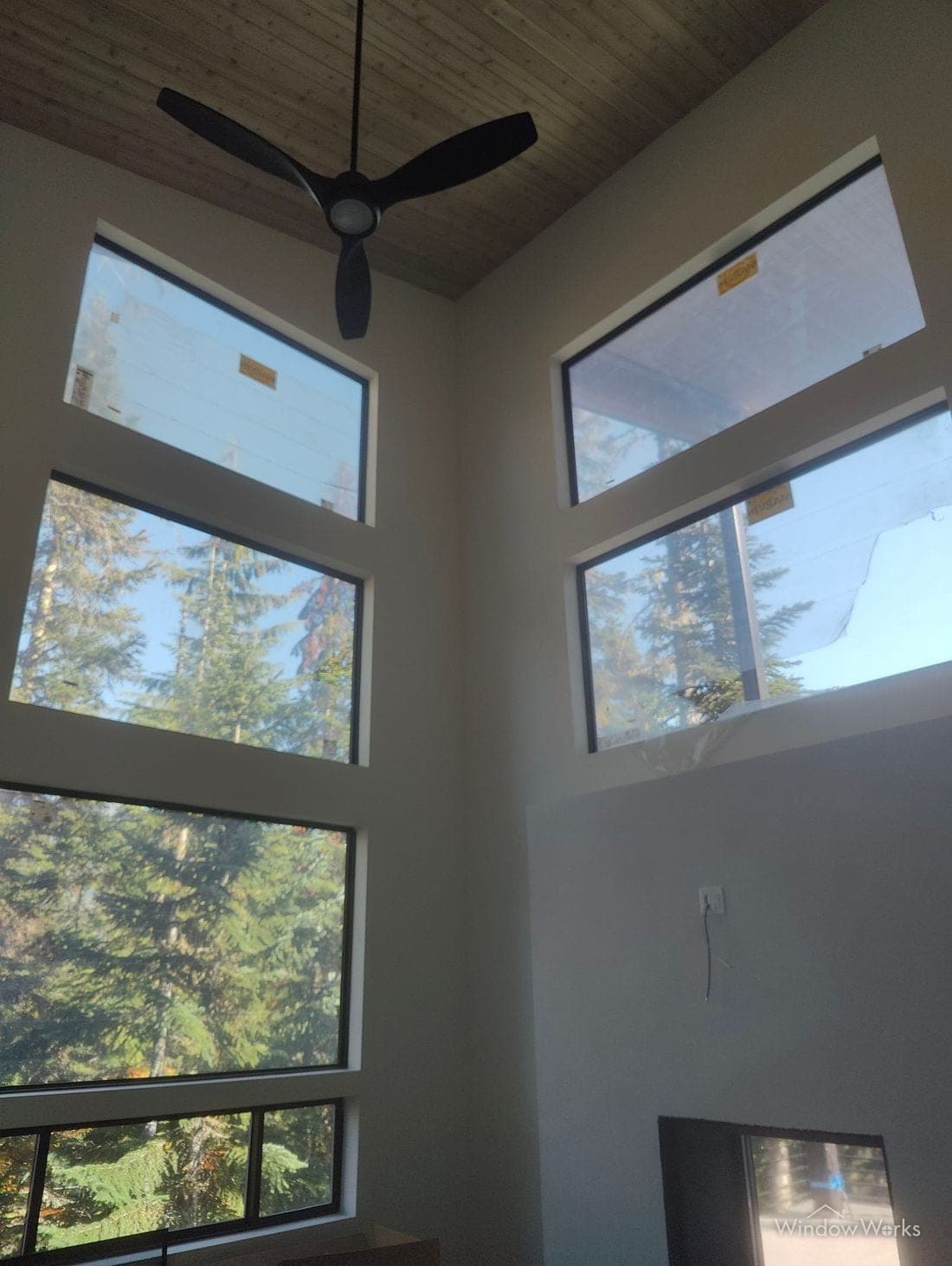
No. Not removed by a standard window cleaning
Yes. Removed with our Construction Window Cleaning
Parking permits, security stickers, kids' decorations, the gum left behind by holiday light tape, and factory labels on brand-new units.
All of it needs solvent and a blade, which is the construction glass method rather than a standard visit. Left in the sun through a summer the adhesive bakes on and the backing goes brittle, which turns an easy peel into a scrape, so sooner is easier.
Paint and stain splatter
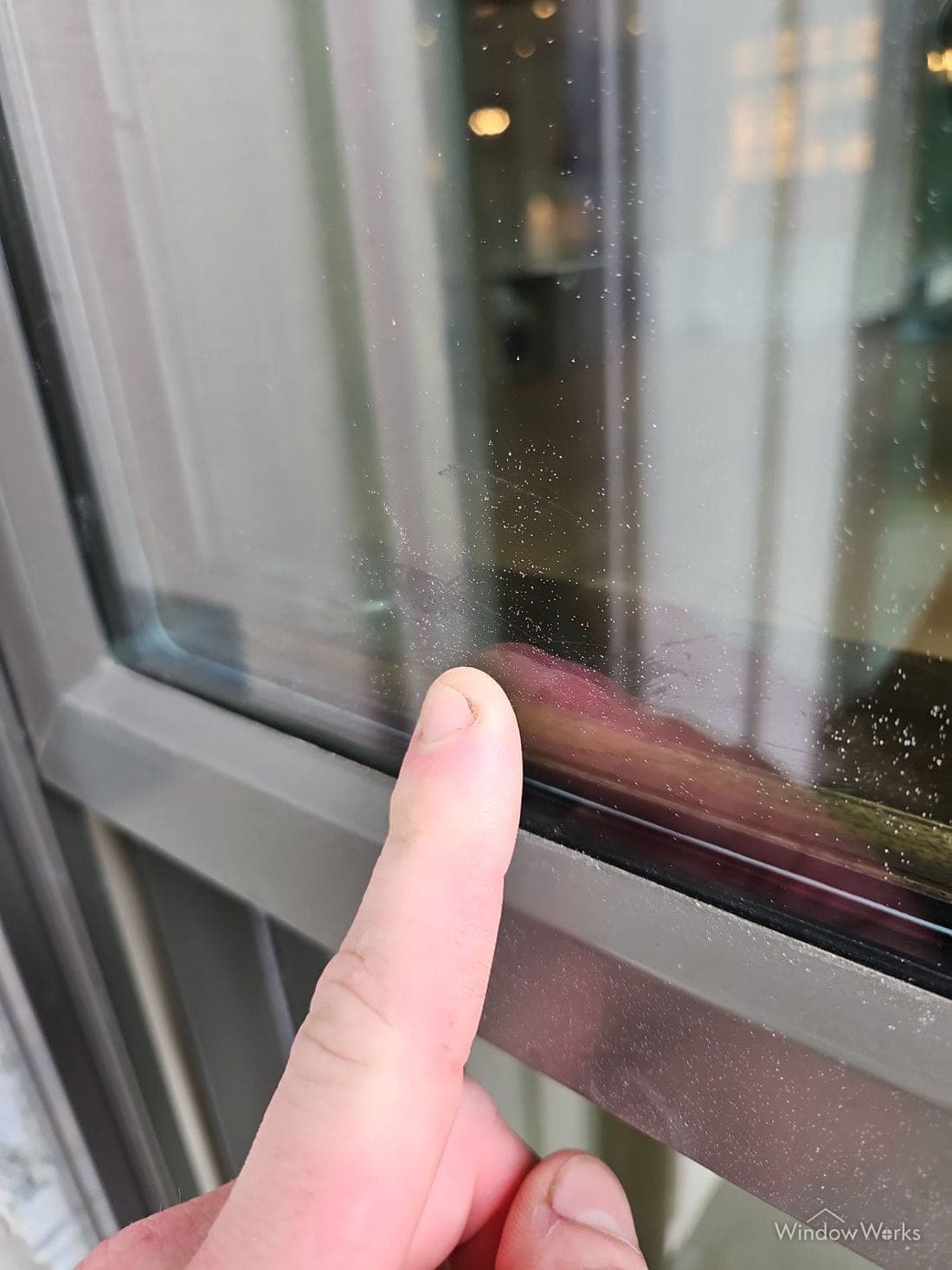
No. Not removed by a standard window cleaning
Yes. Removed with our Construction Window Cleaning
Overspray and drips from painting the house, staining a deck, or spraying a fence.
Fresh splatter on sound, uncoated glass comes off with solvent and a blade. Cured paint is harder. On tinted or coated glass a blade is not an option at all, because the coating is on the surface and the blade takes it off, so we identify the glass before any tool comes near it.
Caulk smears and silicone residue
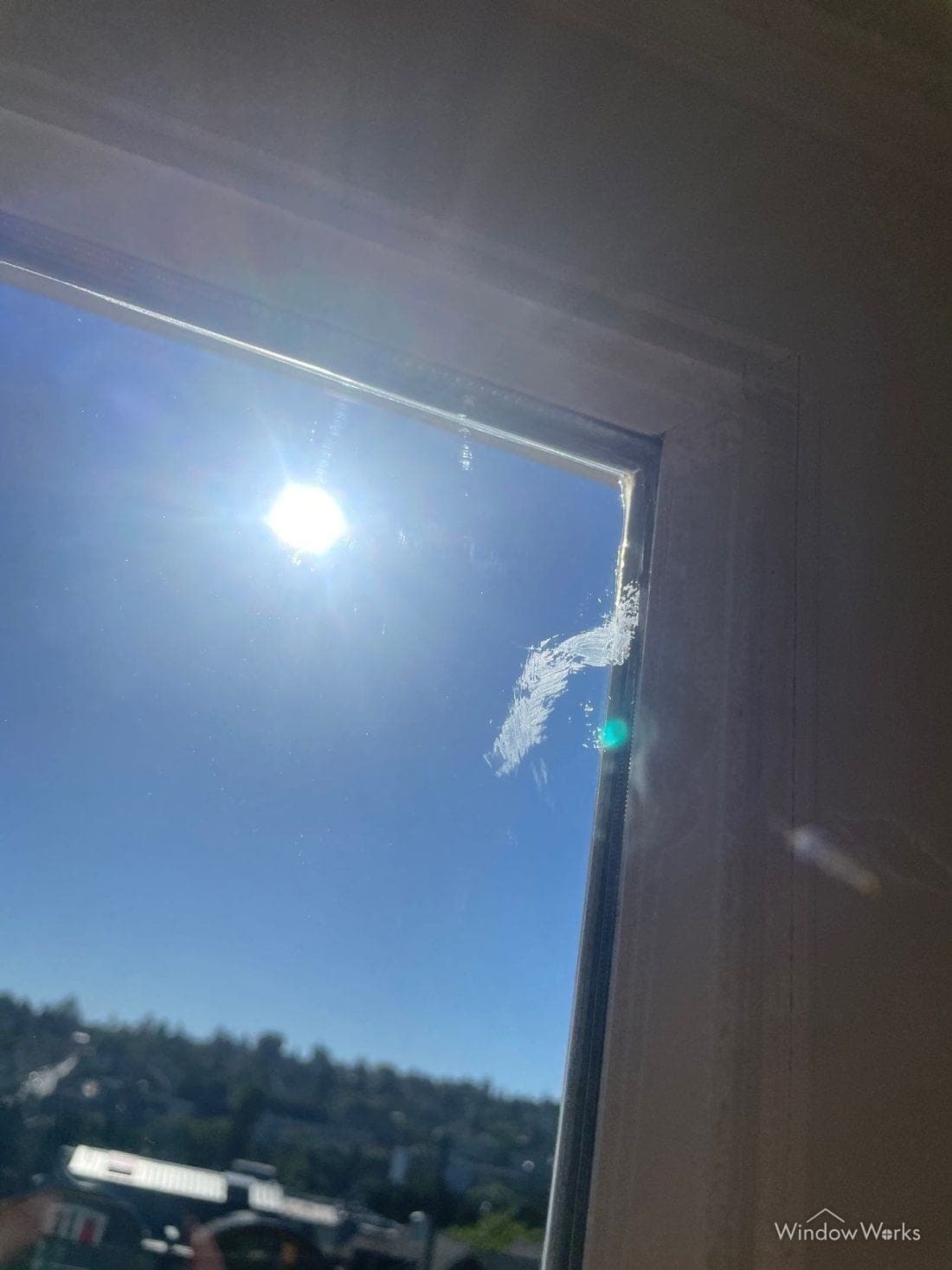
No. Not removed by a standard window cleaning
Yes. Removed with our Construction Window Cleaning
Smears left by window installation, re-glazing, or trim work.
Fresh caulk comes off with solvent. Cured silicone is genuinely stubborn and needs dwell time and blade work, which puts it in this group rather than in a normal visit.
Stucco, mortar, and concrete splash
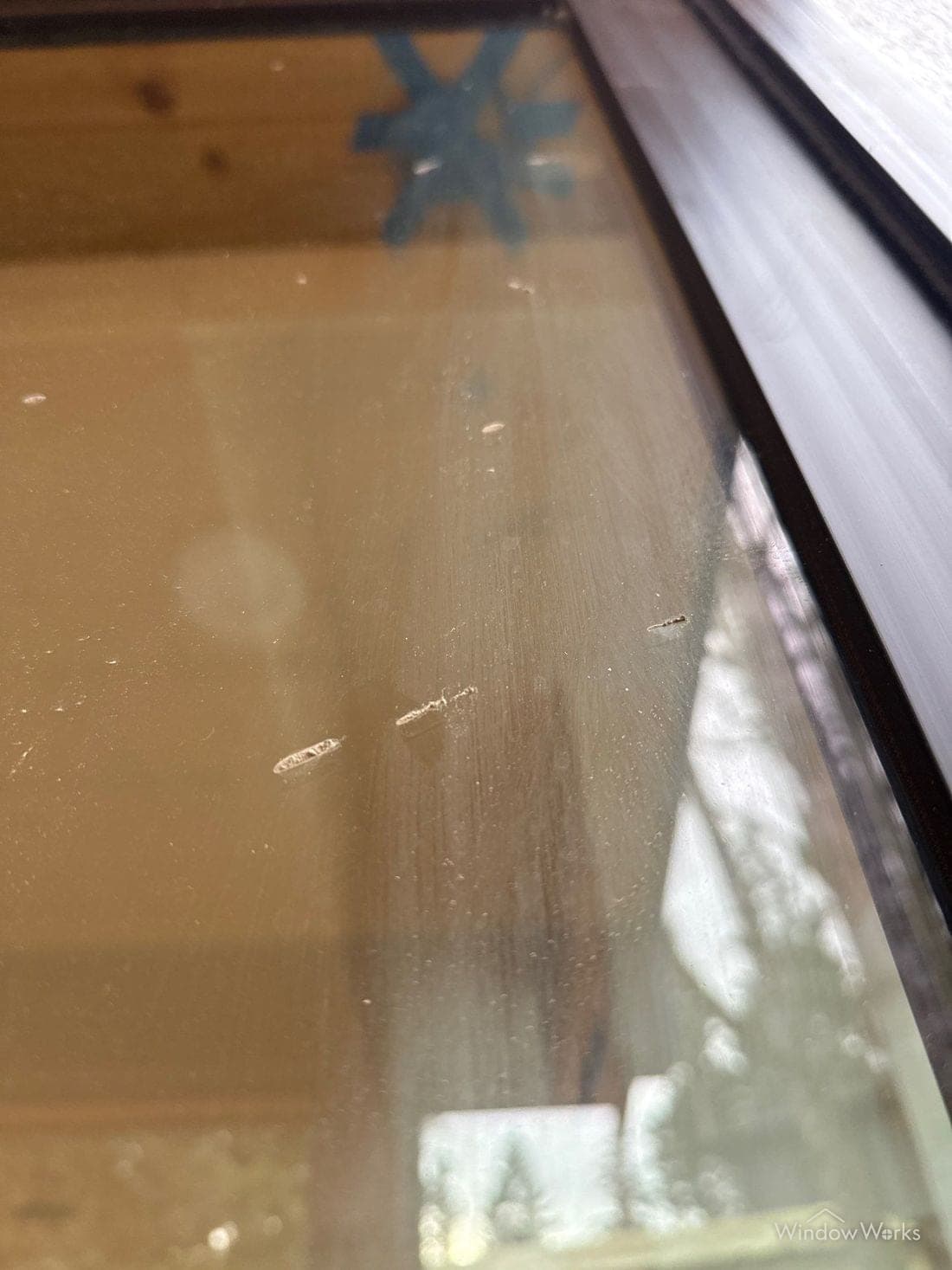
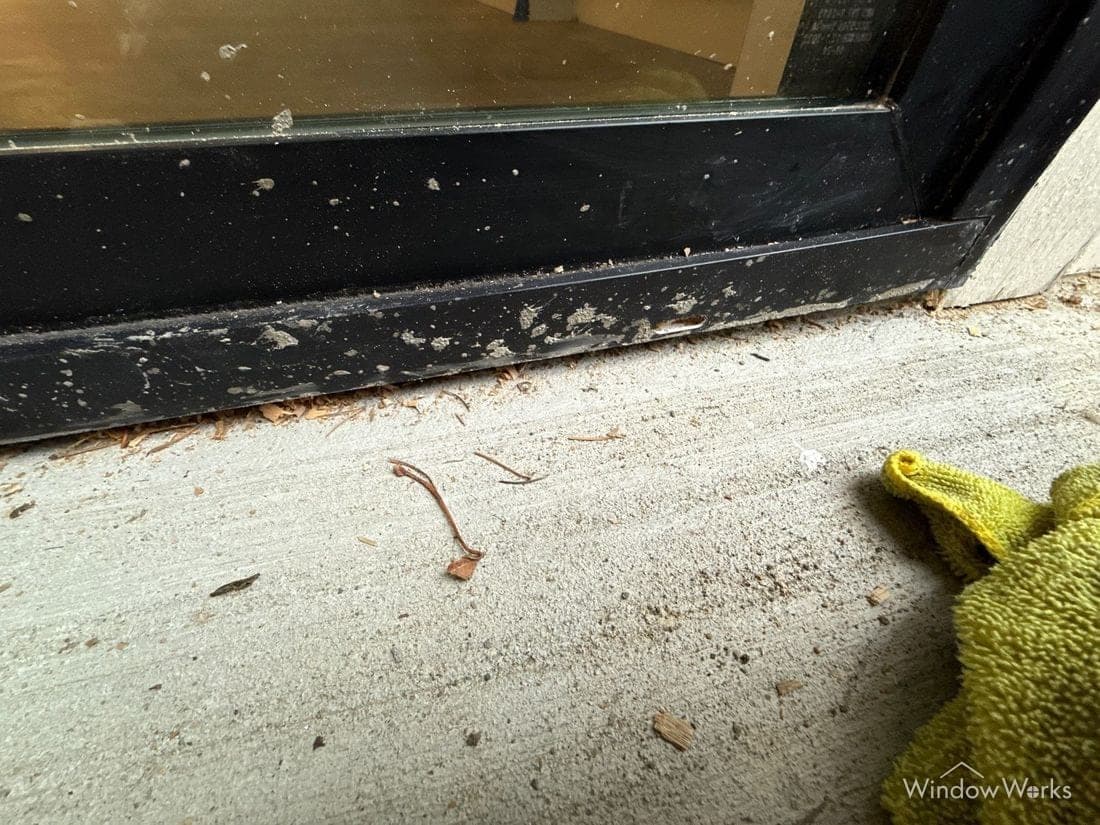
No. Not removed by a standard window cleaning
Yes. Removed with our Construction Window Cleaning
Splash and slurry from stucco, masonry, or a concrete pour that dried on the glass.
This is the hardest of the construction contaminants. It bonds hard and it is alkaline, so it can etch the glass underneath while it sits. It takes multiple passes with the right chemistry, and the sooner after the work it is done the better the outcome.
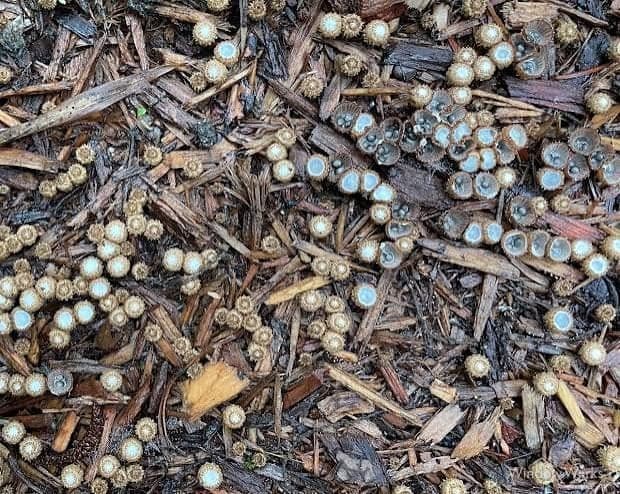
Artillery fungus
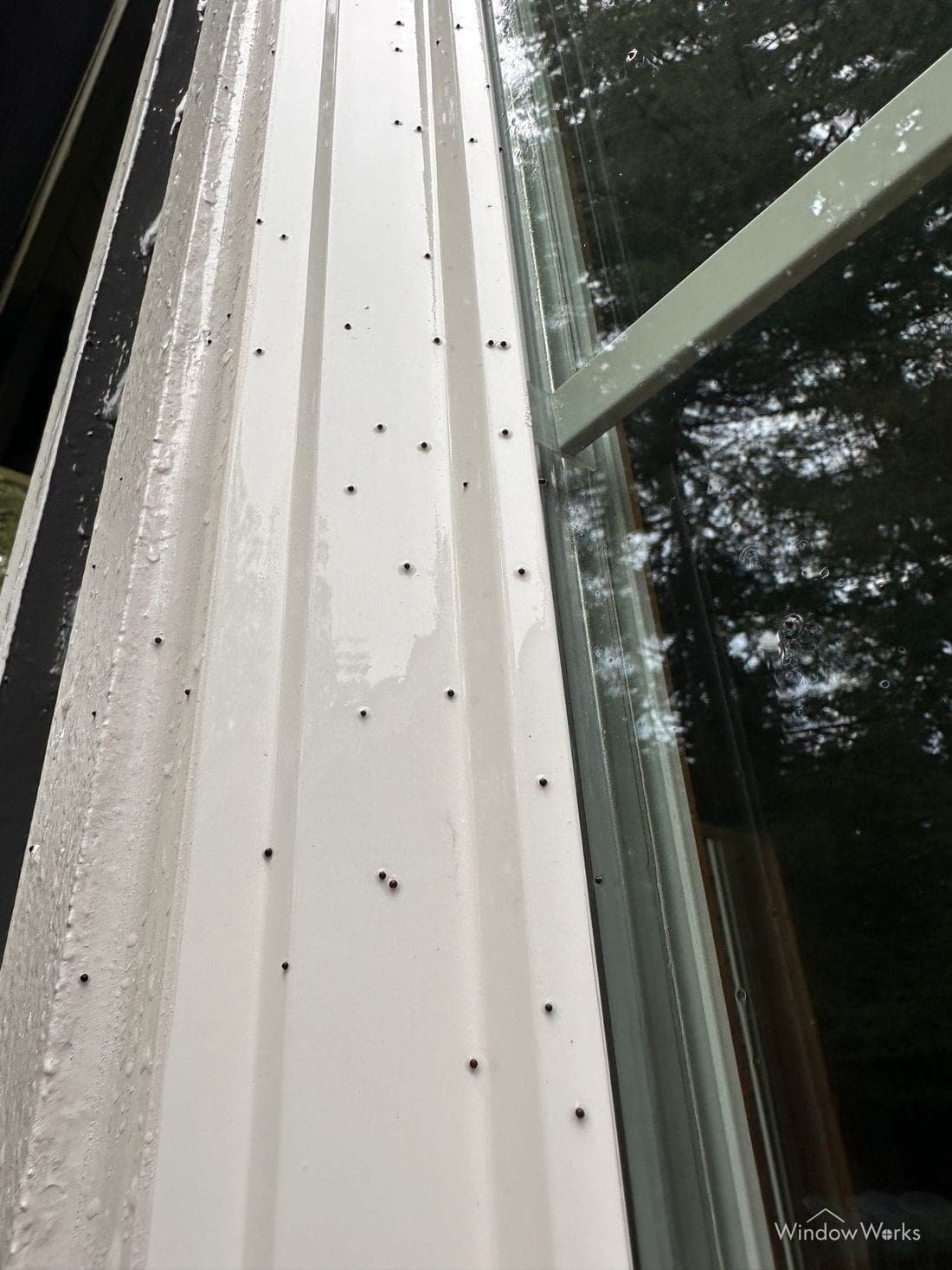
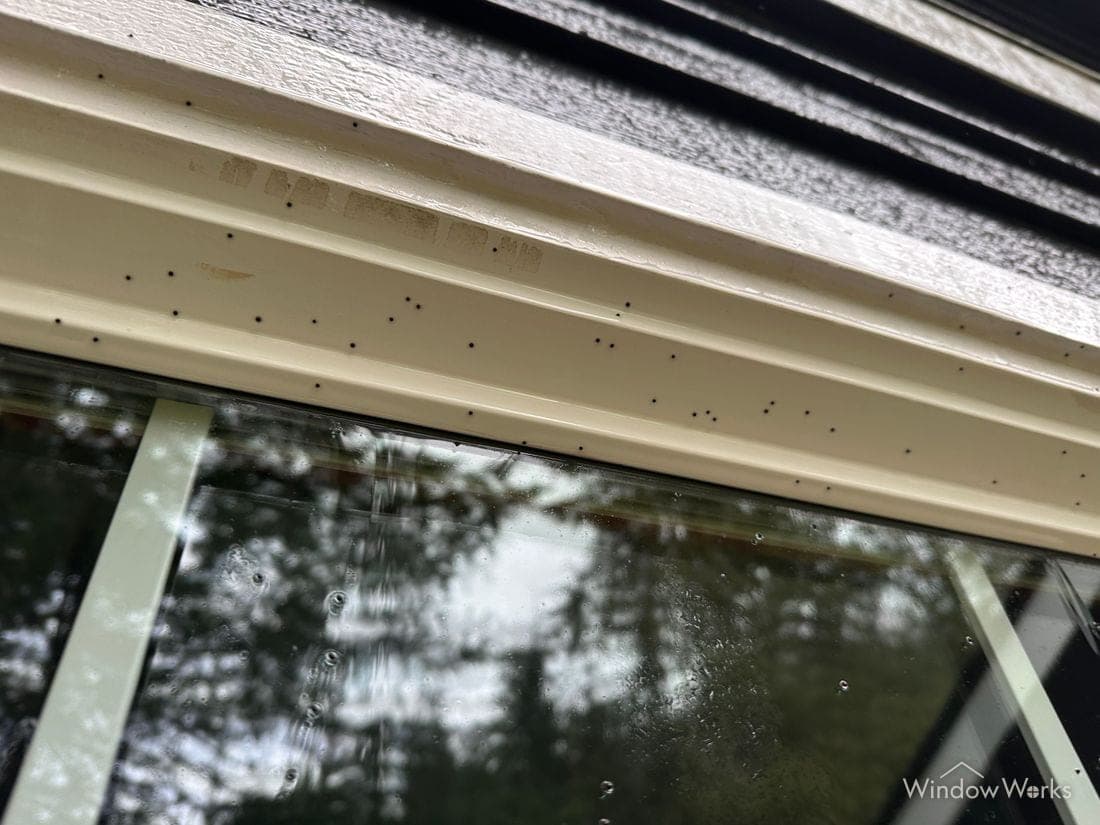
No. Not removed by a standard window cleaning
Yes. Removed with our Construction Window Cleaning
Glass only. There is no way to get these off frames, siding, or trim without damaging the finish.
Tiny black specks that look like flecks of tar, usually on the lower windows on the side of the house with mulch beds. They are spores, shot out of decaying wood mulch by a fungus, and they travel a surprising distance.
On glass they come off, but only with blade work, which is why they need the construction glass method rather than a standard visit. On frames and trim they are there for good, because anything aggressive enough to lift them takes the finish with it.
The real fix is the mulch bed. Turning the mulch regularly so it does not stay damp and dark, or switching that bed to stone or rubber, stops the source.
Metal shavings and welding spatter
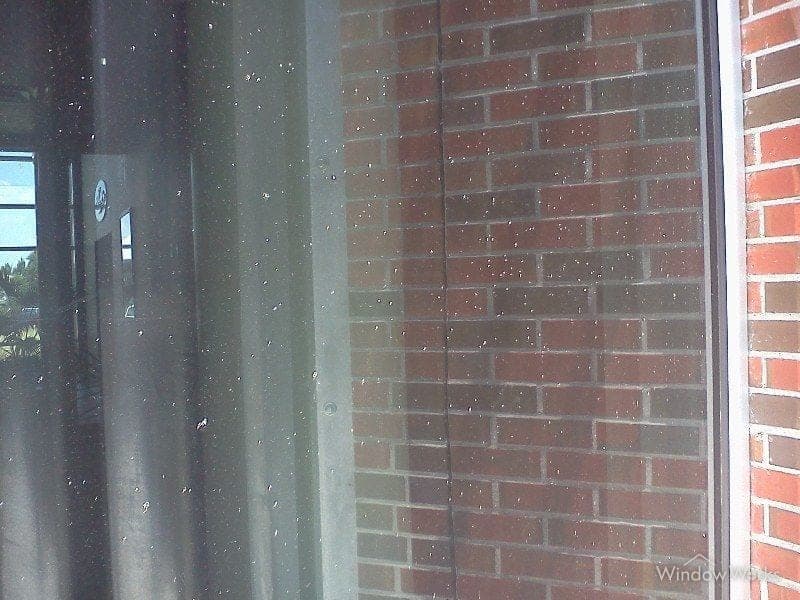
No. Not removed by a standard window cleaning
This is the one thing in this group we cannot fix. The glass needs replacing.
Fine metal particles from cutting or grinding nearby, and spatter from welding within range of the glass. Both come from adjacent trades rather than from anything you did.
Shavings rust where they land and the rust eats into the surface. Welding spatter arrives molten and fuses in. Either way the damage is in the glass rather than on it, so cleaning does not reach it and no amount of scraping recovers it.
If this happened during a build, raise it with the builder while the trades are still on the job. It is a replacement, and it is usually theirs to cover.
Not sure which one you are looking at? Send us a photo and we will tell you.
Get a free estimateDamage a cleaning cannot fix
Everything here is damage to the glass or the unit rather than something sitting on it. We will still clean the window and it will look better. We will also tell you plainly that the mark is staying, because the alternative is you paying twice to learn the same thing.
Fog or haze between the panes
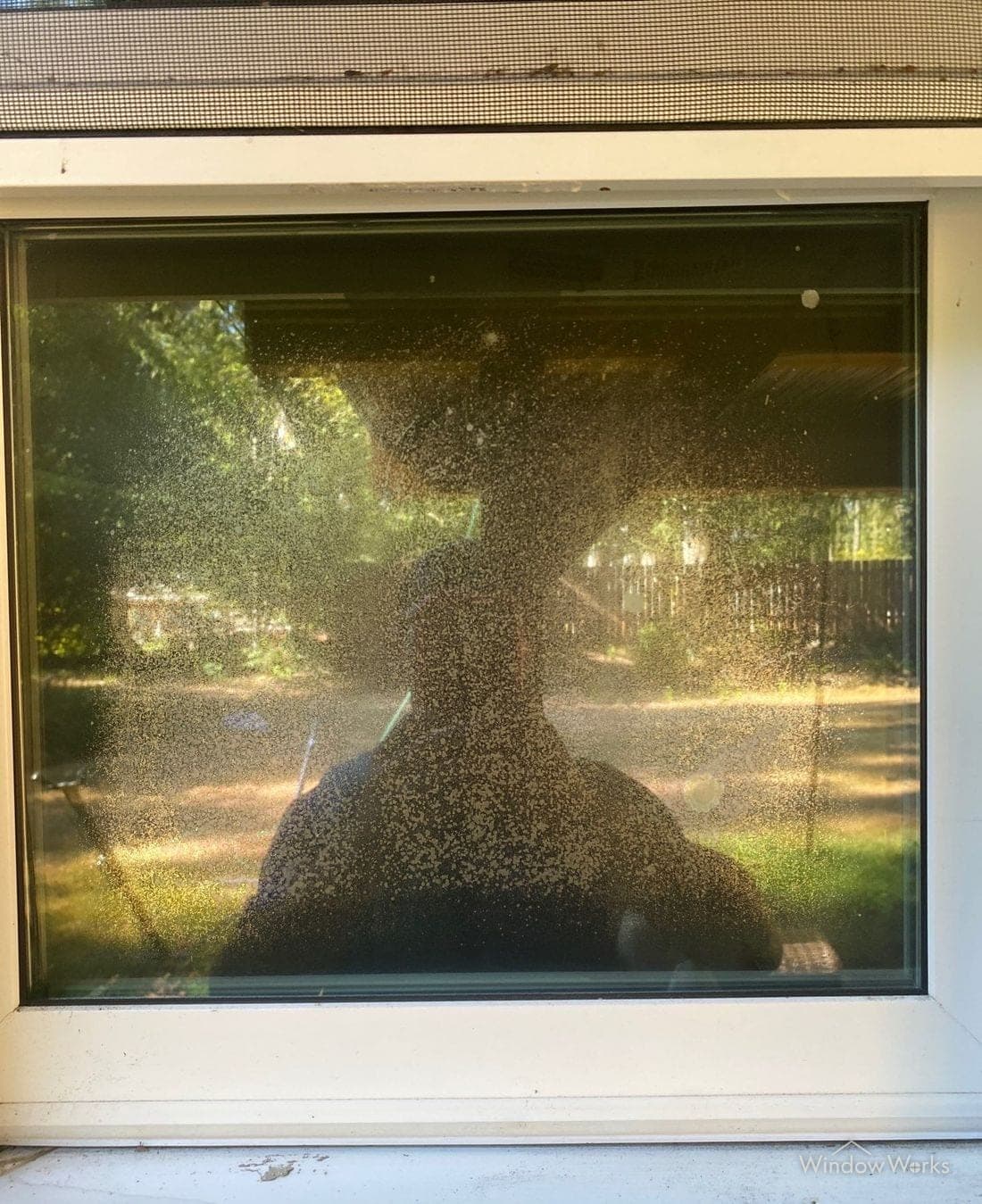
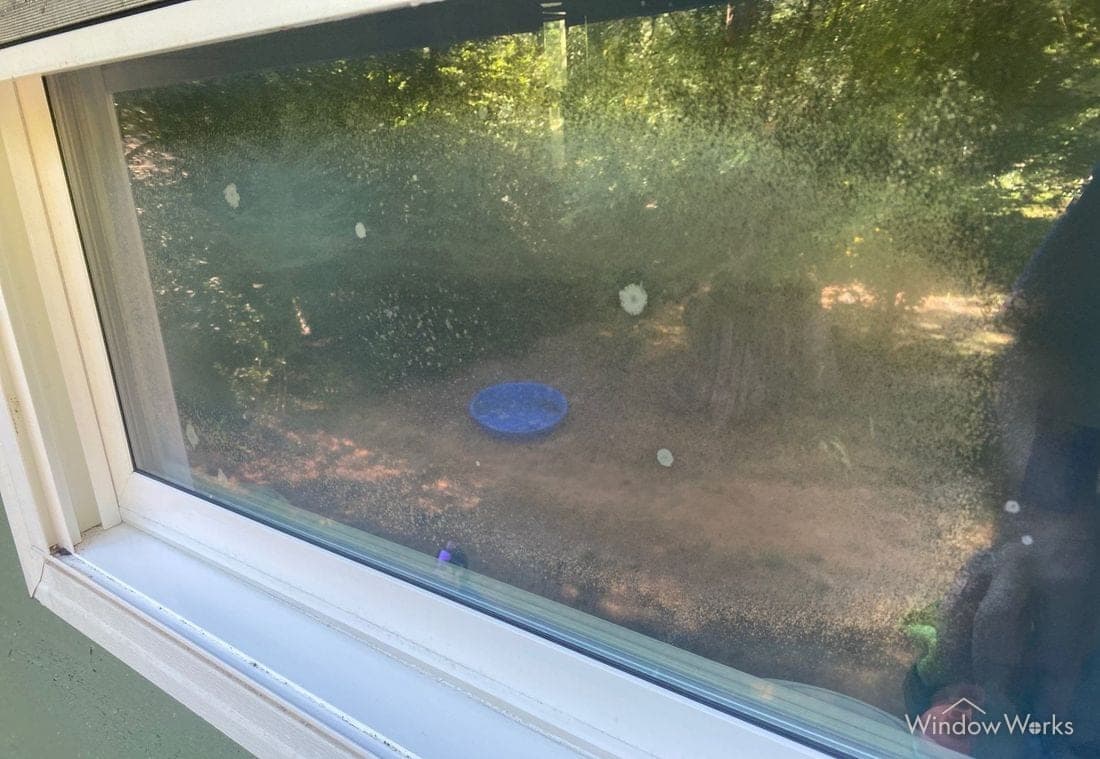
No. Not removed by a standard window cleaning
A double-pane window that looks foggy no matter the weather, or shows a rainbow, iridescent cast inside the glass, has a failed seal. Moisture has gotten into the sealed space between the panes and it is not coming back out.
The fix is replacing the glass unit, which is glazier work. We can clean both faces of it and the fog stays exactly where it is, because it is on neither surface we can reach.
Etched glass
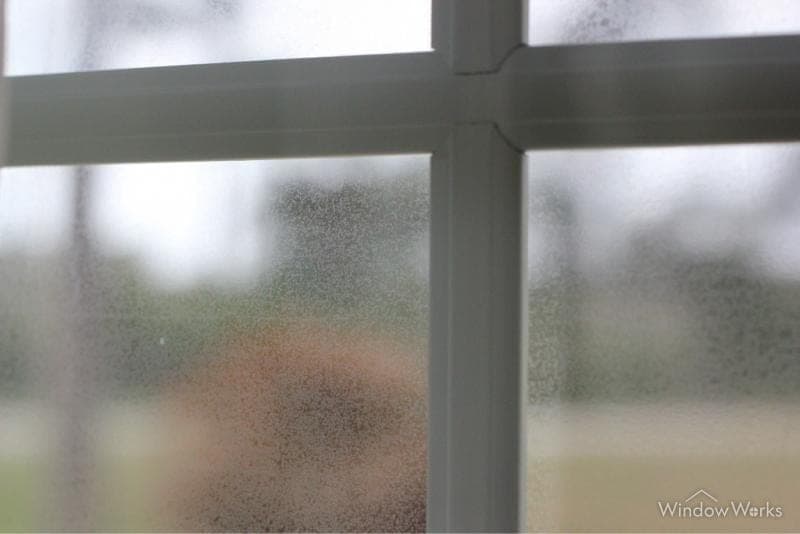
No. Not removed by a standard window cleaning
Cloudiness or a dull patch that does not change no matter how clean the glass gets, and shows most at a low angle or in direct sun.
Etching is a texture change in the surface of the glass itself. It comes from long acid contact, chemical overspray from concrete or fertilizer work, and most commonly from mineral deposits that sat long enough to eat in. That is the end of the road for hard water: caught early it comes off, left for years it stops being a deposit and becomes damage.
Cleaning makes an etched window as clean as it can be. The etching is permanent, and no restoration process rebuilds the original surface.
Scratches that appear after the first clean
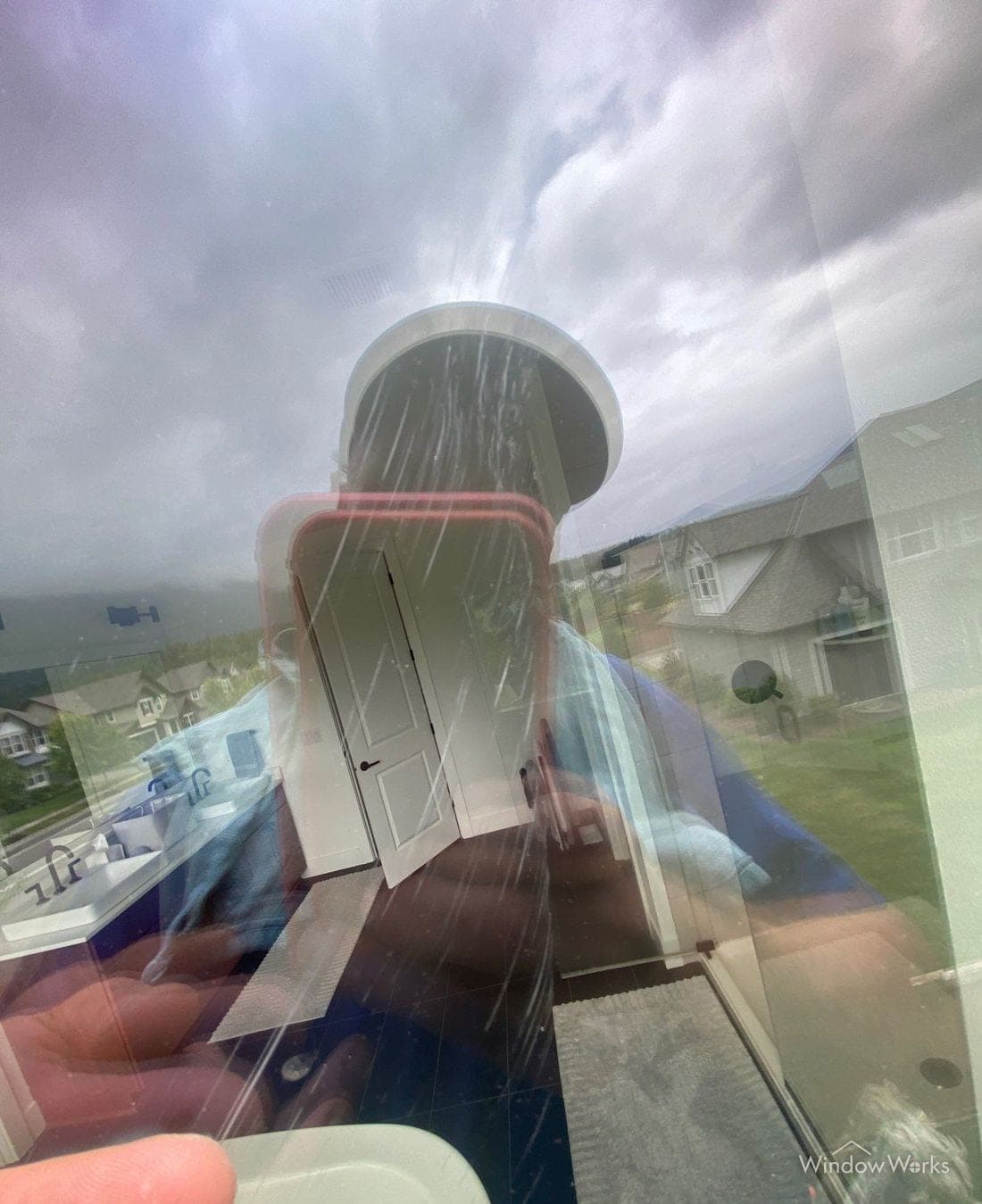
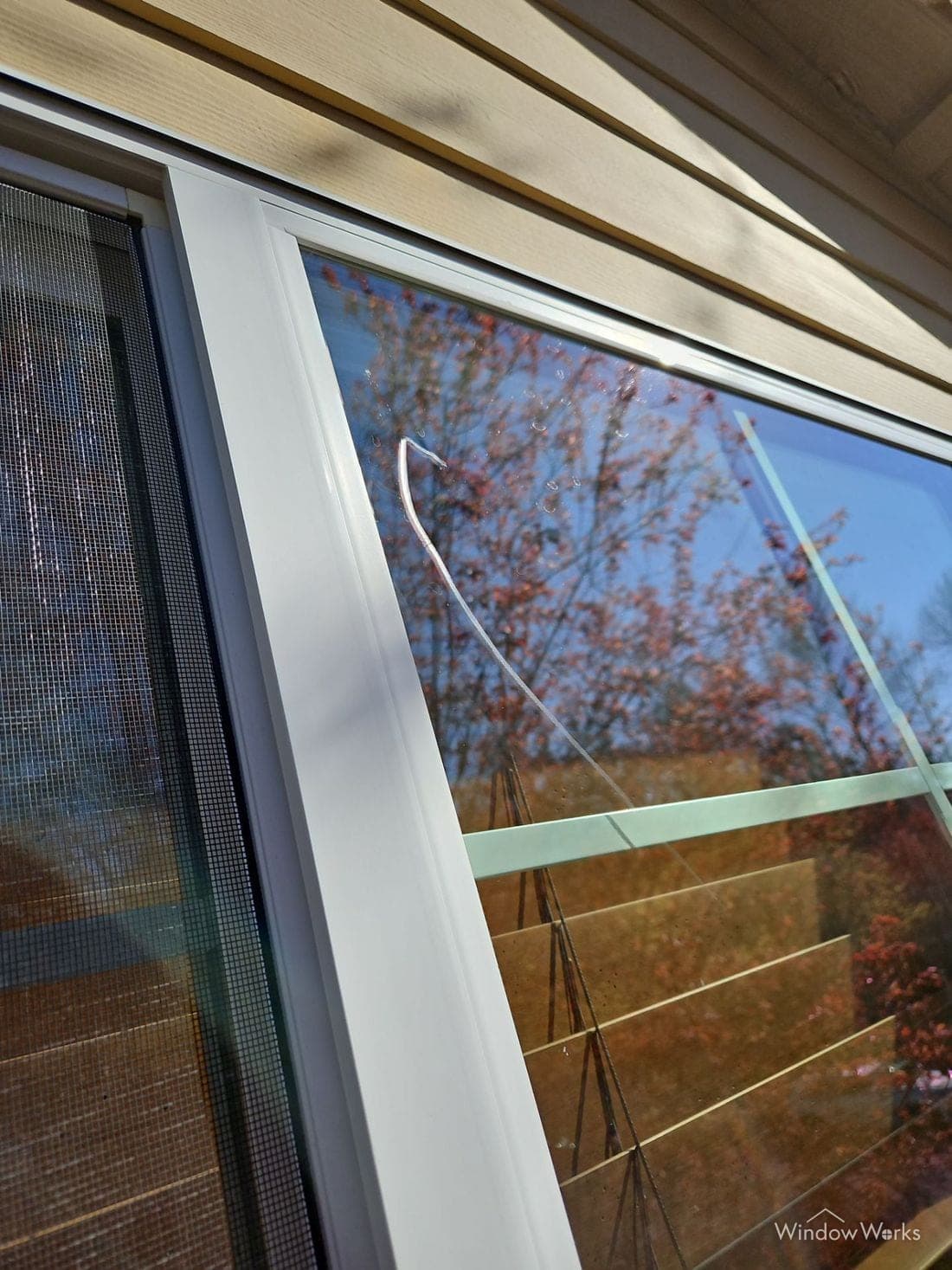
No. Not removed by a standard window cleaning
Glass that has been dirty for a long time hides a lot. Scratches, chips, and etching that were already there sit under the residue, and the day the residue comes off they are suddenly visible.
To someone who has never seen that glass clean, this looks exactly like damage the cleaner caused. That is why we look at the glass with you first and flag what we can already see.
Cracks and chips
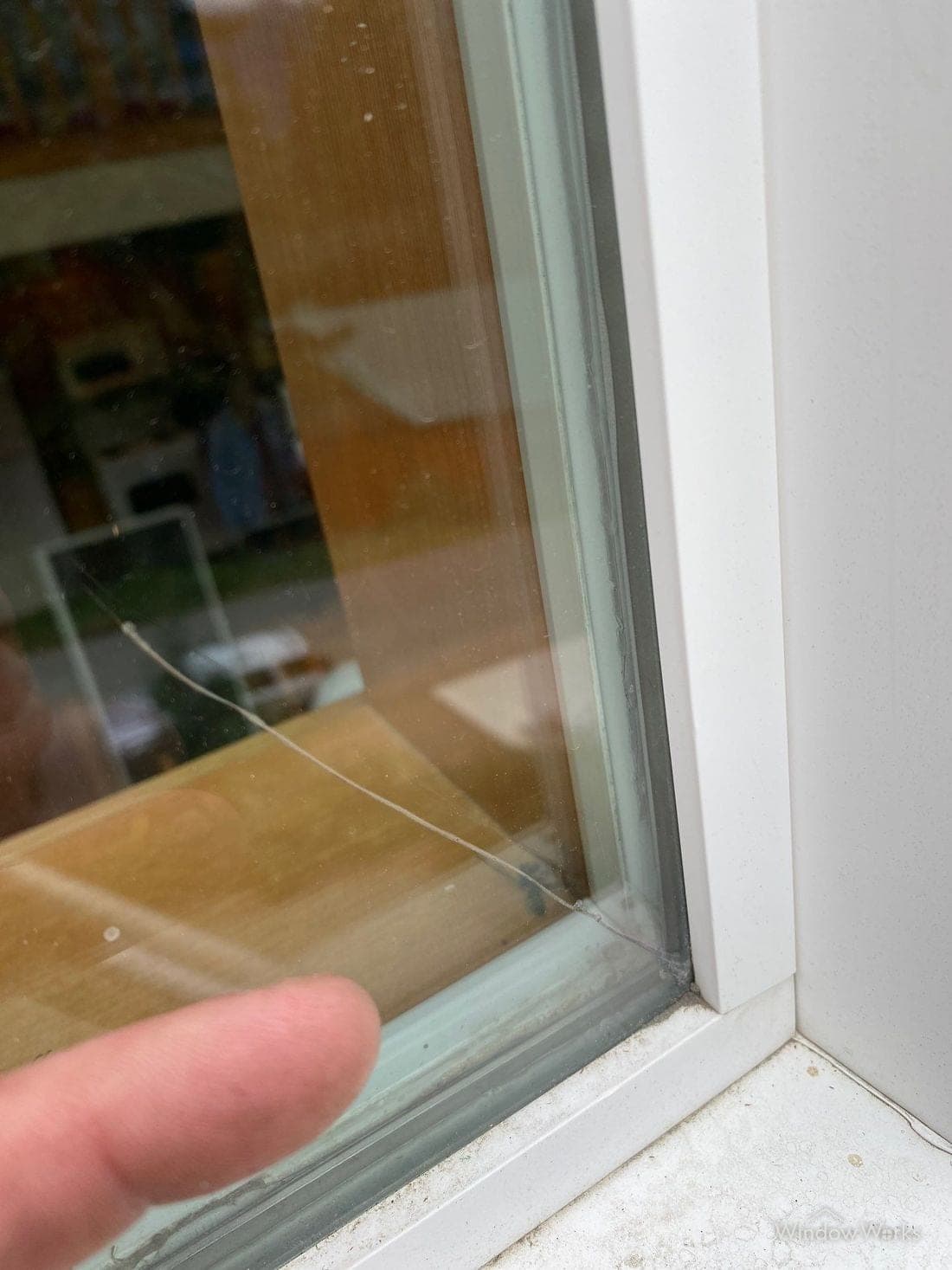
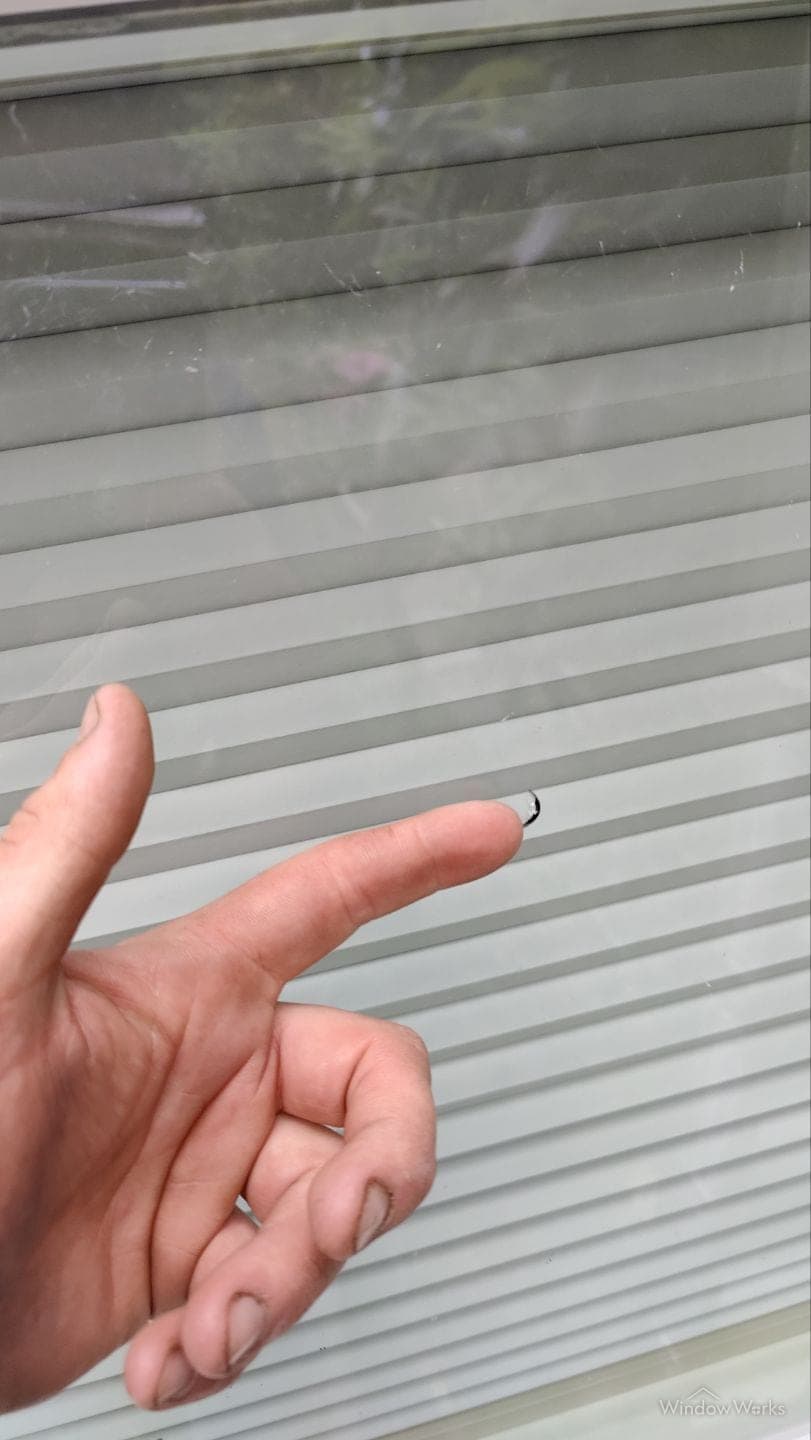
No. Not removed by a standard window cleaning
A crack running out from an edge, or a small chip knocked out of the surface by a stone from a mower or a trimmer.
Neither is a cleaning problem, and both matter more than they look. A chip is a stress point that a crack can grow from, and a crack in a sealed unit means the seal is compromised whether it has fogged yet or not.
We photograph what we find and point it out before we work near it, because glass that is already cracked can carry on cracking when it is washed, and neither of us wants that conversation afterward.
Fabricating debris in tempered glass
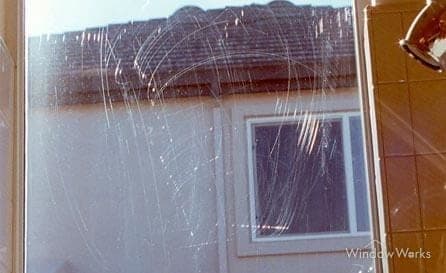
No. Not removed by a standard window cleaning
Tempered glass can leave the factory with microscopic particles fused into its surface, left behind in the tempering oven. When a blade passes over glass like that, the particles drag and score fine scratches.
The defect is in the glass, not in the technique. The same blade on sound glass leaves nothing behind. There is no reliable way to detect it before scraping, which is the whole reason construction glass work carries a signed waiver.
What we do about it: we test scrape a small, low-visibility area on each type of glass first. If that test area drags or scores, we stop, document it, and talk to you before another tool comes out.
Low-E coating damage
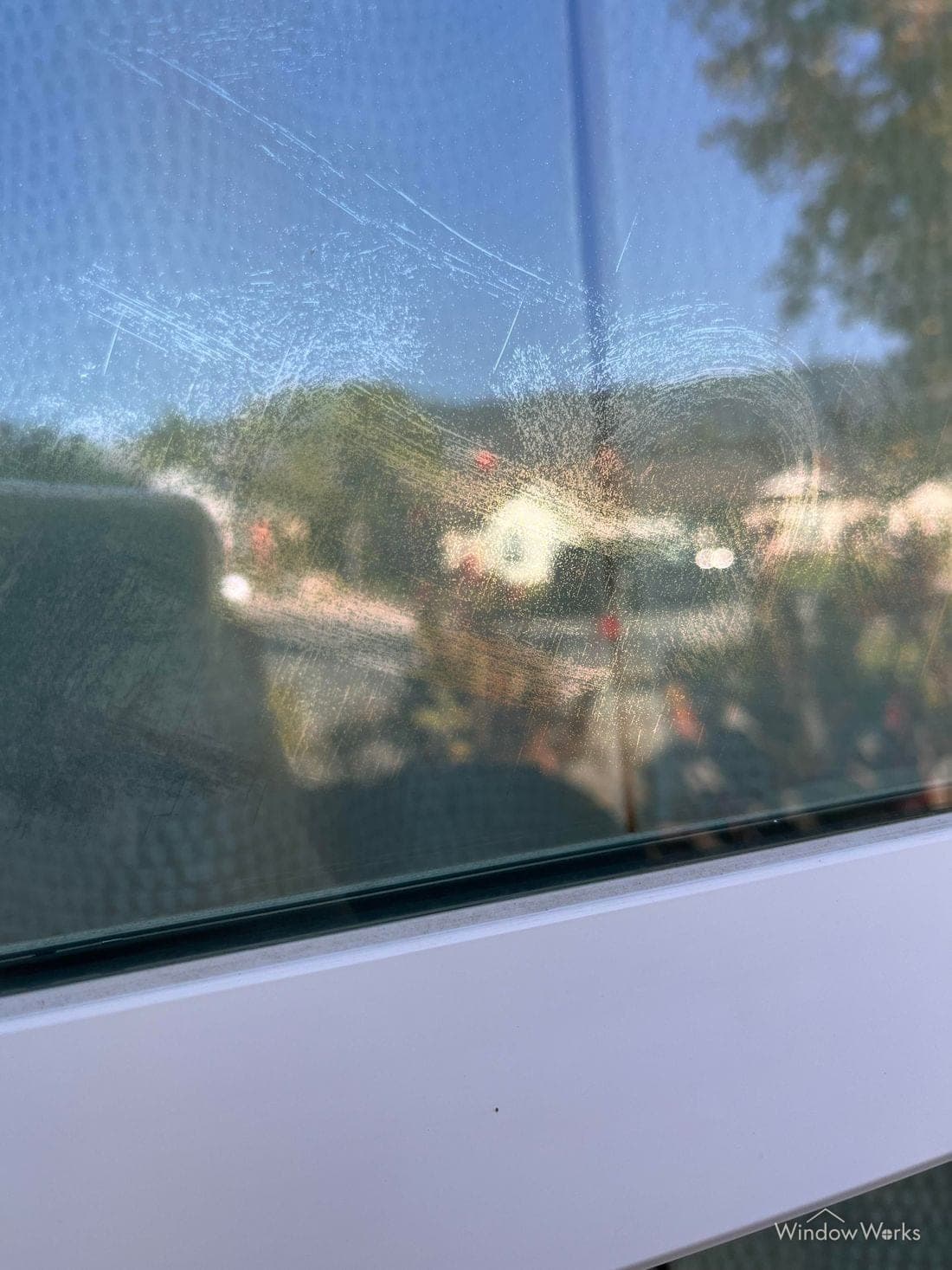
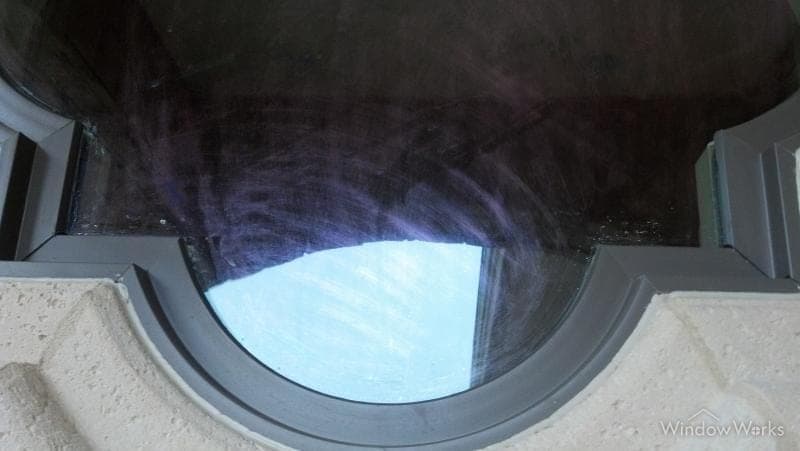
No. Not removed by a standard window cleaning
The exception to the white pad rule at the top of this page. On coated glass even a white pad is too much. If your windows are reasonably modern, assume they are coated.
Low-E stands for low emissivity. It is a metallic coating thinner than a human hair that lets light through and reflects heat back, which is why a modern window holds heat far better than an old one. Nearly every window sold in the last twenty years has it.
Most of that coating is sealed between the panes, out of reach. Modern windows usually carry another layer on the interior pane, facing into the room. That one is exposed, and it is the surface you touch every time the inside of the glass gets cleaned.
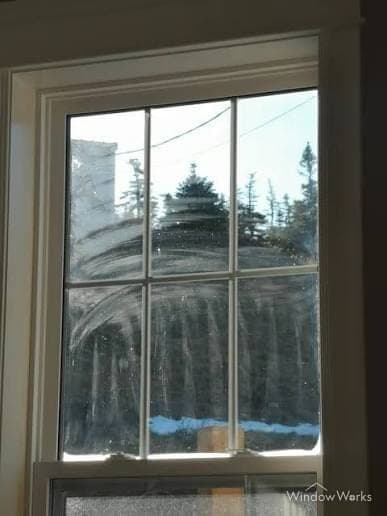
It marks in one pass. An abrasive pad, steel wool, a scraper, or the wrong chemical is enough. The damage shows as fine scratching that catches the light at an angle, a haze that will not clean off, or the swirl pattern in the second photo, left by a scrubbing pad. It often reads faintly purple.
Coated glass takes microfiber and alcohol and very little else. Plenty of installers, construction cleaners, and window cleaners have never been told that, and most homes we walk into already carry some damage, usually done at installation before the owner saw the windows. None of it comes back out. We check before anything touches the glass, and we point out what was already there.
Window film and tint damage
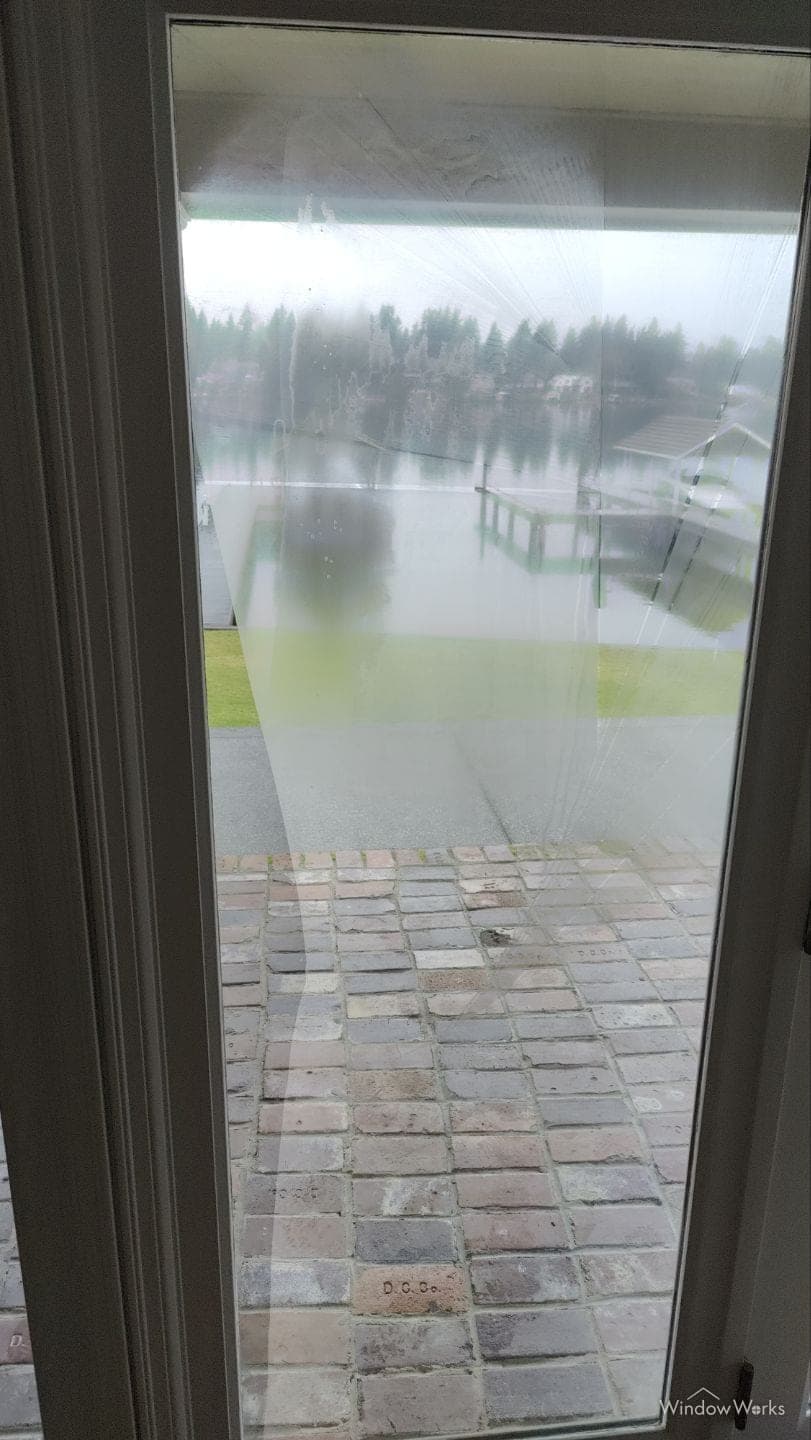
No. Not removed by a standard window cleaning
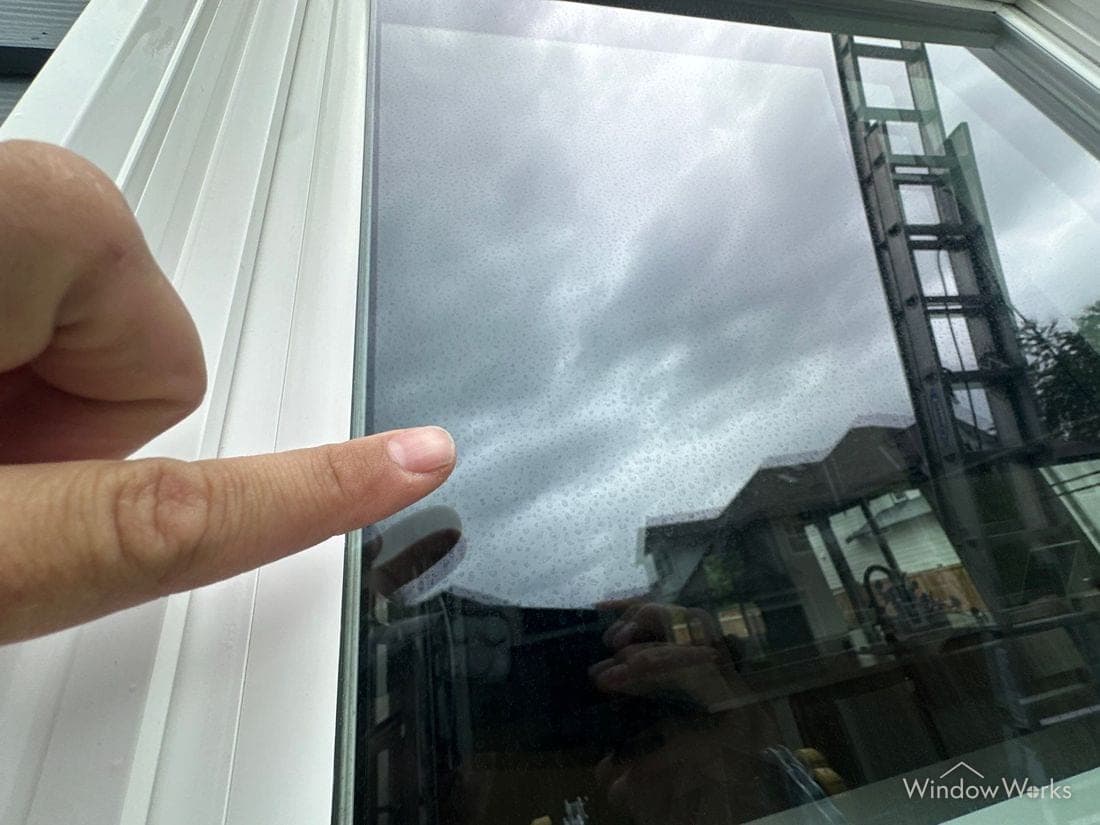
Applied film that is bubbling, clouding, peeling, or creasing away from the glass, as in the photo above.
This is a film stuck onto the glass rather than part of it, so the failure is in the film. Replacing it is window film work, not cleaning. Until then we clean around it carefully: a blade or an abrasive pad on tint destroys it in one pass, so tinted units get identified before any tool comes near them.
Frame oxidation
No. Not removed by a standard window cleaning
Yes. Removed with our Oxidation Removal service
Worth telling apart from hard water, because the fix is different. Hard water comes off the glass. This is coming out of the frame.
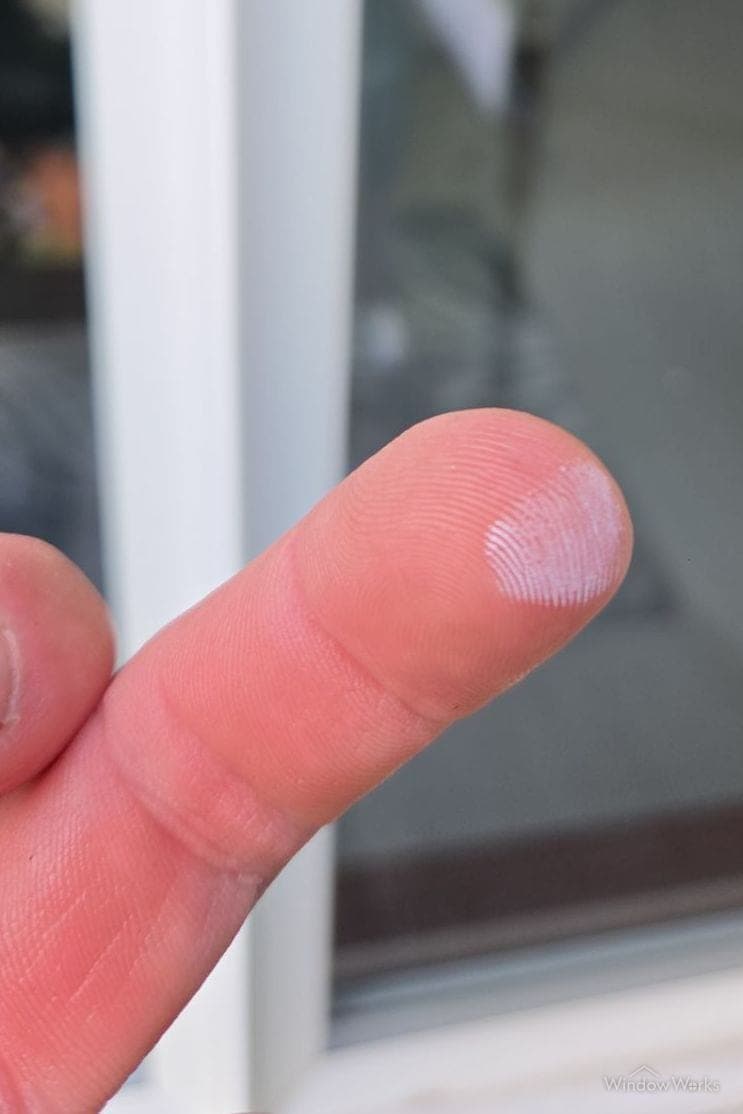
Run a finger down the frame. If it comes back white or gray with chalk, as in the photo, the frame is oxidizing.
UV breaks down the surface of the paint or vinyl and it sheds as powder. That makes it a sun problem. It shows on the south-facing side first, and on any elevation that takes heavy sun, while the shaded side of the same house stays clean.
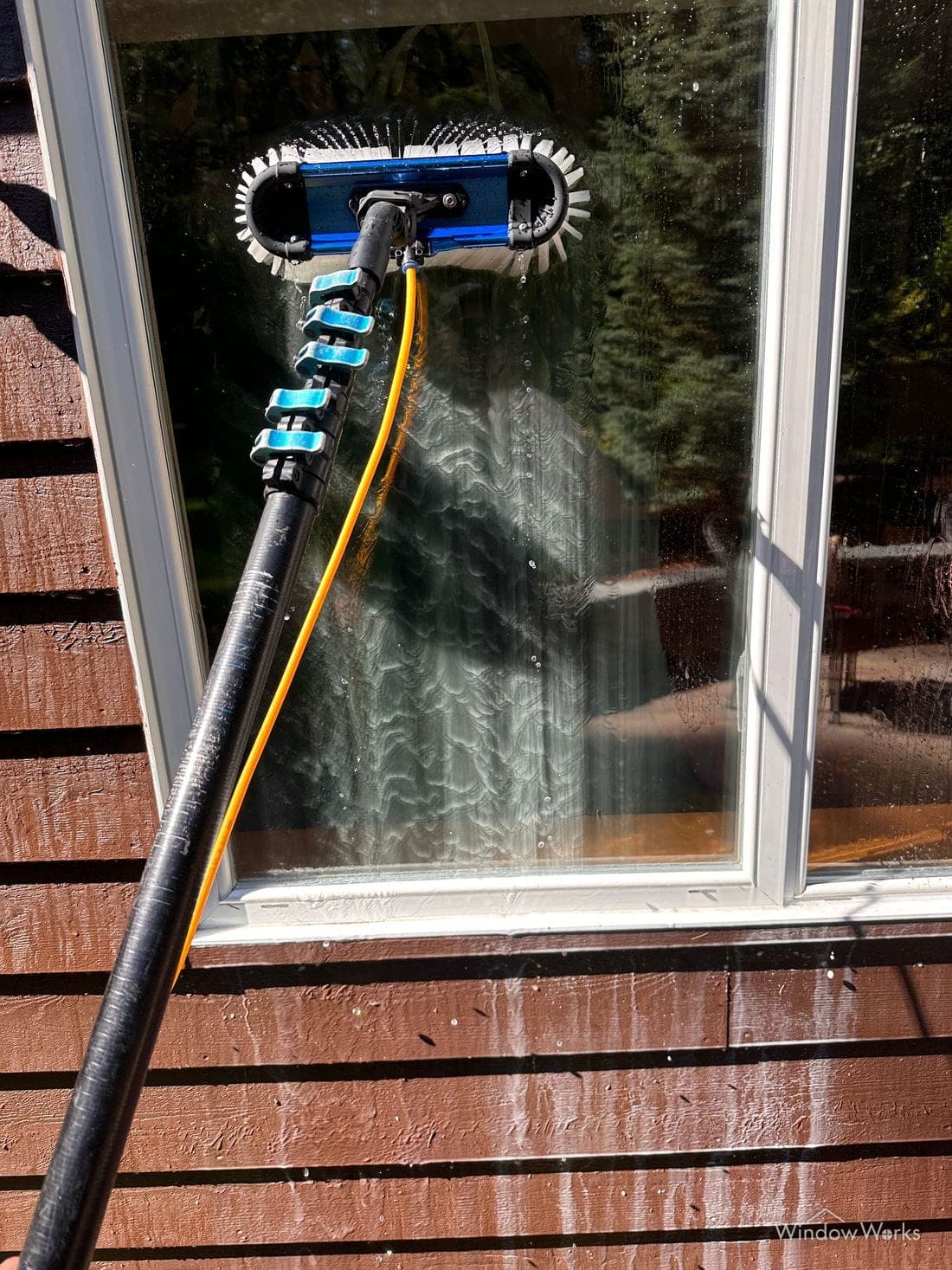
Wet, the chalk turns milky and runs down the glass, as in the second photo. Dried on the pane it leaves a white film that looks like hard water, so people treat it as a glass problem when the source is the frame above it.
A standard cleaning takes off what has run onto the glass. It does not restore the frame, and the film comes back while the frame keeps shedding. Tell us if you want the frame itself looked at.
Frame and sill damage
No. Not removed by a standard window cleaning
Rotted wood, corroded aluminum, failed paint on the sill, and soft or crumbling trim.
Cleaning does not repair any of it, and on wood that has gone soft, cleaning around it needs a light touch so it does not get worse. We flag what we find so you can get ahead of it.
Not sure which one you are looking at? Send us a photo and we will tell you.
Get a free estimateNot sure what you are looking at?
Send us a photo and we will tell you what it is.
We will identify it, tell you honestly whether it comes off with a wash or needs a specialty process, and give you a free estimate either way.
One thing worth knowing before you scrub
Almost every permanently scratched pane we get shown started with someone working on one stubborn spot. Glass looks tough and scratches easily, and nothing puts the surface back afterward. Soap, water, and patience are safe on any window. Everything past that depends on what kind of glass you have, which is worth asking about first.