

Diagnostic guide
What's On My Siding?
And will it come off with a house wash?
Your siding is one of the most important parts of your home's exterior. It protects you from the elements and gives your home or business its curb appeal. Over time, your siding can get dirty or stained by various substances that can affect its look and longevity. Some of these are harmless and easy to remove, while others can cause damage or require special treatment. We will help you identify common types of stains and growths on your siding, and let you know whether we can remove it with our House Washing service or if it requires a specialty process. We will also give you some tips on how to prevent future problems and keep your siding looking great.
Removed by our house washing
Dirt and dust
Dirt and dust is usually harmless and can be removed easily with a gentle wash. However, if left unchecked, it can accumulate and provide a breeding ground for other organisms or cause discoloration of the paint (like mold). If you have had construction recently, or if concrete has been cut or mixed nearby, you may be seeing silica dust.
Mold and mildew
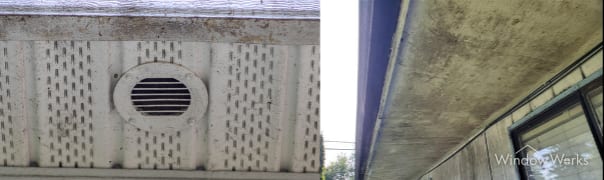
If you are experiencing excess soffit mold, especially if the mold returns after a house wash within 6 months, we recommend an inspection of your attic, as there is a high likelihood of mold growth to some degree.
These are fungi that thrive in moist and humid conditions and can appear as black, green, or white spots or patches on your siding, and most commonly on your soffits, as the heat, shade, and moisture expelling out of the roof venting holes create perfect growing conditions. They can cause health problems, such as allergies and respiratory issues, as well as damage your siding by staining it or making it brittle. Fun fact: mold cannot grow naturally on clean paint. It needs some sort of substrate to feed on, and dust is the biggest culprit. An annual house rinse can reduce your chance of a full-on mold infestation.
Algae and moss
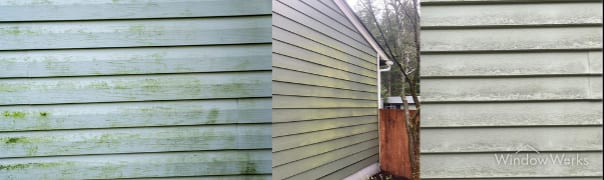
Algae and moss are plants that grow on your siding, especially if it is made of wood or vinyl. They can appear as green, brown, or yellow streaks or fuzzy growths on your siding. They can damage your siding by retaining moisture, causing rot or corrosion, or lifting the paint or coating. If you have areas that are heavily shaded by vegetation, it is a good idea to trim it back to allow the surface to fully dry, making it harder for algae and moss to grow.
Lichen
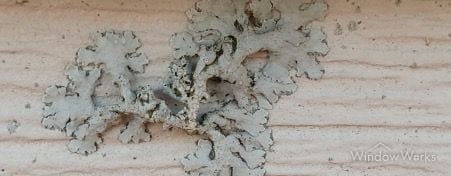
Some residual staining may remain on the siding after cleaning because of the pigments in the lichen. Severe infestations may result in added cost, so please let us know if you have lichen prior to scheduling a house wash.
Lichen is a composite organism that consists of algae or cyanobacteria living among fungi, forming a symbiotic relationship. It can appear as patches of green, gray, yellow, or orange crusty or hairy growths on your siding. It can damage your siding by penetrating the surface and weakening the structure, or by leaving behind stains or discoloration. Lichen can be difficult to remove because it is resistant to most cleaners and requires physical scraping unless the proper chemicals are used.
Bat droppings
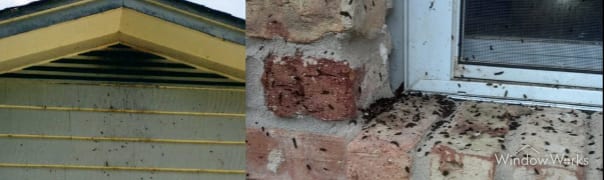
Some residual staining may remain on the siding after cleaning because of the acid erosion and fungal spores in the bat droppings.
These are the waste products of bats that roost on your siding or in your eaves. They can appear as black, brown, or gray pellets that accumulate on the ground and siding below the roosting area. They can damage your siding by staining it or eating away at the paint or coating because of their acidity and fungal growth. Bat droppings can also pose a health risk, as they may contain harmful pathogens or parasites. It is important to distinguish bat droppings from bird droppings, as they require different methods of removal and prevention. Bird droppings tend to be larger and more liquid, while bat droppings are smaller and more solid. If you suspect you have a bat infestation, we recommend contacting a professional pest control company to safely remove the bats and install deterrent devices to prevent them from returning.
Bird droppings
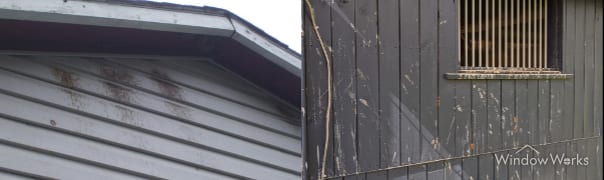
A faint discolored outline of the dropping may remain on the siding after cleaning because of acid staining caused by the droppings.
These are the waste products of birds that land or nest on your siding or in your eaves. They can appear as white, gray, or black splatters or streaks on your siding. They can damage your siding by staining it or eating away at the paint or coating because of its acidity. It is recommended to promptly remove nests if able, and to install bird deterrents if bird droppings are a common problem for you.
Bug poop and webs
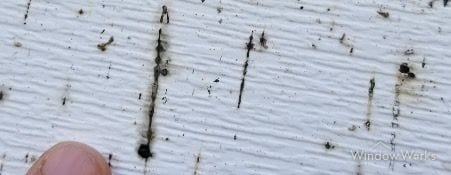
These are especially noticeable on light-colored siding, where they can create dark spots and streaks. Bug poop and spider webs can also attract more insects and spiders, creating a vicious cycle of dirt and pests.
Pollen
Pollen is a yellow, green, or rust-colored dust that builds up on siding heavily in spring and early summer. It washes off easily with a standard house wash and is harmless to siding finishes. If pollen is allowed to sit through a wet season, it can feed mold growth, so an annual rinse in late spring is one of the best preventative habits a homeowner can build.
Tree sap and honeydew
Tree sap is the sticky residue that drops from sappy trees (especially pines and maples). Honeydew is the sticky deposit aphids leave behind on leaves above your siding, which then drips down. Both create a glossy, sticky surface that quickly attracts dust, mold, and sooty mold. A house wash removes the surface stickiness. Very thick or aged sap may need extra dwell time and a second pass, which is included in the standard service.
Tannin stains
Tannin staining is the brown or reddish-brown discoloration that drains from leaves, needles, acorns, and other organic debris that sits on or near your siding. It is especially common where trees overhang the roof or where leaves pile in corners. The stains lift in a standard house wash. Prevention is regular leaf removal and trimming back overhanging branches.
Needs a specialty process
A standard house washing will not fully remove these, but we have other processes and services to handle most of them. Ask us about it when you book.
Oxidation
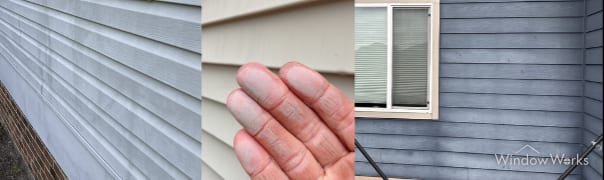
We can remove it on a case-by-case basis depending on severity and siding type.
Oxidation is a process that occurs when paint is exposed to oxygen, water, and UV radiation, which leaves behind a white chalky residue and can sometimes appear as streaks or spots on your siding. It can damage your siding by making it lose its color or shine. Oxidation is difficult to remove and requires specialized cleaners and agitation with a brush, making it a very labor-intensive process. Many homeowners choose to repaint as opposed to clean the surface.
Rust stains
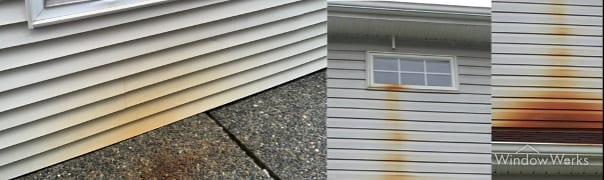
Yes. Removed with our Acid Washing process
We can remove rust from most surfaces using our acid washing process. However, we recommend fixing the root cause of the staining prior to cleaning so the issue does not recur.
These are caused by iron or steel objects that come into contact with your siding and leave behind traces of rust. They can appear as reddish-brown or orange spots or streaks on your siding, especially near nails, screws, or metal fixtures. It can also occur from sprinklers whose water is rich in iron and frequently makes contact with the siding. It can damage your siding by discoloring it or corroding the surface.
Efflorescence
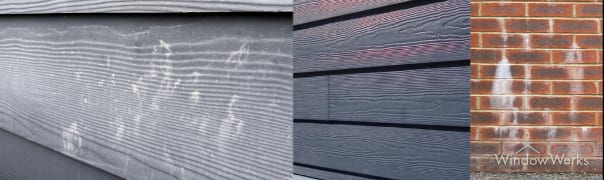
Yes. Removed with our Acid Washing process
We can remove efflorescence from most surfaces using our acid washing process. However, if the source of the seal breakage or water intrusion is not fixed, efflorescence can recur and damage your siding further.
This is a white powdery substance or discoloration of the paint that forms on the surface of brick, HardiePlank (concrete fiber), concrete, or other masonry siding. It is caused by salt deposits that are dissolved in water and then leach out of the material as the water evaporates. Efflorescence can make your siding look dull and chalky, or leave behind mysterious white droplets, and it can also weaken the structure of the material by creating cracks or holes over time.
Silica dust
Yes. Removed with our Acid Washing process
We can remove silica dust from most surfaces using our acid washing process.
Silica dust is dust from cutting concrete and is common to see on construction sites, or if you have had a patio, driveway, etc. poured recently. Silica dust is abrasive and can cause scratching. It can also bond with the paint if left for too long, and the area may need to be repainted. It requires careful agitation and a set of specialty cleaning solutions. If you are going to get any concrete work done on the home, request that the company protect the walls.
Artillery fungus
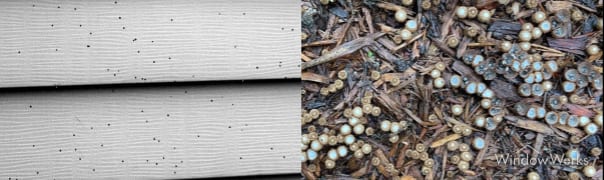
Artillery fungus is a type of wood-decay fungus that grows on organic matter, such as mulch or wood chips. Artillery fungus produces tiny black spores that look like specks of tar and can shoot up to 20 feet in the air, landing on your siding, windows, cars, or anything else nearby. These spores are very hard to remove and can leave behind stains or holes if scraped off. The best way to prevent artillery fungus is to churn your mulch monthly to expose the fungus to sunlight and prevent growth, along with applying a fungicide. You can also replace your organic mulch with synthetic or stone mulch.
Mineral staining
We can remove it on a case-by-case basis depending on severity and siding type.
Mineral staining is a type of discoloration that occurs when minerals from hard water, soil, or concrete leach or splatter onto your siding. Mineral staining can look like white, gray, brown, or green streaks or spots on your siding, depending on the type and amount of minerals present. Mineral staining can be hard to remove with regular washing, as it can penetrate into the pores of the siding material. The best way to prevent mineral staining is to avoid contact with water or soil that contains high levels of minerals, such as iron, calcium, or copper.
Calcium staining
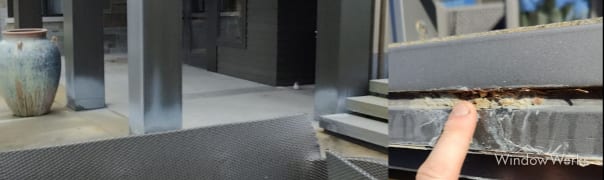
We can remove it on a case-by-case basis depending on severity and siding type.
Calcium staining is a type of discoloration that occurs when calcium carbonate from hard water or concrete and stone masonry reacts with carbon dioxide in the air and forms white, chalky deposits on your siding. Calcium staining can make your siding look dull and dirty, and can also damage the surface by causing cracks or peeling. Calcium staining can be difficult to remove as it can adhere strongly to the siding material.
Soot and smoke staining
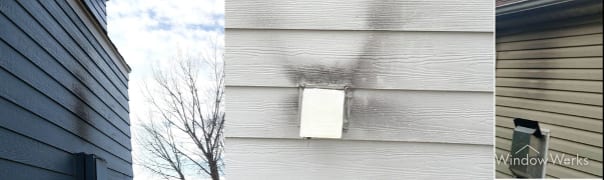
We can remove it on a case-by-case basis depending on severity and siding type.
Soot or smoke staining is a type of discoloration that occurs when the combustion products from a heat vent, BBQ, fireplace, or other source accumulate on your siding. Soot or smoke staining can make your siding look blackened, greasy, or charred, and can also pose health risks by releasing harmful chemicals or odors. Soot or smoke staining can be challenging to remove as it can penetrate deep into the pores or cracks of the siding material.
Wildfire smoke residue
We can remove it on a case-by-case basis depending on severity, siding type, and how long the residue has been on the surface.
Wildfire smoke residue is the yellow-brown to gray film that settles on the exterior of homes downwind of wildfire smoke events. The residue is acidic and can etch into paint and finish over time, especially if it sits through a wet season. Light residue cleans up with a standard house wash. Heavier residue, or residue that has been on the surface for more than a season, often needs the acid washing process.
Gutter oxidation streaking
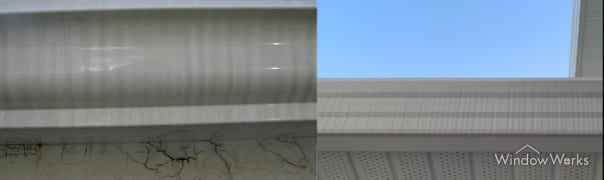
We can remove it on a case-by-case basis depending on severity.
Gutter oxidation is a type of discoloration that occurs when aluminum gutters are exposed to oxygen and moisture in the air and form a layer of aluminum oxide on their surface. Gutter oxidation can make your gutters look faded and/or streaked, like drip marks. While we can remove the mold, algae, and dirt/needles from the gutter exteriors, the oxidation lines cannot be removed in the normal House Wash Service.
Not sure what you are looking at?
Send us a photo and we will tell you what it is.
We will identify it, tell you honestly whether it comes off with a wash or needs a specialty process, and give you a free estimate either way.