

New to the Pacific Northwest
Your house came without a manual. Here's the Northwest one.
Nobody mentions at closing what this climate does to a house. So here is the whole year: what to look at, what to do about it, and what can wait. Use it yourself, or hand the outside of the house to us.
Skip to the calendar

Download our new homeowners guide to exterior maintenance.
A printable guide to caring for a Pacific Northwest home: the year season by season, every service with what it is actually protecting, and where to start if the budget is thin this year.
Inside: The seasonal calendar, how often each service is really needed, the three fall jobs worth doing first, the dryer vent nobody inspected, and how to stop artillery fungus before it speckles your siding.
What this climate does to a house
None of it is urgent yet. All of it is happening now.
Three things go after a Northwest house, year in and year out. None of them is a reason to panic. All of them are cheaper to stay ahead of than to catch up on.
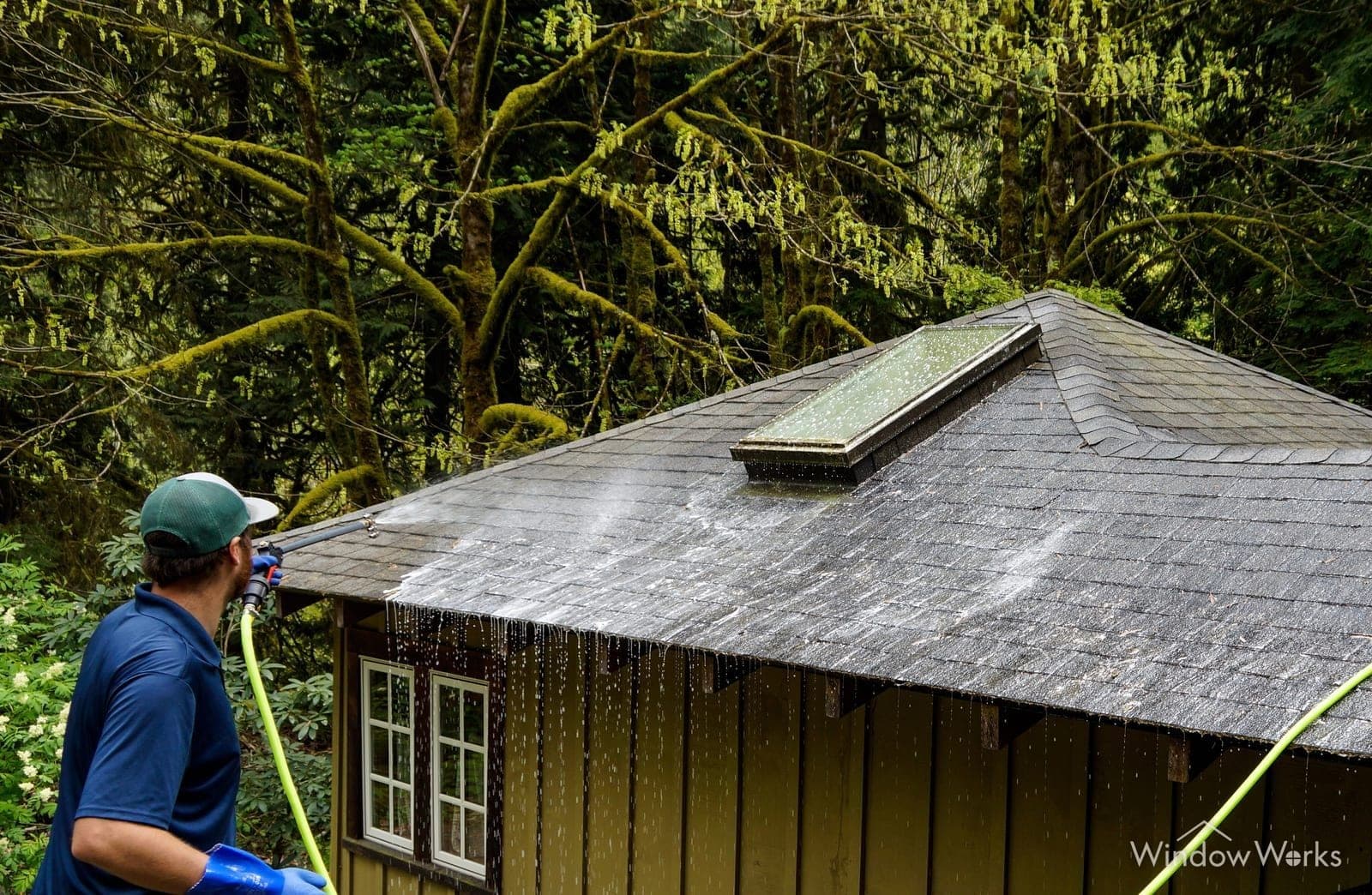
Moss on the Roof
Shade, rain and overhanging trees make a Northwest roof a good home for moss. It anchors into the granule layer, holds water against the shingles and gets harder to remove the longer it sits.
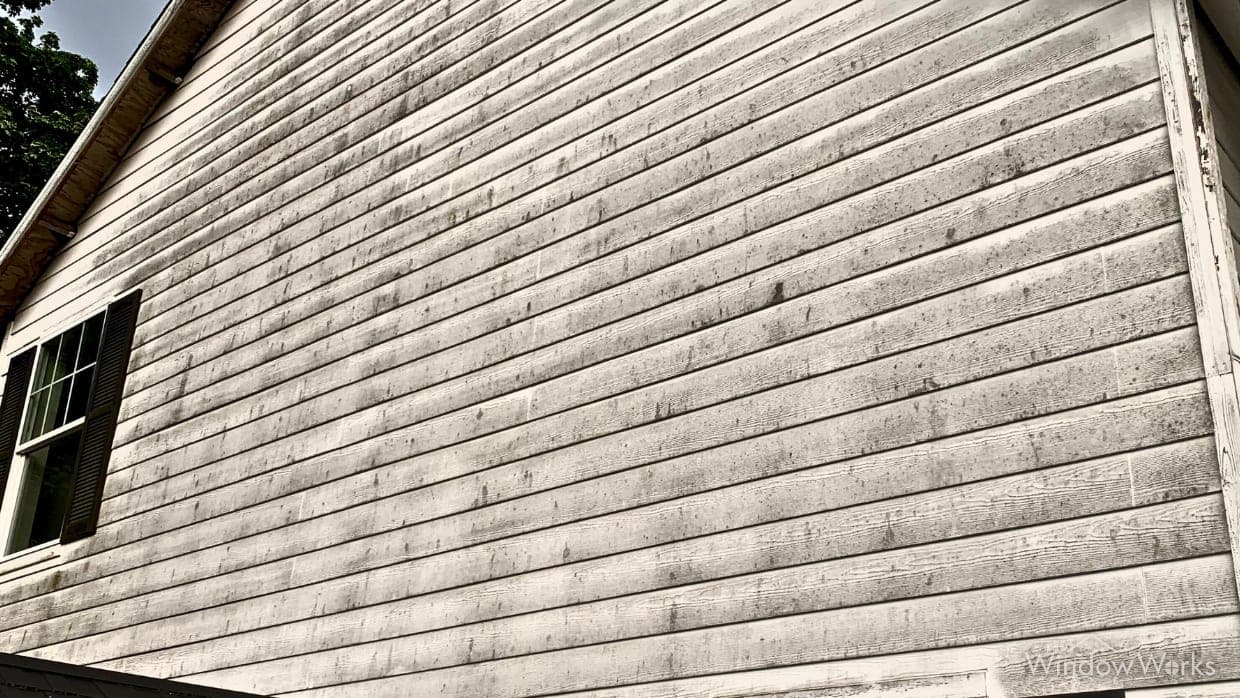
Algae on the Siding
The black streaks on siding and the green film on a north wall are living growth, not dirt. They spread on their own, they hold moisture against the wall, and a garden hose will not touch them.
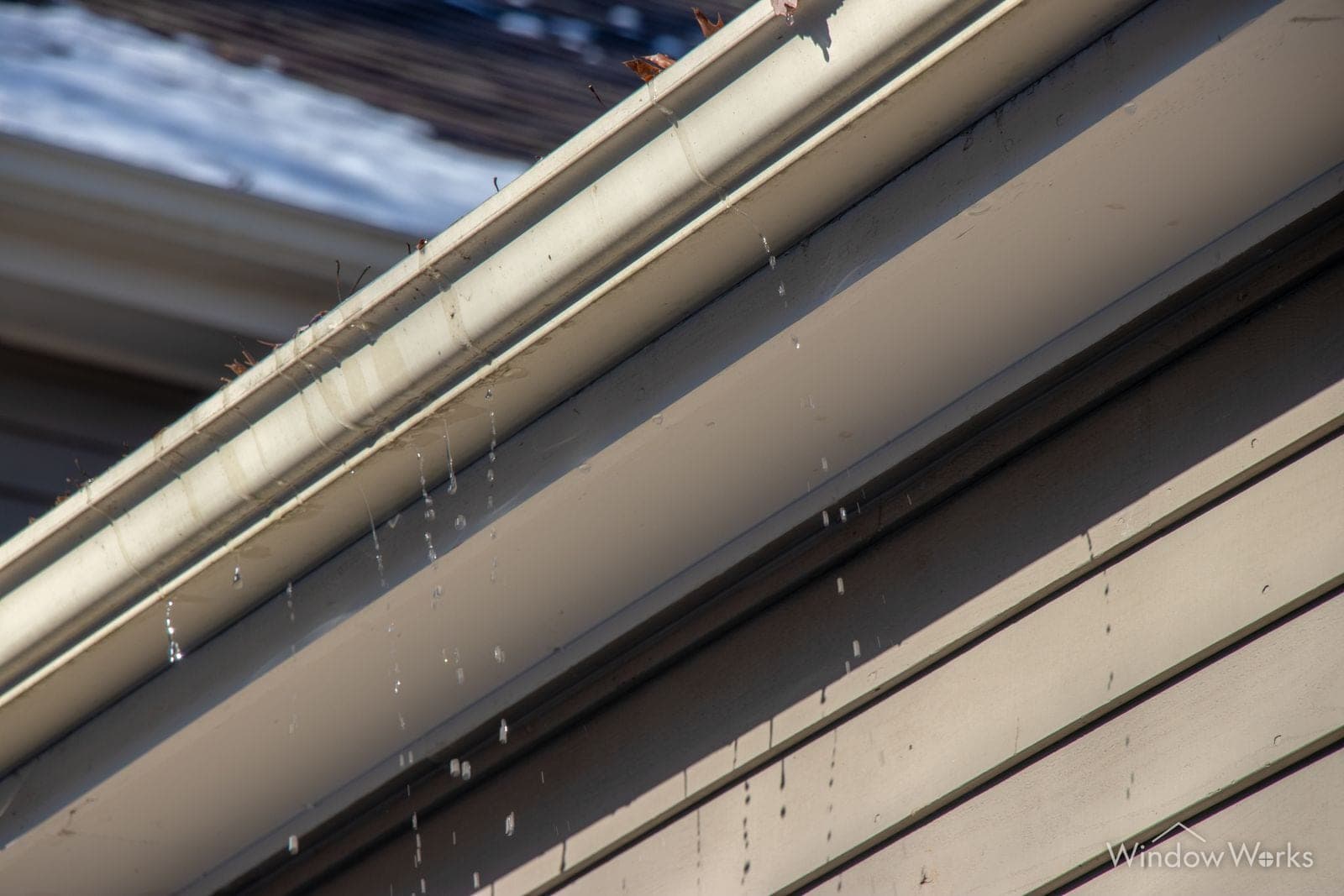
Gutters That Stop Draining
Evergreen needles are worse than leaves. They mat down, pack the trough and stop the water. Then it comes over the front, onto the fascia and down at the foundation instead of away from it.
Or do not run it yourself
Hand the whole calendar over.
You have just read a year's worth of intervals. A maintenance plan puts every one of them on a single schedule at a single price, built around your property, so none of it is your job to remember.

Up to 20%
off your services for the year
Planning your whole year at once costs us less to schedule and route, so we pass it back. Plan customers save up to 20% across the year compared to booking each service one at a time.
Save Up to 20% All Year
Bundling the year into one plan earns a standing discount on every service in it, so keeping your home its best costs less, not more.
See Your Plan Before Anyone Calls
Answer five quick questions and we scan your property, suggest the schedule with the reason for each service, and show you a monthly range, before a person ever picks up the phone.
Keeps Your Warranty Valid
The 3-year roof moss-free warranty depends on one to two gutter cleanings a year. A plan builds them in, so your coverage never lapses on a forgotten booking.
Nothing to Remember
Your visits go on the calendar for the year, before everyone else starts calling in October. We reach out when each one is due, you give the go-ahead, and the same crew shows up.
The Northwest manual
Your house, one year at a time.
This is the whole cycle. Print it, screenshot it, or ignore it and call us. Nothing here is a sales pitch; it is what we would tell a neighbor over the fence.
Early fall
September to October
- Rinse the house down to knock off summer dust
- Take the window screens off for the winter
- First gutter cleanout
Clears a summer of dust and pollen before the rains drive it into the glass and bake it onto the siding.
Late fall
November
- Main gutter cleaning, after the leaves are down
- Book holiday lights
Clogged gutters overflow and rot the wood behind them. Light installers fill up early.
Winter
December to February
- Watch the roof and the north-facing walls for green
- Check that downspouts still carry water away from the house
The wet season is exactly when moss takes hold. Catching it in winter means treating it, not fighting it.
Spring
March to May
- Roof moss treatment
- House wash
- Screens back on, windows cleaned
Treat the moss before summer and wash off the winter. This is the visit that makes the house look new again.
Summer
June to August
- Enjoy it
- Schedule the fall work early
The dry season, the least growth, and the easiest time of year to get ahead of the next one.
The short version
How often
- Gutters
- Twice a year. More under heavy trees.
- Roof moss
- Once a year, or whenever it appears. Soft wash only.
- House wash
- Every one to two years. Shaded sides sooner.
- Windows
- Twice a year, spring and fall.
- Roof look-over
- Once a year.
- Driveway and patio
- As they need it.
The one most people miss
Take your window screens off before the winter rains start. They hold a summer of dust, and sideways rain washes that dust down onto the glass, where it dries into mineral spots that are stubborn to get off. Bare glass stays clearer all winter. Label them, store them, put them back in spring.
Know what you are looking at
Three things grow on a Northwest roof. They are not the same problem.
Before anyone quotes you anything, it helps to know which one you have. All three love shade and damp, and all three are treated by soft washing, never by pressure.
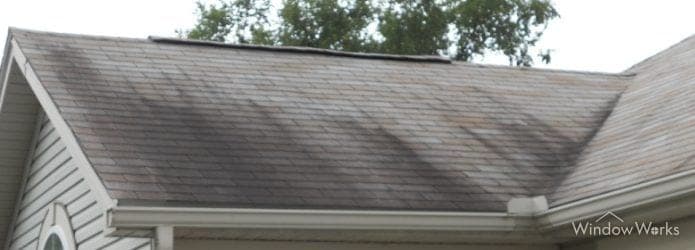
Black Streaks
Algae, usually a cyanobacterium called Gloeocapsa magma, feeding on the mineral filler in asphalt shingles. Mostly cosmetic at first, but it holds moisture, it spreads, and it makes a roof look old before its time.
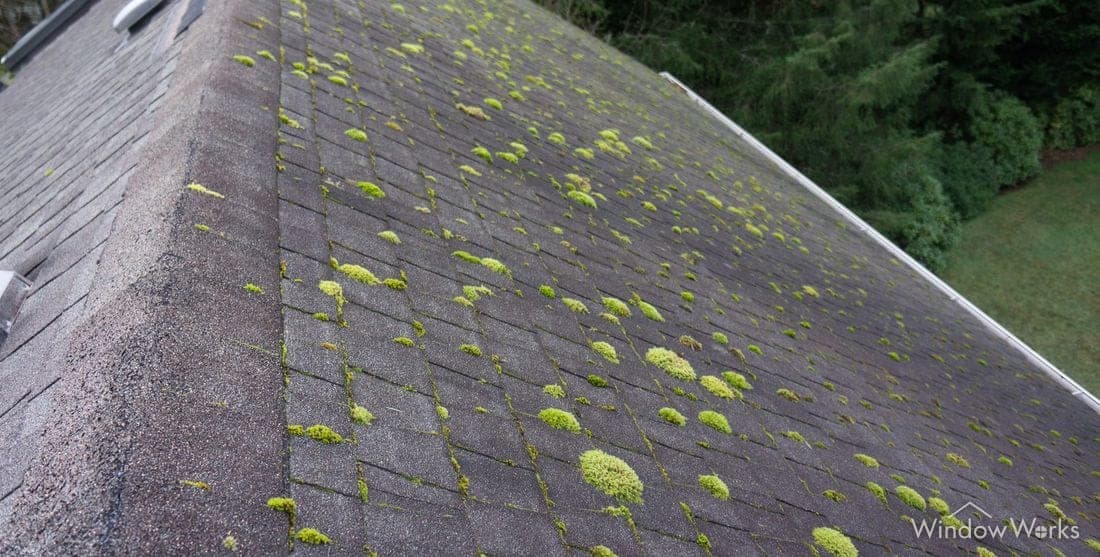
Green Clumps and Mats
Moss, and the number one roof problem here. It anchors into the granule layer, and as it swells and dries through our wet seasons it loosens and lifts the granules and holds water against the roof.
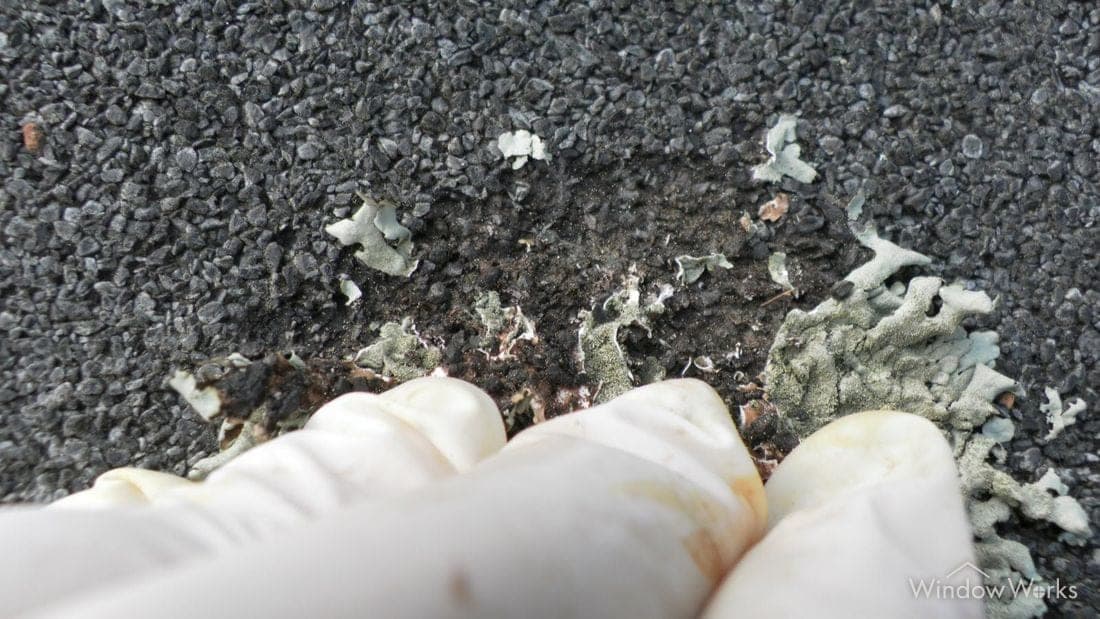
Crusty Gray Patches
Lichen, a fungus and an alga living as one organism, bonded down into the shingle rather than sitting on top of it. It is the hardest of the three to remove, and scraping it takes the protective granules with it.
Before and after
This is what a first cleaning looks like.
Real Eastside and Greater Seattle homes, most of them the same first visit a new owner books.
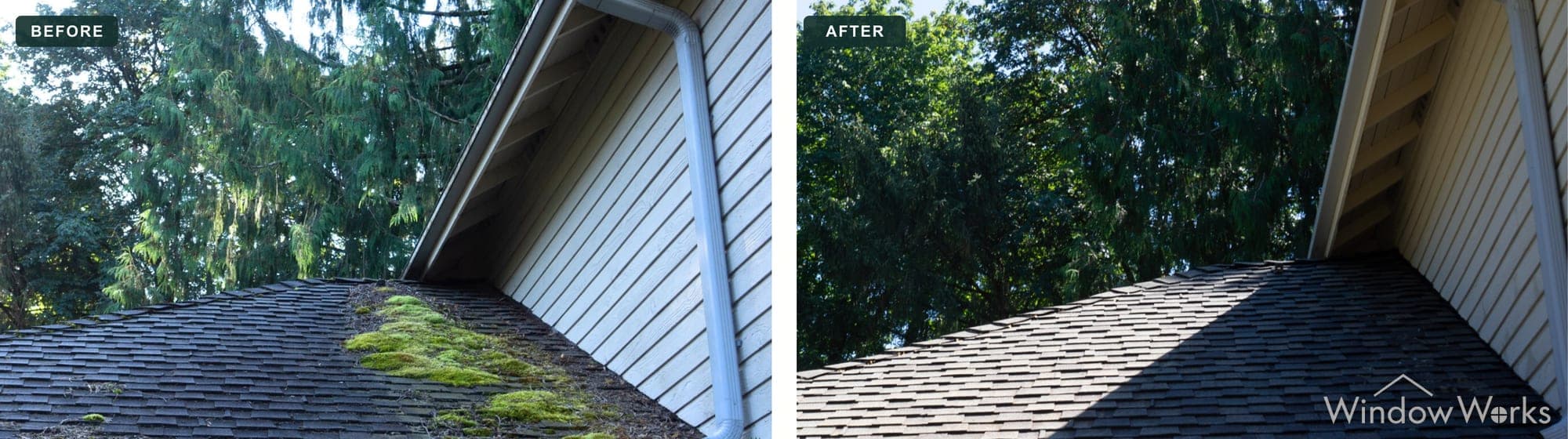
Removing heavy moss from a shingle roof. 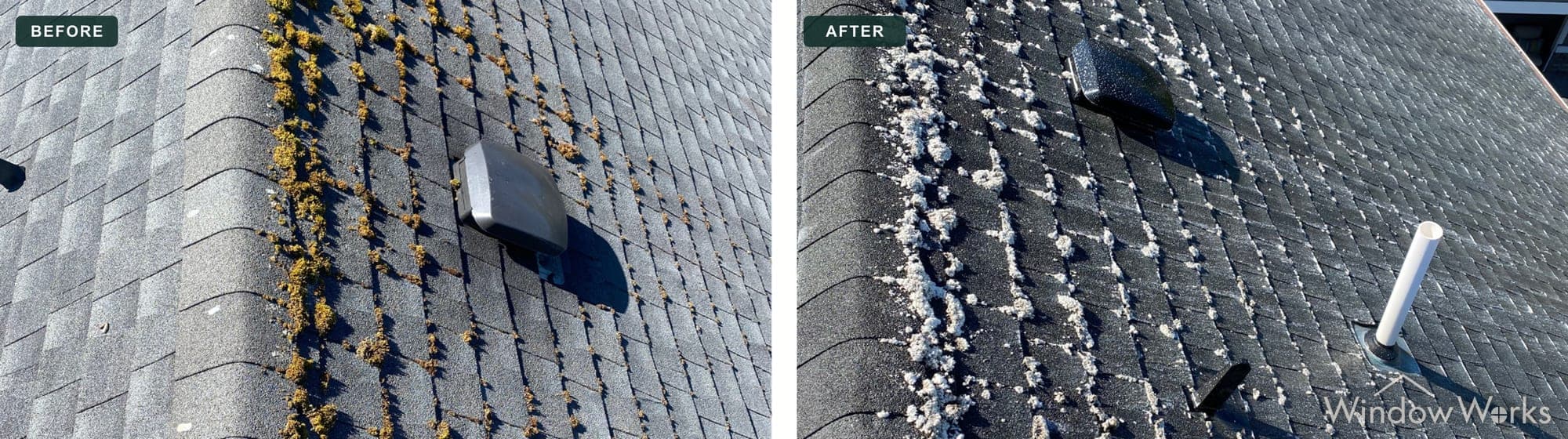
Clearing yellow moss from a roof valley. 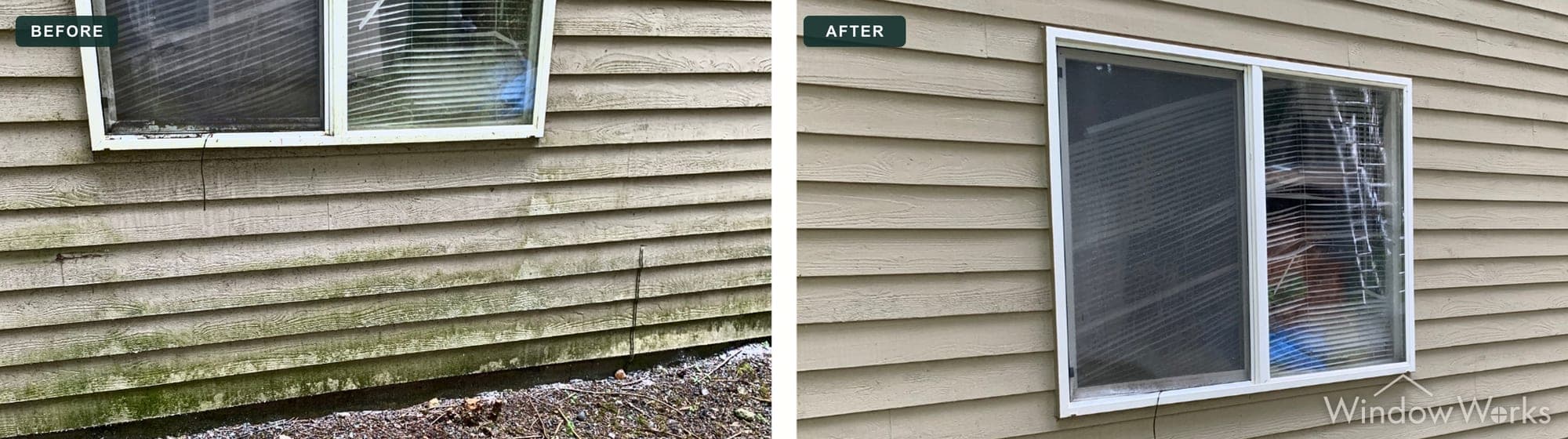
Removing green algae streaks from siding. 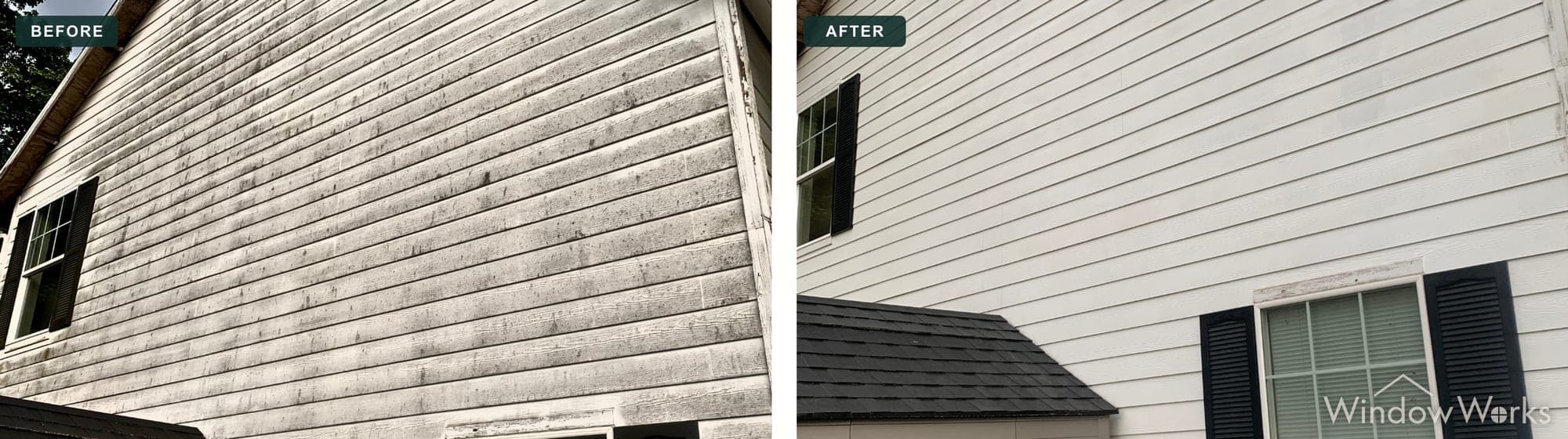
Soft washing grimy lap siding clean. 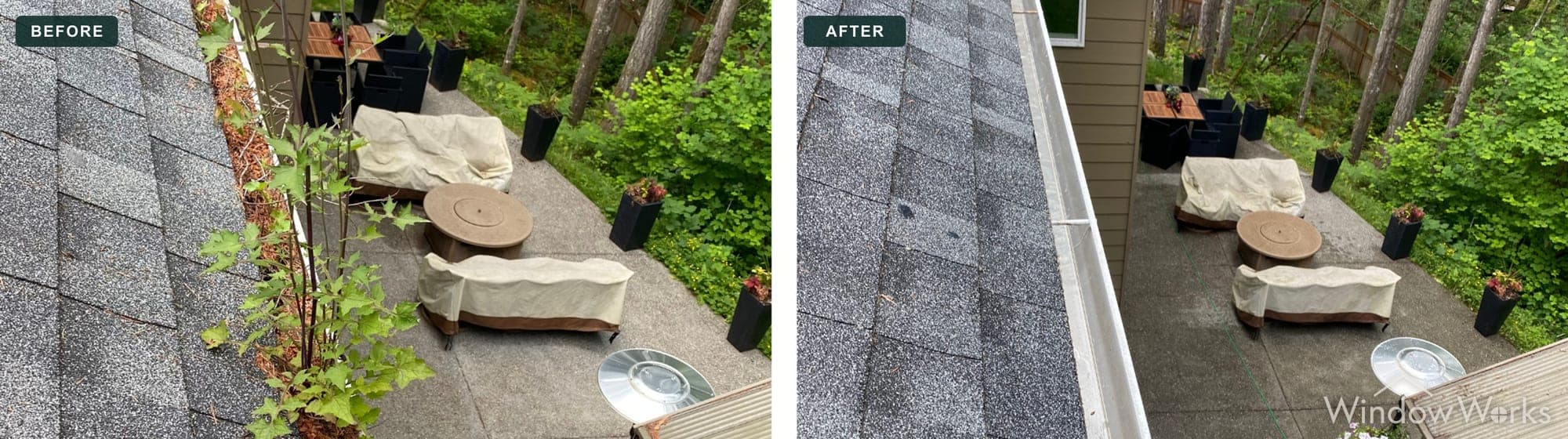
Clearing a debris-clogged gutter. 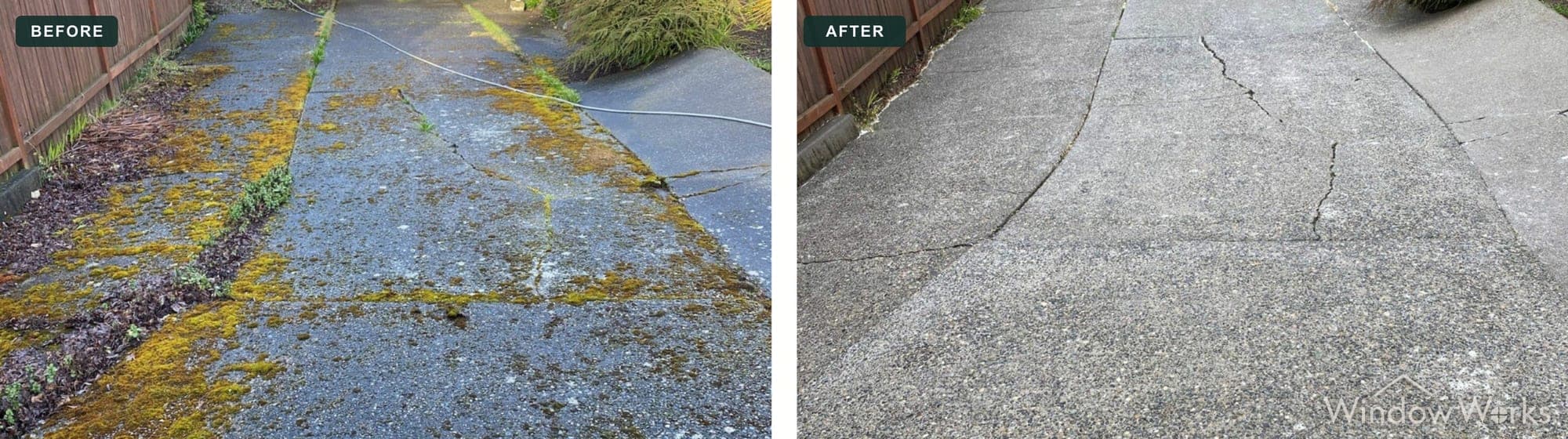
Pressure washing a moss-stained driveway. 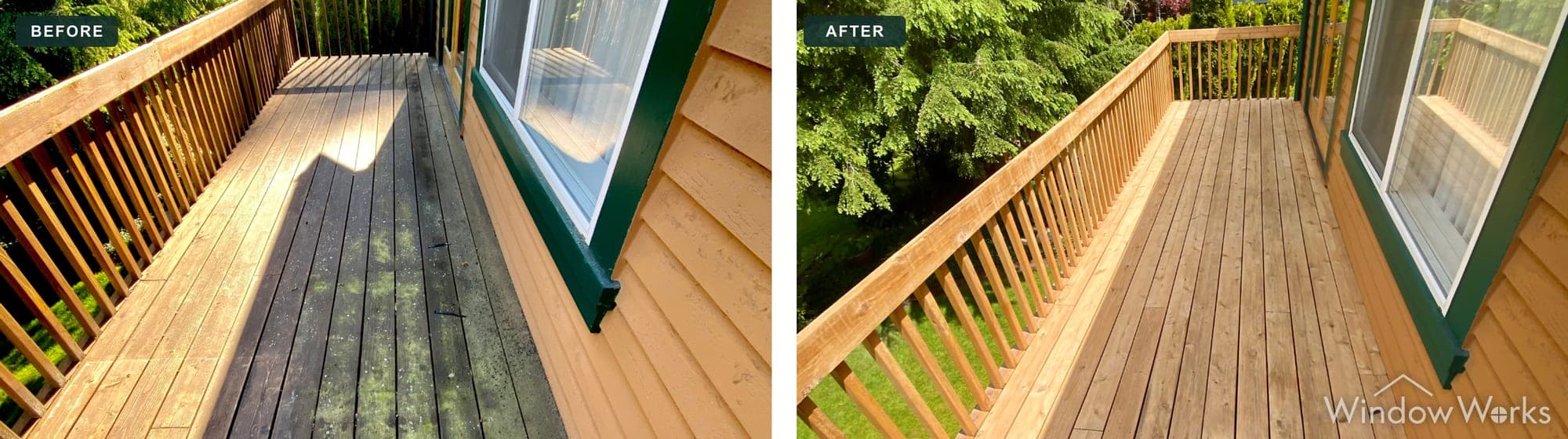
Washing algae off a wood deck.
Who to ask
We work for how long it lasts, not how it looks this afternoon.
Anyone can make a surface look clean today. The question worth asking is what the method used to get there costs you in three years.
Photographs on Every Visit
We show you what we found and what we did, in pictures, every time we come. It is how we prove what we say instead of asking you to take our word for it.
What You Need Now, and What Can Wait
We do not sell you services you do not need. We walk the property and tell you what is worth doing this year and what is fine to leave until next. Sometimes the honest answer is nothing yet.
Longevity Before Instant Results
The fastest way to make a surface look clean today is usually the fastest way to shorten its life. We will not trade years off your roof for an afternoon of shine.
Never High Pressure on a Sensitive Surface
High pressure strips the granules off shingles and drives water behind siding. It gets a fast result and it costs you the surface, so we do not do it on any material that cannot take it.
A Specific Process for Each Surface
Cedar, asphalt, tile, vinyl, painted wood, composite, concrete and pavers all want different chemistry, pressure and dwell time. Matching the process to the material is what makes it both look right and stay sound.
None of it is about today. It is about not paying to replace something early.
A roof, a deck, a paver patio, a coat of stain: each has a natural life and a price to replace. Everything above exists so you get all of that life instead of buying it again years sooner than you should have to.
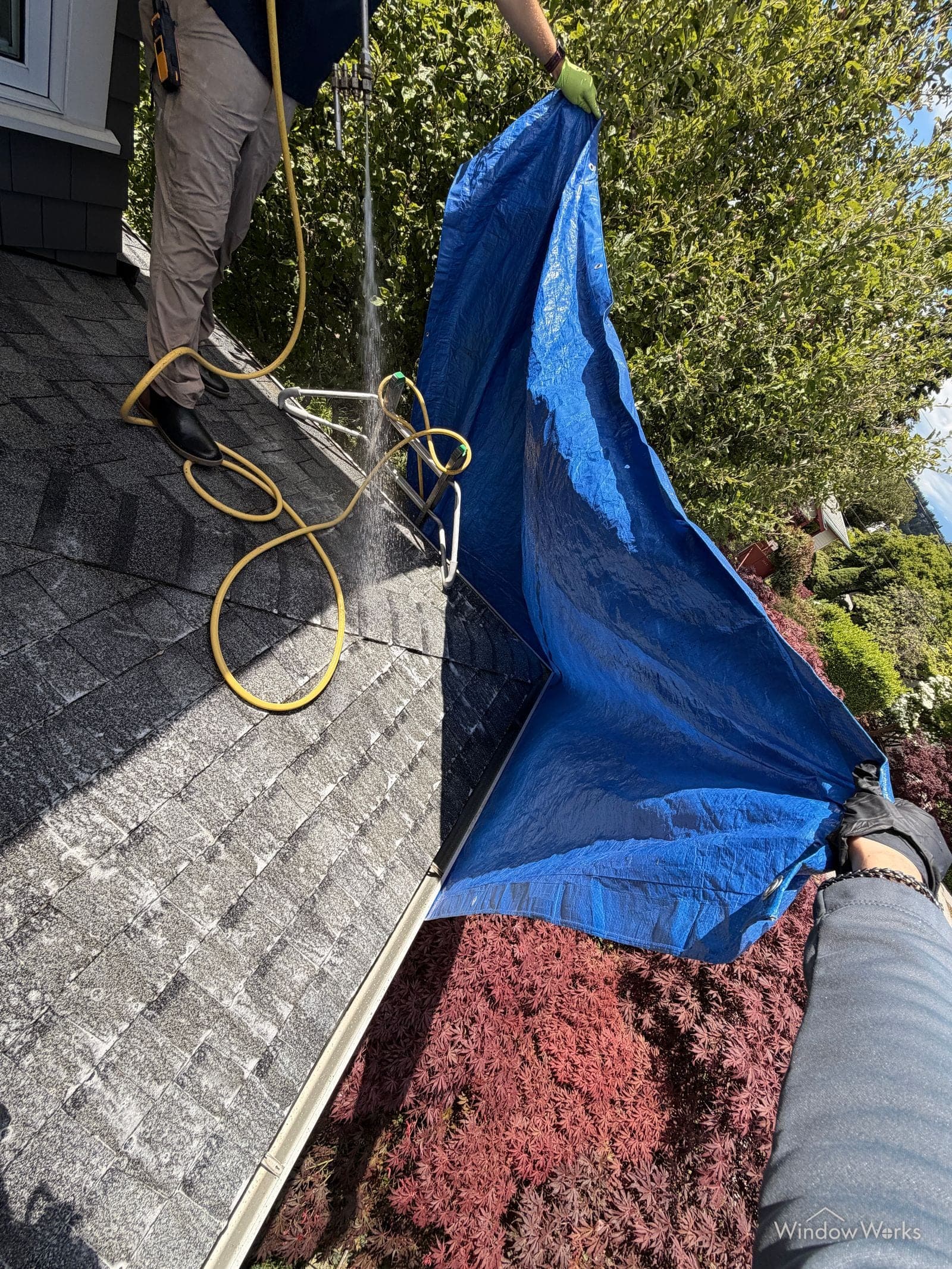
Before they touch your house
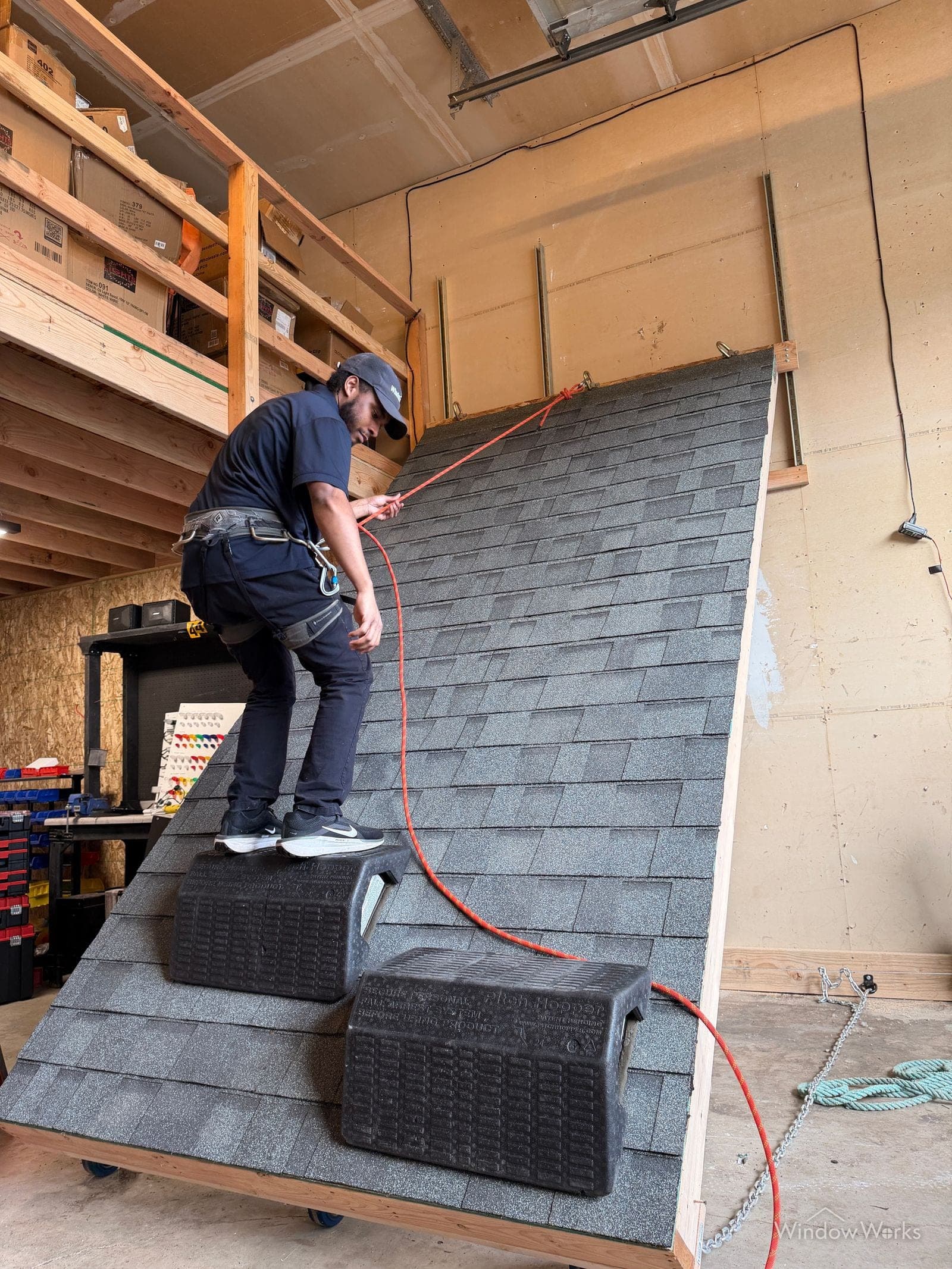
A month on property protection before they are handed an applicator.
Plenty of companies hand a new hire a pressure washer and send them to your address. Every WindowWorks technician spends at least a month learning property protection before they are allowed to pick up an applicator or a pressure washer at all.
We hire for personality and trustworthiness first. The technique can be taught. Being someone you are comfortable having at your house while you are at work cannot.
Who's on your property
You should know who's climbing on your roof.
Our technicians are insured, background-checked, and certified through a multi-level training program, with a written property-protection protocol on every job. We even built our own training facility.
- Background-checked before day one
- W2 employees, never day-hire subcontractors
- Multi-level certified technicians
- Written property-protection protocol
- OSHA-aligned safety training
- Our own training facility
Trained in the WindowWorks way
Every hire is chosen and trained to make even the most tentative client feel safe and well cared for, with a personalized experience on every visit. It's why clients worth over a hundred million dollars trust our crews at their homes when nobody is there.
Start with a clear picture
Not sure what your house needs? Ask us.
Get a real estimate in minutes, or call and talk to a person who has been on Eastside roofs for twenty years. Either way you get the honest picture first.