

Post-Construction Window Cleaning in Sammamish
Post-Construction Window Cleaning in Sammamish, WA
Owners on the Plateau usually assume the bill follows the window count. It does not. We put a number on this after looking at the condition of the glass, because two panes of cured silicone can take longer than a whole house of ordinary windows. Sammamish homes run newer and larger, so there is a lot of new glass to look at.
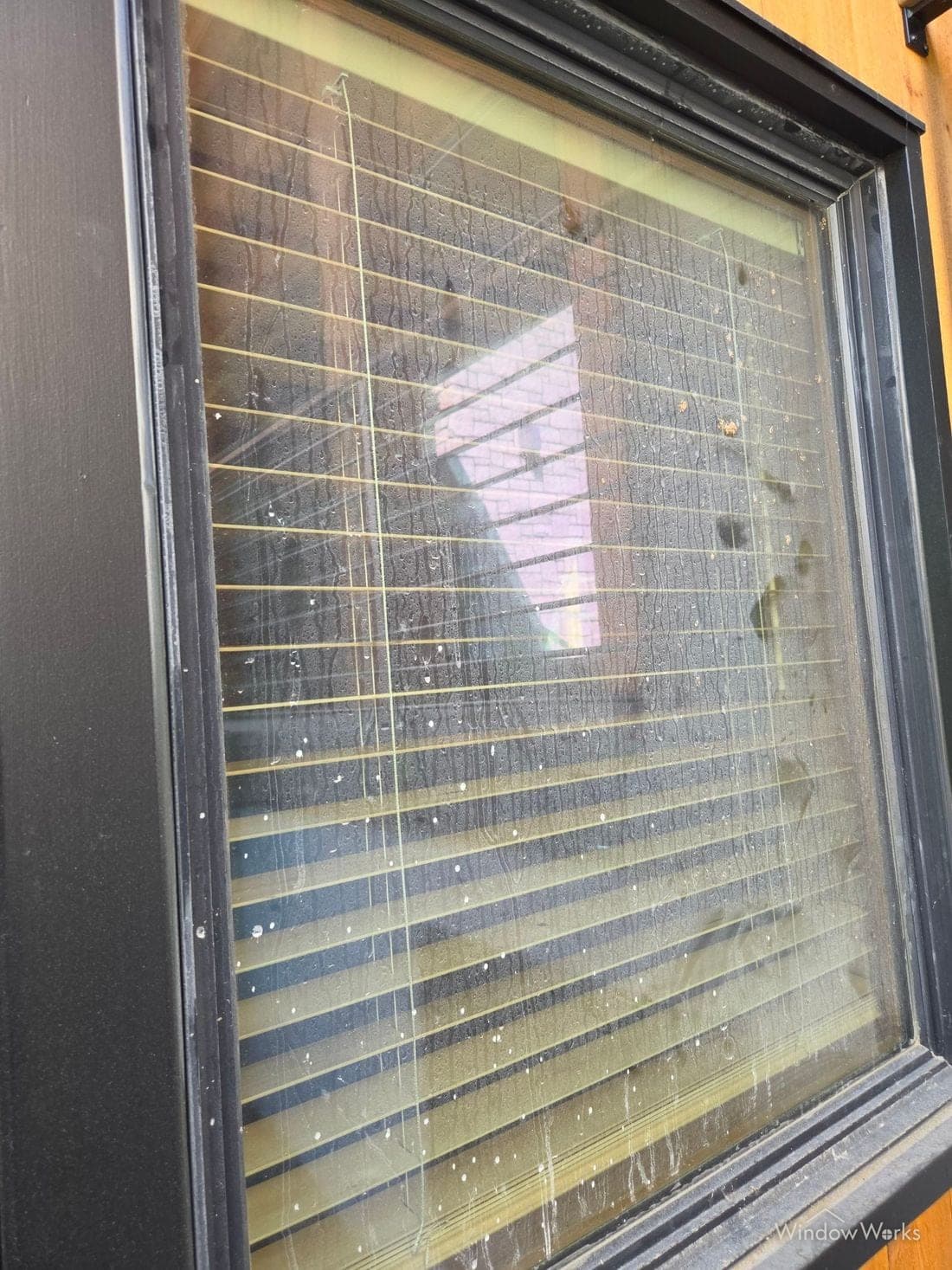
What comes off is overspray, silicone, caulk, glazing sealant, adhesive, drywall mud, concrete, tape residue and labels. Solvent softens it and the pane never goes dry while anyone is working on it, so nothing drags grit across the surface. Each glass type gets tried on a hidden corner before we touch the visible panes.
Pine Lake, Klahanie, Trossachs and Beaver Lake sit on big lots under heavy conifer cover, and pitch lands on new glass while a site is still open. It lifts with the same solvent as the trade residue, so it gets handled in the same visit. Sahalee and Inglewood are no different.
Areas we serve in Sammamish
- Pine Lake
- Klahanie
- Beaver Lake
- Trossachs
- Sahalee
- Inglewood
Sammamish questions
- Do you charge per window?
- No. We quote from the condition of the glass after an assessment, in person or from clear photos, and never sight unseen. A big house of lightly spotted glass can come in under a small house with cured silicone on every pane.
- Our new windows are coated. Is your method safe on them?
- Coated and tempered glass get handled differently, on purpose. That is what the hidden test area is for, one on every glass type in the house, before anything happens where you can see it. If the test says the residue will not lift safely, we stop and tell you.
What we can and cannot do
Construction cleaning: what it removes, what it doesn't remove.
Residue comes off the glass. Damage does not. If it is in the second list, that is a conversation with your builder or glazier about replacement, not a cleaning. We tell you which one you have before we quote.
Comes Off
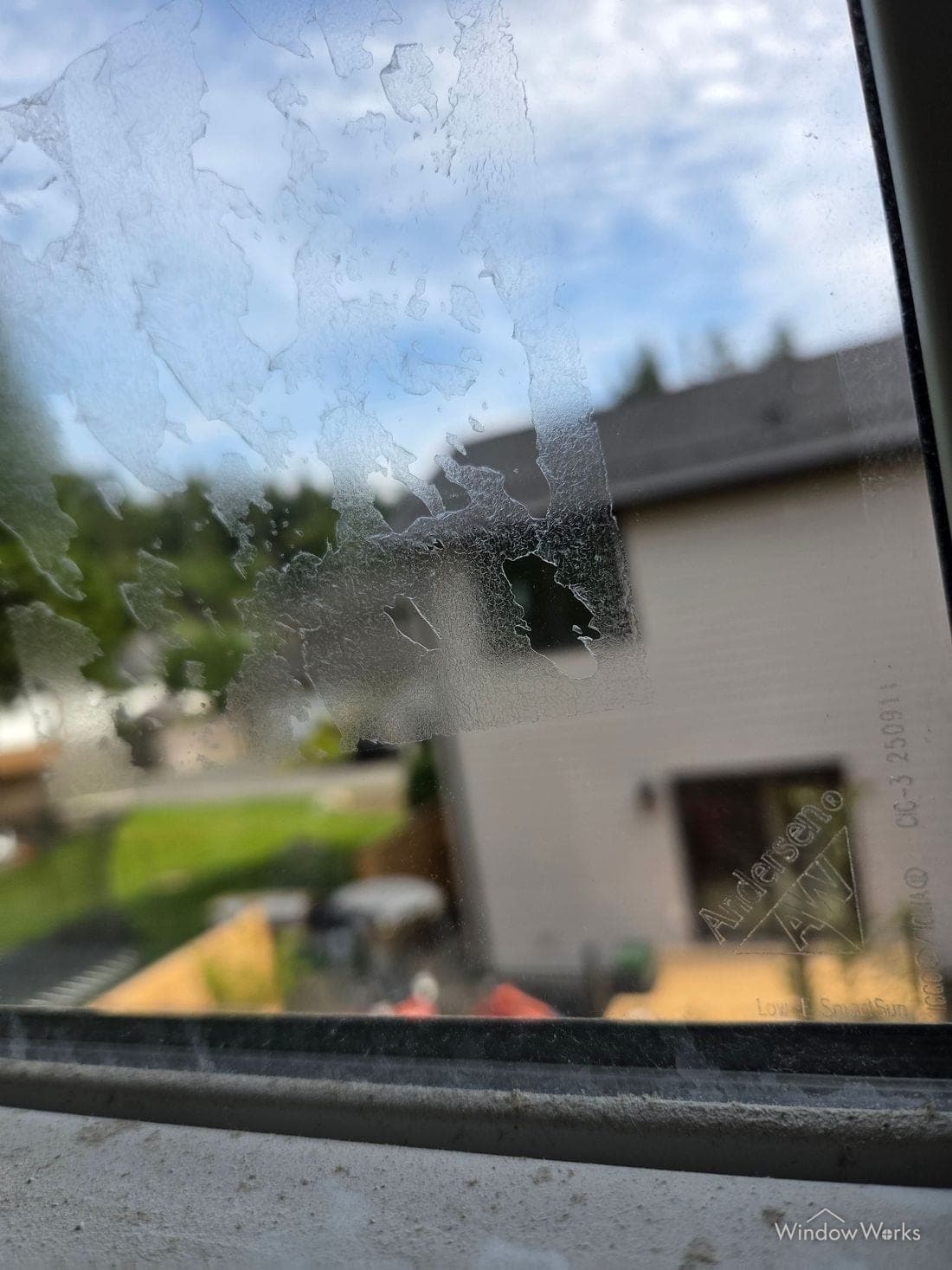
- Paint overspray: latex, oil, primer, lacquer, clear coat
- Silicone, caulk, construction adhesive, and glazing sealant
- Stickers, tape, labels, film backing, and glue
- Drywall mud, plaster, concrete, mortar, grout, and stucco
- Construction dust and splatter
- Tree sap, pitch, and tar
- Hard water spotting, up to the point where it has etched in
- Artillery fungus, on glass only, never frames or trim
Ask for a Replacement
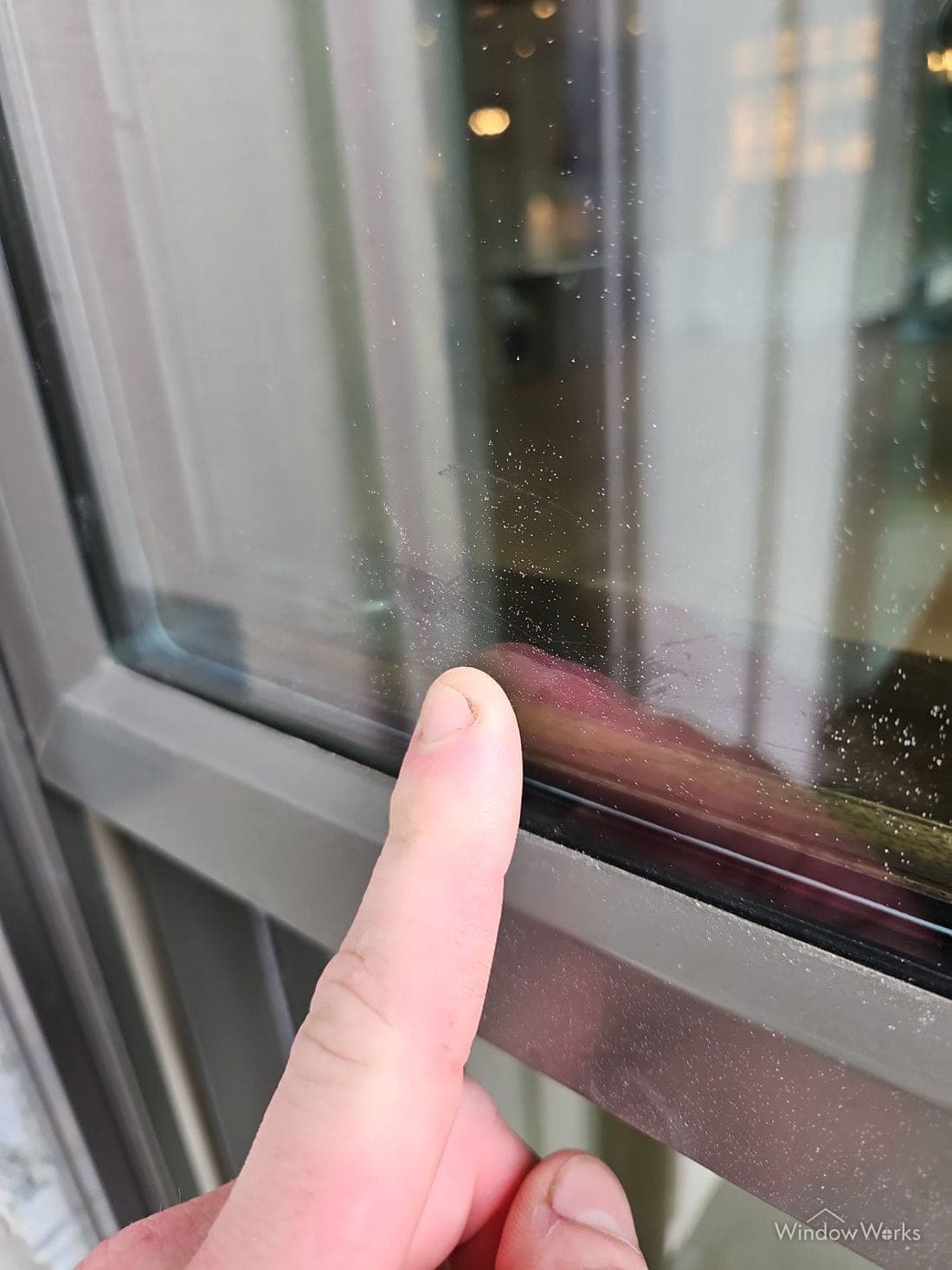
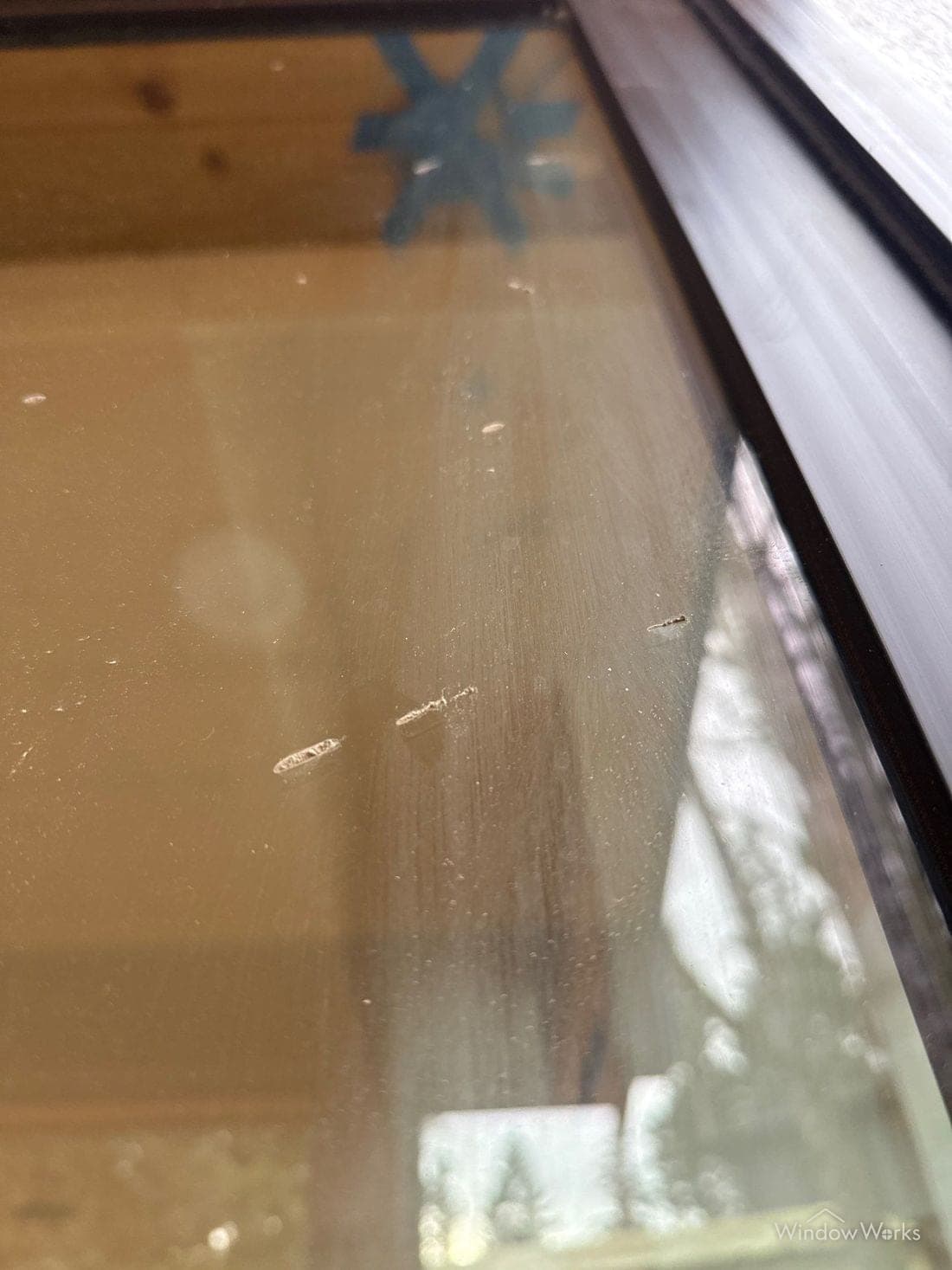
- Fabricating debris in tempered glass, the arcing scratch tracks
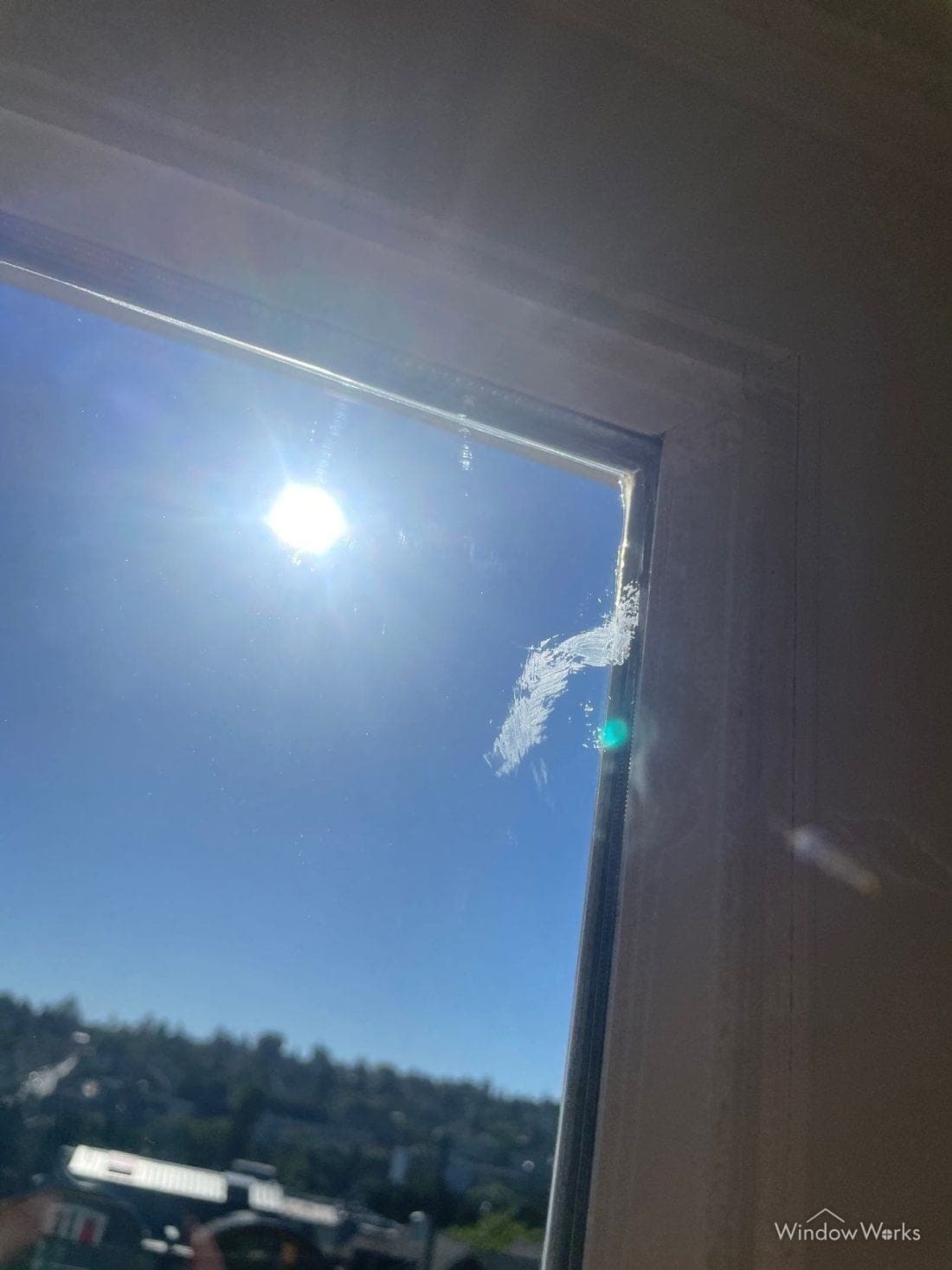
- Low-E coating damage
- Welding spatter, which burns in and leaves nothing to lift off
- Scratches that were already in the glass
- Etched glass, including hard water left long enough to bite in
- Cracks and chips
- A failed seal, fog or haze sealed between the panes
- Window film and tint that has clouded or creased
- Frame and sill damage
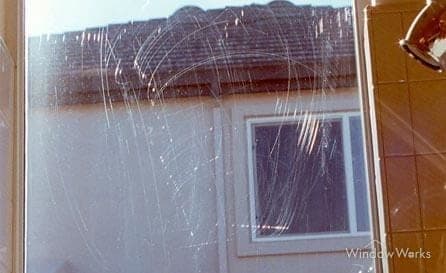
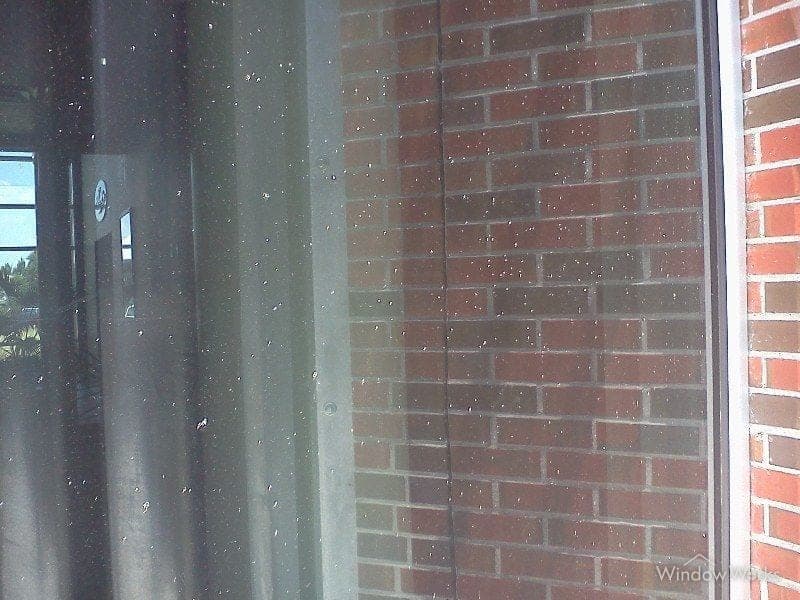
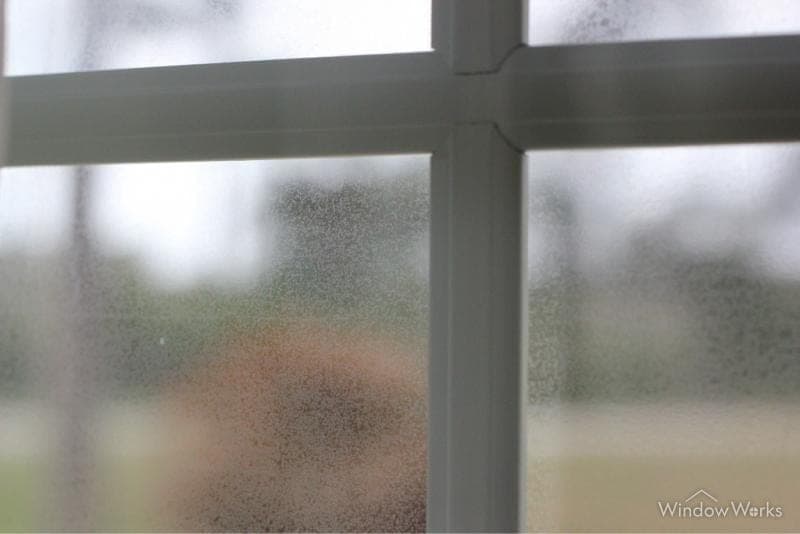
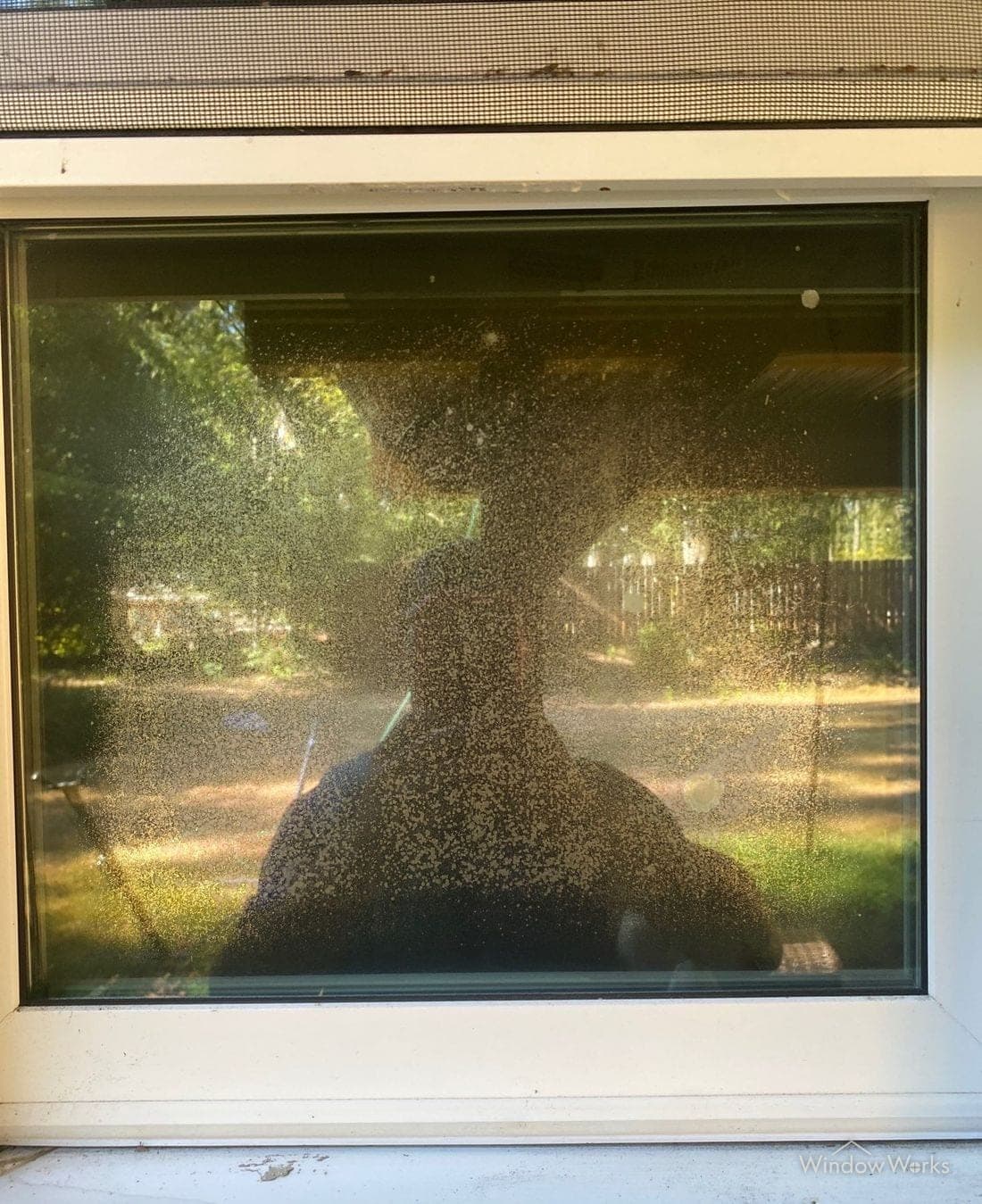
Residue hides damage. Some of the second list only shows up once the glass is finally clean, which is why we document the finished condition and walk it with you before we leave.
Before anyone touches your glass
Modern glass has a coating on the inside, and it scratches.
Low-E is a metallic coating thinner than a human hair that lets light through and reflects heat back into the room. Nearly every window sold in the last twenty years has it. Most of it is sealed between the panes, out of reach. Modern windows carry another layer on the interior pane, facing into the room. That one is exposed, and it is the surface someone touches every time the inside of the glass gets cleaned.
Abrasives destroy it in one pass. No steel wool, no scrub pads, no scrapers, no powders, no razor blades. The manufacturers call for microfiber and isopropyl alcohol on that surface and very little else.
Most builders and construction cleaning companies do not know this. It has caused a tremendous amount of scratched and damaged glass after construction, usually done before the owner ever sees the windows. None of it comes back out. The glass gets replaced or it stays that way.
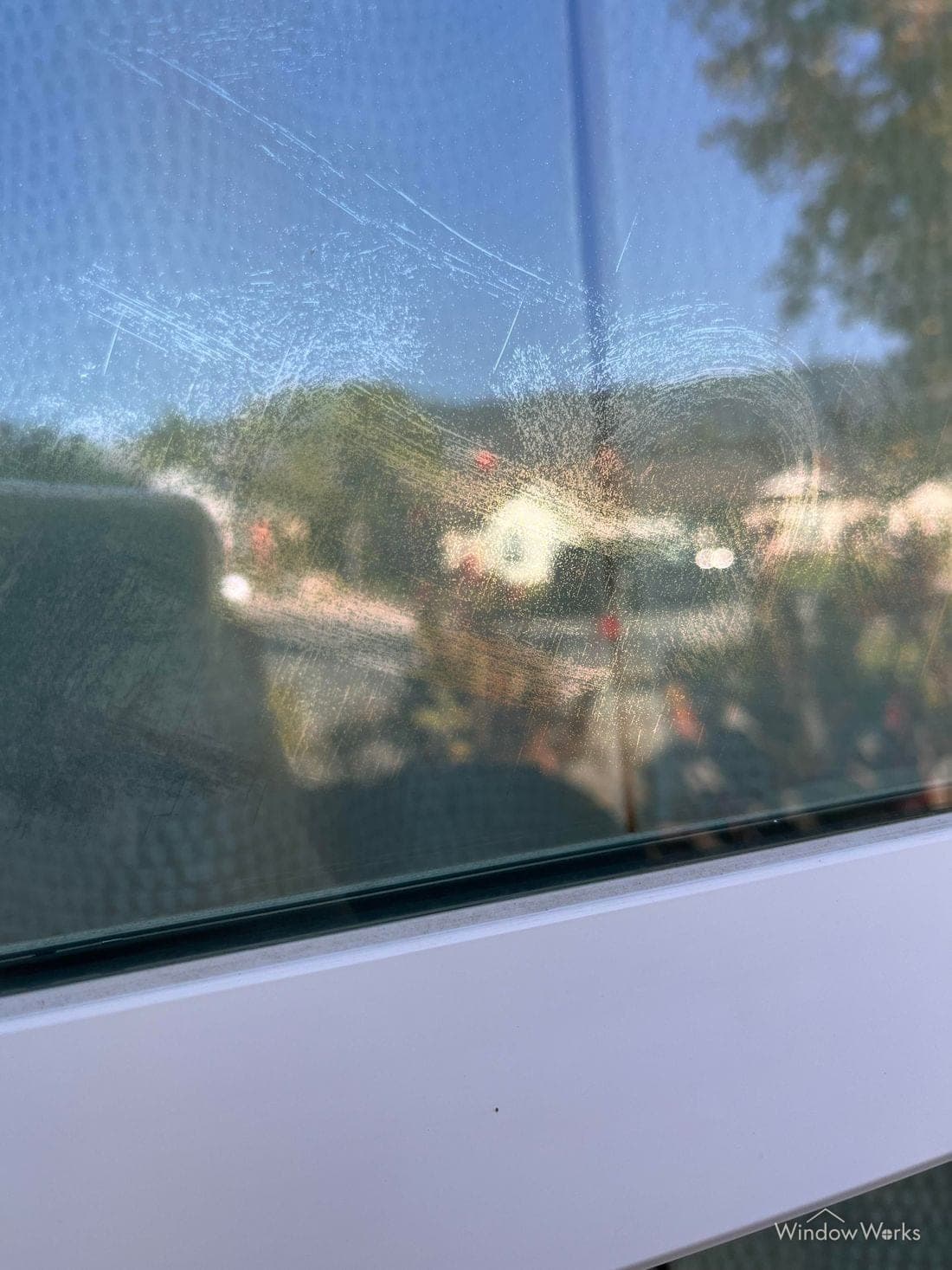
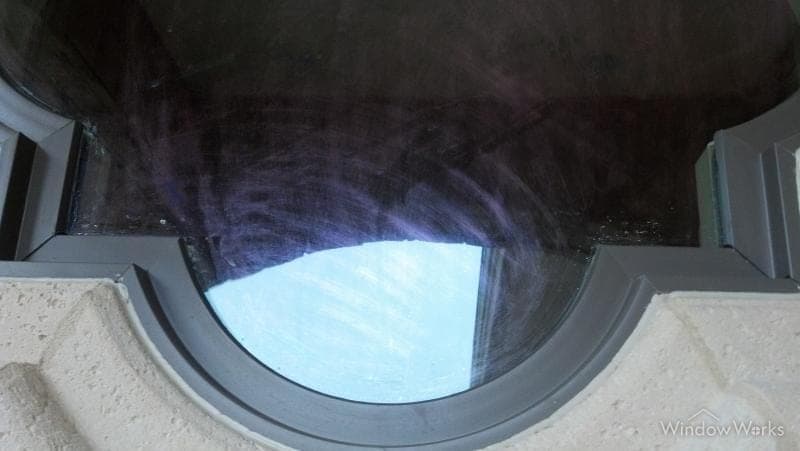
Do not try to clean these without knowing exactly what you're working with.
Why it matters
The problem this solves.
Every trade leaves something on the glass: overspray, silicone, adhesive, drywall mud, concrete. None of it is dirt, no standard window cleaning takes it off, and scrubbing harder just drags grit across brand new glass.
How we do it
Our approach.
We schedule only after the last trade is off site, otherwise the glass gets re-contaminated and the job is done twice. We quote by the condition of the glass after an assessment, never by window count. Before any tool comes out, you sign a scratch waiver covering risks no technique eliminates.
- Assessment in person or from photos
- A hidden test area on each glass type before we commit
- Coated and tempered glass handled differently, on purpose
- The glass kept wet the whole time it is worked
- Solvent for silicone, adhesive, sap, and tar
- Full unit: glass, frames, tracks, sills
- Final walkthrough, finished condition documented
Add-ons
Add it while we're there.
The crew and equipment are already on site, so these attach to your visit.
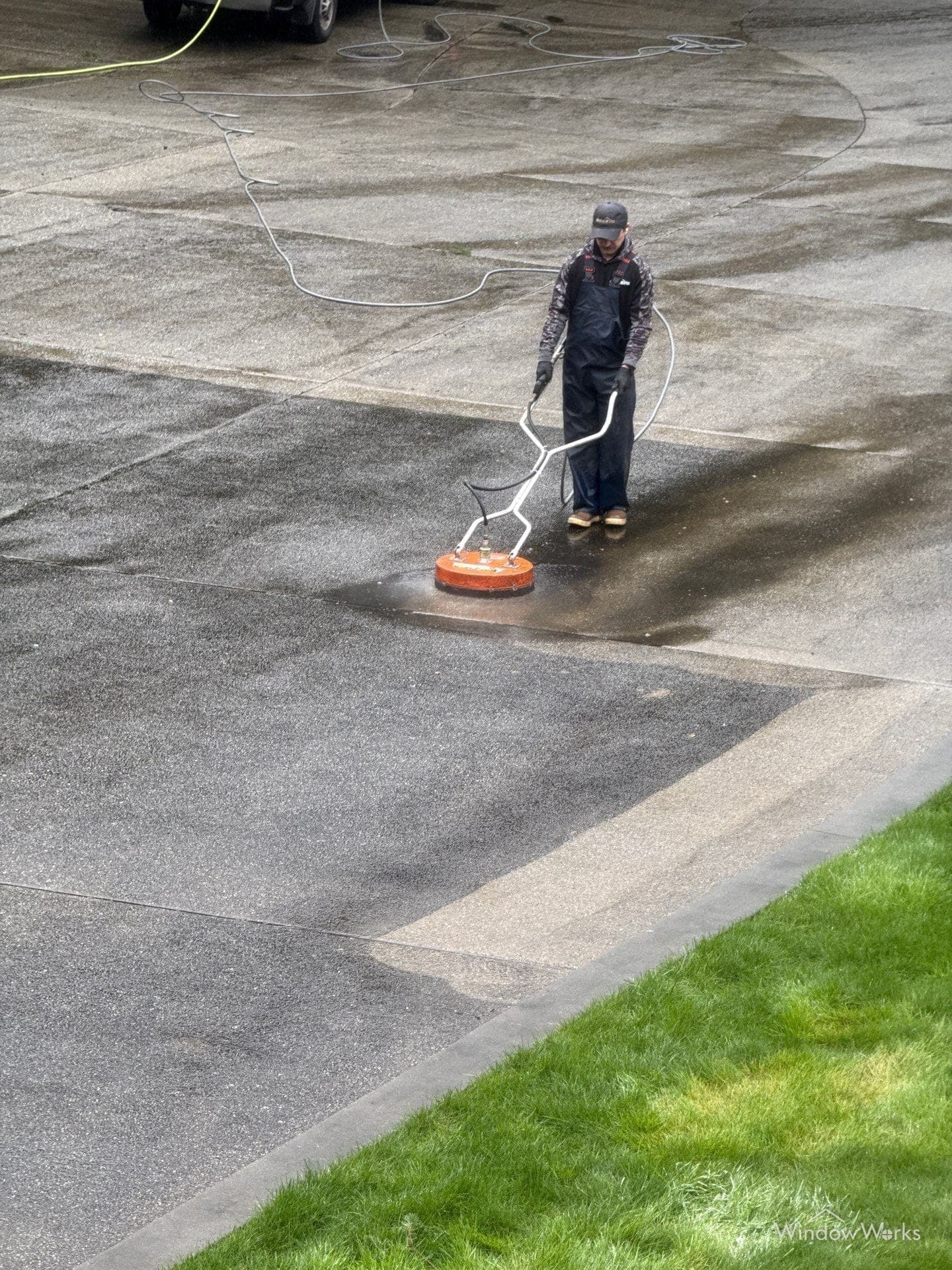
Driveway and Walkway Wash
Construction leaves concrete splatter, mortar, mud, and tire tracking on the driveway. We can quote it on the same visit.
See the full service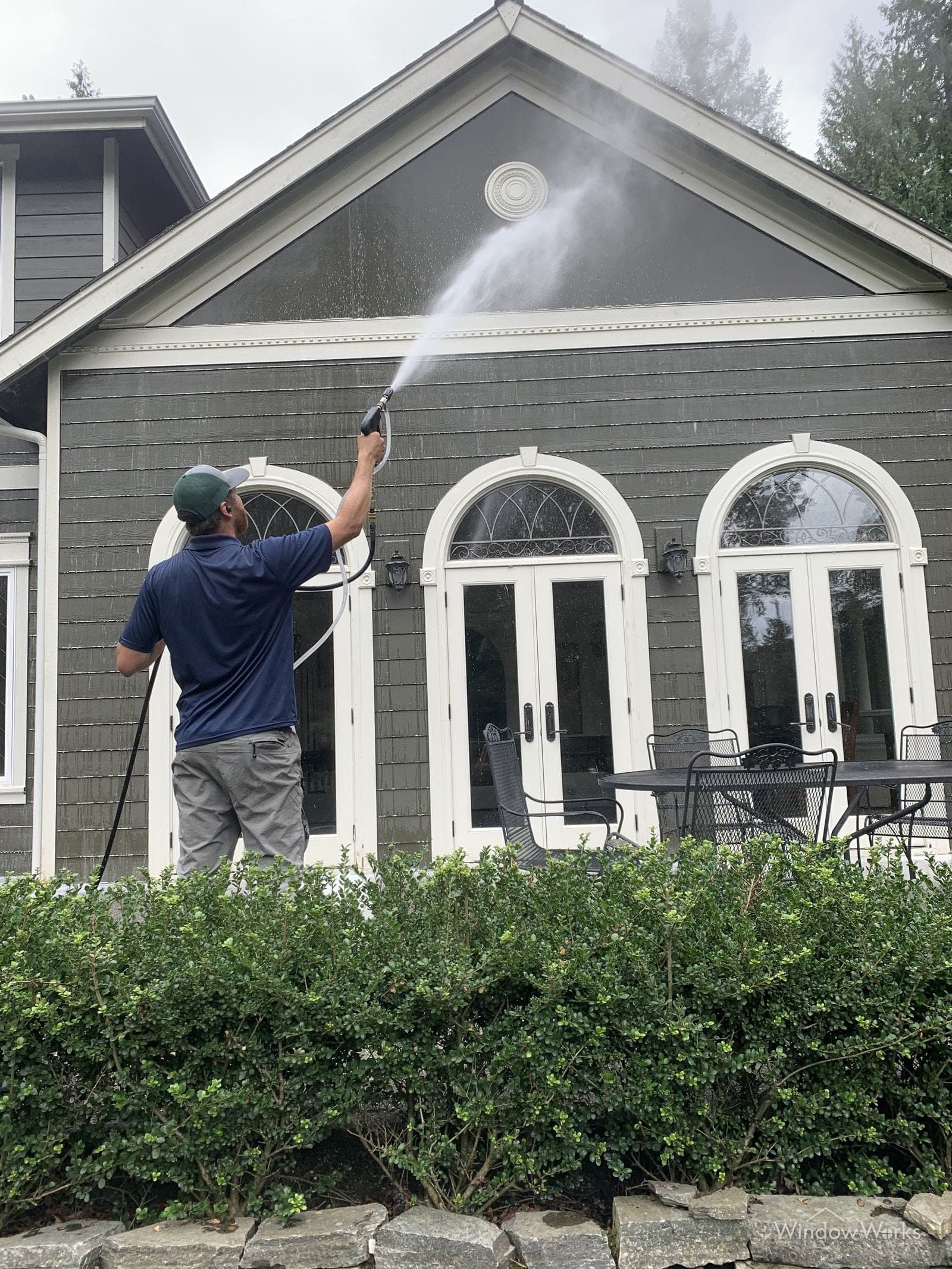
House Wash
New siding carries construction dust, overspray, and handling marks. On a remodel, the untouched sides no longer match the new work.
See the full service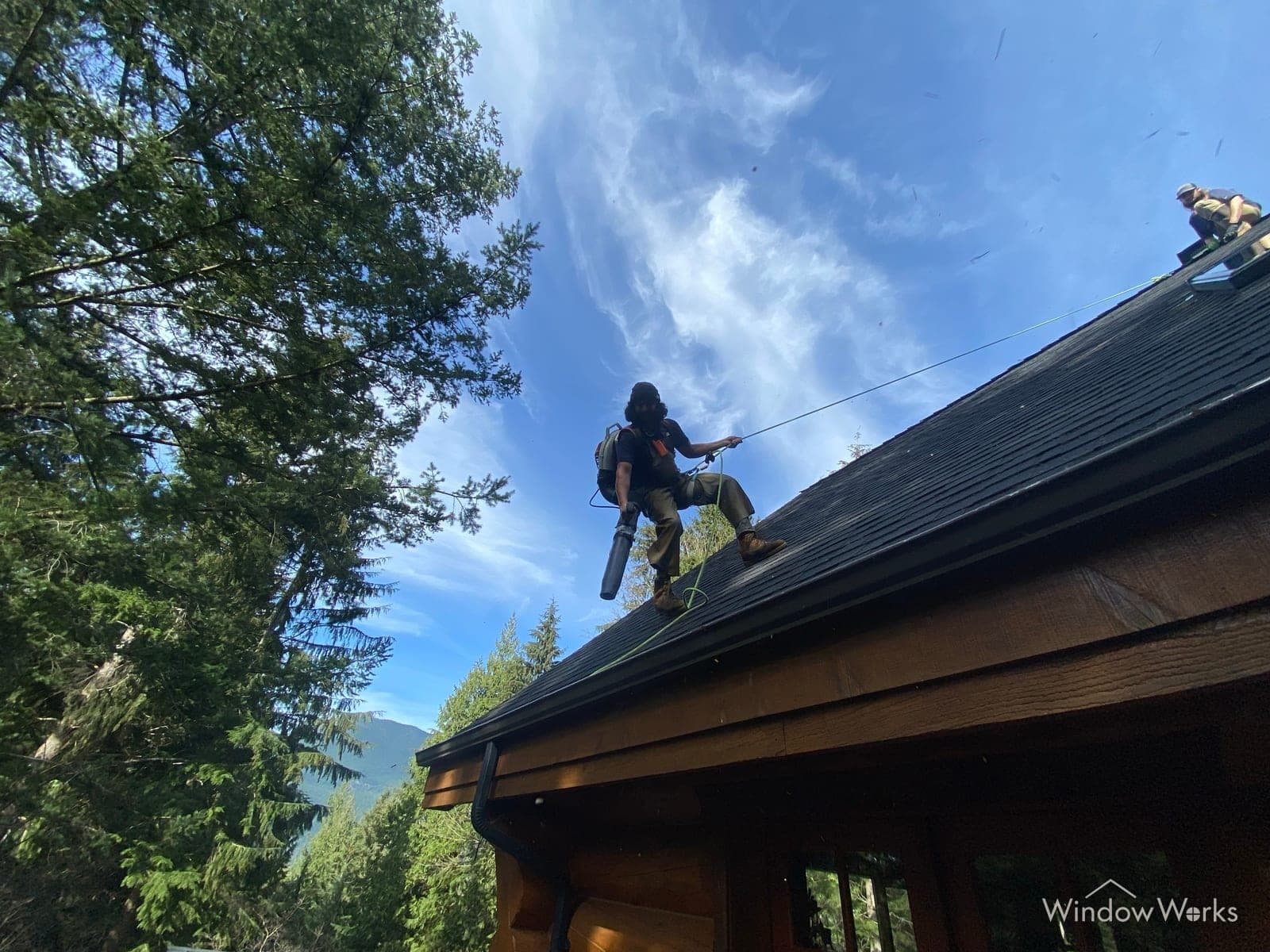
Gutter Cleaning
New construction fills gutters with shingle granules, cut-offs, and packaging, all headed for your drains. Worth clearing before the first storm.
See the full service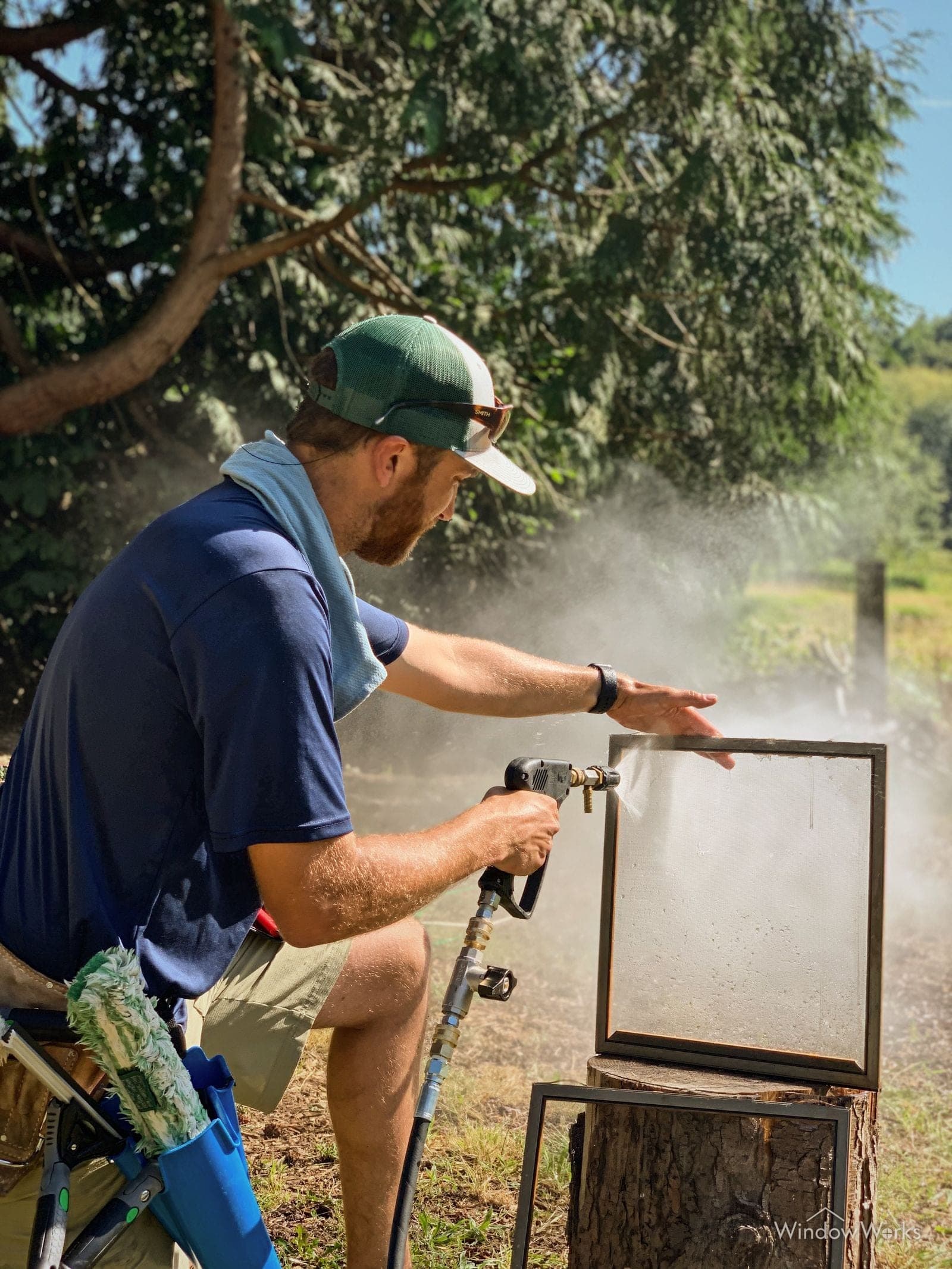
Deep Screen Cleaning
Screens stored during construction come back dusty; screens left in place catch overspray. Easy to add while we are on the glass.
See the full service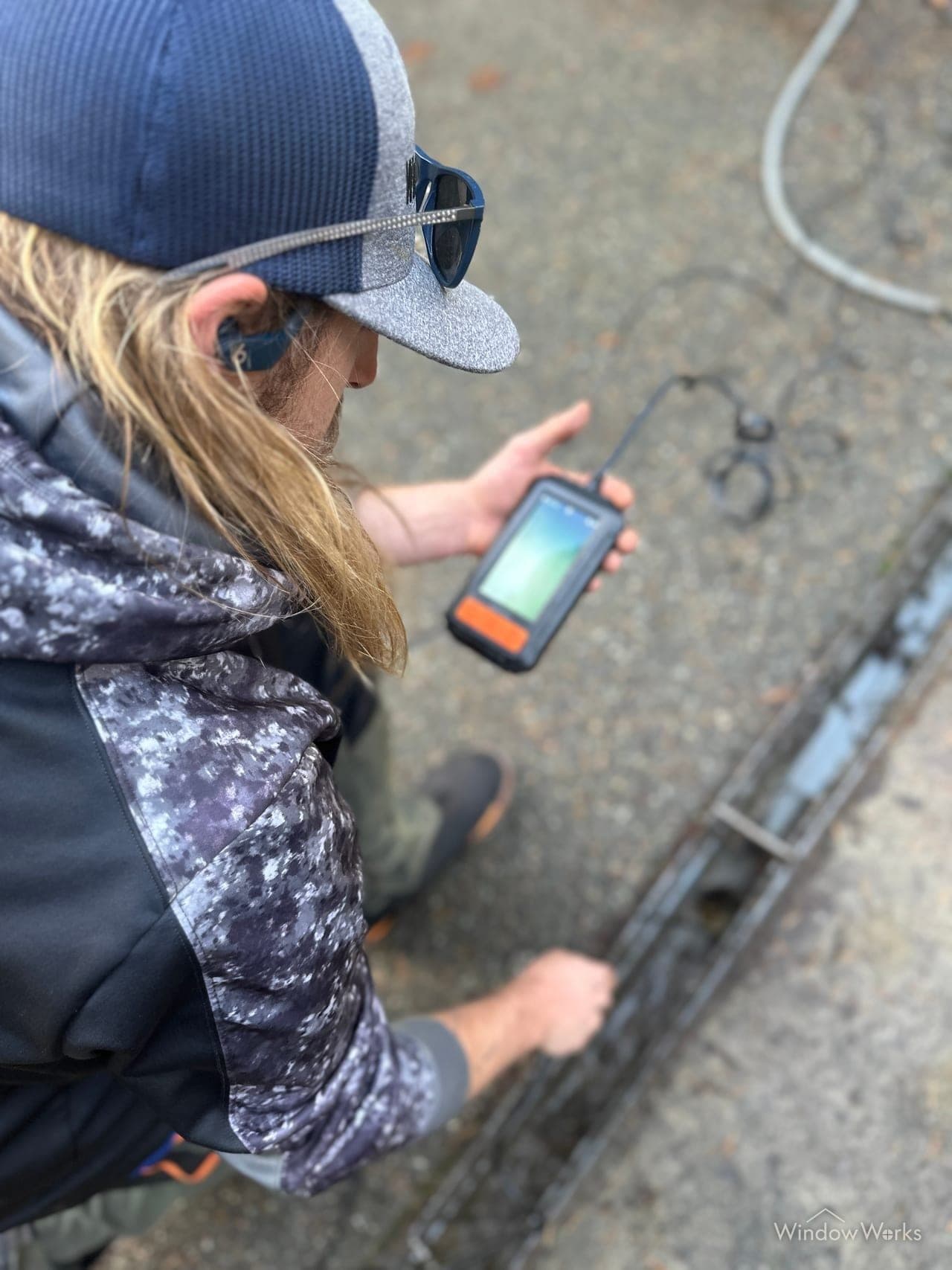
Rooter Drain Jetting
Construction debris washes into new drains and underground lines. Jetting clears it before landscaping hides the problem.
See the full service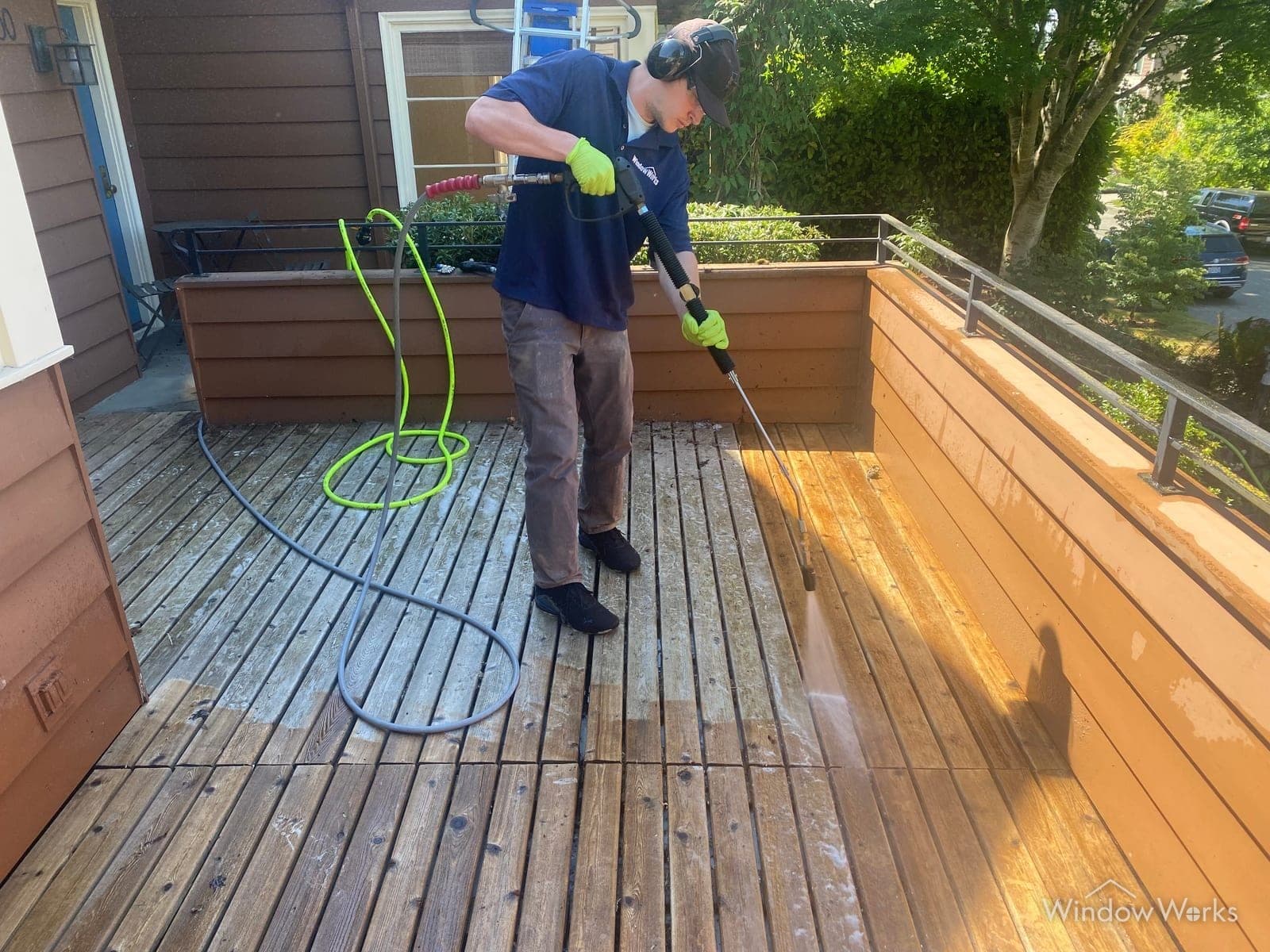
Deck and Fence Washing
Construction dust settles on every horizontal surface. With the crew already on site, decks and fences come clean in the same visit.
See the full service
Why WindowWorks
Who shows up matters.
Anyone can rent a pressure washer. After 20+ years on Eastside exteriors, and a 4.9 rating across 300+ reviews, we can tell you the real difference is the person holding the wand: what they know, how they were trained, and whether the company behind them takes care of them. We take care of our techs, so they take care of your property.
Background-checked
Every technician is background-checked before they ever step onto a customer's property.
Certified, skill by skill
Our crews earn certification across 369 individual skills in 10 categories, each one signed off by an evaluator, never just by clocking time.
Paid like professionals
A living wage, healthcare, and dental. People who are treated well do careful work, and they stay, so you see the same faces.
Licensed, bonded, and insured
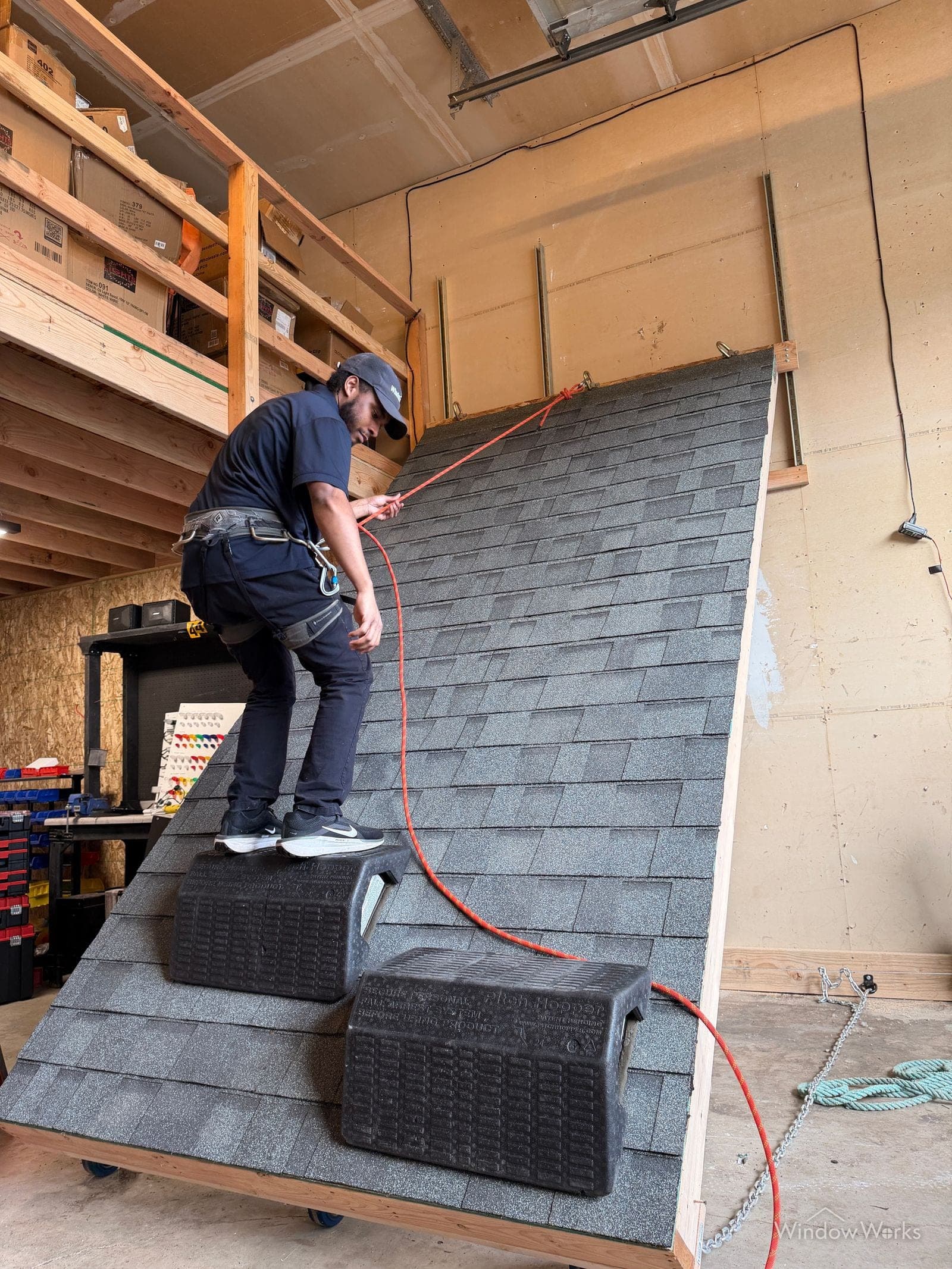
With OSHA-aligned safety training for the at-height work. If someone is on your roof, they are trained and covered for exactly that.
Method matched to the surface
Soft wash where pressure would damage, hot water where cold cannot lift, the right chemistry for the stain. The method follows the surface, not the other way around.
Documented before and after
Every job is photographed before and after, so you can see exactly what changed and keep it on file.
Common questions
Good to know.
Why do I have to sign a scratch waiver first?
Two risks no method eliminates. Tempered glass can carry factory debris fused into the surface, which turns into scratches the moment anything moves across it. And residue hides damage that was already there. The waiver covers both, it gets signed before we start, and without it we do not work.
How is it priced?
By condition, after an assessment in person or from clear photos, never sight unseen and never by window count. Two panes of cured silicone can take longer than a whole house of ordinary glass.
What if you find damage under the residue?
Residue sometimes hides scratches, chips, or etching that were already there, and they show once the glass is clean. We document what we find and walk it with you; replacing damaged glass or failed insulated units is outside our scope.
Who signs the waiver on a commercial job?
We confirm up front who signs the waiver and who accepts the finished condition, especially when working for a general contractor rather than the owner. The waiver requirement itself is identical to residential, no exceptions.
Can you get welding spatter off the glass?
No. Molten metal burns into the glass and leaves a hole in the surface, so there is nothing to lift off. That pane needs replacing, and we will tell you that instead of charging you to try.
What about hard water spotting from the sprinklers?
We remove it, and we tell you to fix the source first or it comes straight back. There is a limit: once the minerals have etched deep enough, taking them off means taking off enough of the glass surface to distort what you see through it. Past that density we stop and tell you, rather than trade a spotted window for a warped one.
Serving Sammamish and the whole Eastside
Post-Construction Window Cleaning near you.
- Post-Construction Window Cleaning in Issaquah
- Post-Construction Window Cleaning in Bellevue
- Post-Construction Window Cleaning in Redmond
- Post-Construction Window Cleaning in Kirkland
- Post-Construction Window Cleaning in Newcastle
- Post-Construction Window Cleaning in Woodinville
- Post-Construction Window Cleaning in Mercer Island
- Post-Construction Window Cleaning in Snoqualmie
- Post-Construction Window Cleaning in North Bend
- Post-Construction Window Cleaning in Fall City
- Post-Construction Window Cleaning in Carnation
- Post-Construction Window Cleaning in Duvall
- Post-Construction Window Cleaning in Renton
- Post-Construction Window Cleaning in Seattle
Post-Construction Window Cleaning in Sammamish
Ready for a real estimate?
Answer a few quick questions and get a real number in minutes. No pressure, no obligation.