

Rooter Drain Jetting in Kirkland
Drain Jetting in Kirkland, WA
Water that backs up at a downspout on a Kirkland hillside does not sit still. It runs along the foundation and downhill, in the same track, every storm. Jetting opens the buried line so the water leaves the way the house was built to send it.
Houghton and Rose Hill have the older pipe in the ground, Juanita and Finn Hill the newer plats, and damp air off the lake and the Juanita Bay wetlands keeps everything growing and shedding into the gutters. Lots in Bridle Trails and Totem Lake carry their own tree load.
Mapping matters more on a slope, because the discharge point is often well away from the house and buried in landscaping. We find it, then flow test to locate the restriction before any jetting starts.
Areas we serve in Kirkland
- Juanita
- Rose Hill
- Houghton
- Finn Hill
- Bridle Trails
- Totem Lake
Kirkland questions
- Where does my downspout line actually come out?
- Finding that is part of the job. We map the lines, the connections and the discharge points before the work begins, so you know where the water is supposed to go. On a sloped lot that end point is often a long way from the house.
- Water pools at the same corner after every storm. Gutters or the buried line?
- If the gutters are clean and it still pools in that one spot, the line under that downspout is the usual reason. Water concentrated at a corner is what does foundation damage, so it is worth handling rather than watching.
Why it matters
The problem this solves.
Most major clogs are not in the gutters, they are in the buried lines below them. When one packs up with debris, sediment, or roots, the water backs up and overflows at the base of the foundation, storm after storm, in the same confined spot. That is worse than water spilling over a gutter edge, because it concentrates at the corners, where a foundation is already weakest, and that concentrated water is what turns into structural damage.
How we do it
Our approach.
We map the system first, then flow test to locate the restriction before jetting. The nozzle pulls debris back toward the access point instead of driving it deeper, and we work the full run to the discharge point. A second flow test verifies the line runs clear end to end.
- System mapping: lines, connections, discharge points
- Flow test before to locate the restriction
- Nozzle pulls debris out, not deeper
- Full run jetted to the discharge point
- Flow test after, verified end to end
- Damage documented, with an honest read on what it needs
Three kinds of buried line
Which line is backing up?
Underground drainage is not one pipe. Three different systems run under a yard, they clog differently, and each one is its own jetting job. All three get a flow test before and after.
Downspout Drain Lines
The buried pipes your downspouts empty into. Leaves, needles, and sediment that get past the gutter accumulate here, and a packed line backs the whole system up at the downspout.
This is the standard maintenance job, and the fix when clean gutters still overflow. Annual without downspout protection, every two years once Gutter Sticks are in.
Surface Drains
Yard drains, area drains, trench drains, and inlets, the drains most homeowners forget they have. They collect soil and organic silt straight from grade level.
The call when water stands at a grate, an inlet has visibly silted in, or one zone of the yard drains slow. Grate and basin replacement is not included.
French Drains
Perforated lines that collect subsurface water. Silt and fine sediment choke them slowly, and the symptom is a wet zone that used to stay dry.
Condition gets assessed before any work begins, and we are honest about the limit: heavily silted or collapsed lines may not fully recover.
How we work a buried line
Finding the problem is most of the job.
You cannot see an underground drain, so the work is a sequence: prove where the water stops, clear what can be cleared, and open up the ground only where the line has actually failed. Here is one Eastside job, start to finish.
- 1
At the trench drain
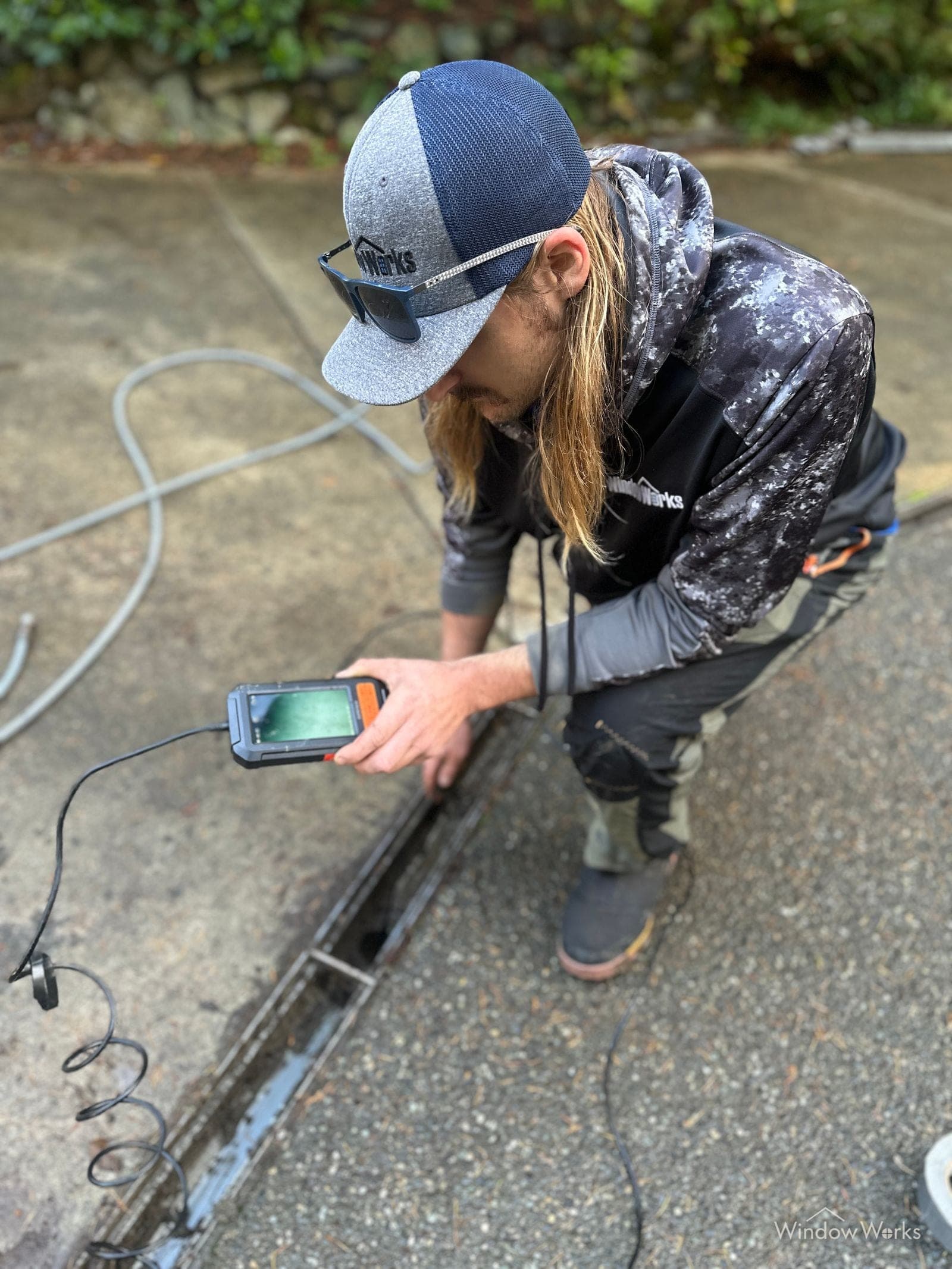
1Put a Camera In the Line
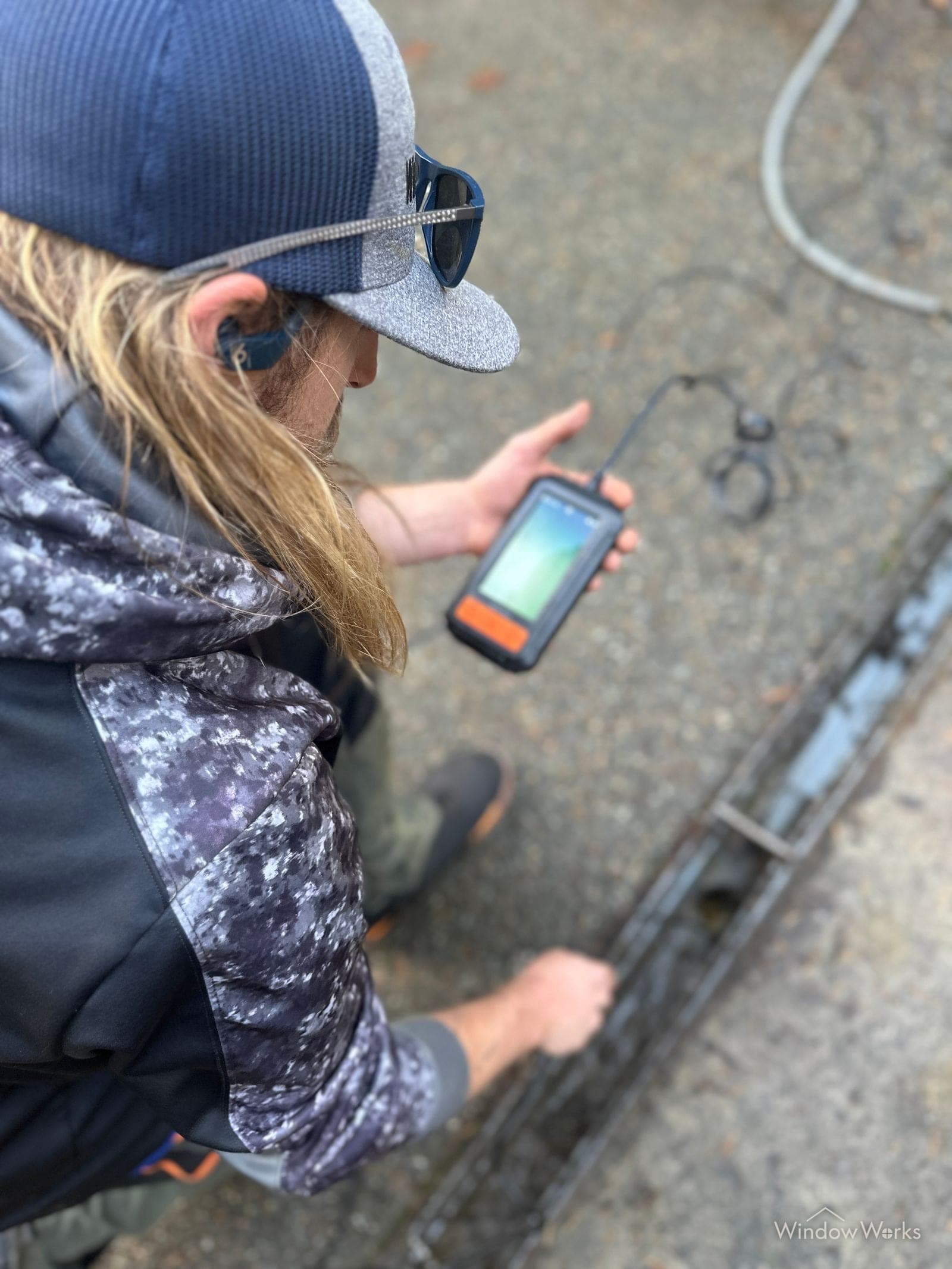
Before anything else we get eyes on the pipe. The camera goes in at the drain and runs the line until it finds where the water stops, so the restriction gets located instead of guessed at.
- 2
In the line
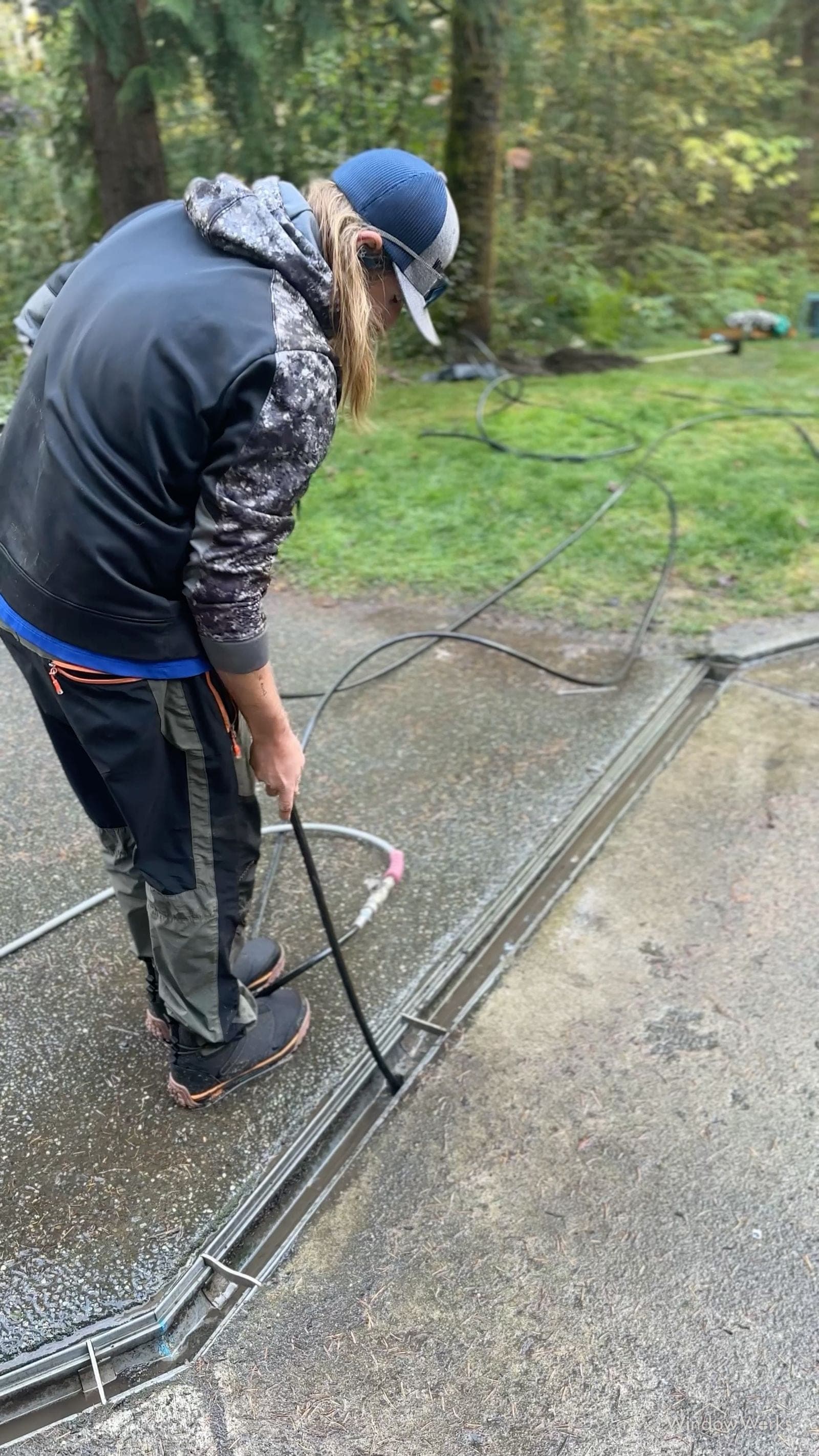
2Jet the Run
The jetting nozzle goes in at the same access point and works the full run to the discharge, pulling debris back toward us rather than driving it deeper. A flow test before and after says whether that was the whole problem.
- 3
Under the lawn
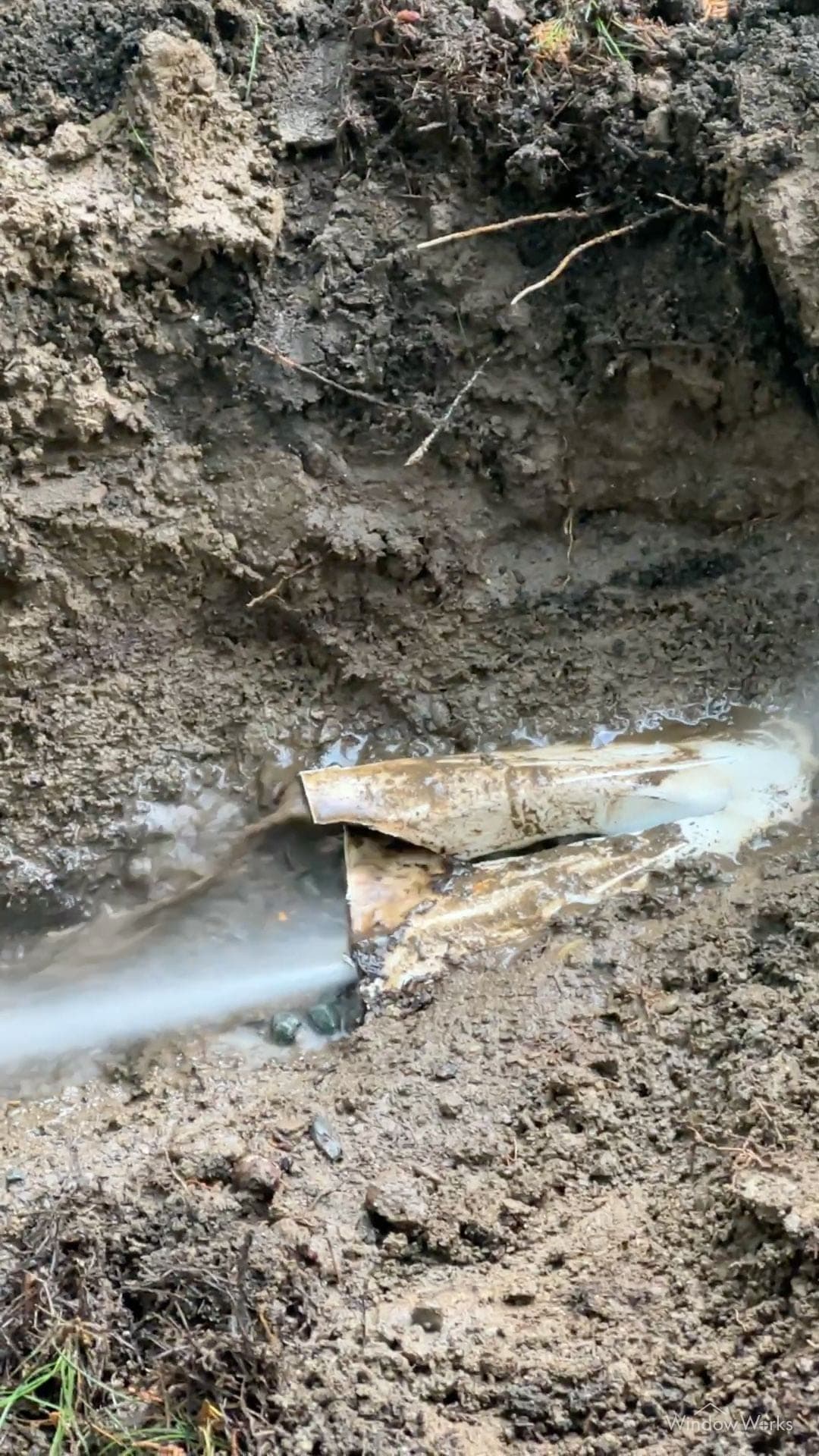
3Open the Ground At the Failure
This is the extreme case, not the normal one. When the flow still will not hold, the pipe itself is the problem: on this job the line had been crushed flat underground, so we dug down to it and cleared it from the failure point, which is the water you can see coming through.
A camera finds the spot. Digging is what confirms it. Depending on the job we either do this part ourselves or bring in a drainage contractor, and you know which before it starts.
- 4
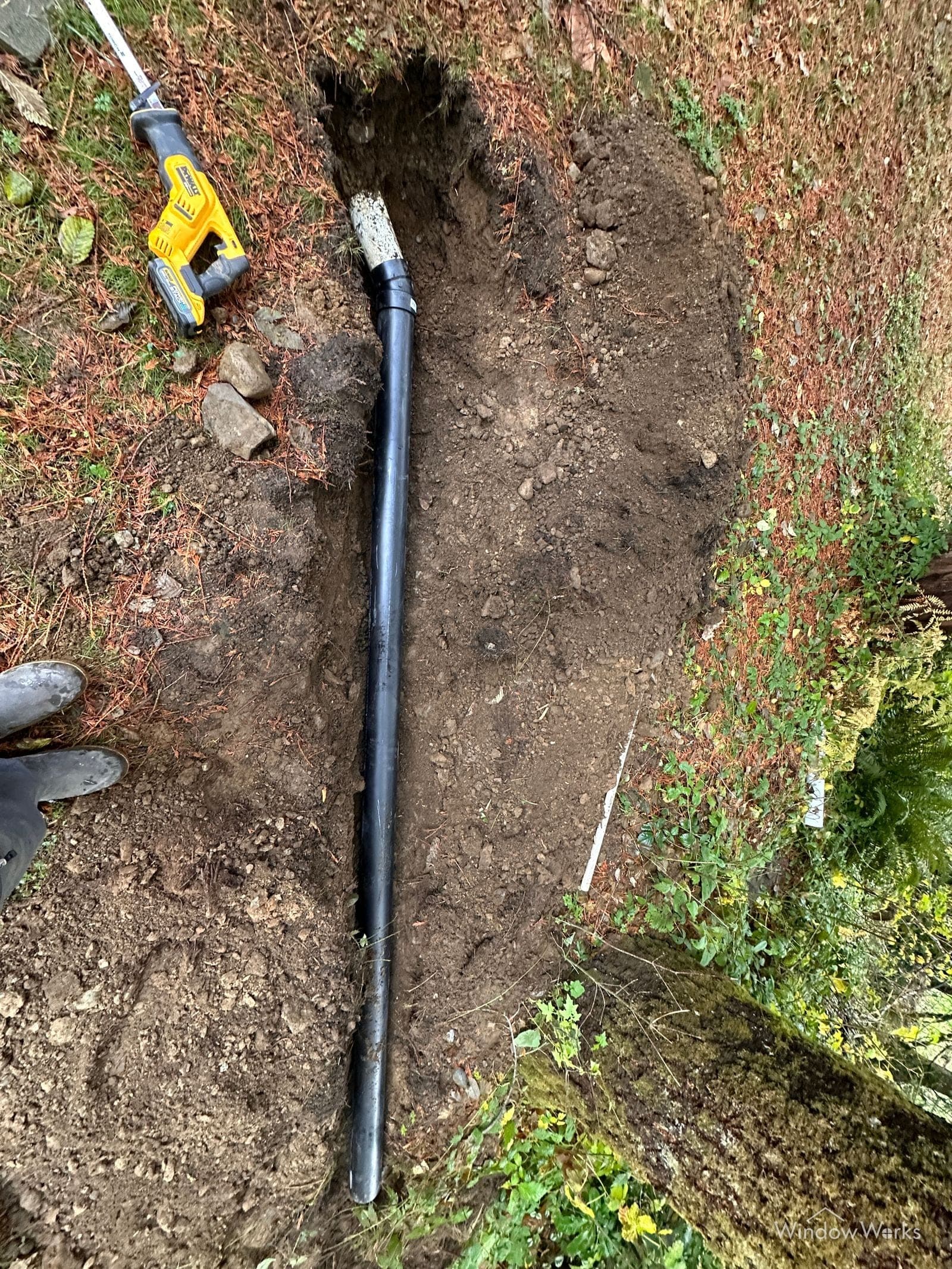
In the trench
4Cut In Sound Pipe
The crushed section came out and new pipe went in, sized to the run and bedded back in the trench. Clearing a line that is collapsed only buys weeks; the pipe has to be able to carry water again.
- 5
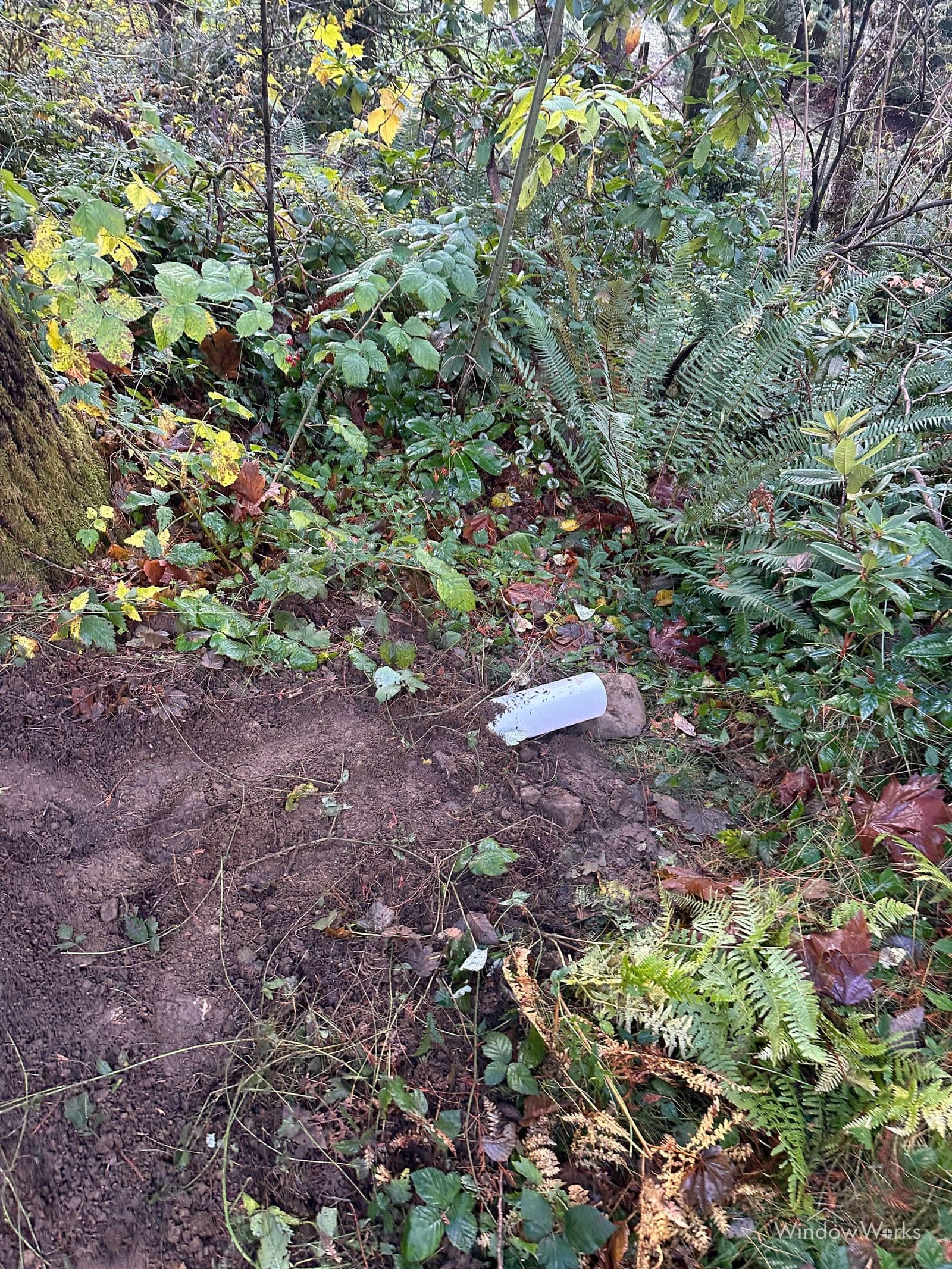
Out at the bank
5Give the Water Somewhere To Go
The line was extended out to the bank and daylighted, so it discharges in the open, well clear of the house. Water leaving the property beats water pooling against a foundation corner, every time.
One job on the Eastside, photographed as we worked it. Not every job needs every step; most stop after the jetting.
What jetting finds
Debris is a cleaning job. Roots are a warning.
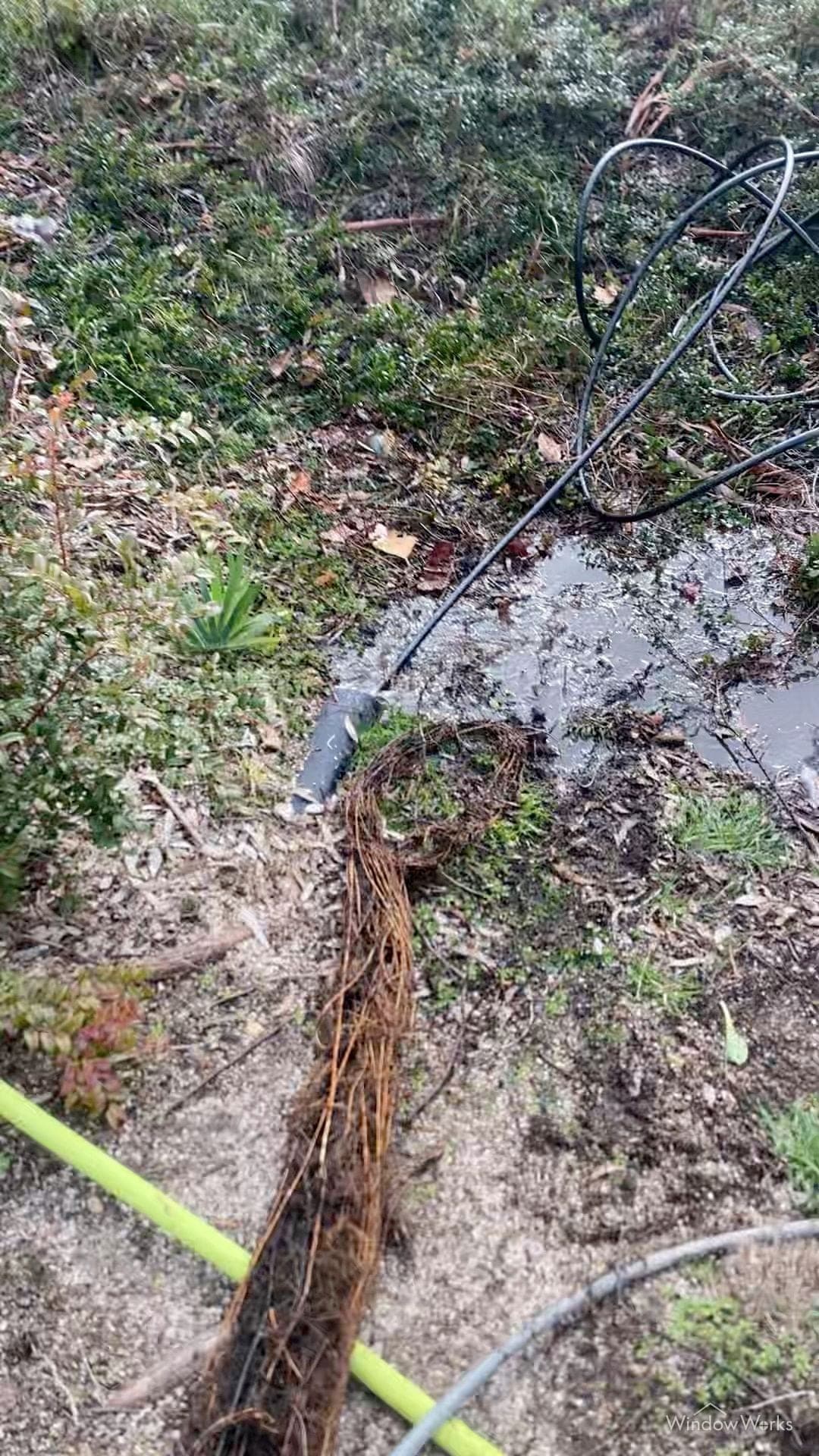
Most blocked lines are packed with debris and silt, and jetting resolves them. But roots in a line mean the pipe itself is cracked, because roots only get in where water is already getting out. Knowing which one you have is worth as much as the cleaning.
| Blocked by debris | Invaded by roots | |
|---|---|---|
| What happened | Leaves, needles, and silt packed the line | Roots found a crack and filled the pipe |
| What jetting does | Clears it, flow restored end to end | Clears it for now, and they grow back |
| What happens next | A yearly or two-year schedule holds it | Camera documents it, then it gets repaired |
| The pipe itself | Sound, just full | Cracked, and early is the cheap time to know |
Foundation repair is the expensive way to find out.
When a buried line backs up, the water goes along your foundation wall instead. Clearing a line costs a fraction of foundation repair, and the flow test proves the run came clear end to end.
Get an Instant Estimate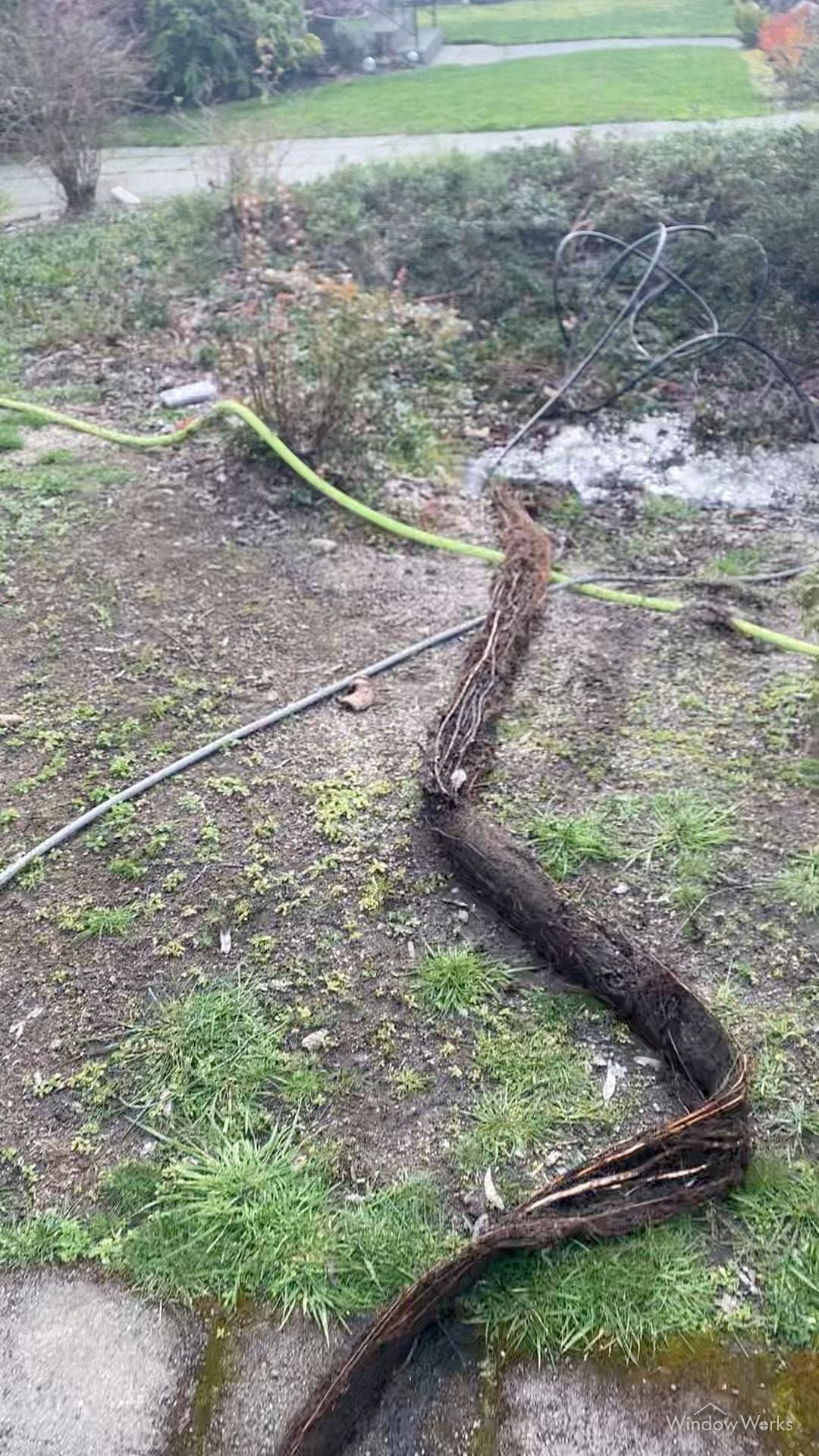
Pulled from one buried line on an Eastside job. Roots this established mean the pipe is compromised; we document it and refer the repair to a drainage contractor.
Keeping it clear
Most of what packs the line goes down a downspout.
The buried pipe does not fill from nowhere. Needles and leaf grit wash off the roof, through the trough, down the downspout, and straight into the line, where they settle and build until the water cannot get past.
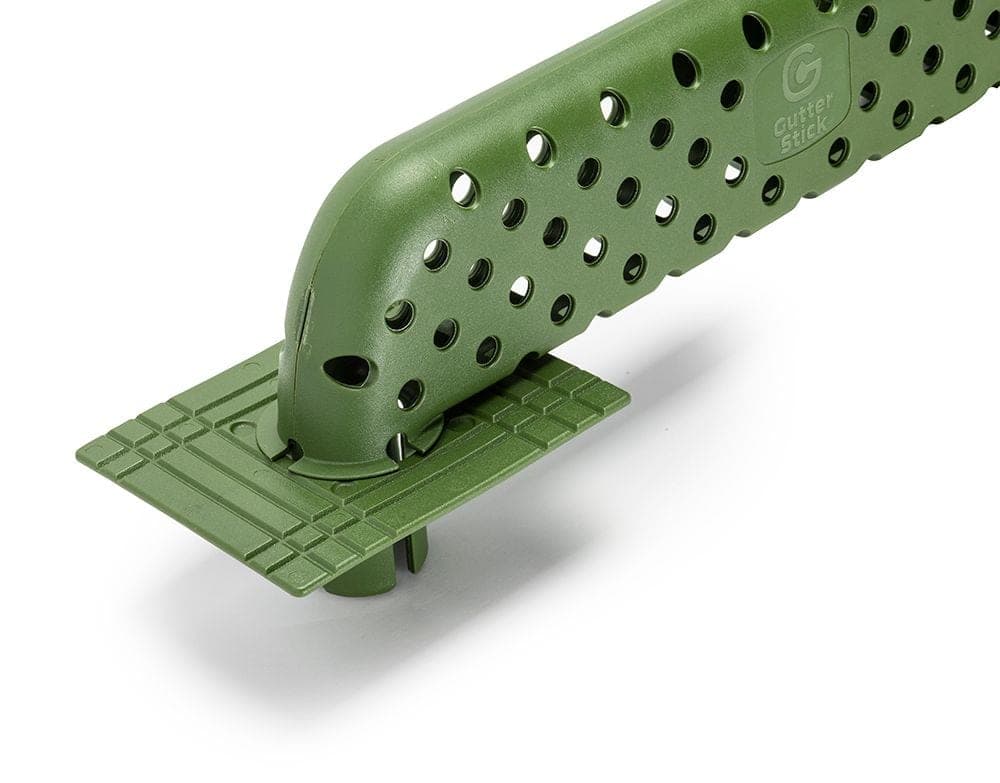
A Gutter Stick is a slitted PVC insert that sits in the downspout opening. Water drains right through it while the debris, needles included, stays up in the trough where clearing it is cheap and easy. Cut the debris going in and the line stops packing up: it is what moves most properties from jetting every year to jetting every two, and it goes in during a normal gutter cleaning visit.
See how the Gutter Stick works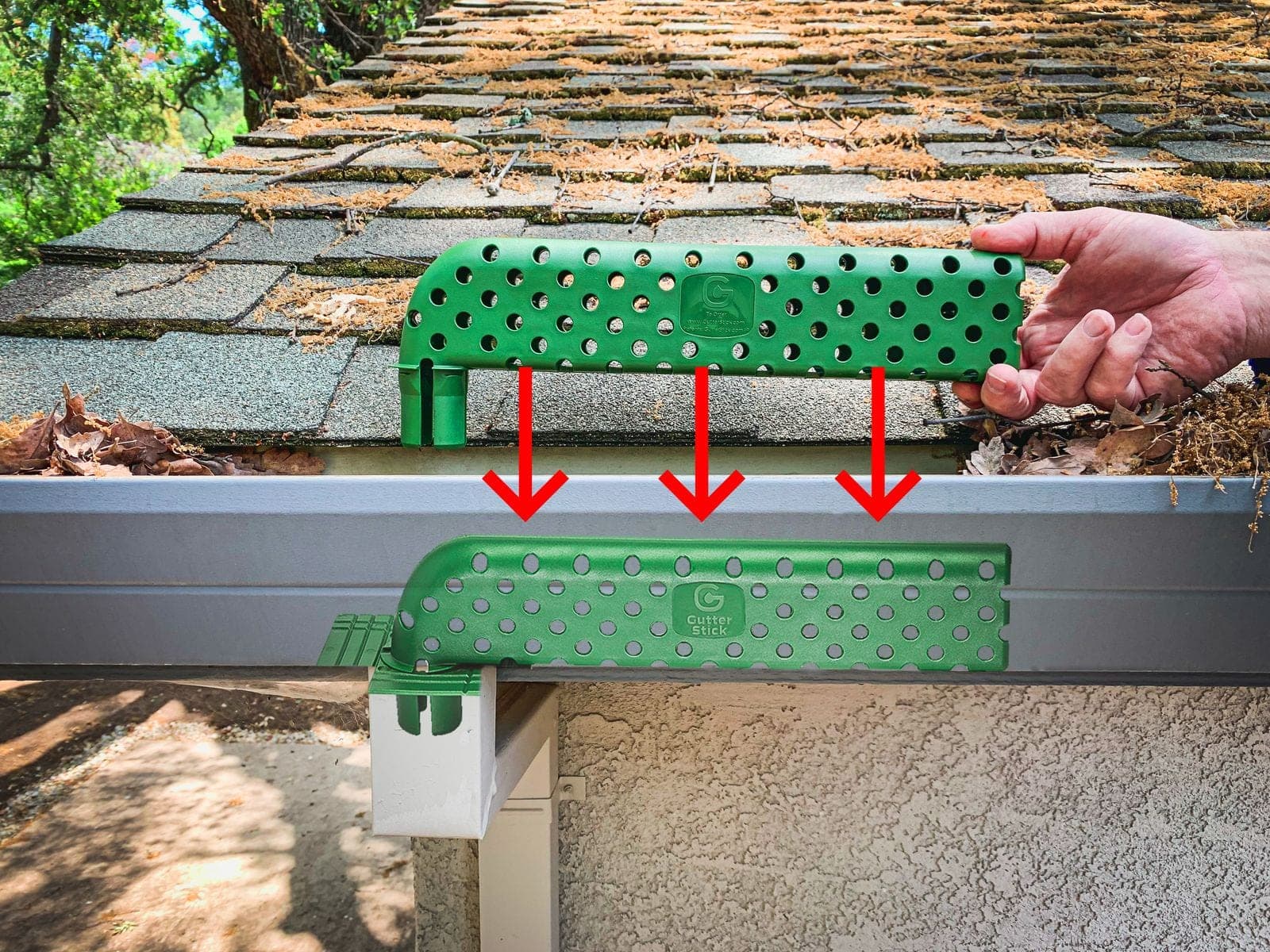
Add-ons
Add it while we're there.
The crew and equipment are already on site, so these attach to your visit.
Camera Inspection
Documents the cleaned line and catches what jetting can't fix: roots, cracks, joint separation. Strongly recommended on first service and older homes.
Gutter Stick Installation
A PVC insert in the downspout opening. Needles stay in the trough while water drains, typically stretching jetting to every two years.
See the full serviceSurface and French Drain Jetting
Yard drains, area drains, trench drains, and perforated French drain lines, jetted on the same visit as your downspout lines. French drains get their condition assessed first.
Gutter Cleaning
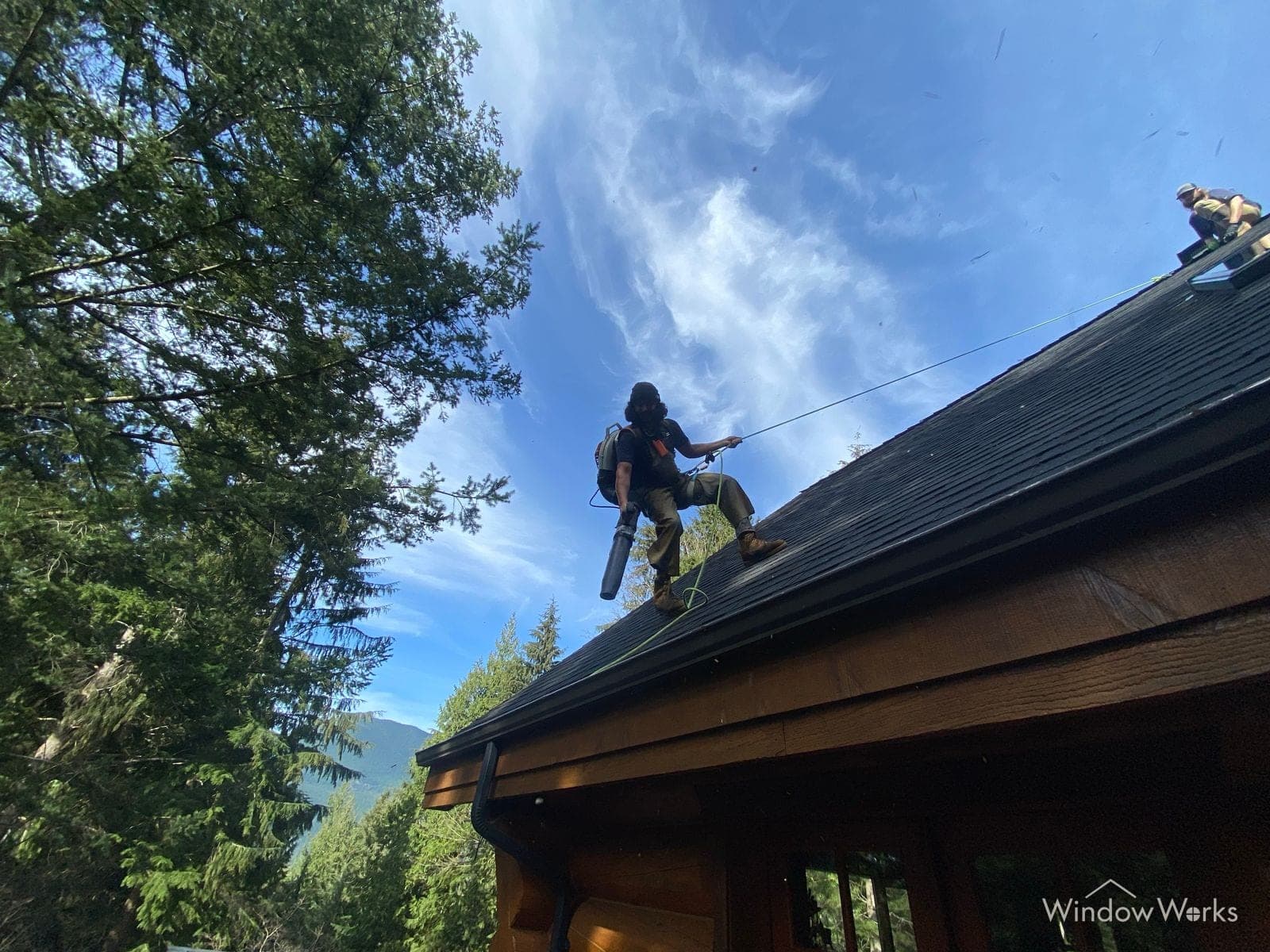
Clearing the buried line only fixes half the path. Troughs and downspouts cleared above grade means the whole system runs, top to discharge.
See the full service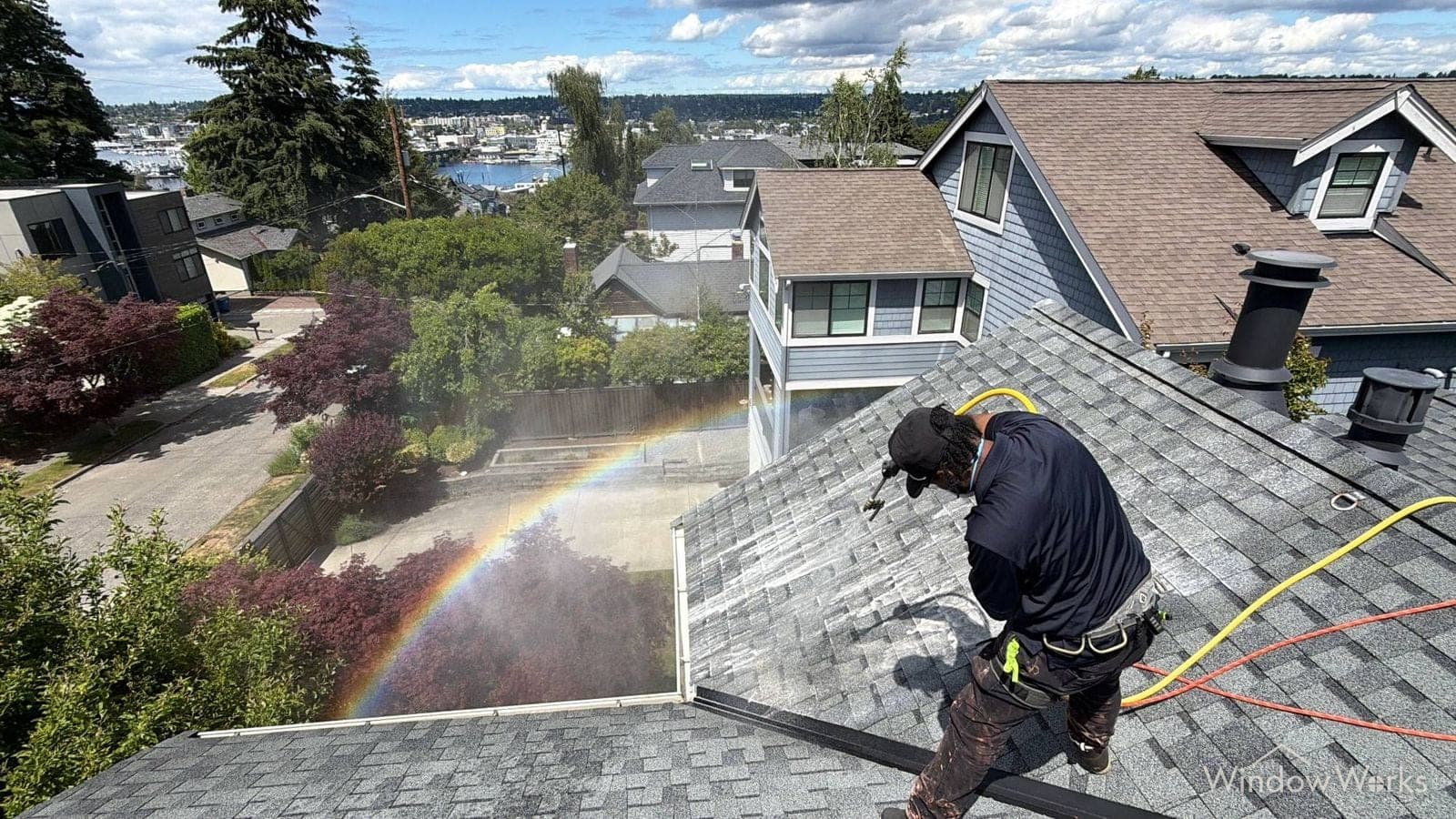
Roof Wash
The moss on the roof is what sheds into the gutters and packs the line you just paid to clear. A soft wash slows the debris at its source.
See the full service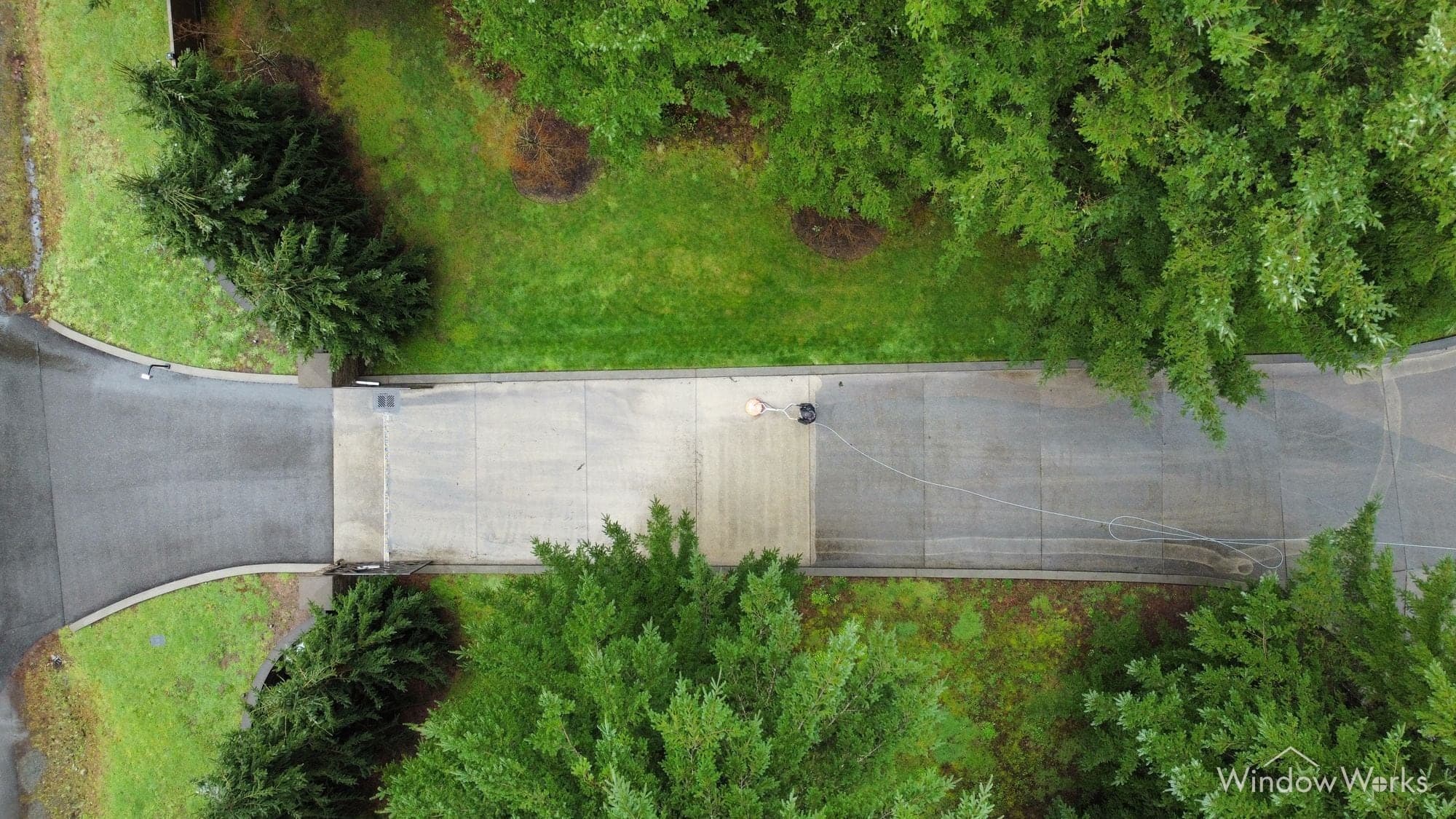
Pressure Washing and Soft Washing
Jetting leaves silt and debris on the driveway around the inlets. With the crew already on site, the hard surfaces come clean in the same visit.
See the full service
Why WindowWorks
Who shows up matters.
Anyone can rent a pressure washer. After 20+ years on Eastside exteriors, and a 4.9 rating across 300+ reviews, we can tell you the real difference is the person holding the wand: what they know, how they were trained, and whether the company behind them takes care of them. We take care of our techs, so they take care of your property.
Background-checked
Every technician is background-checked before they ever step onto a customer's property.
Certified, skill by skill
Our crews earn certification across 369 individual skills in 10 categories, each one signed off by an evaluator, never just by clocking time.
Paid like professionals
A living wage, healthcare, and dental. People who are treated well do careful work, and they stay, so you see the same faces.
Licensed, bonded, and insured
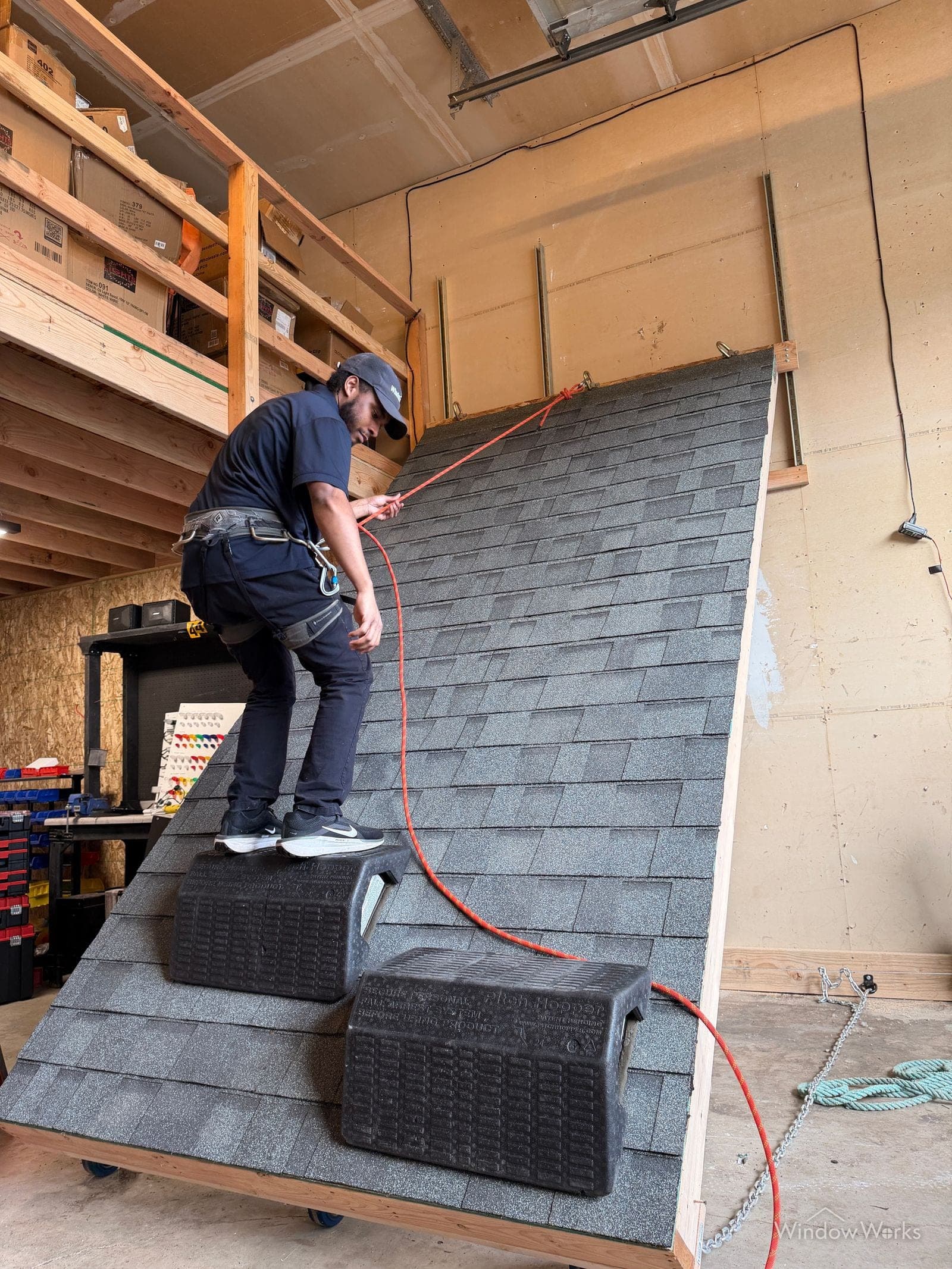
With OSHA-aligned safety training for the at-height work. If someone is on your roof, they are trained and covered for exactly that.
Method matched to the surface
Soft wash where pressure would damage, hot water where cold cannot lift, the right chemistry for the stain. The method follows the surface, not the other way around.
Documented before and after
Every job is photographed before and after, so you can see exactly what changed and keep it on file.
Common questions
Good to know.
How do I know my underground drain is clogged?
Gutter overflow at the downspout despite clean gutters, water pooling near the foundation after rain, standing water at a yard drain, or drainage slowing in one zone. The line is invisible, so symptoms are usually the first clue.
My gutters are clean, why is water still backing up?
Gutter cleaning clears the troughs and downspouts above grade, but a packed underground line still backs the system up at the downspout. Jetting is the step that completes the gutter system.
What if you find roots or damage?
Roots mean the pipe is cracked and they return until it's repaired, so those lines get jetted annually with a camera each visit. Digging only comes up in the extreme cases, where the pipe is crushed or collapsed and no amount of jetting will hold. Depending on the job we either open it up and replace that section ourselves or bring in a drainage contractor, and we tell you which one it is before anything starts.
Can Gutter Sticks replace jetting?
No, they reduce it. A Gutter Stick keeps needles from packing the downspout and underground line, typically stretching jetting from every year to every two.
Serving Kirkland and the whole Eastside
Rooter Drain Jetting near you.
- Rooter Drain Jetting in Issaquah
- Rooter Drain Jetting in Sammamish
- Rooter Drain Jetting in Bellevue
- Rooter Drain Jetting in Redmond
- Rooter Drain Jetting in Newcastle
- Rooter Drain Jetting in Woodinville
- Rooter Drain Jetting in Mercer Island
- Rooter Drain Jetting in Snoqualmie
- Rooter Drain Jetting in North Bend
- Rooter Drain Jetting in Fall City
- Rooter Drain Jetting in Carnation
- Rooter Drain Jetting in Duvall
- Rooter Drain Jetting in Renton
- Rooter Drain Jetting in Seattle
Rooter Drain Jetting in Kirkland
Ready for a real estimate?
Answer a few quick questions and get a real number in minutes. No pressure, no obligation.