

Graffiti Removal in Carnation
Graffiti Removal in Carnation, WA
In Carnation the question is rarely just the wall. It is the animals on the other side of it, the garden bed against it, and the rain collection off the roof. We treat the tag with chemistry suited to the surface, keep the rinse water away from all three, and wash down the plants when the work is done.
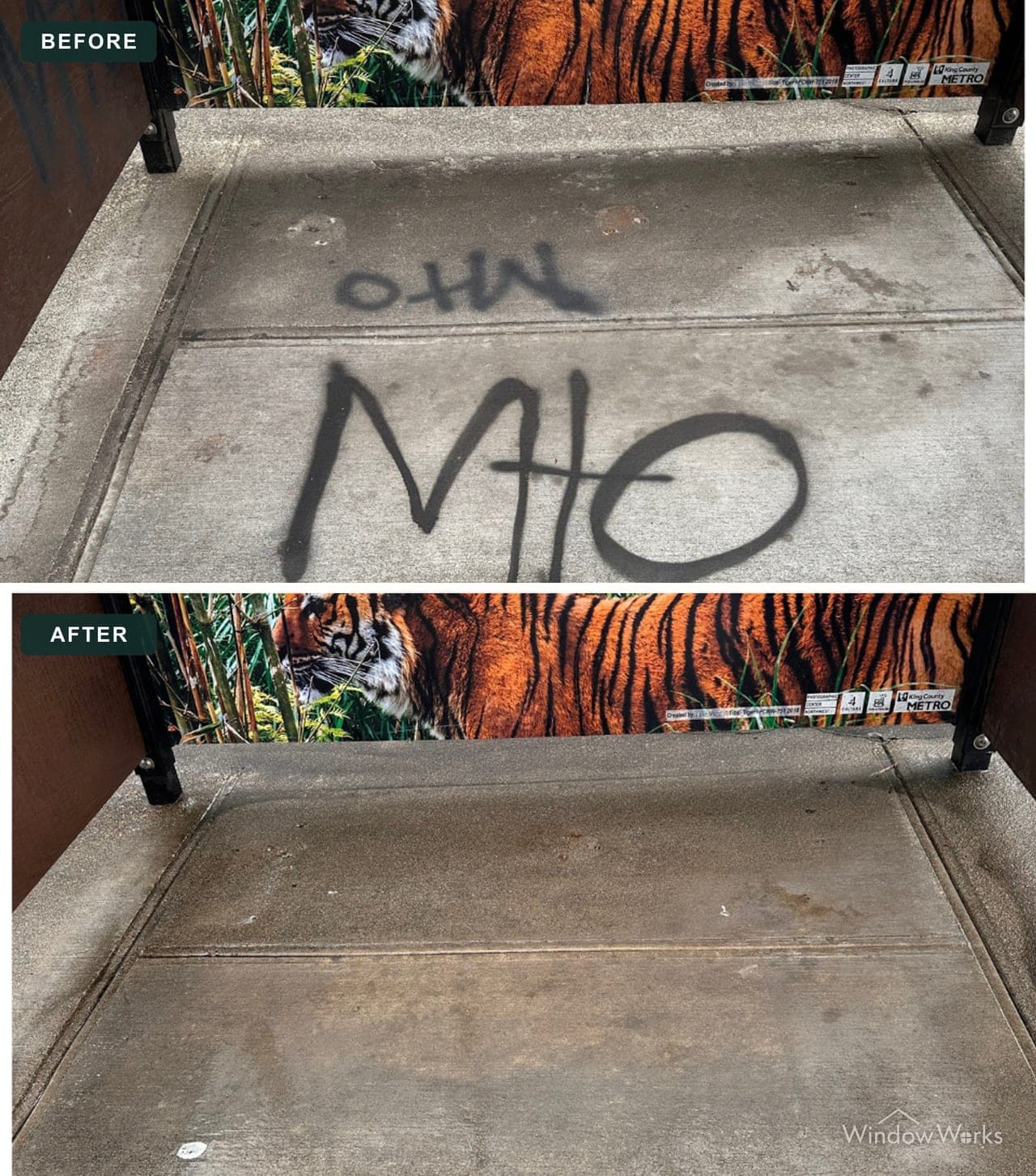
A farmhouse wall in Downtown Carnation is not the same surface as a newer home up Tolt Hill, so the treatment changes with the material. A test goes on first, in a place you will not notice, and you approve what it shows before the rest is treated.
Low pressure protects the surface while the chemistry works. Forcing the paint off masonry leaves damage you cannot undo, so we do not do it. You get photos of the wall before and after.
Areas we serve in Carnation
- Downtown Carnation
- Tolt Hill
- Stillwater
- Tolt River corridor
- Ames Lake area
Carnation questions
- We have animals and a garden right against that wall. How do you work around them?
- Tell us when we schedule and we plan the job around what lives there. The rinse water stays out of the pasture and the beds, and everything green gets washed down before we leave. If you collect rainwater, say so and we will work around that too.
- Why does the test spot go somewhere nobody looks?
- Because it is a preview, not a promise. It shows what your exact surface will give back before anything visible is touched, and if a porous wall is going to keep a faint shadow, you find out there. You approve the result first, then we treat the full area.
What we cover
Surfaces we take graffiti off.
Flat or vertical, painted or raw. The material decides the method, not the other way around.
- Concrete and exposed aggregate
- Brick and block
- Stucco
- Natural and cut stone
- Retaining walls
- Painted and coated walls
- Metal doors and roll-ups
- Glass and storefronts
- Signage and light poles
- Dumpster enclosures
- Sidewalks and loading docks
- Transit shelters and street furniture
Every surface gets a test spot first. On porous masonry that has held the paint through a wet season a faint shadow can stay, and you hear that from us before we start rather than after.
Before and after
The difference, on real jobs.
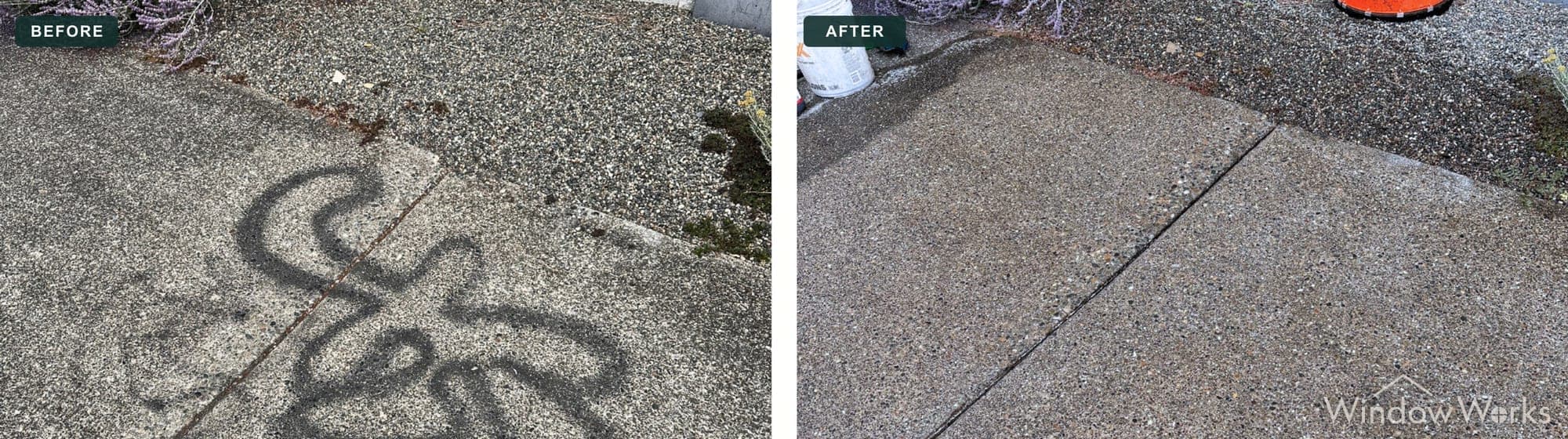
Exposed aggregate, which is about as porous as flat work gets, back to its own color with no shadow left. 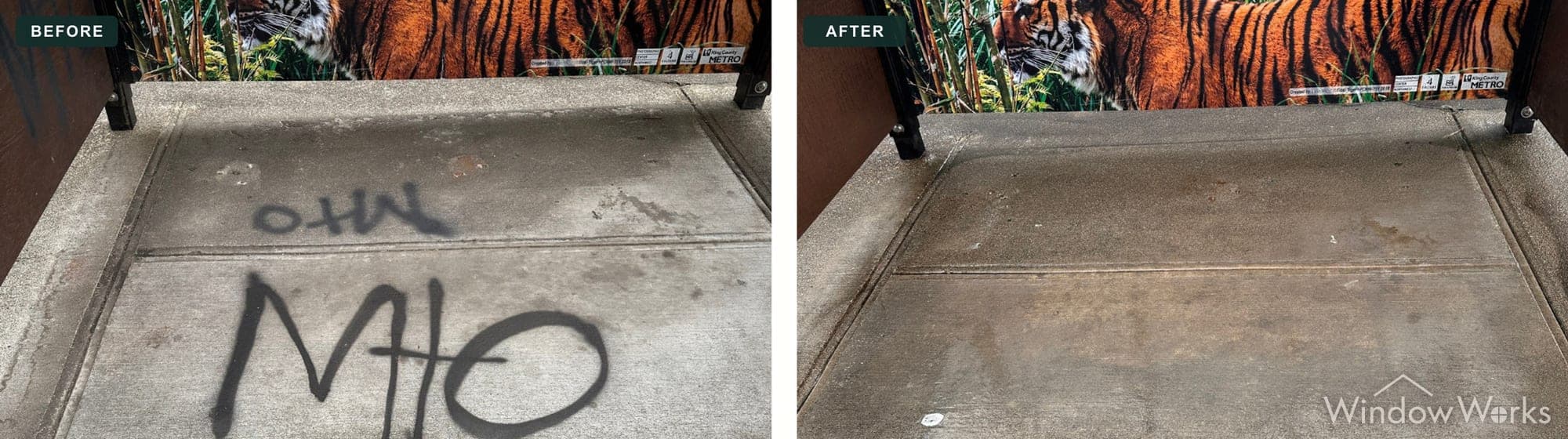
The tag came off the pad. The commissioned art panel behind it stayed exactly where it was.
Why it matters
The problem this solves.
Customers read a tagged wall as a building nobody is watching, and so do tenants deciding whether to renew. Your city reads it the same way: Seattle gives an owner ten days to clear it after notice, 48 hours if it is gang or hate related, and Bellevue put removal on the property owner. Every week it sits, the paint cures further into the surface and comes off less completely.
How we do it
Our approach.
Paint behaves differently on every material, so the compound has to match the surface and the paint system both. Every job starts with a test spot somewhere nobody looks. We show you that result and agree what you are getting before the full area is treated, in writing on commercial work. Then the chemistry does the work at low pressure, because blasting a tag off masonry trades it for a permanent scar.
- A test spot first, somewhere nobody looks
- Compound matched to the material and the paint
- Low pressure, so the wall is not scarred taking the tag off
- The result agreed before the full area is treated
- Runoff directed, plants and surroundings rinsed down
- Before and after photos for your file
Worth knowing
What a tag does, and what a paint-out does.
Two different things get called graffiti, and the usual fix makes one of them worse.
Street art and tagging are not the same thing.
A mural is work an owner commissioned and paid an artist for. A tag is a name sprayed on your wall without asking, up in seconds, aimed at other taggers rather than at your customers.
We do not decide which is which. You point at what you want gone, and if something looks commissioned we ask you before we touch it.
A paint-out is a patch, and patches never match.
Covering it is cheaper the first time. Exterior paint fades, so the new rectangle sits a shade off the wall around it, and after a few rounds you are maintaining a quilt of blocks that reads as neglect just as loudly as the tag did.
The patch is also flat, clean, and uniform, which makes it the easiest surface on the building to write on. On brick, the coats seal a wall that was built to breathe.
The clock is the biggest variable.
Spray paint keeps curing into a porous surface the whole time it sits there. The same tag comes off more completely this week than next month, and on aggregate or raw brick that is the difference between clean and a shadow.
Fast removal is what every city graffiti program is built on, for the same reason. A wall that gets cleared stays cleared, and a wall that holds a tag collects more.
Three ways to deal with it
Paint it out, blast it off, or take it off.
Most buildings have already tried the first two.
| Paint over it | Pressure blast it | Targeted removal | |
|---|---|---|---|
| What happens to the tag | Covered. The paint is still under there. | Ground at, and it comes off with some of the surface. | Lifted out of the surface and rinsed away. |
| What the wall looks like after | A rectangle a shade off the wall around it. | A halo where the surface was cut back, lighter than everything near it. | The wall it was before, minus the tag. |
| After three or four rounds | A quilt of mismatched blocks, and paint film building on the masonry. | Etched brick, furred stucco, mortar washed out of the joints. | No change. Nothing is accumulating. |
| What the next tagger sees | A fresh, flat, uniform panel. | A wall that already looks damaged. | A wall that gets cleaned. |
| Cost over time | Cheapest once, then it repeats, and the area you repaint keeps growing. | Cheap now. Restoring etched masonry later is a mason's job. | Priced per tag, with nothing to undo afterwards. |
| The honest limit | Only matches if you have the original paint and the wall has not faded. | Pressure damage does not come back out of masonry. | On porous surfaces that sat a long time, a faint shadow can stay. |
We do not paint, so this is not us talking you out of somebody else's product. If a wall genuinely is best repainted, we will tell you that and hand it back.
The paint-out is only cheaper once.
Every round of covering up adds a patch, and the patch is the next canvas. Removal ends at the surface: nothing builds up, nothing has to be color-matched later, and the wall you paid for is still the wall you have. On a property that gets hit repeatedly, that is the difference between a maintenance line item and a growing one.
Request a proposalAdd-ons
Add it while we're there.
The crew and equipment are already on site, so these attach to your visit.
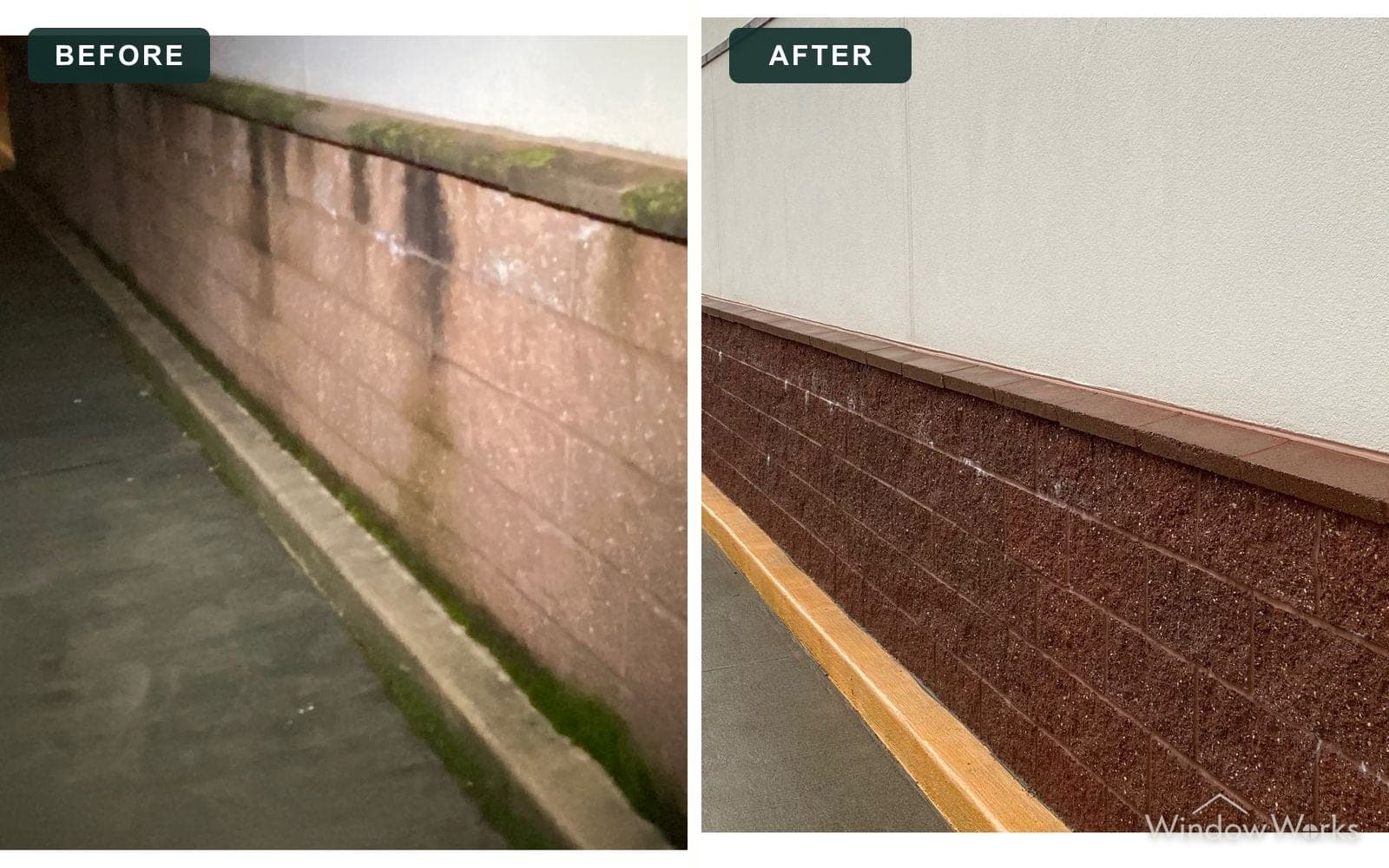
Building Washing
Tags rarely land on a clean building. If the elevation is filmed over, removal leaves a clean rectangle on a dirty wall, which is its own kind of patch.
See the full service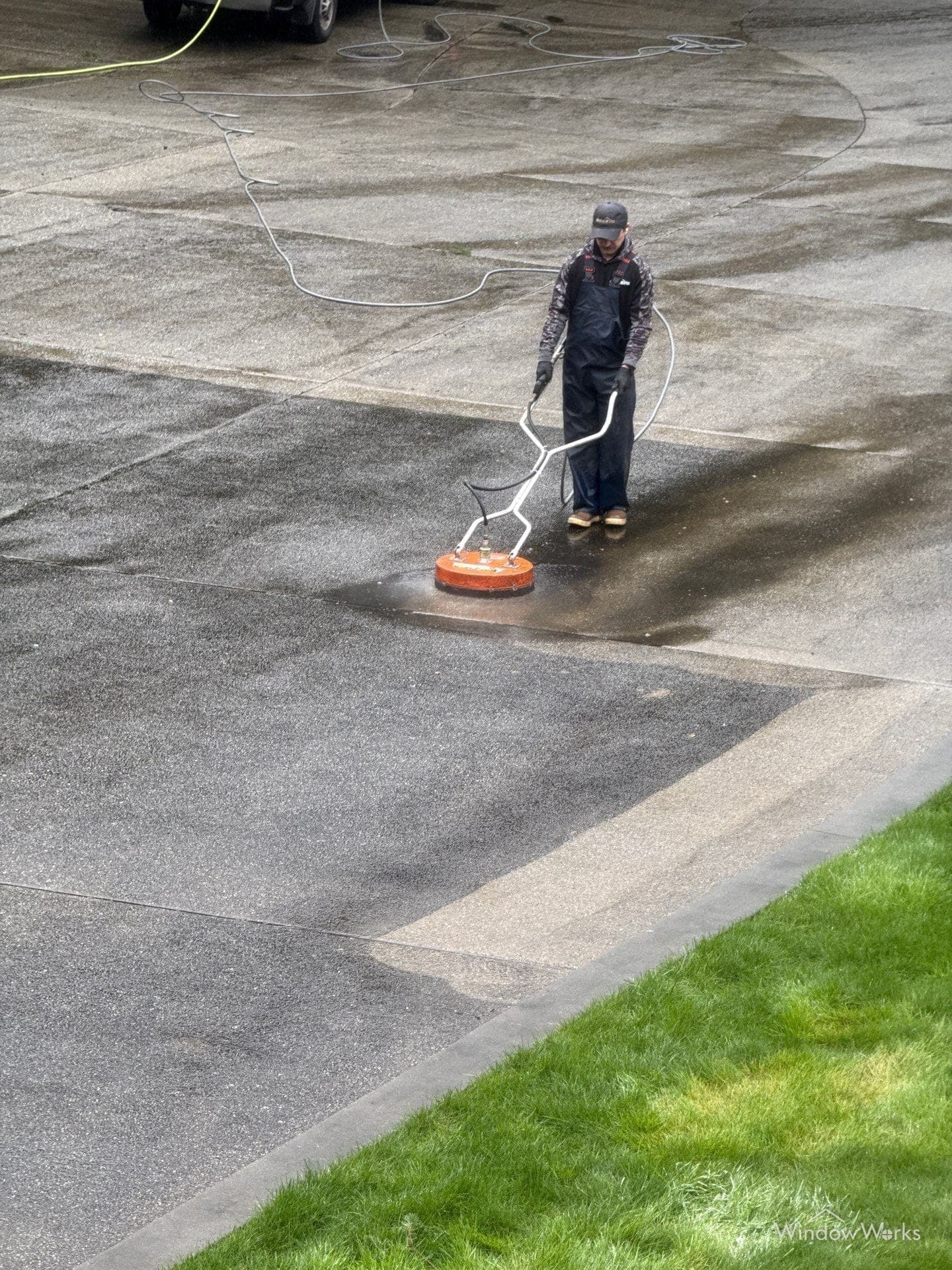
Pressure Washing and Soft Washing
The concrete around a tagged wall is usually carrying gum, oil, and spills. Hot water is what lifts those, and the crew and equipment are already there.
See the full service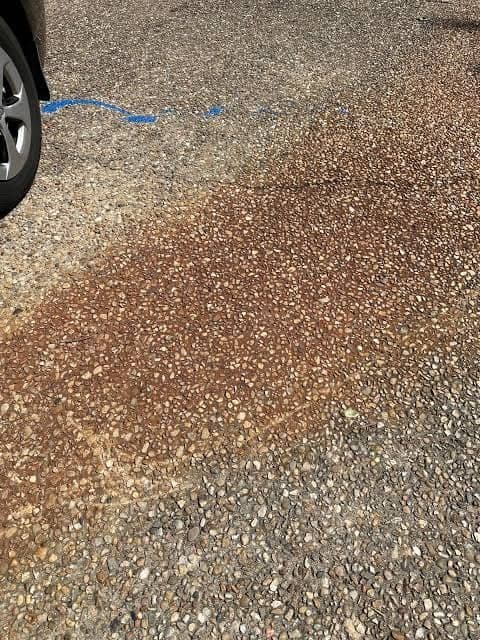
Complex Stain Removal
Rust bleed, efflorescence, tannin, battery acid. Same test spot, same written expectation, with the treatment matched to the stain instead of the paint.
See the full service
Why WindowWorks
Who shows up matters.
Matching the removal method to the surface is what keeps a cleanup from leaving its own mark.
Anyone can rent a pressure washer. After 20+ years on Eastside exteriors, and a 4.9 rating across 300+ reviews, we can tell you the real difference is the person holding the wand: what they know, how they were trained, and whether the company behind them takes care of them. We take care of our techs, so they take care of your property.
Background-checked
Every technician is background-checked before they ever step onto a customer's property.
Certified, skill by skill
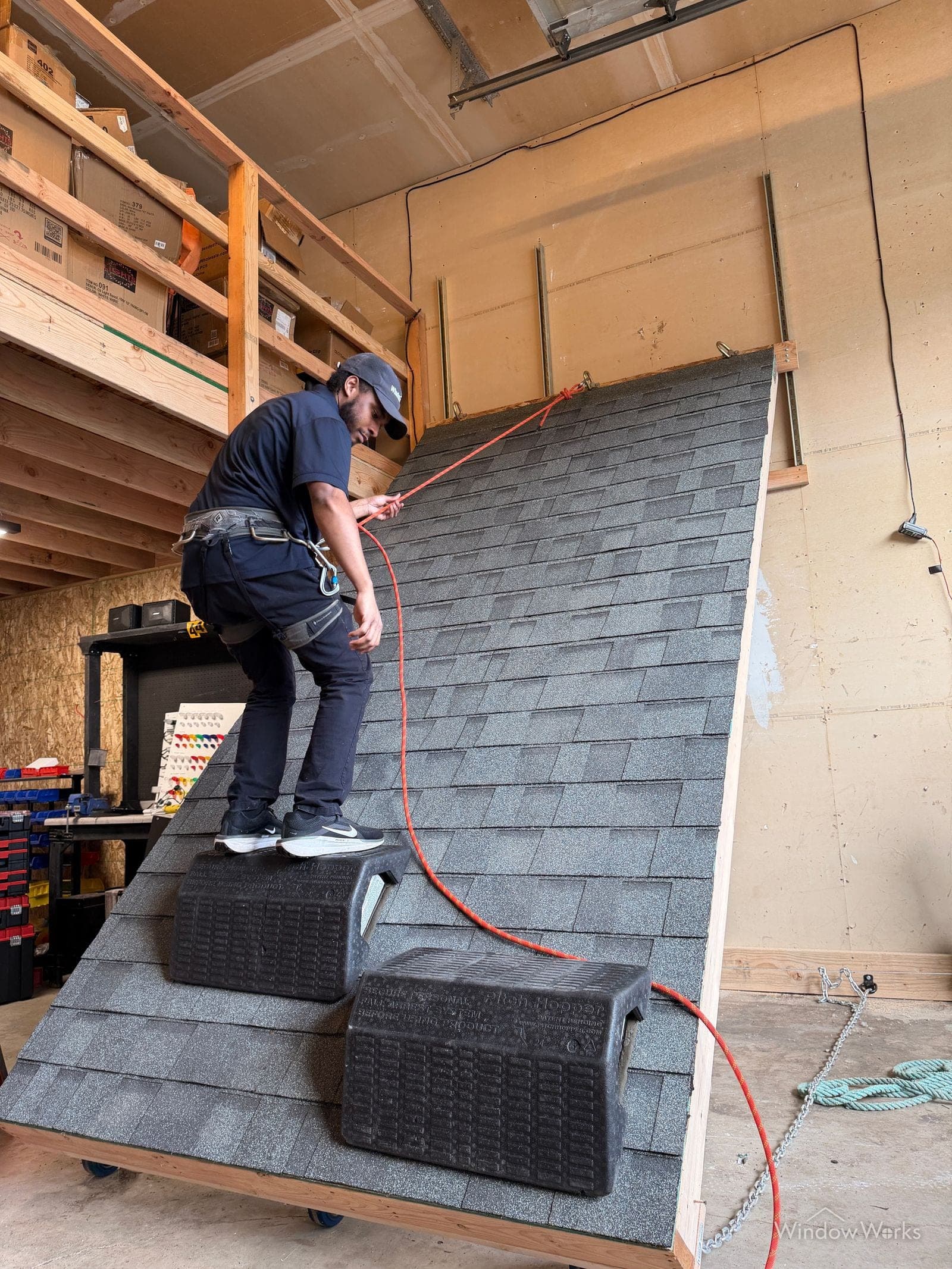
Our crews earn certification across 369 individual skills in 10 categories, each one signed off by an evaluator, never just by clocking time.
Paid like professionals
A living wage, healthcare, and dental. People who are treated well do careful work, and they stay, so you see the same faces.
Licensed, bonded, and insured
With OSHA-aligned safety training for the at-height work. If someone is on your roof, they are trained and covered for exactly that.
Method matched to the surface
Soft wash where pressure would damage, hot water where cold cannot lift, the right chemistry for the stain. The method follows the surface, not the other way around.
Documented before and after
Every job is photographed before and after, so you can see exactly what changed and keep it on file.
Common questions
Good to know.
Do you remove murals and street art?
Only if you tell us to. A commissioned mural is work somebody paid an artist for, and a tag is a name sprayed on your wall without asking. They are not the same thing and we do not treat them the same. If what is on your wall looks commissioned, we ask you before we touch it.
Isn't it cheaper to just paint over it?
Once. Exterior paint fades, so the patch never quite matches the wall around it, and the next tag lands on a fresh flat panel that is the easiest surface on the building to write on. After a few rounds you are maintaining a quilt. We do not paint, so we have nothing to sell you either way.
Will the tag come off completely?
On sealed concrete, metal, and glass, usually. On porous brick, block, or aggregate that has held the paint a while, a faint shadow can stay, and we do not guarantee full removal on porous substrate. The test spot tells us which one you are looking at, and you get that answer before we treat the whole area, in writing on commercial work.
Am I required to remove it?
In Seattle, yes. Graffiti on private property is a nuisance under the city code, and an owner has ten days to clear it after notice, or 48 hours if it is gang or hate related. Bellevue also makes removal the property owner's responsibility. Rules differ city to city, so check yours.
Does it matter how fast I deal with it?
More than anything else. Spray paint keeps curing into a porous surface the whole time it sits there, so the same tag comes off more completely this week than next month. Fast removal is also what every city graffiti program is built on: a wall that gets cleared stays cleared, and a wall that holds a tag collects more.
Can't you just pressure wash it off?
High pressure scars brick, masonry, and softer concrete, and it takes the mortar out of the joints. That trades a tag for a lighter, eroded patch you cannot undo. We use removal compounds matched to the surface and the paint, and let the chemistry do the work.
What surfaces do you clean, and do you do homes?
Concrete, brick, block, stone, stucco, metal, and glass, flat or vertical, commercial or residential. Send a photo if you can and we will match the method to the surface.
Serving Carnation and the whole Eastside
Graffiti Removal near you.
- Graffiti Removal in Issaquah
- Graffiti Removal in Sammamish
- Graffiti Removal in Bellevue
- Graffiti Removal in Redmond
- Graffiti Removal in Kirkland
- Graffiti Removal in Newcastle
- Graffiti Removal in Woodinville
- Graffiti Removal in Mercer Island
- Graffiti Removal in Snoqualmie
- Graffiti Removal in North Bend
- Graffiti Removal in Fall City
- Graffiti Removal in Duvall
- Graffiti Removal in Renton
- Graffiti Removal in Seattle
Graffiti Removal in Carnation
Ready for a real estimate?
Answer a few quick questions and get a real number in minutes. No pressure, no obligation.