

Pressure Washing and Soft Washing in Seattle
Pressure Washing and Soft Washing in Seattle, WA
Washing concrete in Seattle is a logistics job as much as a cleaning job. Lots are tight, neighbors are close, and the landscaping often grows right against the walkway. Under trees that have become giants, the concrete in these older neighborhoods carries real growth, and the work has to be done carefully in a small space.
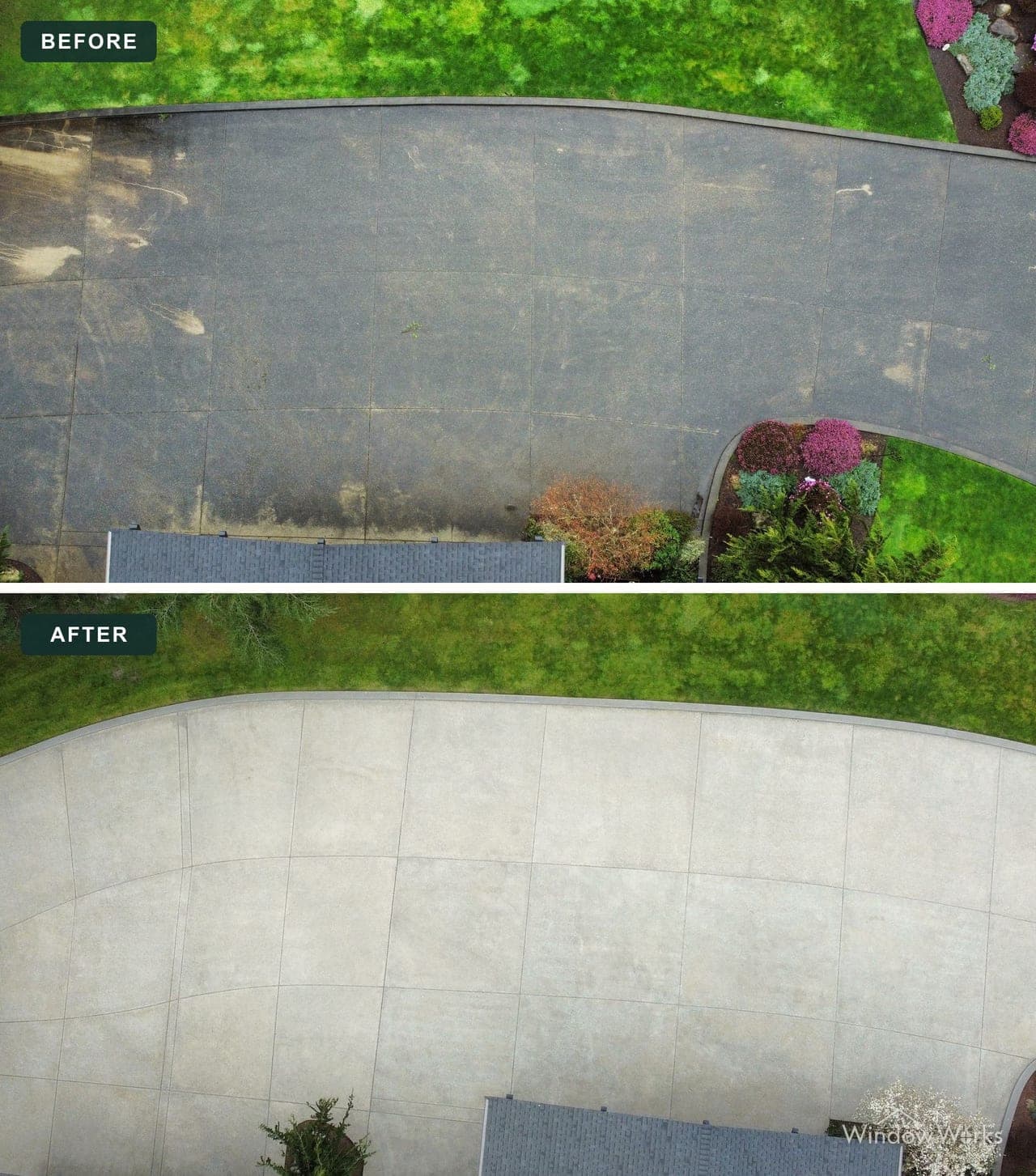
In Wedgwood, View Ridge, Laurelhurst, and Magnolia, careful means pre-wetting the plantings against the house, deciding where every gallon of runoff goes before it goes there, and rinsing the beds again on the way out. Anything pressure would ruin, stone and stucco included, gets a soft wash at low pressure.
Ballard and West Seattle storefronts bring different problems. Gum and grease call for hot water, and spray paint gets graffiti removal matched to the surface and paint type so it comes off without scarring. We take on both sides of that work, houses and commercial properties, across the city.
Areas we serve in Seattle
- West Seattle
- Magnolia
- Ballard
- Wedgwood
- View Ridge
- Laurelhurst
Seattle questions
- Our lot is tight and the plants grow right against the walkway. Can you work around that?
- Yes, that is normal city work for us. We protect what is planted against the house, keep the water where we want it, and rinse the beds again before we go. You walk the finished job with us at the end.
- What about gum and graffiti on our storefront sidewalk?
- Gum and grease are hot water jobs. Graffiti removal is matched to the surface and the paint type so it comes off without scarring, though some shadowing can remain on porous surfaces.
What we cover
Surfaces we clean.
Method-matched across the hard surfaces around your home or building. If yours isn't listed, ask.
- Concrete driveways
- Aggregate
- Asphalt
- Pavers and patios
- Sidewalks and paths
- Retaining walls
- Brick
- Natural stone
- Stucco
- Garage floors
Before and after
The difference, on real jobs.
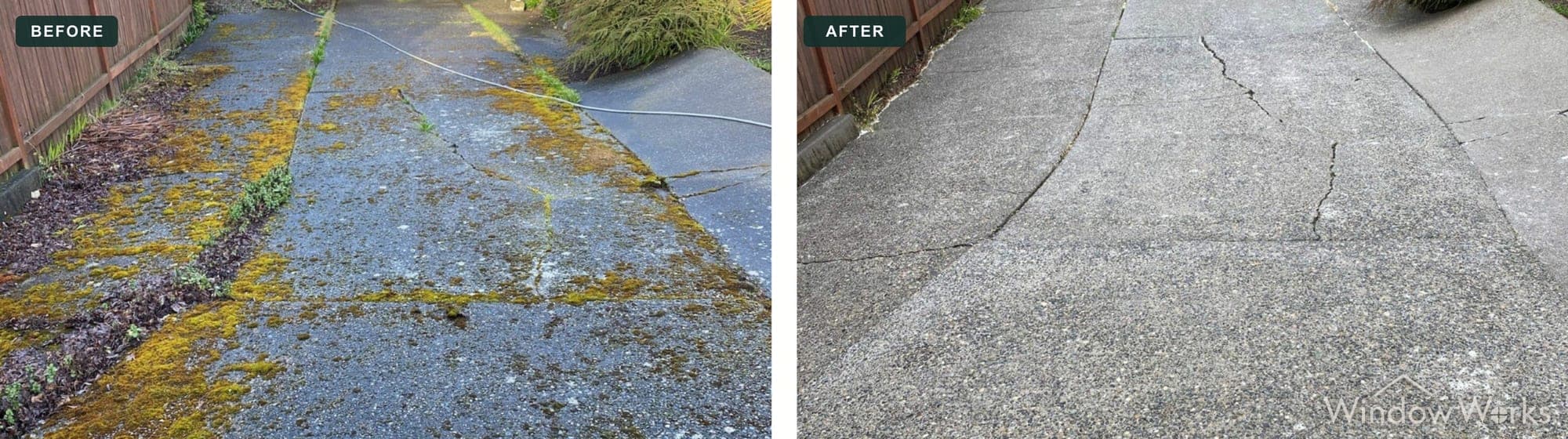
Pressure washing a moss-stained driveway. 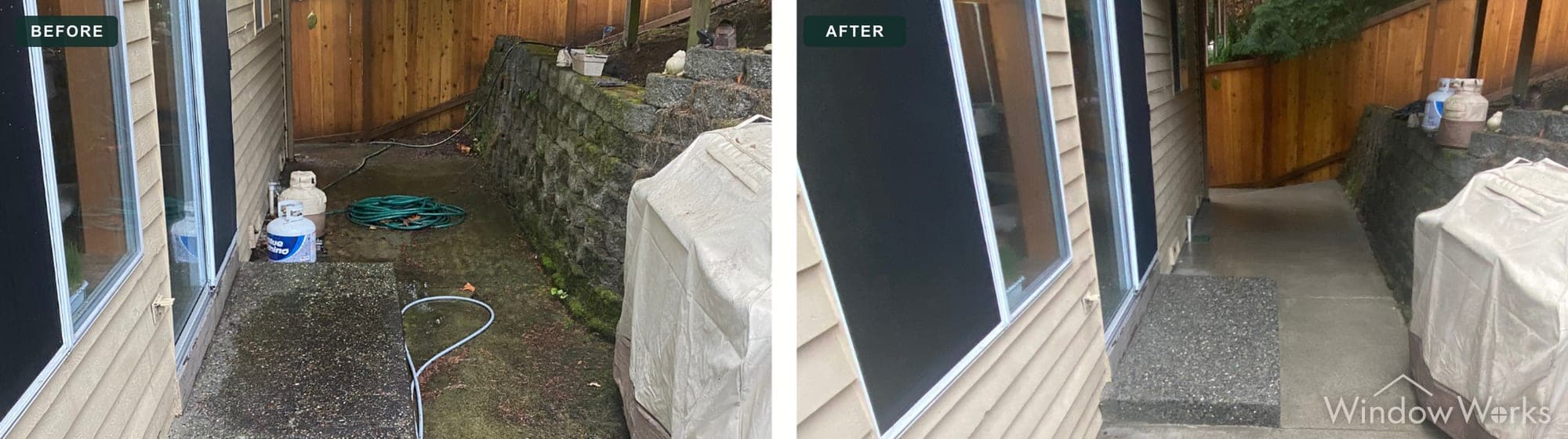
Pressure washing a stained side-yard walkway. 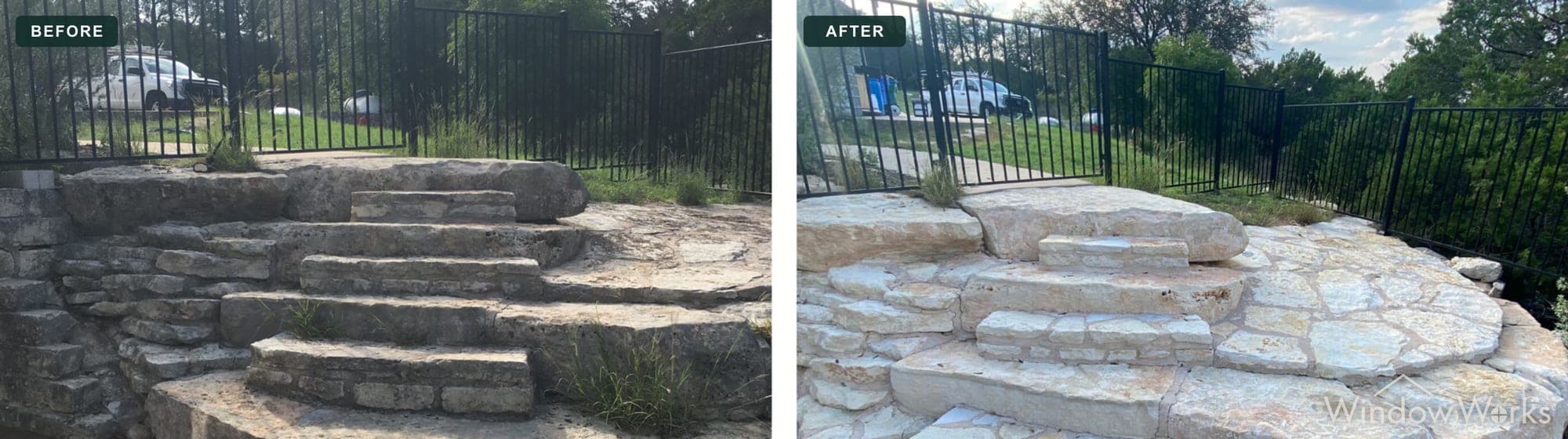
Soft washing a flagstone patio and steps. 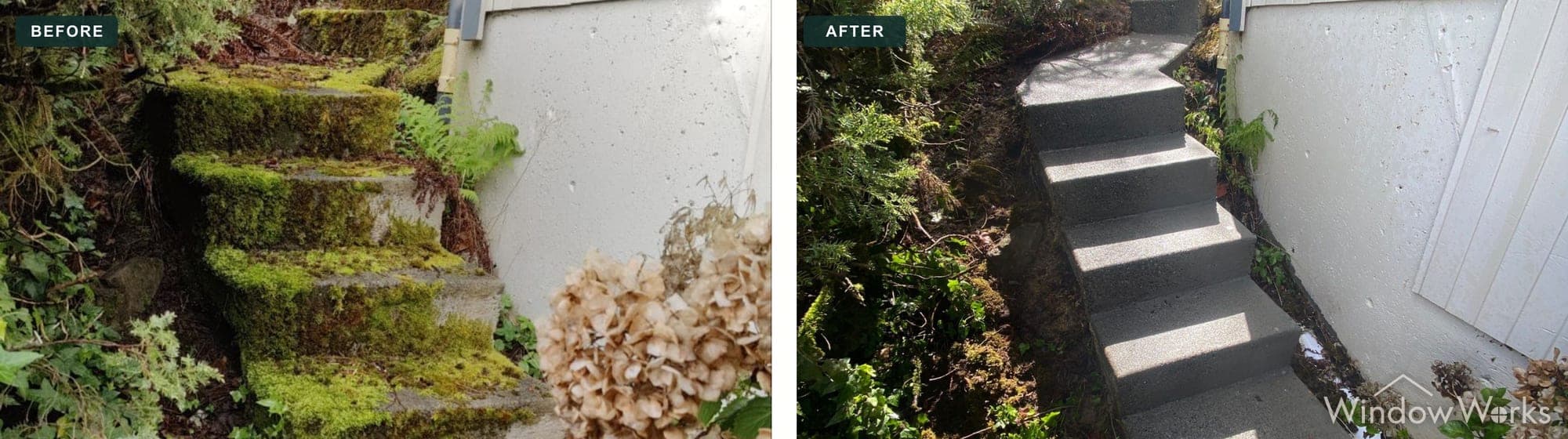
Soft washing moss off concrete steps. 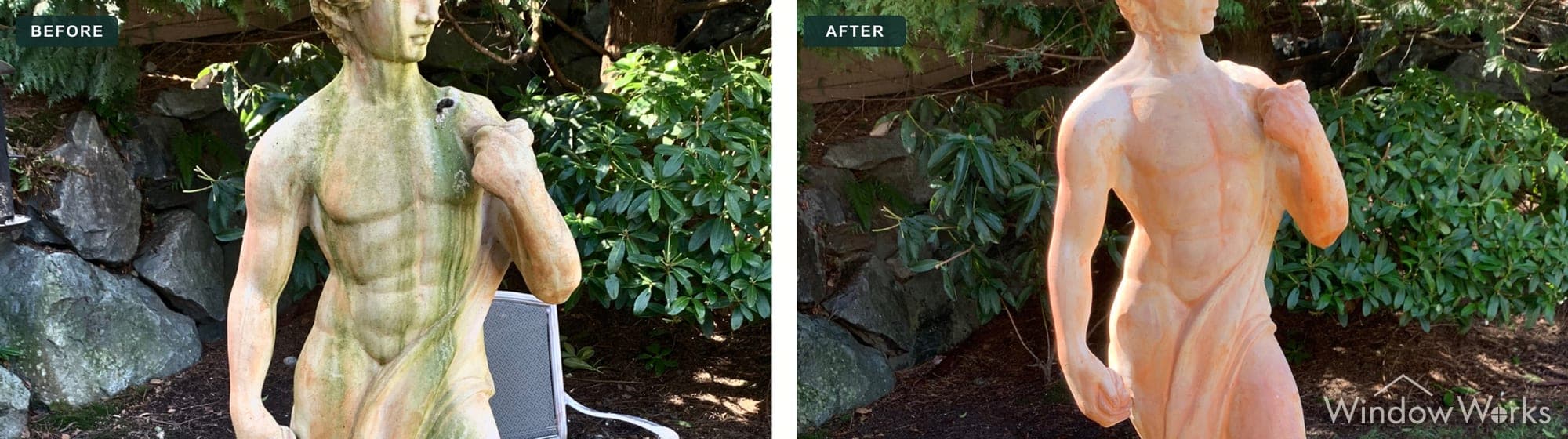
Soft washing a moss-covered garden statue. 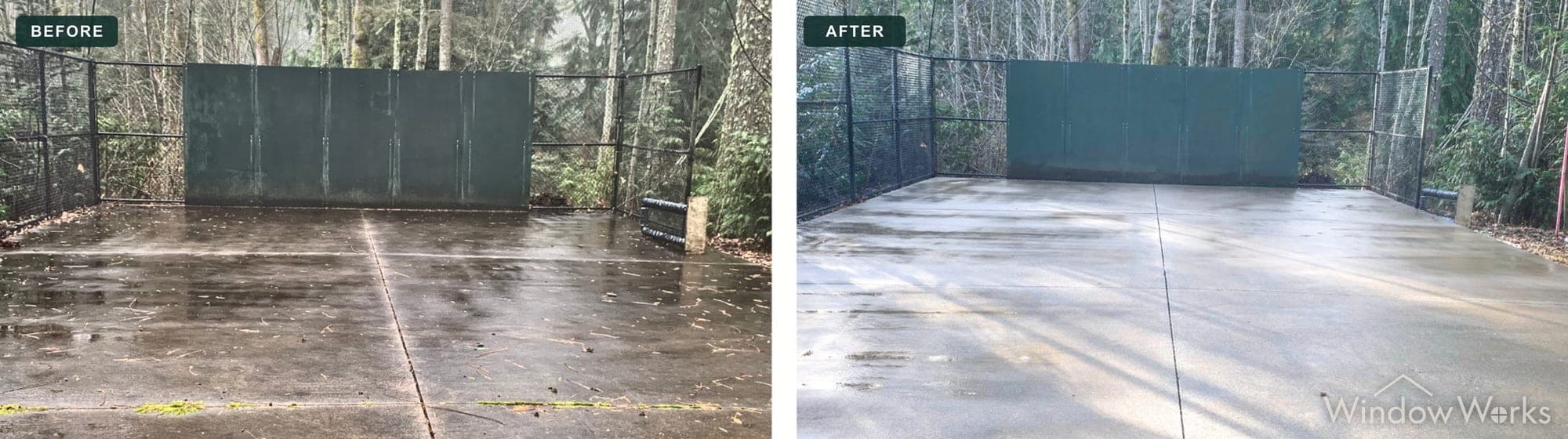
Pressure washing a sport court slab. 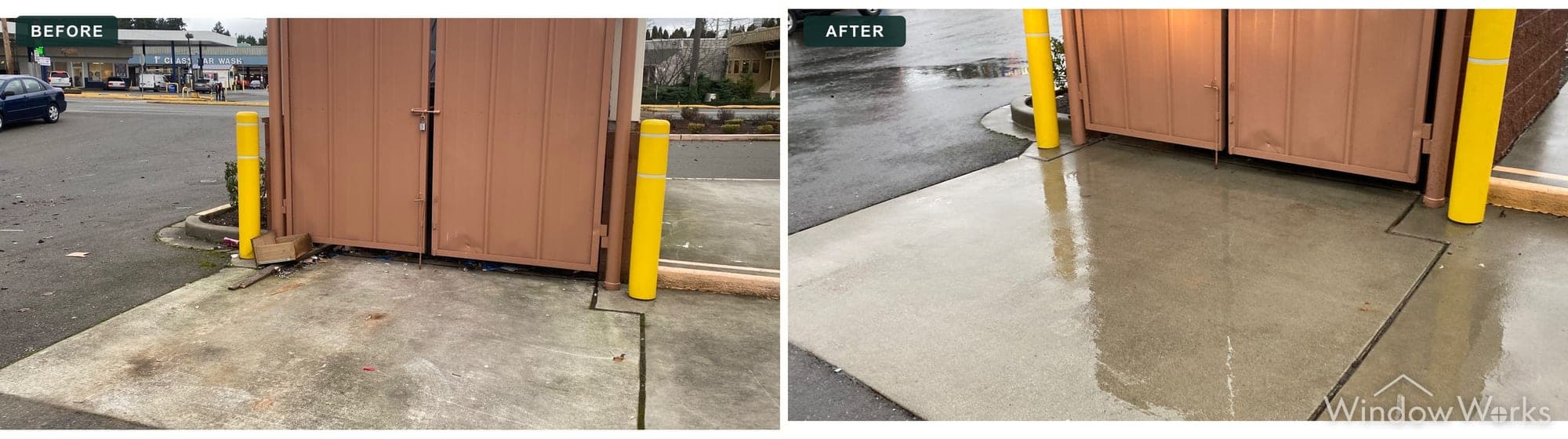
Pressure washing a commercial dumpster-enclosure pad.
Why it matters
The problem this solves.
Northwest moss and algae root into concrete, wedge cracks open, and make wet surfaces a real slip hazard. The worst stains don't respond to pressure: rust is chemistry, oil needs heat, and blasting harder just wears out the surface.
How we do it
Our approach.
Most companies bring one tool. We bring an arsenal: cold water, hot water, chlorine treatment, soft washing, acid-based stain treatments, industrial degreasers, and graffiti removal. We identify the surface and the stain first, because organic growth, petroleum, and mineral staining are three different problems, and the wrong answer either does nothing or leaves damage of its own.
- Surface and stain identified before choosing method
- Plantings pre-wet, surfaces protected, runoff controlled
- Even overlapping passes, no striping
- Final rinse, landscaping re-rinse, walkthrough with you
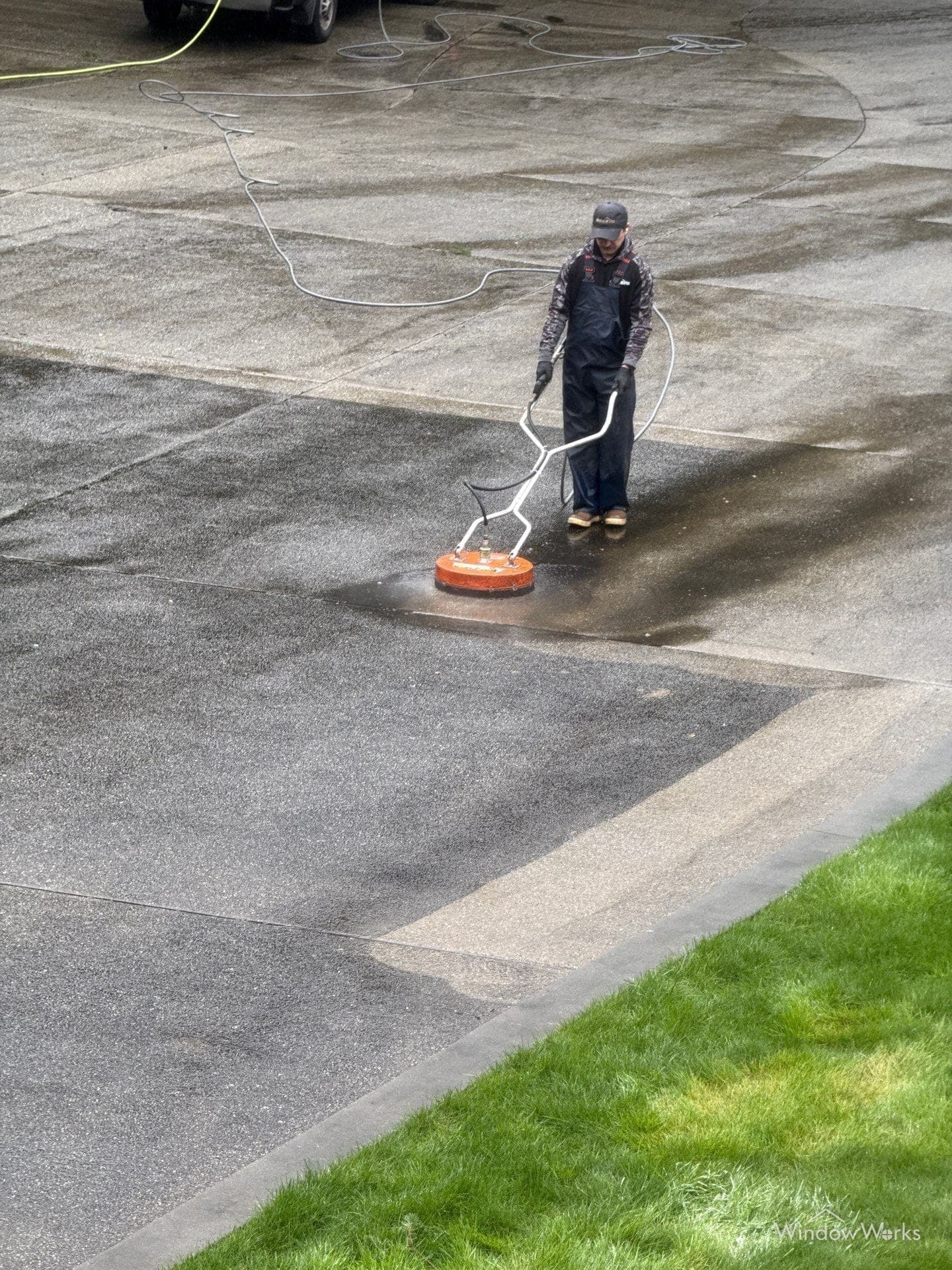
The stain library
Name the stain, and you know the fix.
Most of what gets called dirty concrete is actually one of a handful of specific problems, and each one responds to different chemistry. This is the part most pressure washing companies skip, and it is why the wrong wash either does nothing or leaves damage of its own. Find yours below.
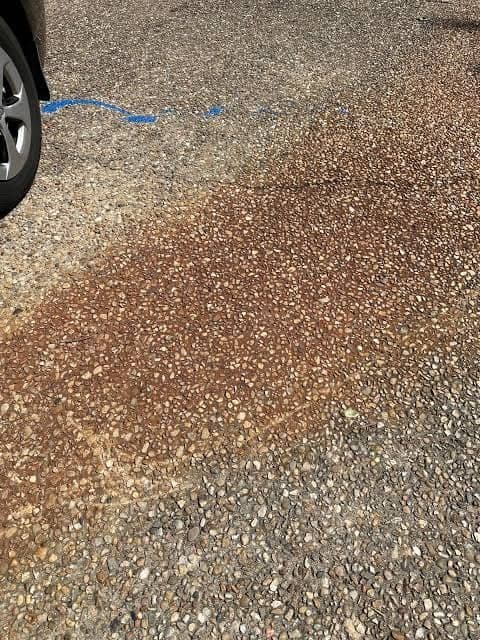
Rust
Orange trails from a sprinkler head spraying iron-rich water, an exposed nail or piece of rebar, or metal furniture left out through a wet winter. The iron bonds into the pores, which is why pressure never lifts it.
It comes off with a targeted acid treatment matched to the stain, starting with a test spot. We find the source first. Clean the stain and leave the sprinkler running on the concrete and you have rented a clean driveway, not fixed one.
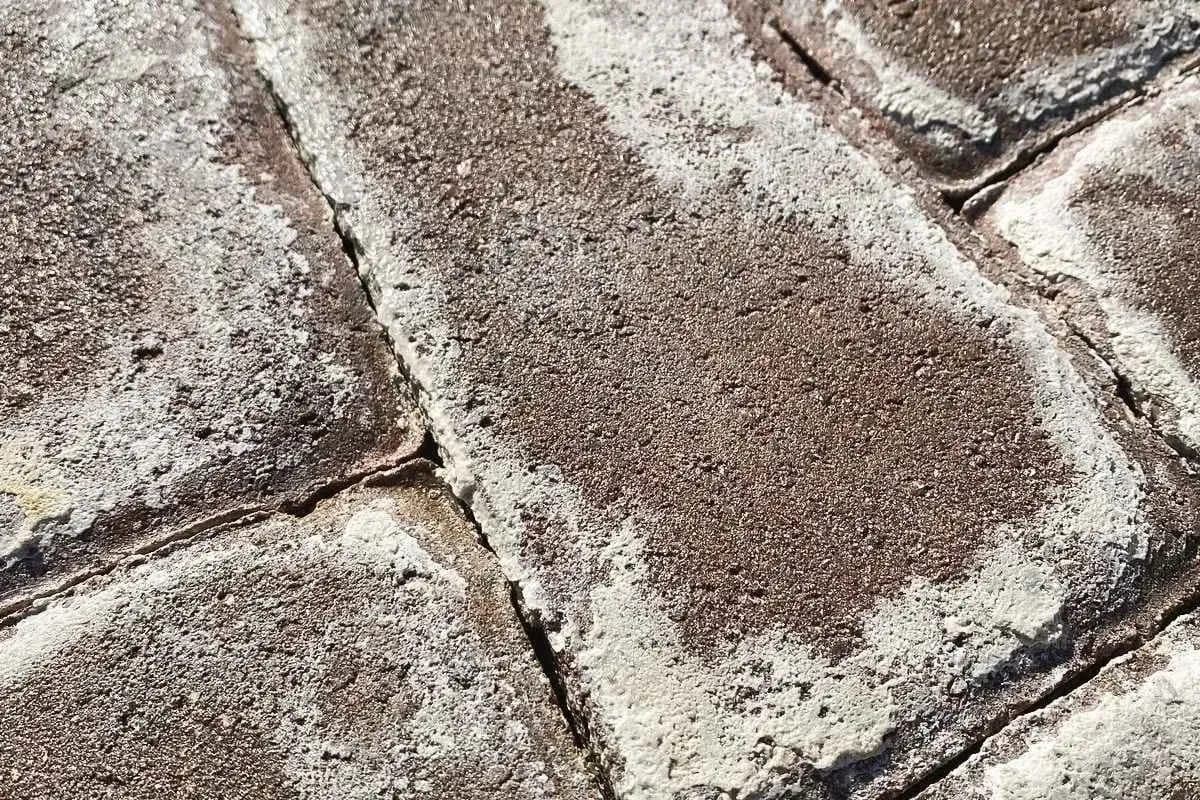
Efflorescence
A white chalky bloom that came from inside the material, not from anything that landed on it. Water moving through concrete, brick, or pavers carries mineral salts to the surface and leaves them there as it dries.
Pressure does not touch it and neither does soap. It takes an acid treatment. It will also keep coming back until the water moving through gets dealt with, and we would rather say that than sell you the same clean every spring.
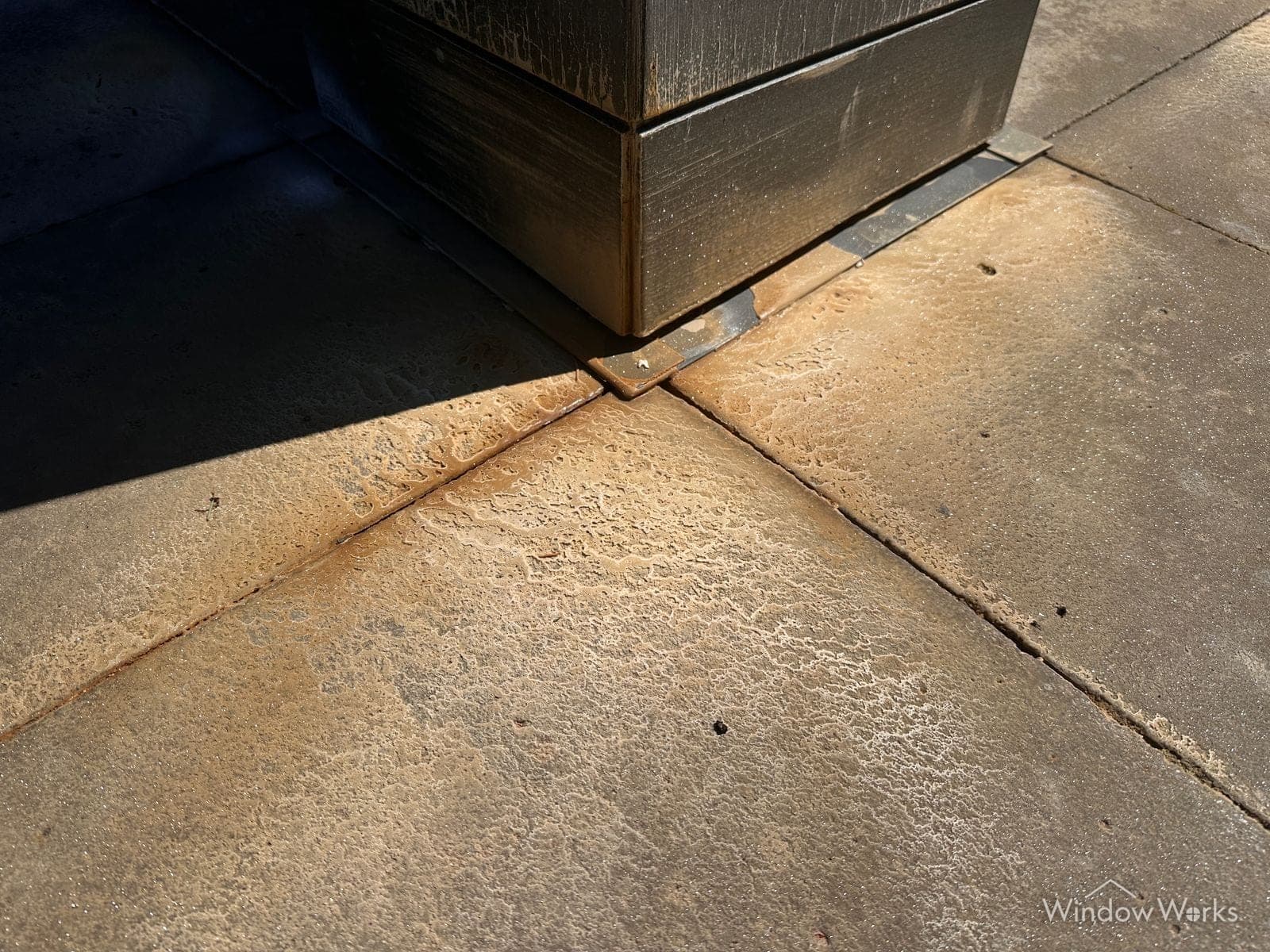
Calcium and Mineral Deposits
A hard tan or white crust where mineral-heavy water ran, pooled, and evaporated: irrigation overspray, a downspout discharging onto the slab, or runoff tracking the same line for years. It builds in the shape of the water.
It is bonded mineral, not dirt sitting on top, so it takes an acid treatment matched to the surface and a test spot first. Fix where the water goes or it returns in the same shape.
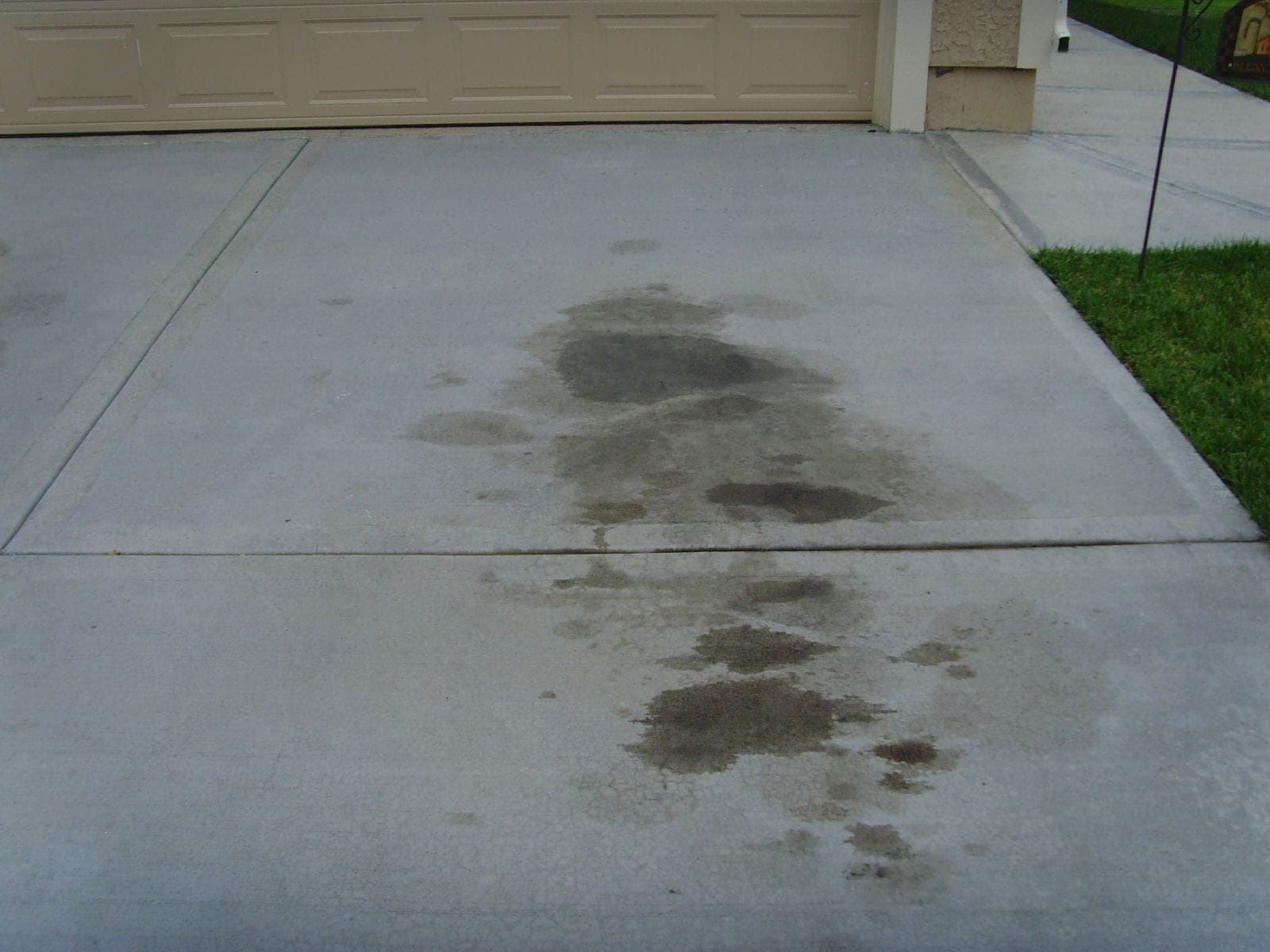
Oil and Gum
Oil and grease soak down into the pores. Gum bonds onto the surface. Cold water on either one mostly moves it around and leaves a shadow.
This is what hot water is for. Heated water breaks petroleum residue down and releases gum in a way cold water cannot. It is the right tool for garage floors, drip stains on a driveway, parking areas, dumpster pads, and loading docks.
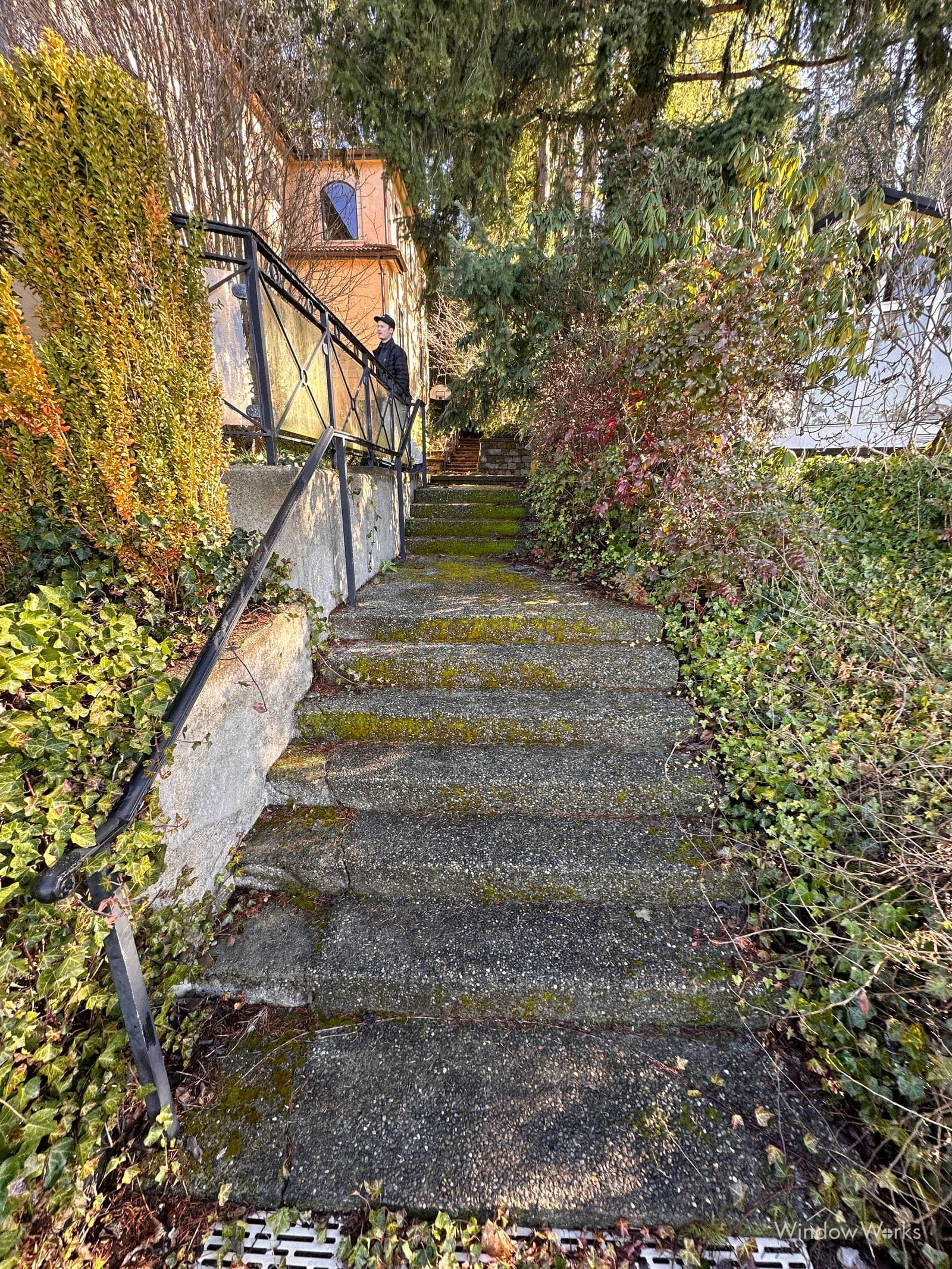
Moss and Algae
The green is alive, not a coating. Moss roots into concrete and masonry, holds water against the surface, and wedges cracks wider every freeze and thaw. Wet algae is a genuine slip hazard.
Washing takes off what you can see. It does not reach the spores, which is why a blasted-clean driveway in the shade greens up within a season. Our chlorine post-treatment kills what is left and holds the clean up to twice as long.
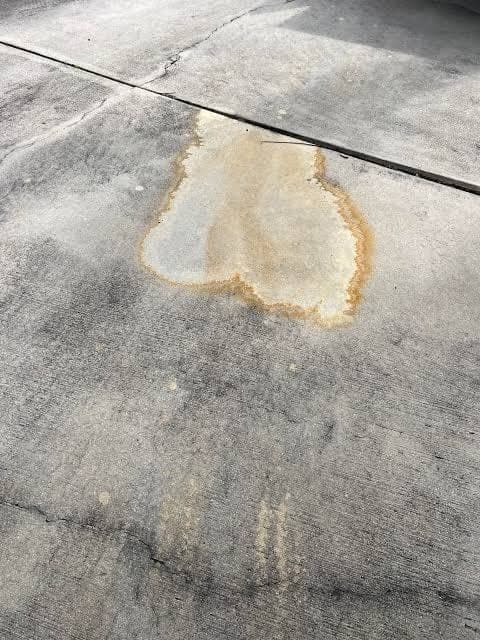
Battery Acid
A leaking battery leaves two problems in one spot. The acid has eaten into the surface and taken the top layer with it, and around that you get orange iron staining off the case and terminals.
The iron comes off with the same treatment as rust. The etched footprint underneath usually does not, because there is nothing left to lift. You will hear which part of it is coming back before we start.
Match the method
The right tool for each stain.
One truck, five methods. This is how we decide what your surface actually needs, and it's why we ask about the stain before we quote.
| What it actually is | What removes it | Watch out for | |
|---|---|---|---|
| Moss & algae | Living growth rooted into the surface, holding moisture against it | Pressure washing, then a chlorine post-treatment to kill the spores pressure can't reach | Regrows from spores. Shaded and north-facing surfaces regrow fastest |
| Oil & gum | Petroleum residue soaked into the pores; gum bonded to the surface | Hot water pressure washing, the tool built for exactly this | Cold water smears oil around instead of lifting it |
| Rust | Iron oxide bonded into the pore structure | A targeted acid-based treatment, test spot first | Fix the source (sprinkler, rebar, metal furniture) or it comes back |
| Efflorescence | Mineral salts carried out of the material by migrating water | An acid-based treatment that dissolves the deposits | If water keeps moving through the slab or wall, the bloom returns. Drainage may need attention |
| Leaf tannin | Organic dye released by leaves left sitting on the surface | An acid-based treatment matched to the stain | Depth and surface porosity decide how completely it clears |
| Battery acid | Chemical staining from a leaking vehicle battery | A targeted acid treatment, after the leak is dealt with | Treating before the vehicle is fixed just restarts the clock |
| Paint & graffiti | Cured paint gripping a porous surface | Removal method matched to the surface and the paint, test spot first | The longer it sits, the deeper it soaks. Some ghosting can remain on porous masonry |
Complex stain results vary with depth, age, and surface porosity. That's why every acid treatment starts with a test spot, and why we quote these jobs on a range after seeing the stain, not from a flat-rate price sheet.
Fix the source first.
Rust from a sprinkler head, battery acid from a parked car, efflorescence from water migrating through a slab: clean the stain without addressing the cause and it comes straight back. Before we treat a complex stain we identify what's feeding it and tell you what has to happen first. Then we do a test spot, quote a range instead of pretending every stain behaves the same, and get to work. Honest beats optimistic.
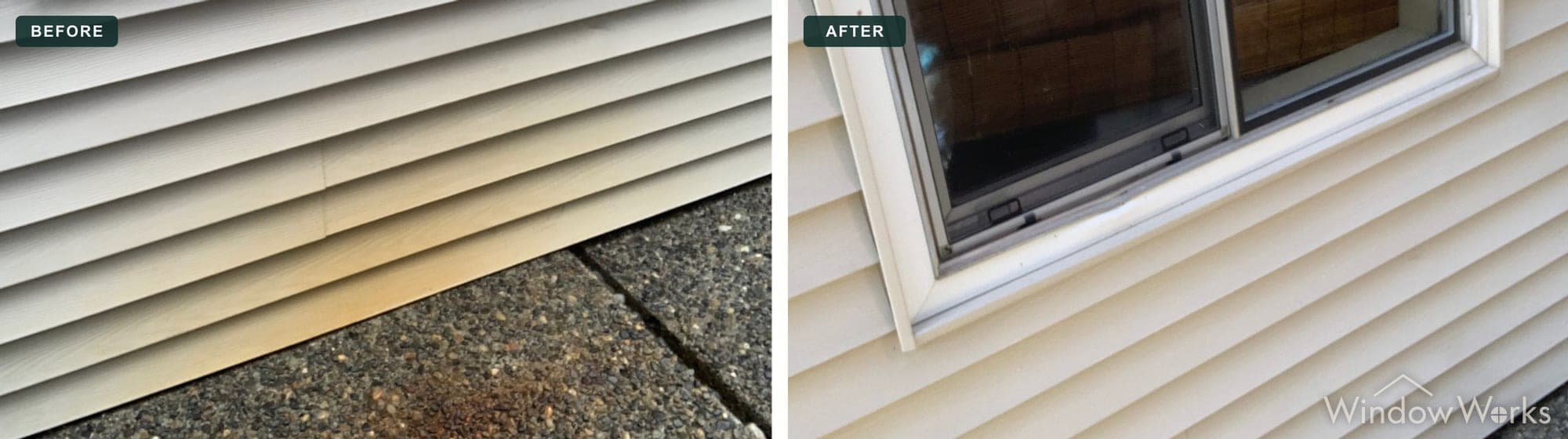
Rust staining lifted from vinyl siding and aggregate concrete with a targeted rust treatment.
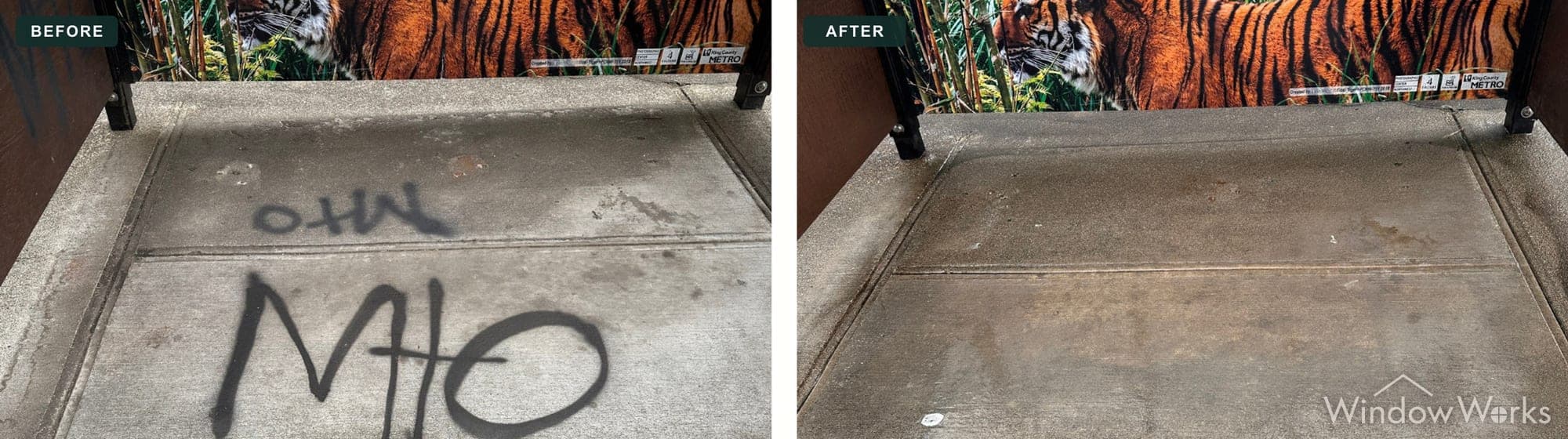
Spray paint lifted from a transit shelter pad. Method matched to the surface, so the cleanup doesn't leave its own mark.
Add-ons
Add it while we're there.
The crew and equipment are already on site, so these attach to your visit.
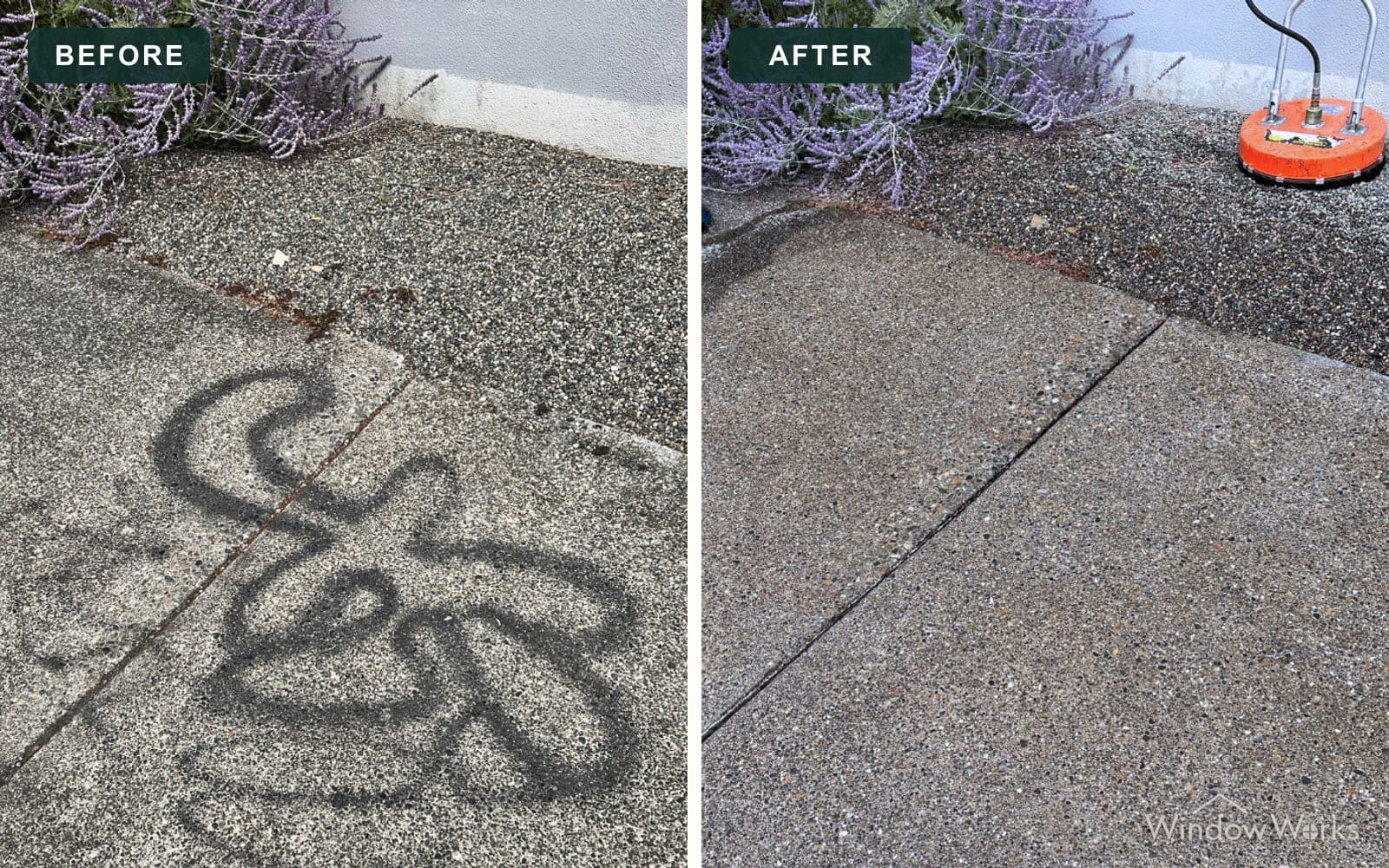
Graffiti Removal
Matched to the surface and paint type, so it comes off without scarring. Some shadowing can remain on porous surfaces.
See the full service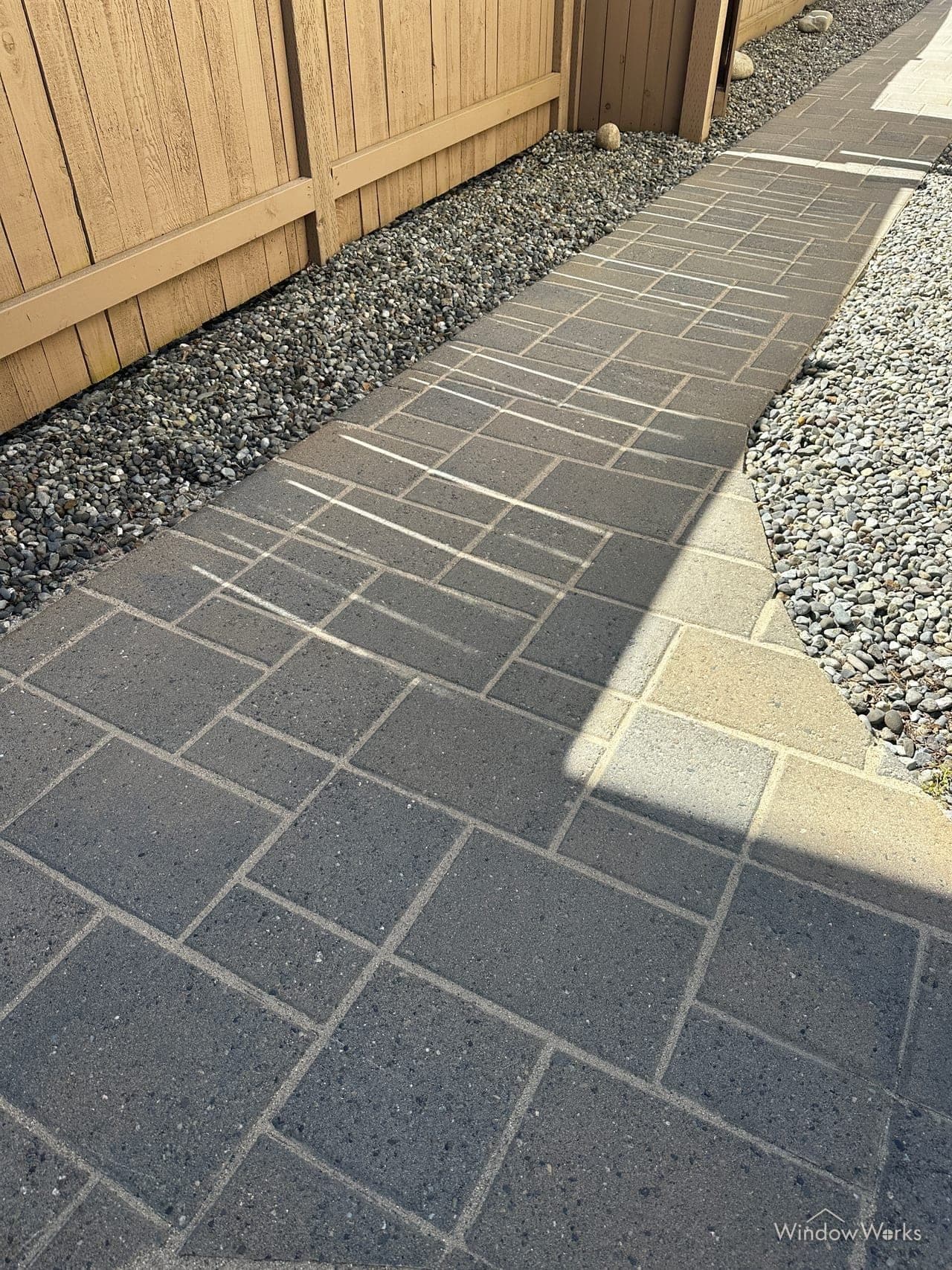
Paver Cleaning and Re-sanding
A chlorine wash and low-pressure rinse that kills joint growth before it displaces the sand. Where the jointing sand is already gone we wash the joints out, treat them, and re-sand in house. It will not relevel pavers that have already shifted.
See the full service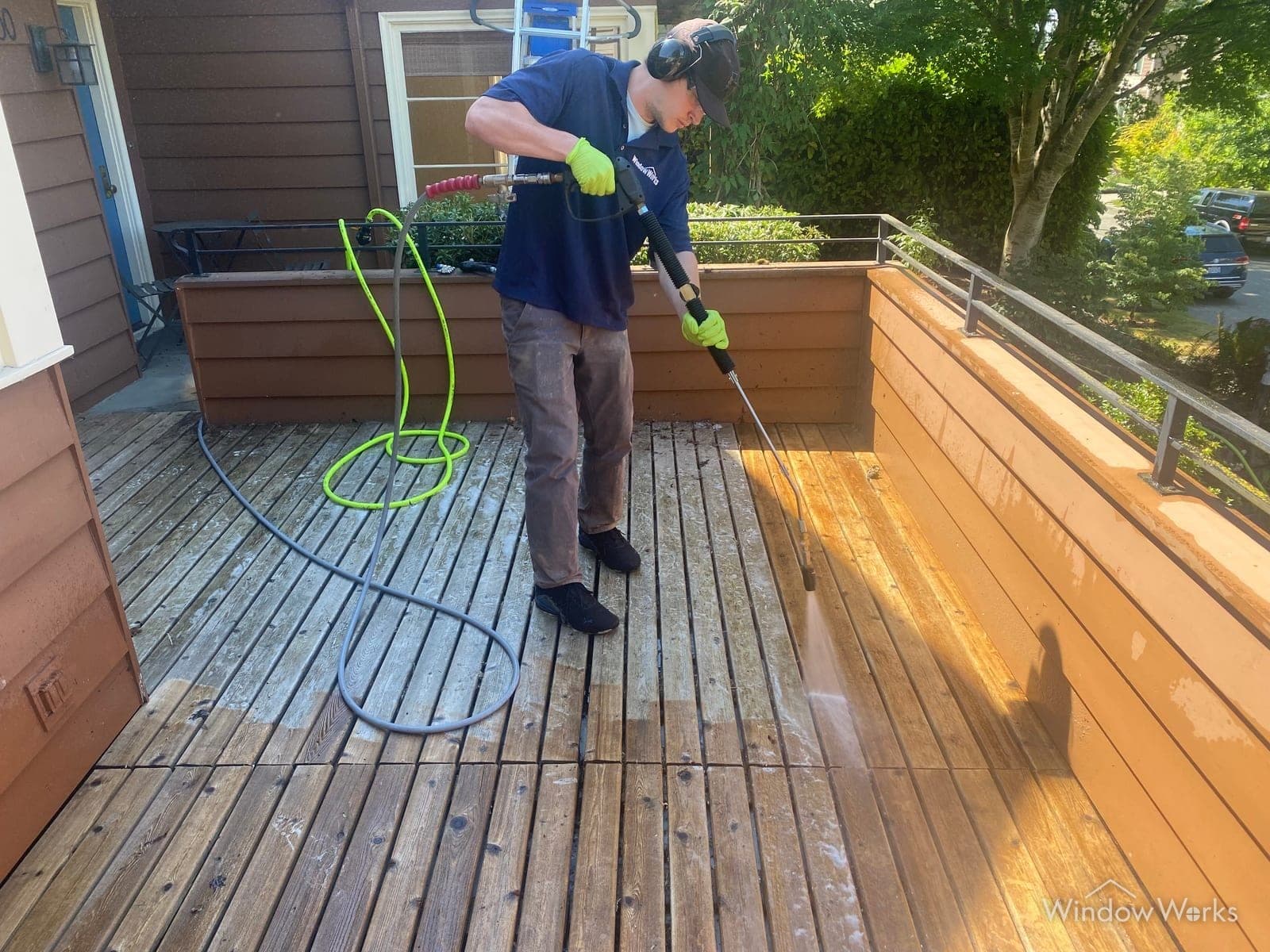
Deck and Fence Washing
Wood takes a gentler wash and different chemistry than concrete. With the equipment already on site, the deck and the fence come clean on the same visit.
See the full service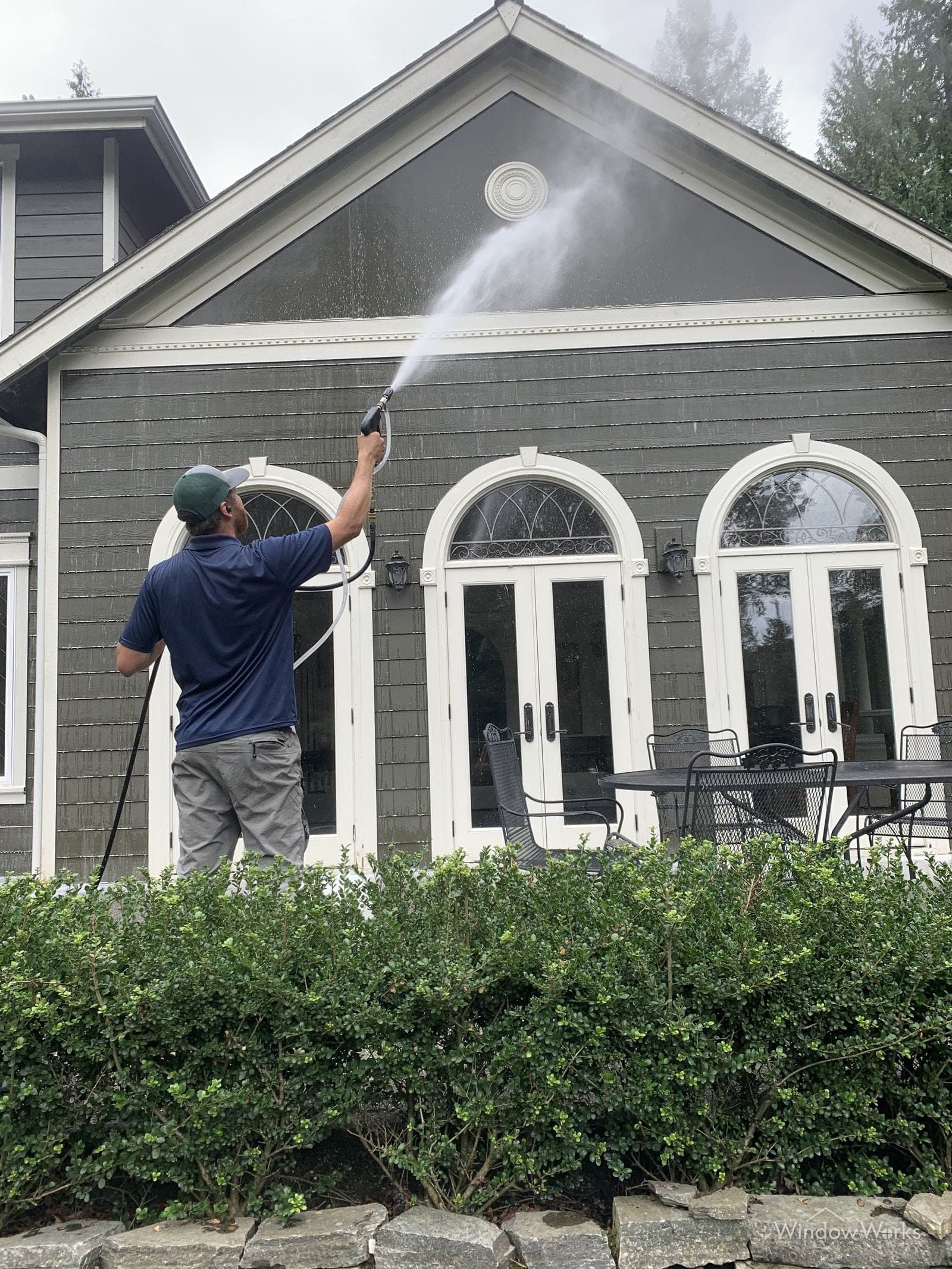
House Wash
Clean concrete makes dirty siding obvious. A soft wash lifts the growth off the walls at low pressure, which is the only way to do it without driving water behind them.
See the full service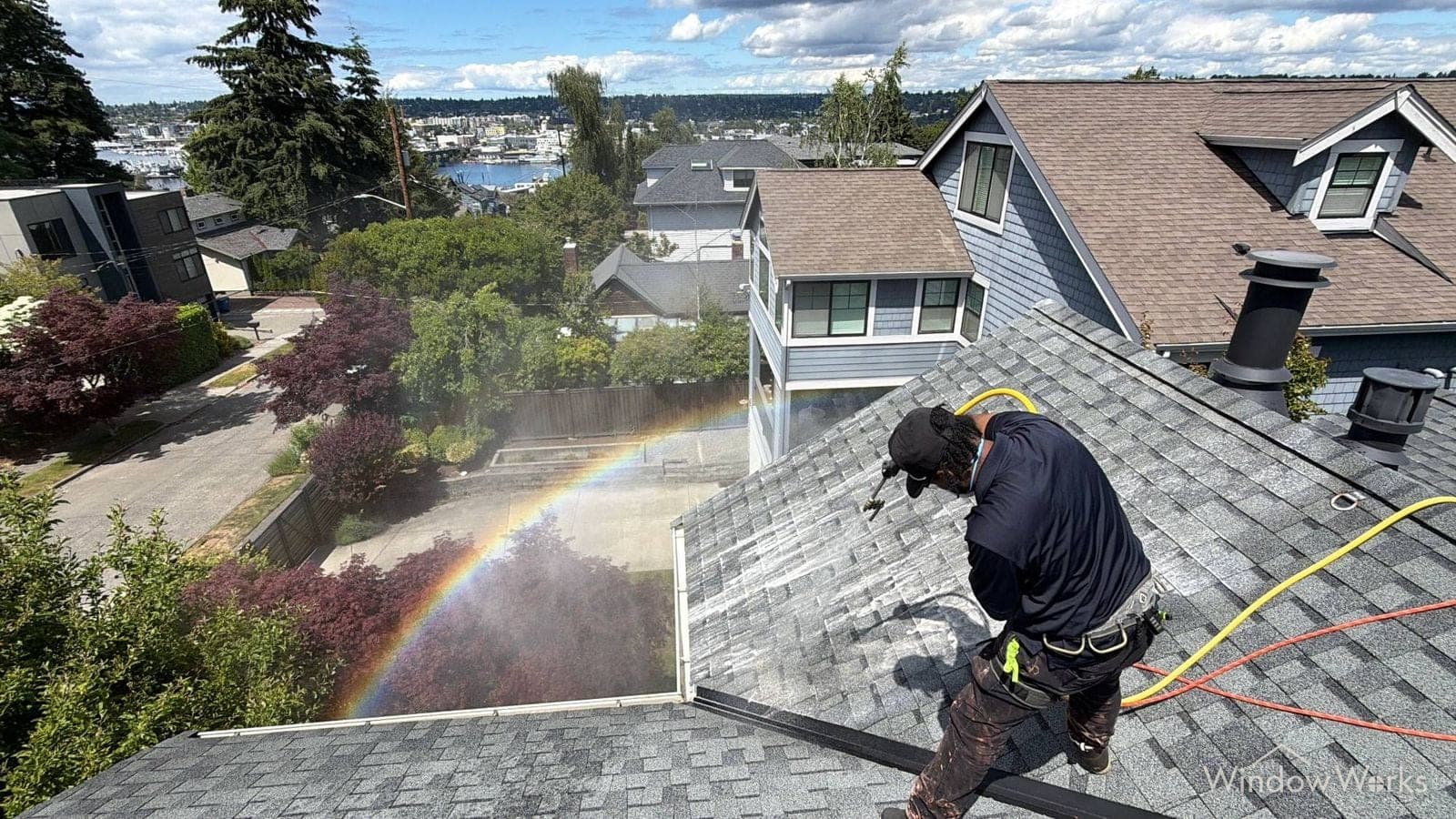
Roof Wash
The roof is where the growth starts, and it washes down onto everything underneath it. Worth doing first, and never with pressure.
See the full service
Why WindowWorks
Who shows up matters.
Five methods on the truck beat one method used on everything. Knowing which one your surface needs is the skill.
Anyone can rent a pressure washer. After 20+ years on Eastside exteriors, and a 4.9 rating across 300+ reviews, we can tell you the real difference is the person holding the wand: what they know, how they were trained, and whether the company behind them takes care of them. We take care of our techs, so they take care of your property.
Background-checked
Every technician is background-checked before they ever step onto a customer's property.
Certified, skill by skill
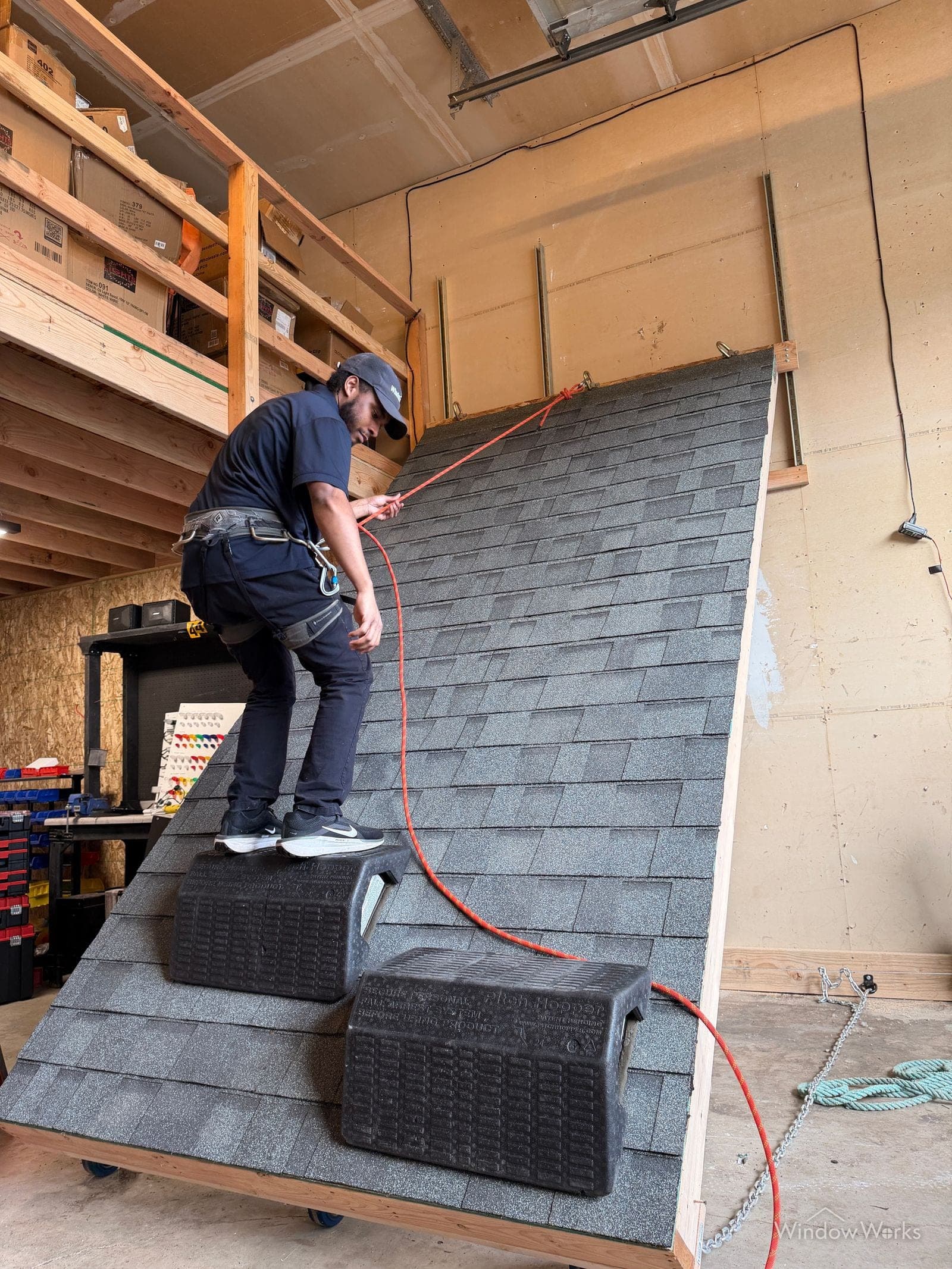
Our crews earn certification across 369 individual skills in 10 categories, each one signed off by an evaluator, never just by clocking time.
Paid like professionals
A living wage, healthcare, and dental. People who are treated well do careful work, and they stay, so you see the same faces.
Licensed, bonded, and insured
With OSHA-aligned safety training for the at-height work. If someone is on your roof, they are trained and covered for exactly that.
Method matched to the surface
Soft wash where pressure would damage, hot water where cold cannot lift, the right chemistry for the stain. The method follows the surface, not the other way around.
Documented before and after
Every job is photographed before and after, so you can see exactly what changed and keep it on file.
Common questions
Good to know.
Why not just pressure wash everything?
Organic growth, oil and gum, and mineral staining are three different problems needing three different methods. Pressure aimed at a chemistry problem, or at stone and stucco, just wears out the surface.
Is the chlorine treatment worth it?
On surfaces with organic growth, especially shaded ones, yes: it kills remaining spores and can turn a twice-yearly clean into an annual one. It isn't relevant for oil, gum, or complex stains.
Can you remove rust or efflorescence completely?
Results depend on stain depth, age, and porosity, so we test spot first and quote a range; full removal isn't guaranteed. We also find the source first, or the stain comes straight back.
Why does hot water matter?
It's the only method that reliably lifts oil, grease, and gum; cold water just smears them. Deep-set oil in porous concrete may not fully release even with heat, and we say so upfront.
Do you seal driveways or pavers?
No, sealing is a separate trade we refer to a specialist; we do the required prep clean, timed to your coating job. We also don't repair cracked, heaved, or settled concrete, pavers, or stone.
Serving Seattle and the whole Eastside
Pressure Washing and Soft Washing near you.
- Pressure Washing and Soft Washing in Issaquah
- Pressure Washing and Soft Washing in Sammamish
- Pressure Washing and Soft Washing in Bellevue
- Pressure Washing and Soft Washing in Redmond
- Pressure Washing and Soft Washing in Kirkland
- Pressure Washing and Soft Washing in Newcastle
- Pressure Washing and Soft Washing in Woodinville
- Pressure Washing and Soft Washing in Mercer Island
- Pressure Washing and Soft Washing in Snoqualmie
- Pressure Washing and Soft Washing in North Bend
- Pressure Washing and Soft Washing in Fall City
- Pressure Washing and Soft Washing in Carnation
- Pressure Washing and Soft Washing in Duvall
- Pressure Washing and Soft Washing in Renton
Pressure Washing and Soft Washing in Seattle
Ready for a real estimate?
Answer a few quick questions and get a real number in minutes. No pressure, no obligation.