
Solar Panel Cleaning in Fall City
Solar Panel Cleaning in Fall City, WA
Some solar arrays get looked at closely once, on installation day, and never again. Fall City acreage makes that easy, with big lots along the river and decades-old trees standing over roofs nobody climbs. By now the pollen up there is bonded to the glass, and rain has not moved it.
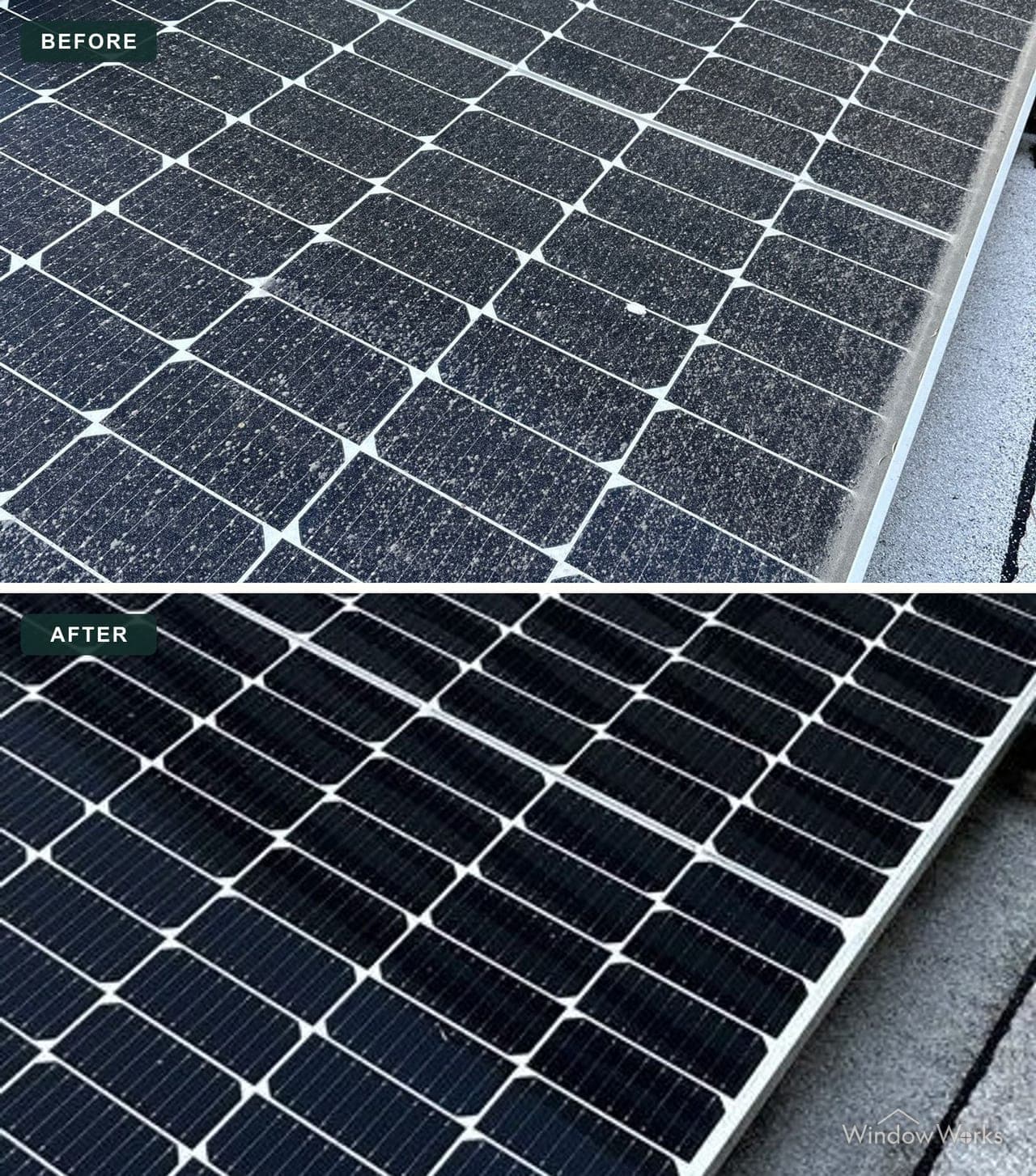
Out near Lake Alice and Aldarra, we start by finding out what is actually on the roof, then go deal with it. You see the condition before and after, and anything odd gets flagged, while you stay off the ladder.
The water matters. Deionized water has zero mineral content, so panels air dry with no spotting, and it is the only thing that touches the glass besides soft bristles. No detergents, no abrasives, never pressure washing.
Areas we serve in Fall City
- Lake Alice
- Aldarra
- Fall City Riverfront
- Upper Preston Road
- Neal Road area
Fall City questions
- Why deionized water instead of regular water?
- Deionized water carries zero minerals, so it dries without leaving anything behind. Regular water spots as it dries, the same way rain leaves mineral traces on flat and low-tilt panels.
- What happens if you find damage on a panel?
- We document it and flag it. Repair itself is outside the cleaning, so the next call is yours to make, and you make it with a clear record of the condition.
Before and after
The difference, on real jobs.
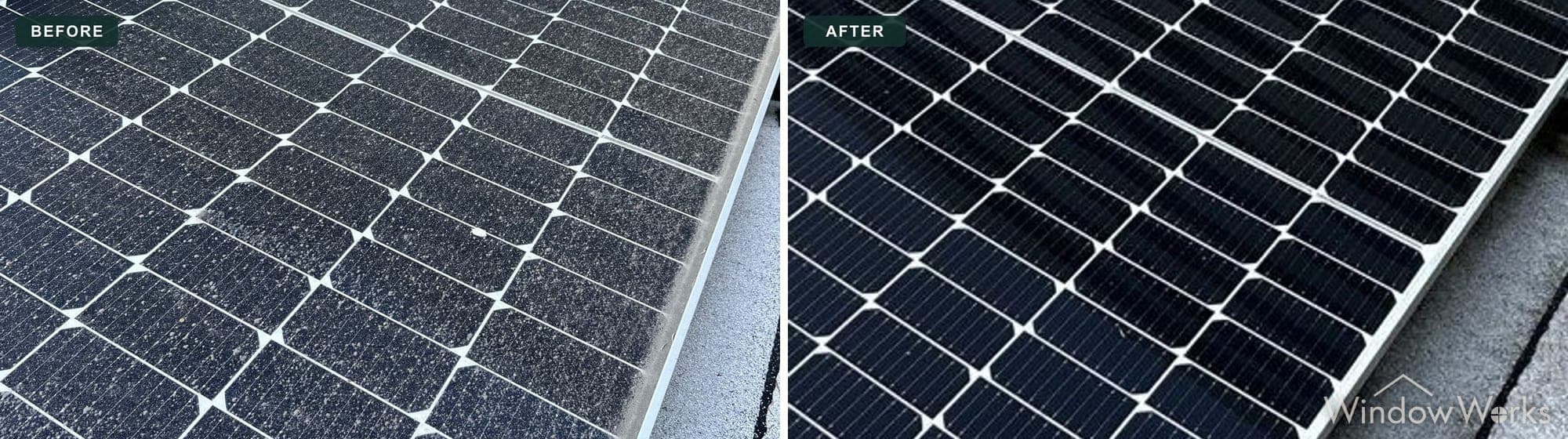
Pollen and grime off, the glass back to black. 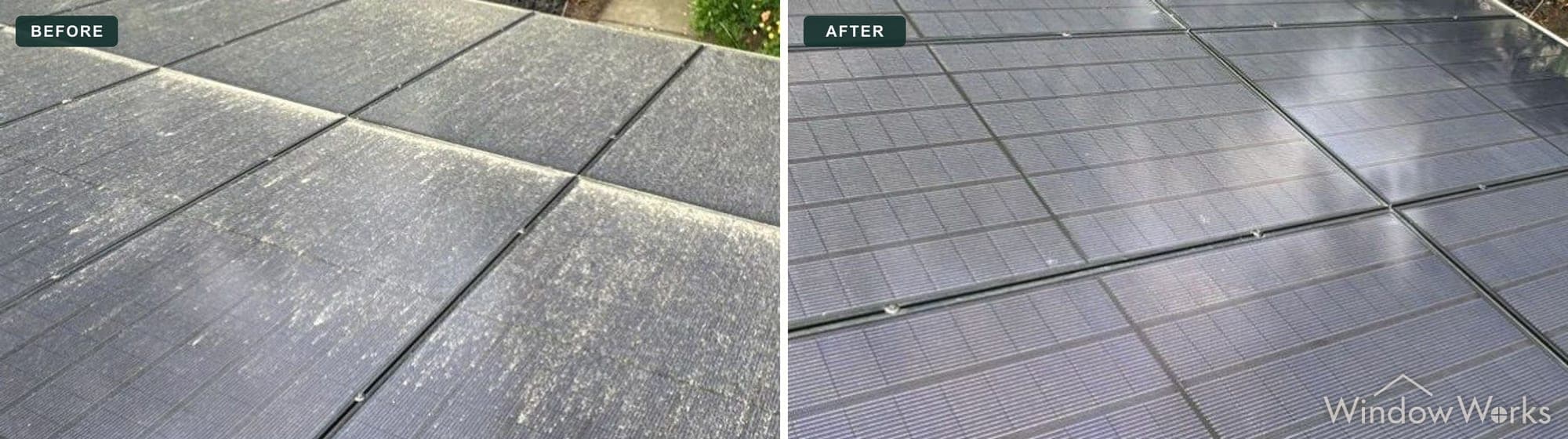
Spring pollen fall, brushed and rinsed with DI water. No spotting, because there are no minerals to leave.
Why it matters
The problem this solves.
Dirty panels quietly cut the output your system was priced to deliver, with no warning light and no visible sign from the ground. Pollen and algae both shrug off rain; they stay until someone cleans them.
How we do it
Our approach.
Deionized water has zero mineral content, so panels air dry with no spotting. Soft brushing matters because pollen bonds to the glass and rinsing alone will not lift it. We keep it gentle: abrasion scratches the anti-reflective coating and voids most manufacturer warranties, and pressure washing forces water into frames and junction boxes.
- Array details confirmed up front
- Roof access matched to pitch and material
- Work around the array, never on it
- No detergents, no abrasives, never pressure washing
- Before and after condition documented
- Anything on the array or roof flagged
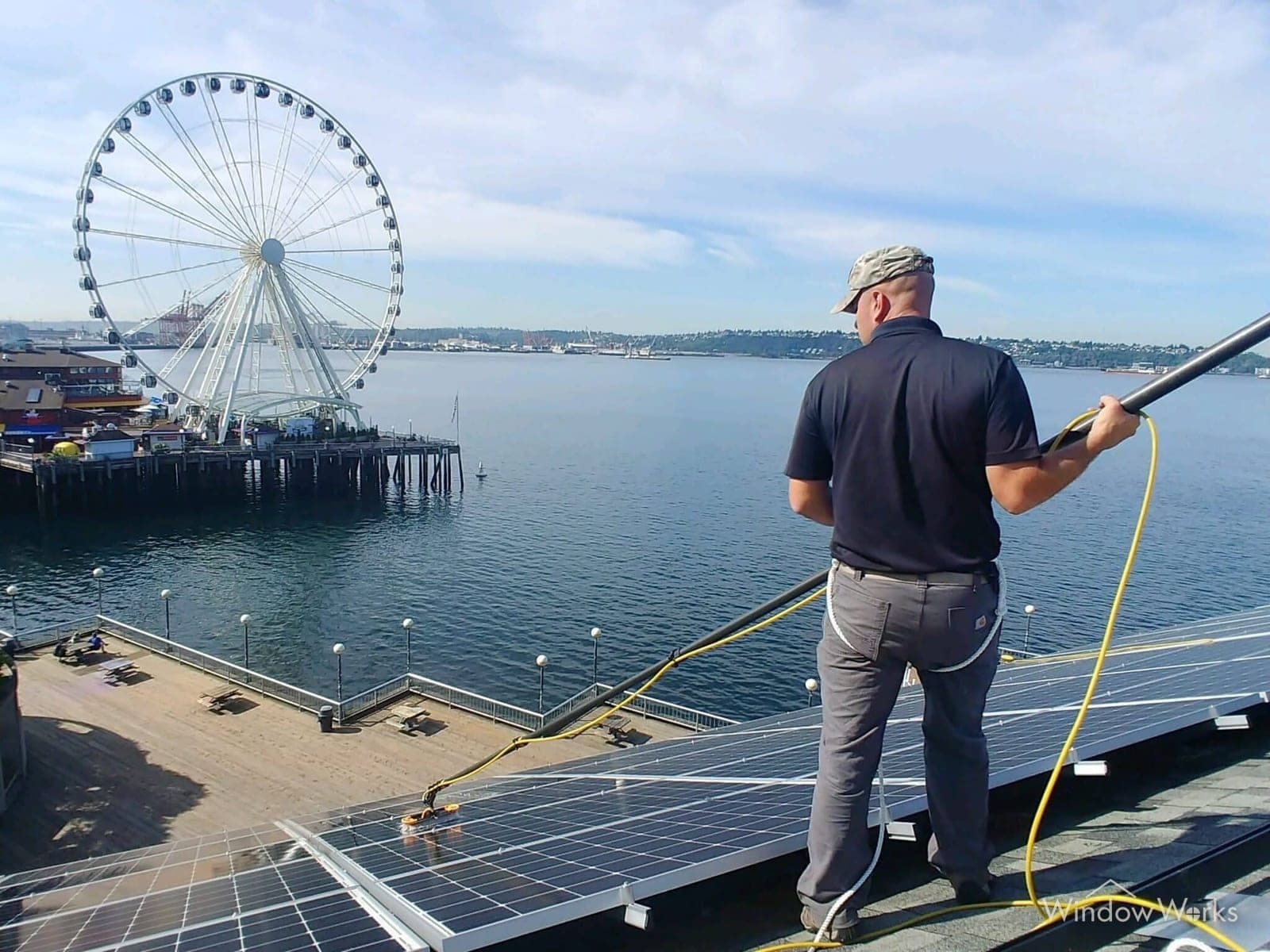
What's on the glass
Four things rain never takes off.
From the driveway, dirty panels look fine. Up close the glass carries four kinds of buildup, and the rain that keeps your yard green removes none of them.
Pollen bonds. It does not rinse.
Every spring the conifers coat panels in a sticky, fine film. Unlike dust, pollen bonds to the glass, so rain moves right over it and leaves it where it sits. Releasing it takes soft bristles and gentle technique, panel by panel.
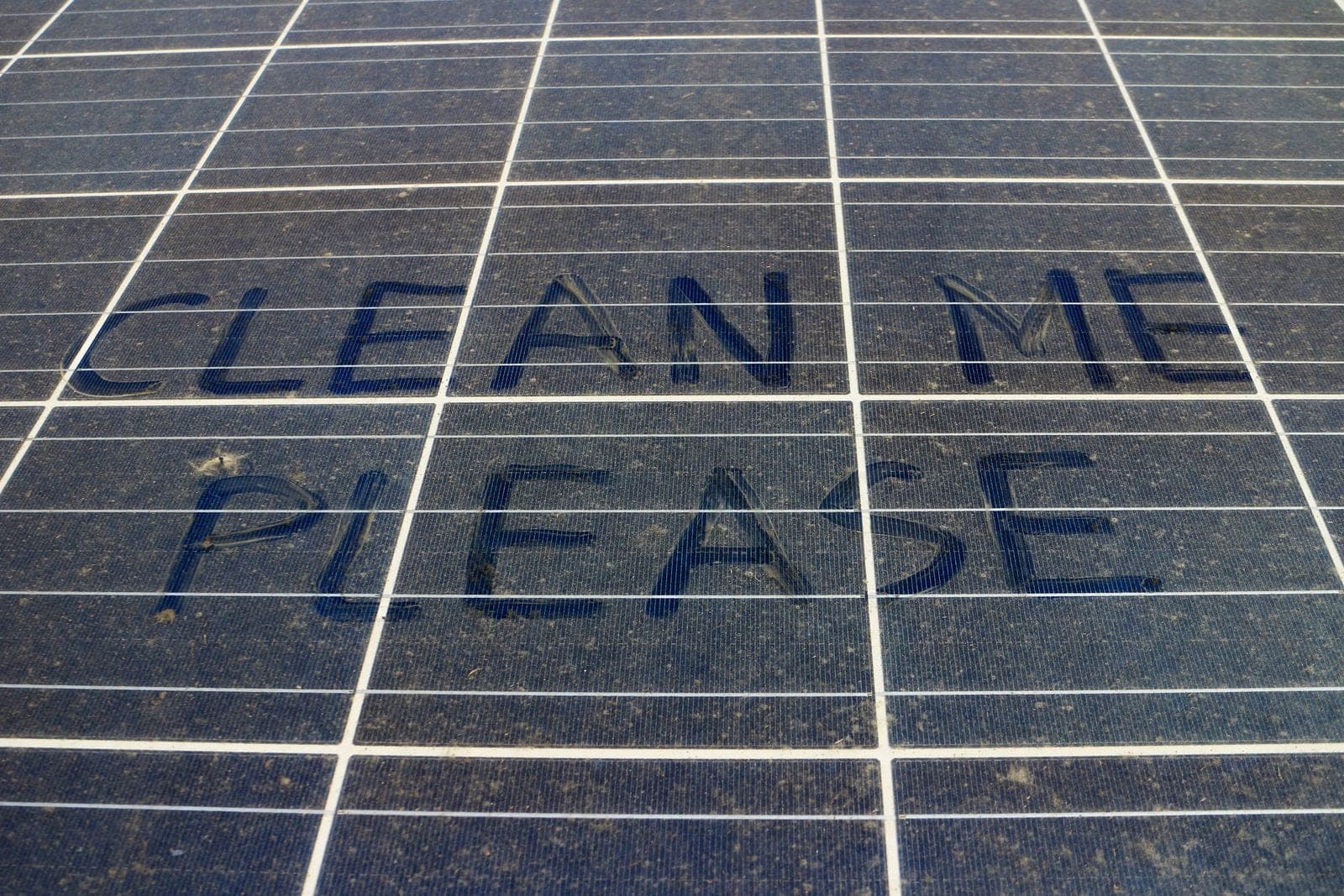
Algae starts at the edges.
Northwest moisture and shade grow algae on the glass itself, and it establishes at panel edges and frame channels first, exactly where output loss concentrates. It is living growth, not debris, so it stays until it is physically removed. For systems where production matters, we offer detailed wiping of every leading edge as an optional step on top of the standard clean.
Conifer debris hits hardest.
Needles, sap, and organic deposit from overhanging trees pile onto some panels and not others. That localized soiling drags down the affected panels disproportionately, so a mostly clean array can still be quietly underperforming.
Even the rain leaves minerals.
Our rain carries particulate that dries into mineral traces on flat and low-tilt panels, and it compounds over time. That is also why we clean with deionized water: zero mineral content, so the rinse itself dries spotless instead of adding to the film.
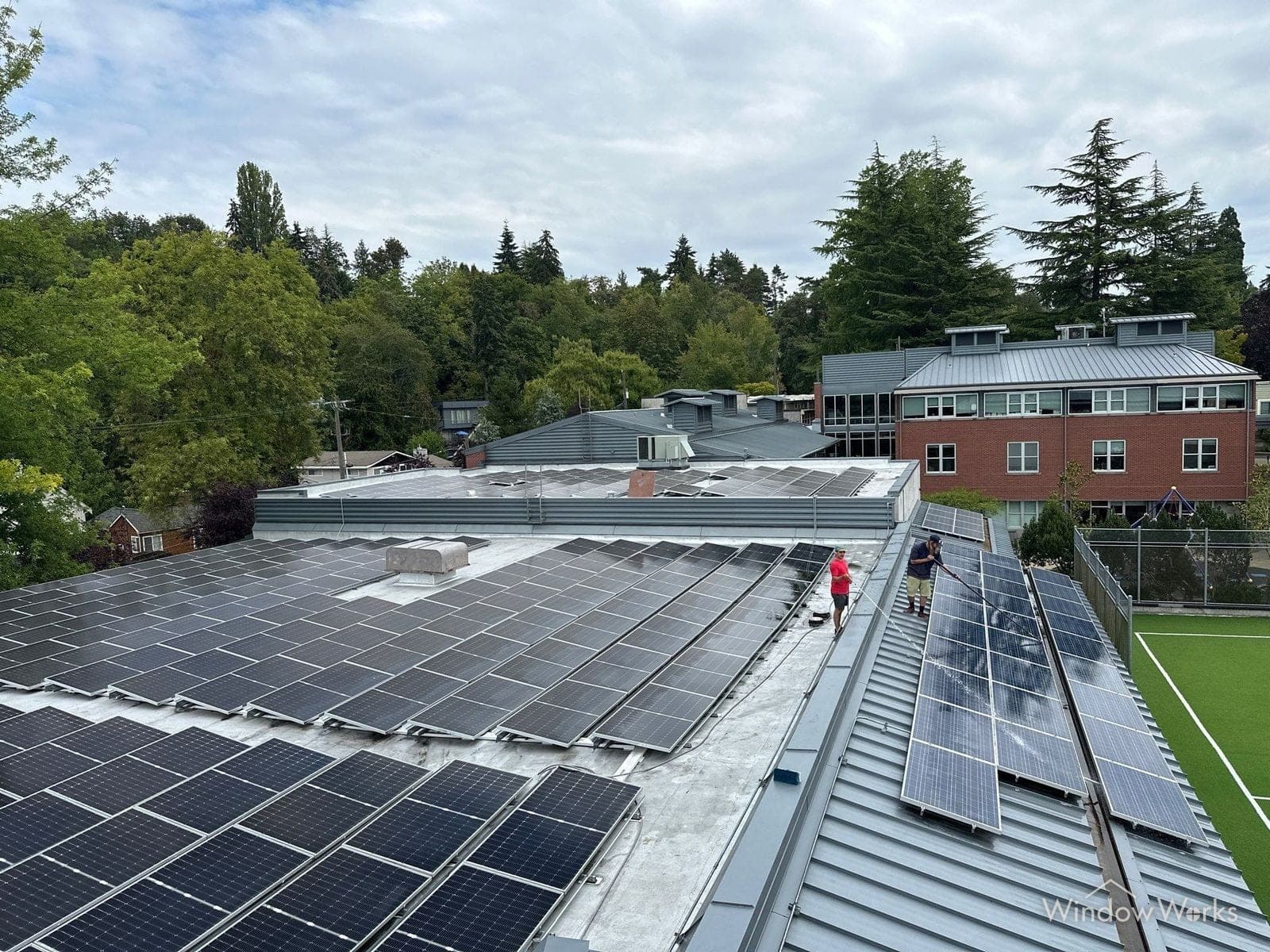
Why this method
Soft brushes and pure water. Nothing else touches the glass.
Solar glass is not bare glass. The anti-reflective coating that pushes more light into the cells sits right on the surface, where abrasives scratch it, harsh chemicals attack it, and pressure washing forces water into frames and junction boxes. Each of those can void a manufacturer warranty. So the method is deliberately simple, and the list of things we never bring near a panel is long: no detergents, no abrasives, never pressure washing.
| Rain | Our DI clean | |
|---|---|---|
| Loose dust | Rinses off in the next shower | Lifted in the pre-rinse |
| Pollen film | Bonds to the glass and stays | Released with soft bristle brushing |
| Algae | Keeps establishing, edges first | Brushed from the glass, edge detailing optional |
| Mineral spotting | Left behind as the water dries | None. DI water dries spotless |
Dirty panels are a quiet bill.
The National Renewable Energy Laboratory puts soiling losses at up to 25 percent, with 5 to 10 percent typical. On a system producing 10,000 kWh a year, ten percent is 1,000 kWh you paid for at install and are not receiving.
Get an Instant EstimateAdd-ons
Add it while we're there.
The crew and equipment are already on site, so these attach to your visit.
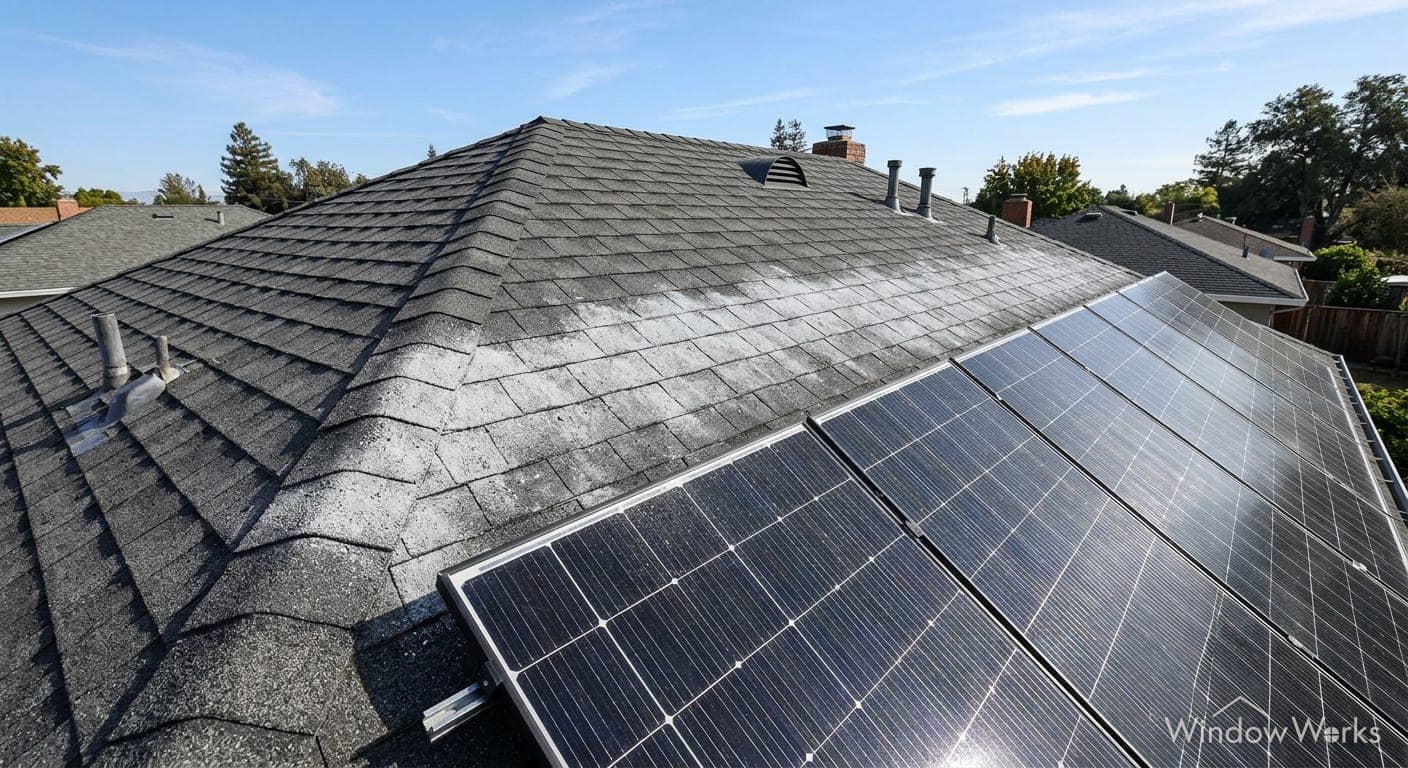
Zinc Powder Treatment
The roof wash treatment cannot be used underneath the panels, so zinc powder is how that strip stays protected. Under and around the array only, never the whole roof.
See the full service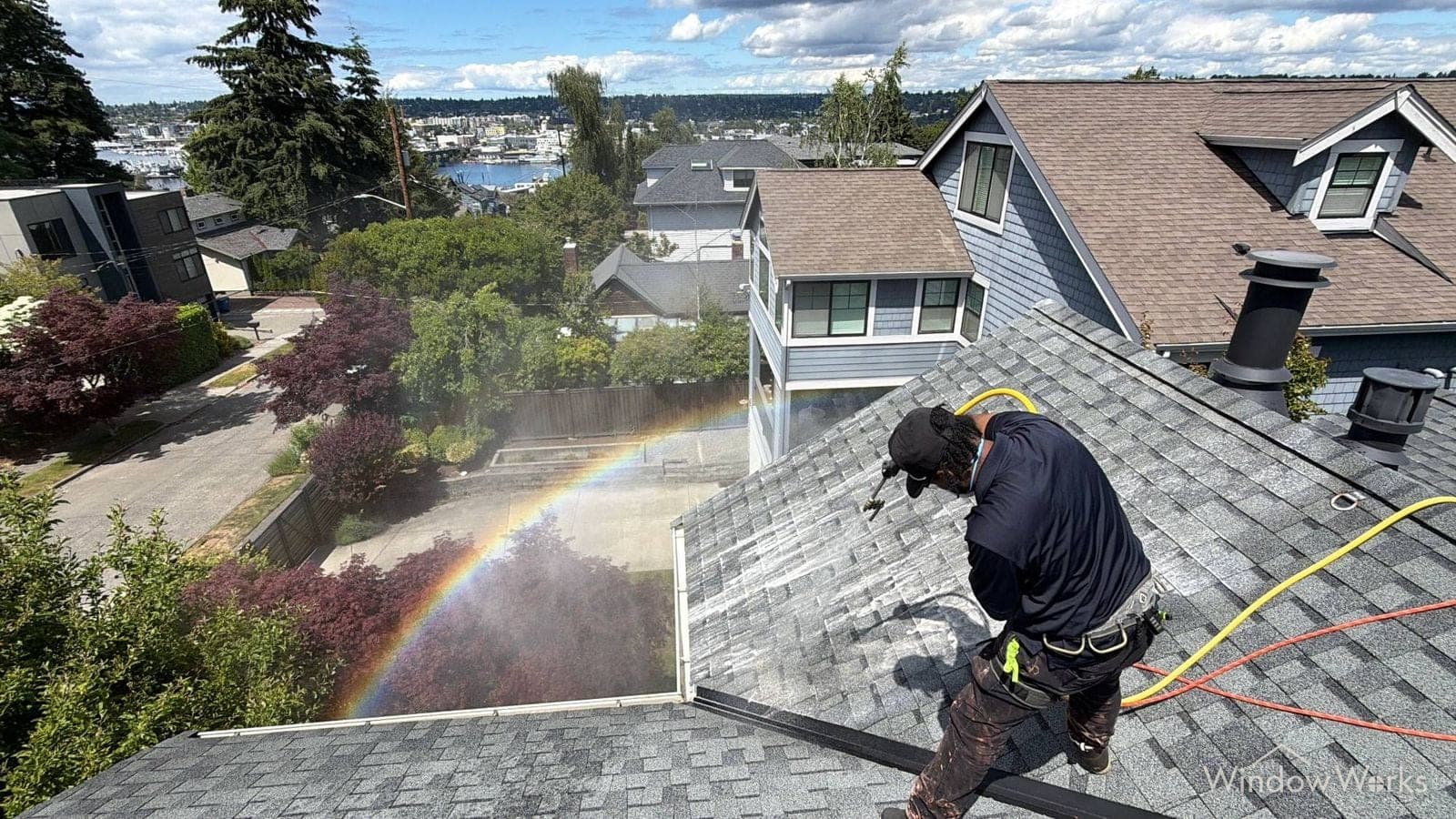
Roof Wash
The growth on your roof feeds what lands on your panels, and the crew is already at your roofline. A soft wash kills the moss around the array, never with pressure.
See the full service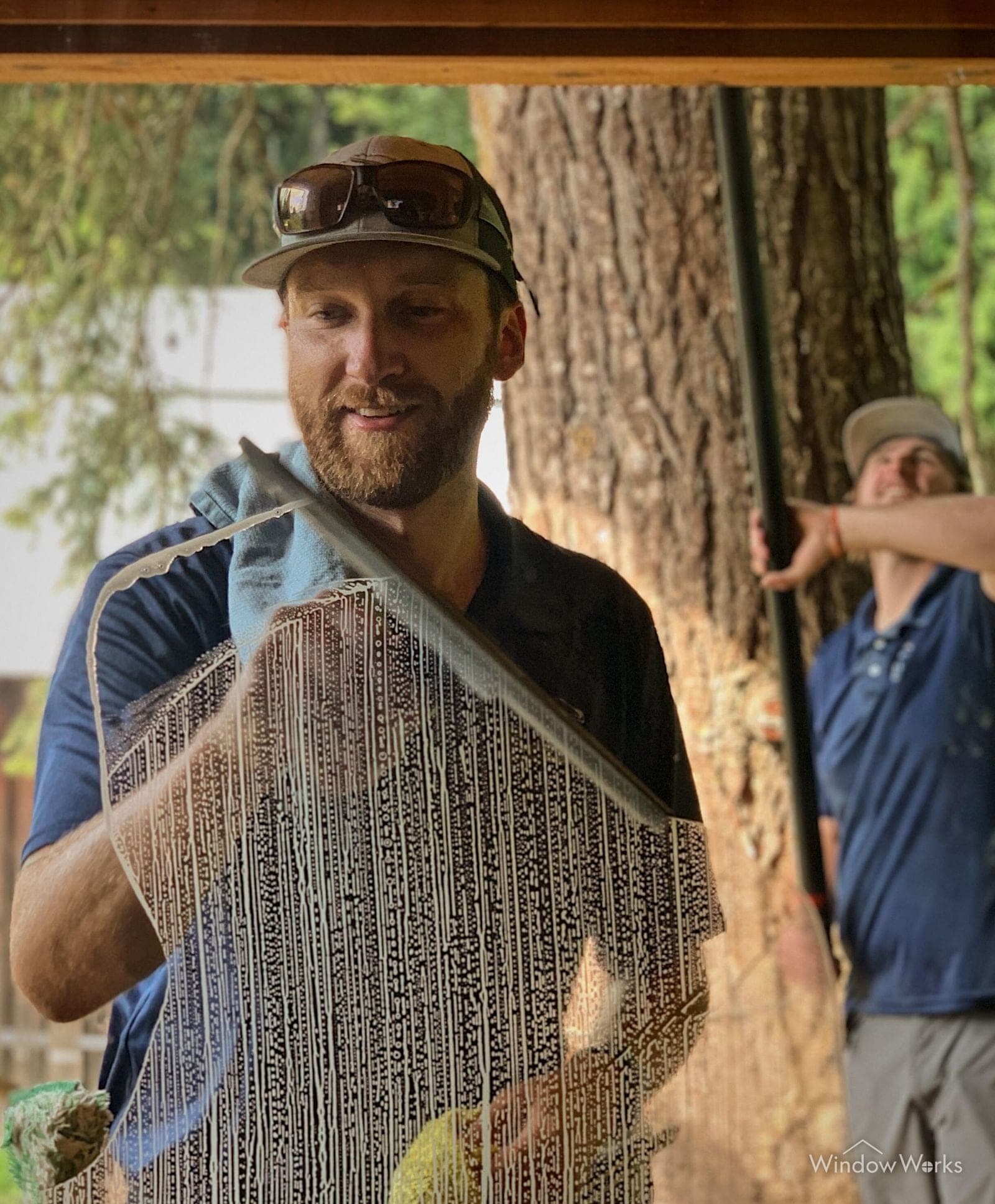
Window Cleaning
The same purified water that leaves panels spotless does the same for glass. Windows and skylights join the visit while the poles are up.
See the full service
Why WindowWorks
Who shows up matters.
Anyone can rent a pressure washer. After 20+ years on Eastside exteriors, and a 4.9 rating across 300+ reviews, we can tell you the real difference is the person holding the wand: what they know, how they were trained, and whether the company behind them takes care of them. We take care of our techs, so they take care of your property.
Background-checked
Every technician is background-checked before they ever step onto a customer's property.
Certified, skill by skill
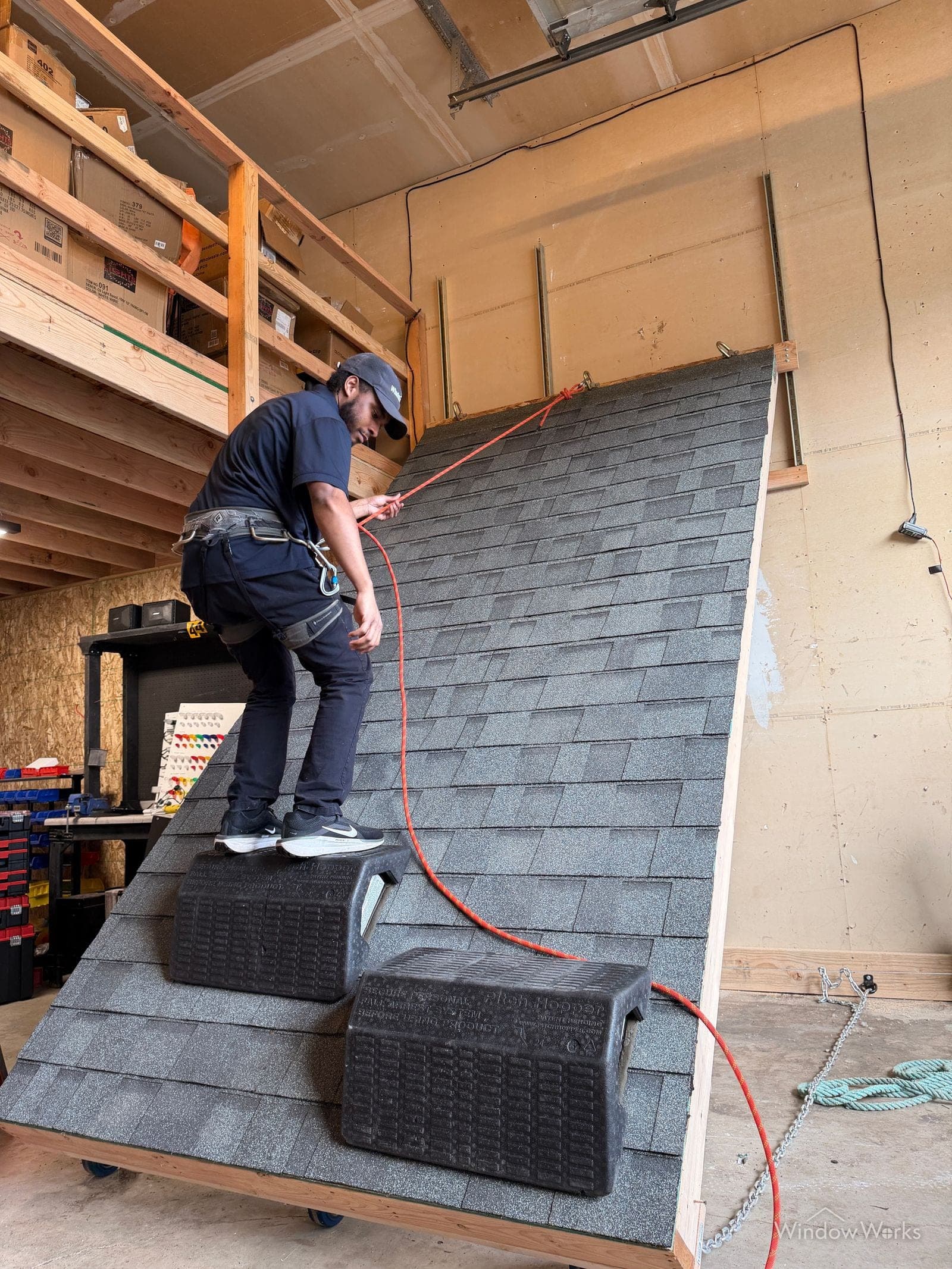
Our crews earn certification across 369 individual skills in 10 categories, each one signed off by an evaluator, never just by clocking time.
Paid like professionals
A living wage, healthcare, and dental. People who are treated well do careful work, and they stay, so you see the same faces.
Licensed, bonded, and insured
With OSHA-aligned safety training for the at-height work. If someone is on your roof, they are trained and covered for exactly that.
Method matched to the surface
Soft wash where pressure would damage, hot water where cold cannot lift, the right chemistry for the stain. The method follows the surface, not the other way around.
Documented before and after
Every job is photographed before and after, so you can see exactly what changed and keep it on file.
Common questions
Good to know.
Doesn't the rain clean my panels?
Rain handles loose dust only. Pollen bonds to the glass, algae is living growth, and rain itself leaves mineral traces on flat and low-tilt panels.
When is the best time to clean solar panels here?
Late June to early July, right after the pollen fall ends. Earlier catches panels still collecting pollen, and later wastes the best production window.
Do I need cleaning twice a year?
Most residential systems do well with one annual visit. Larger or production-critical systems benefit from a second between mid-November and January, and heavy conifer overhang can justify twice yearly.
Never cleaned since installation. Is that a problem?
Clean them as soon as possible, since multi-year buildup is exactly the soiling rain never removes. The first clean sets a baseline, then an annual schedule maintains it.
Do you inspect the electrical system or fix damaged panels?
No. Cleaning doesn't include electrical inspection, inverter or performance diagnostics, panel or cracked-glass repair, or roof structural work, but we document condition and flag anything we spot.
Serving Fall City and the whole Eastside
Solar Panel Cleaning near you.
- Solar Panel Cleaning in Issaquah
- Solar Panel Cleaning in Sammamish
- Solar Panel Cleaning in Bellevue
- Solar Panel Cleaning in Redmond
- Solar Panel Cleaning in Kirkland
- Solar Panel Cleaning in Newcastle
- Solar Panel Cleaning in Woodinville
- Solar Panel Cleaning in Mercer Island
- Solar Panel Cleaning in Snoqualmie
- Solar Panel Cleaning in North Bend
- Solar Panel Cleaning in Carnation
- Solar Panel Cleaning in Duvall
- Solar Panel Cleaning in Renton
- Solar Panel Cleaning in Seattle
Solar Panel Cleaning in Fall City
Ready for a real estimate?
Answer a few quick questions and get a real number in minutes. No pressure, no obligation.