

Wood Restoration & Paint Preparation in Woodinville
Wood Restoration in Woodinville, WA
A Woodinville property rarely stops at the house. Hollywood Hill and Wellington acreage comes with shops, barns, fences and detached garages, most of them wood, all of them sitting under some of the heaviest tree canopy on the Eastside. When those finishes fail, the whole property tends to be due at once.
Wood is wood to the process. House siding, a barn wall, a run of fence: the old stain or paint gets stripped with chemistry at low pressure, the wood gets neutralized and rebalanced, and the surface goes to your painter ready for the new finish. Square footage and how many surfaces drive the price, which on Cottage Lake and Leota acreage is the real variable.
Canopy this heavy keeps wood damp and shaded, which is hard on finishes and unforgiving of bad prep. Old paint left behind bubbles under the new coat. That is why we strip rather than blast, and why the neutralizing step is not optional.
Areas we serve in Woodinville
- Hollywood Hill
- Wellington
- Leota
- Cottage Lake
- West Wellington
- Tourist District
Woodinville questions
- Do you do barns and outbuildings, or just houses?
- Both. The process does not care whether the wall belongs to the house or the shop, and quoting everything together makes sense when it all weathered on the same schedule.
- The fence went gray years ago. Same process?
- Same process. Strip what is left of the old finish, neutralize the wood, and it is ready to be refinished. How much old finish remains decides how much stripping it takes.
- What happens after the new finish goes on?
- The restoration itself is a one-time job, done before refinishing. From there, regular gentle washes stretch the life of the new finish, and on acreage that maintenance can cover the outbuildings too.
Before and after
The difference, on real jobs.
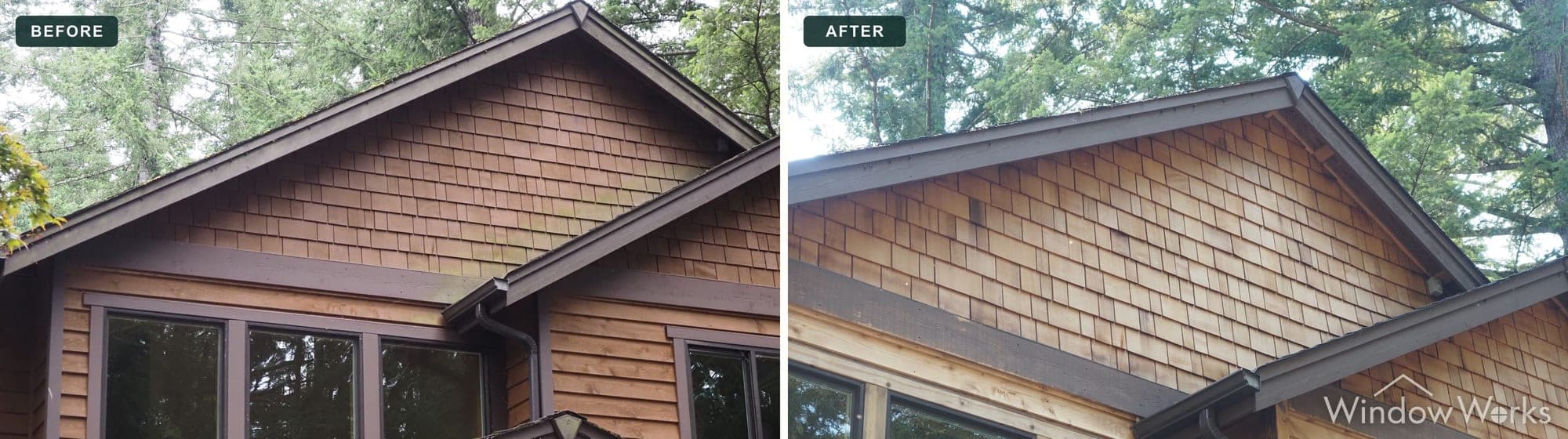
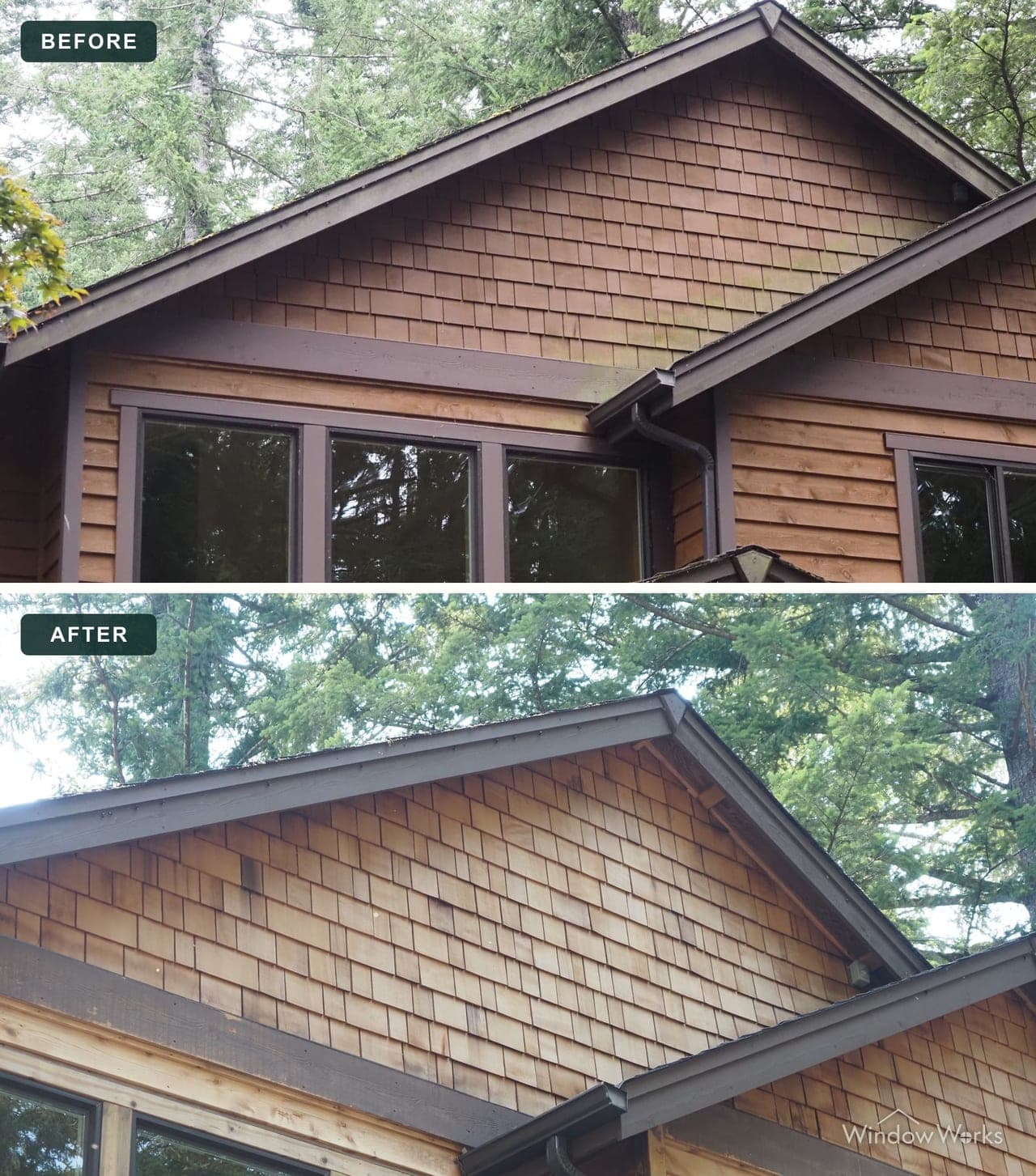
Decades under a dark stain, and the algae had moved in. Stripped, neutralized, and back to bright cedar. 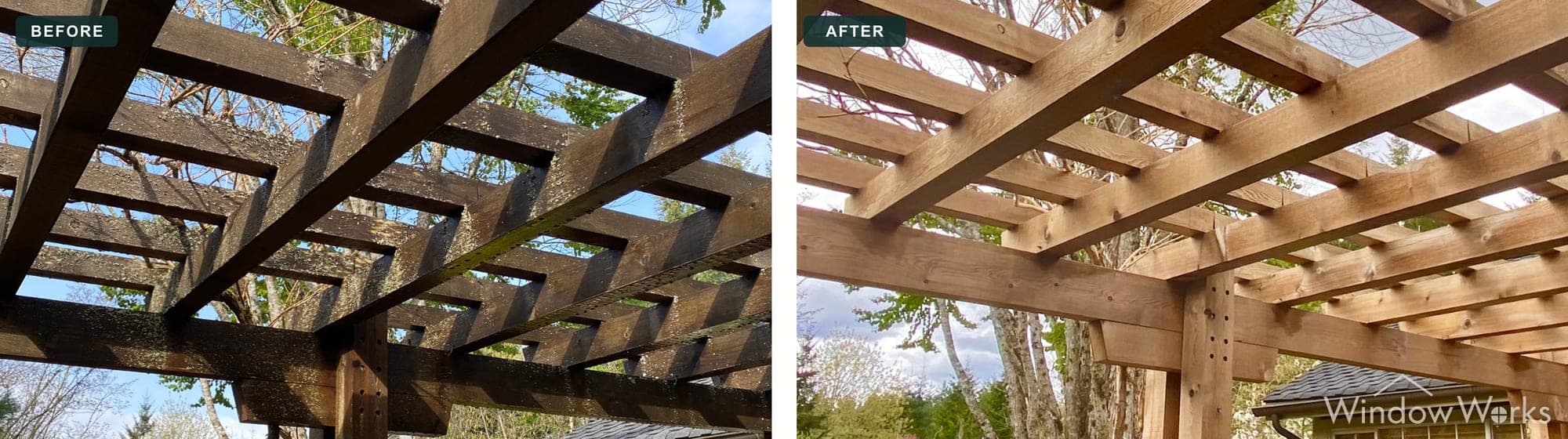
A pergola under a near-black buildup of old finish, back to warm cedar. 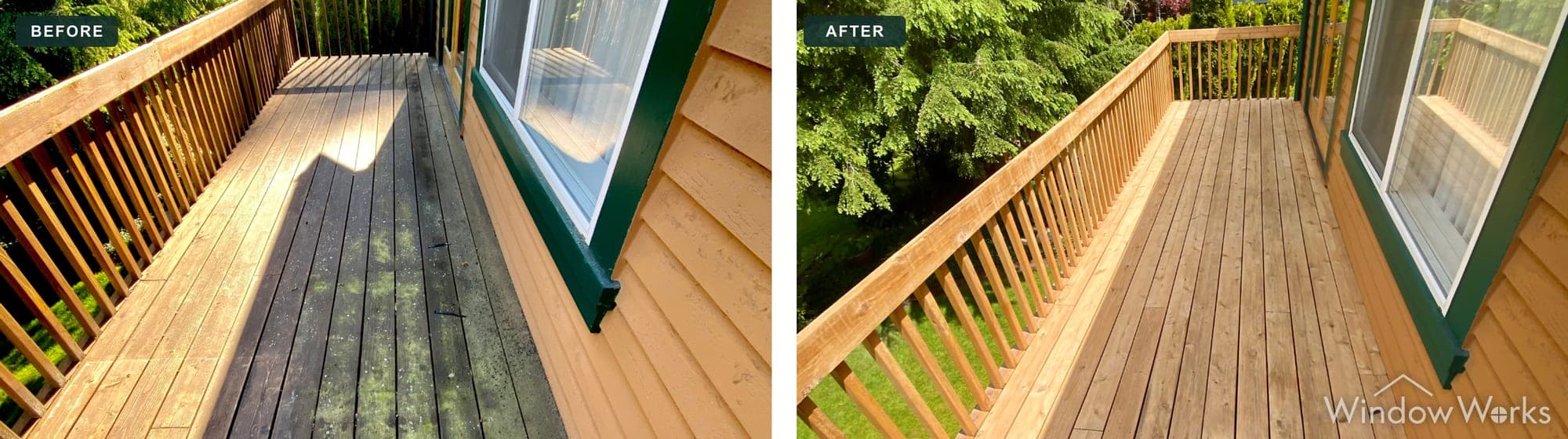
A deck gone green under algae, restored to clean wood. 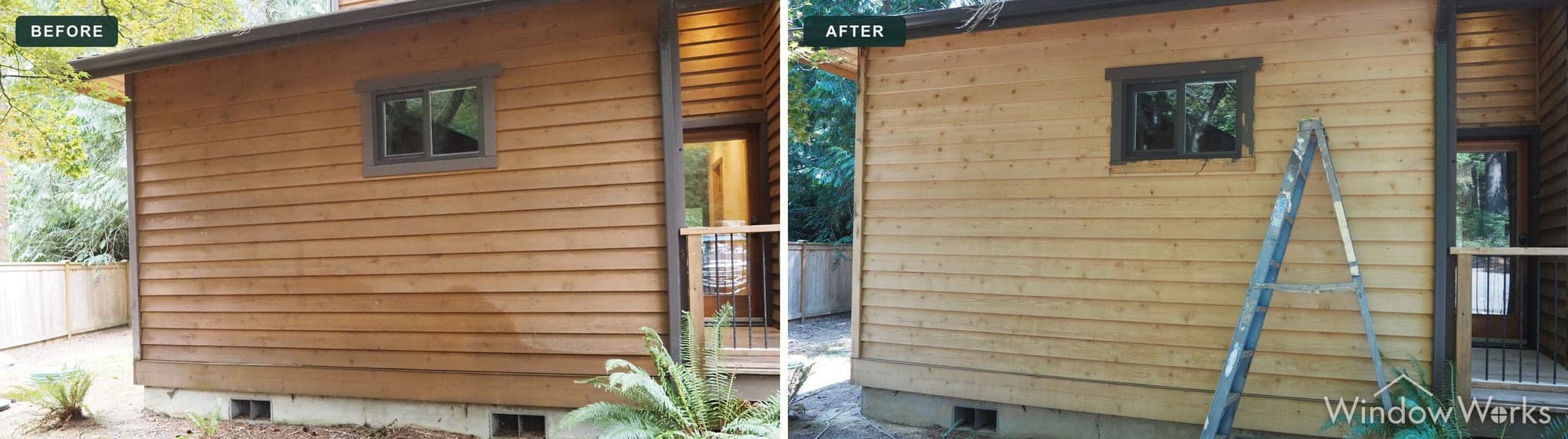
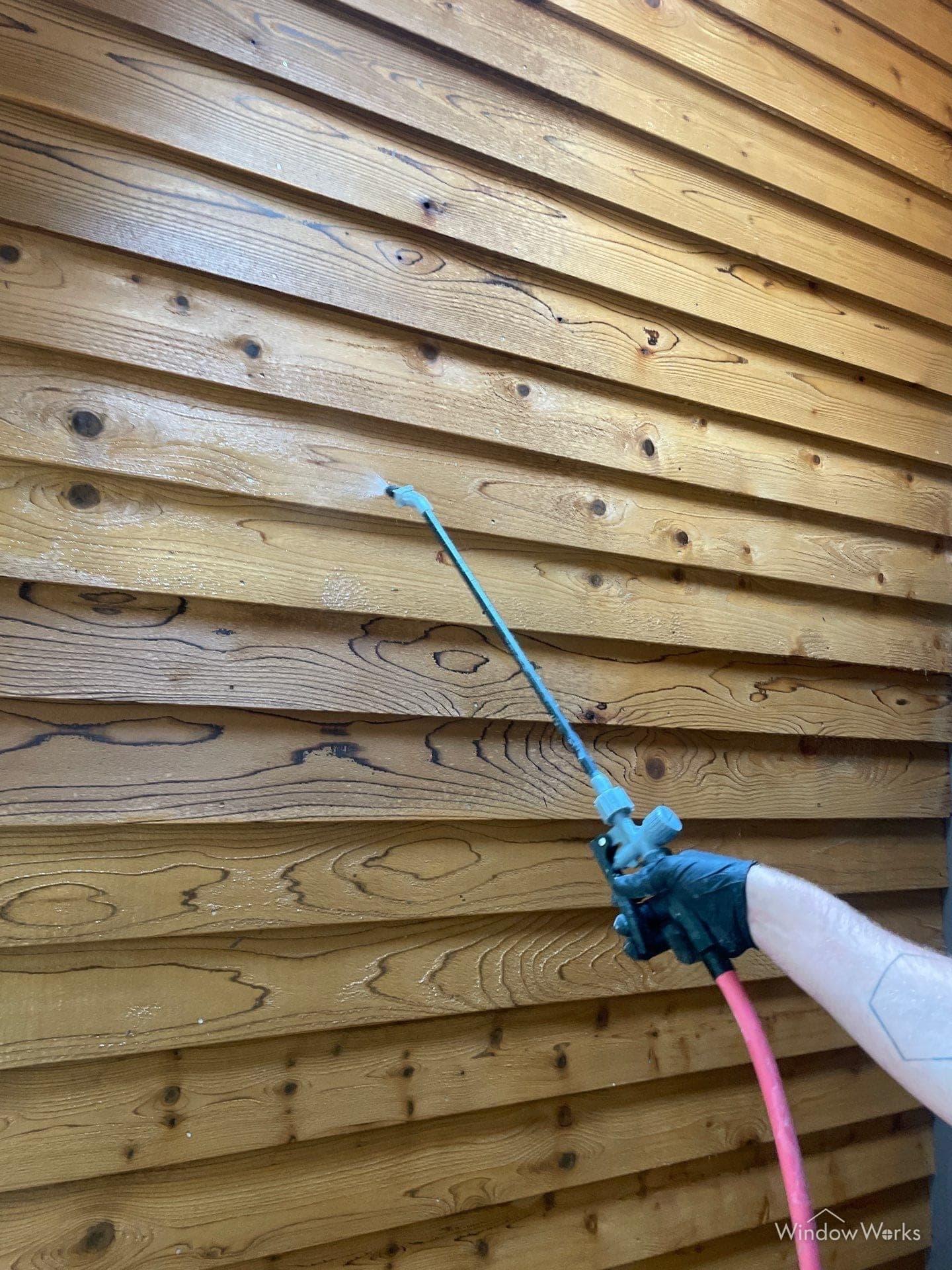
The same job's lap siding, back to bare boards. What goes on next penetrates wood, not old finish. 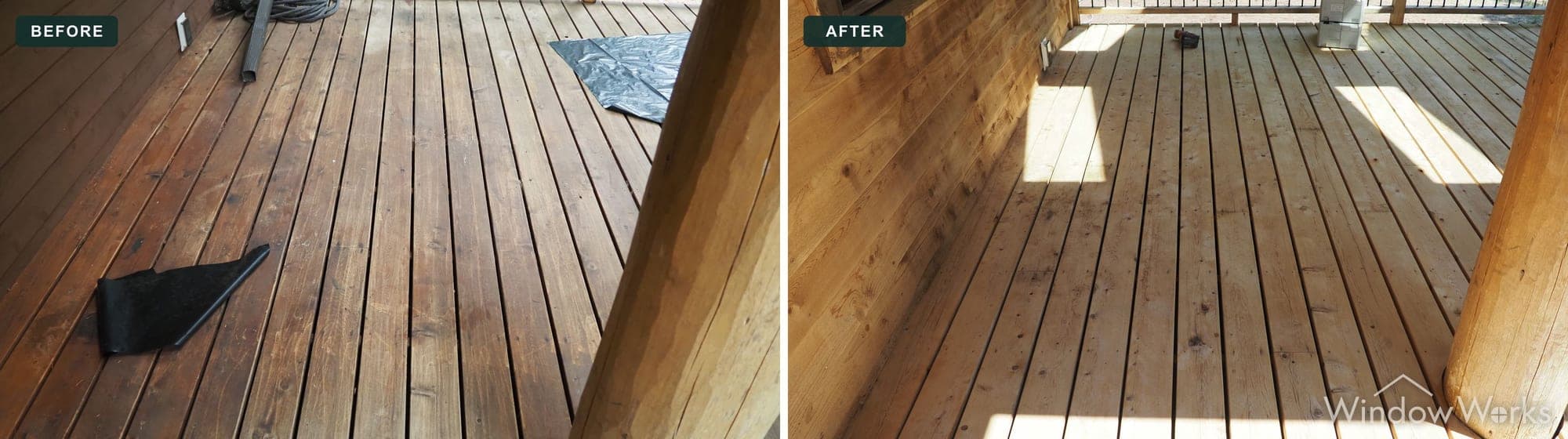
The covered porch, decking and wall together. Ready for whatever finish the owner picks, including a lighter one.
Why it matters
The problem this solves.
A new finish is only as good as the wash underneath it. Painting companies are great at painting, but the pre-wash often is not their trade: high pressure and the wrong chemicals leave old paint behind that keeps breathing under the new coat, so it bubbles and lets go, and pressure driven behind siding traps moisture that shows up later as mold in crawl spaces and problems nobody saw coming.
How we do it
Our approach.
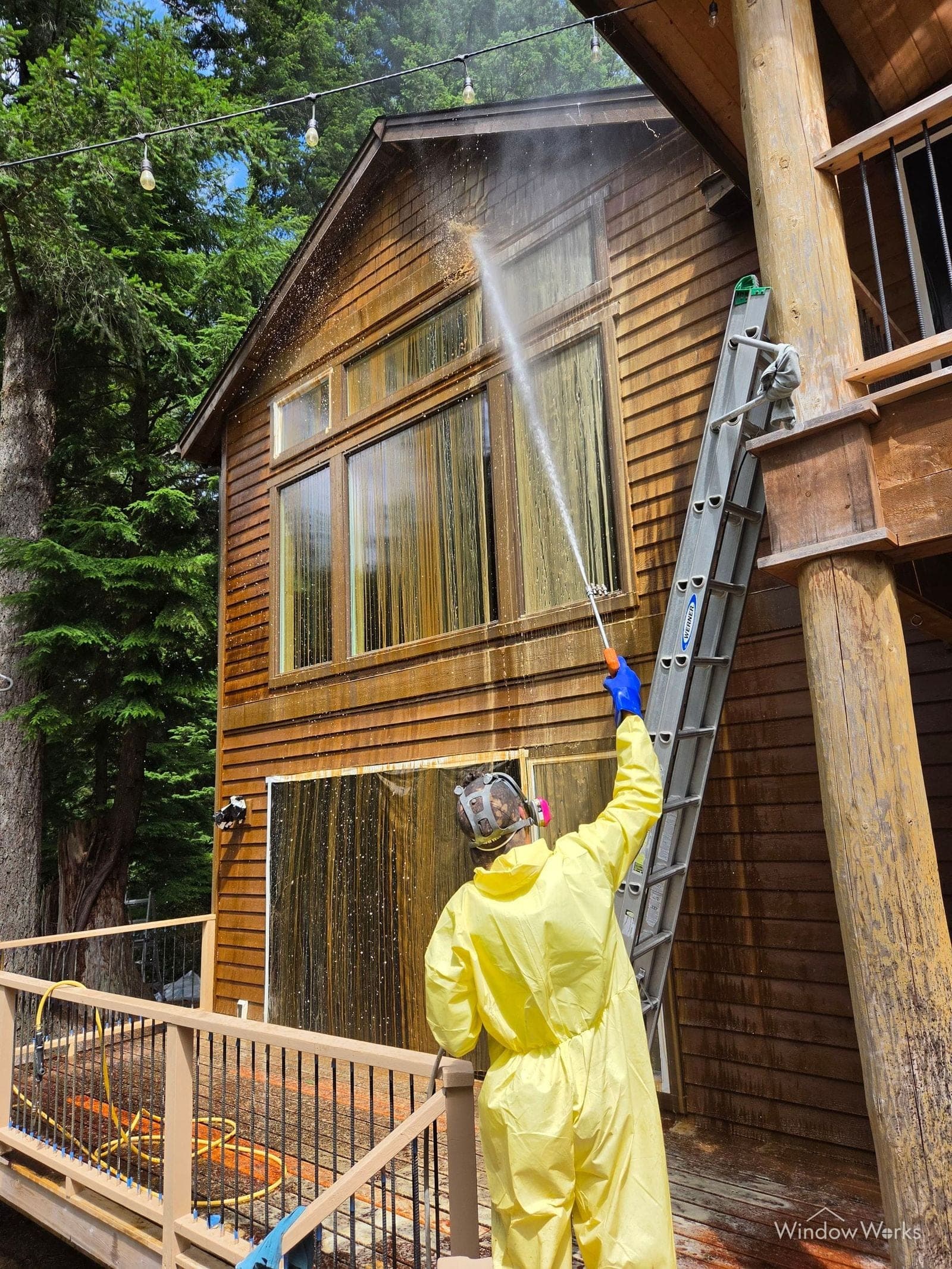
We strip the old stain or paint chemically, at low pressure, then neutralize and rebalance the wood's pH so the new finish cures evenly and adheres the way its manufacturer intended. From there we prep the surface for the finish you actually want, including taking wood that spent decades under a dark-bodied stain down to ready for a light-bodied one.
- Old stain or paint stripped chemically, not blasted
- Wood pH neutralized and rebalanced after stripping
- Surface prepped to take the new finish evenly
- Dark-stained wood prepared for a lighter-bodied stain
- Low pressure only, so moisture never gets driven behind siding
Two reasons wood ends up here
When a wash isn't enough.
Washing keeps a good finish alive. Restoration is for the two situations a wash cannot fix, and the honest read on which side of that line your wood is on comes free.
Going Lighter
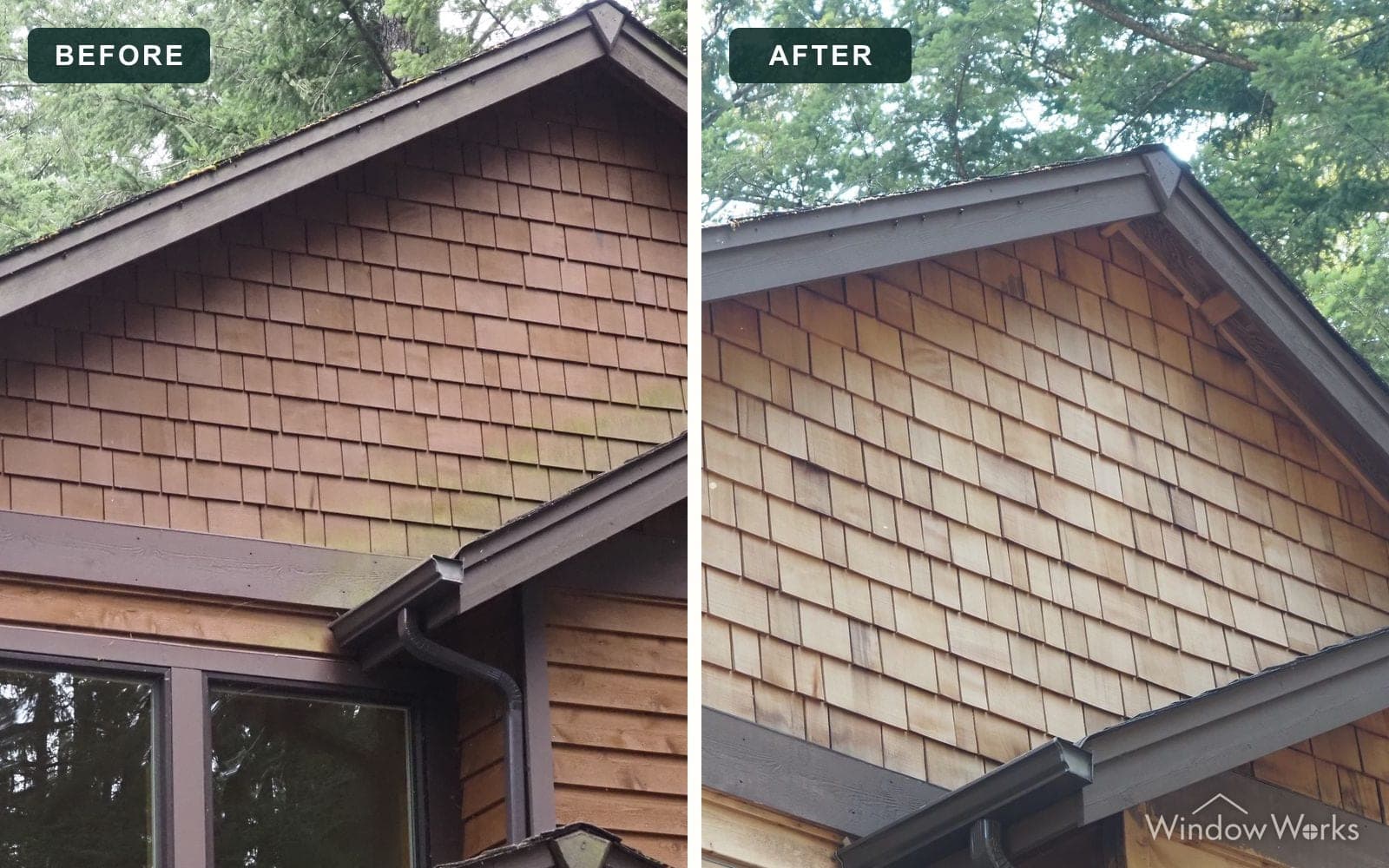
A lighter-bodied stain over a darker one does not work. The old coating has to come off first, all of it, or the dark keeps reading through.
This gable spent years under a dark stain. Stripped and neutralized, it is back to bright cedar that can take whatever color comes next, including one lighter than it has worn in decades.
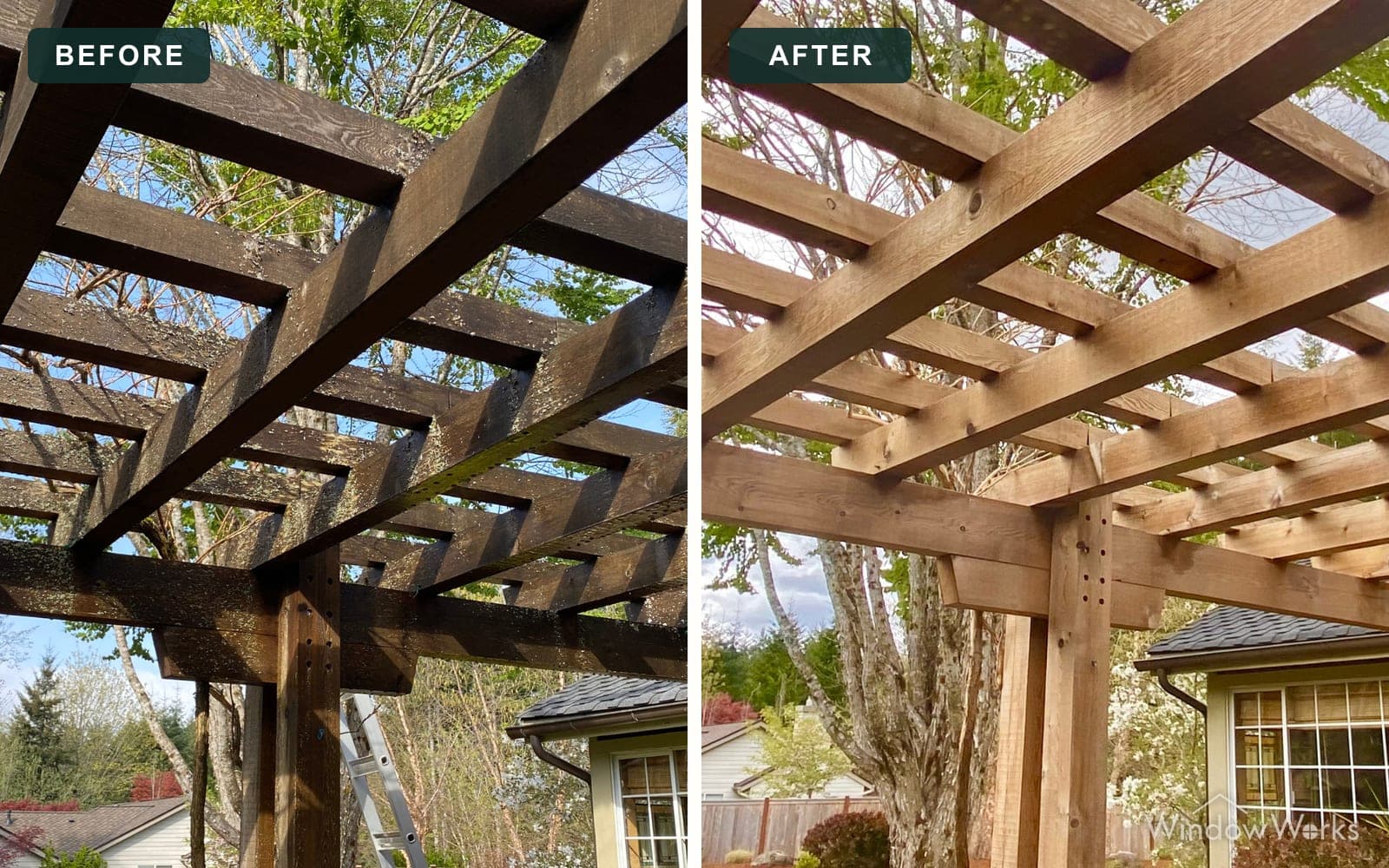
Years of Buildup
Re-staining over old stain, coat after coat, eventually layers up until the finish sits on finish instead of on wood, and the wood underneath starts paying for it.
Stripping takes the accumulation off and gets the new finish back onto clean substrate, where it can actually penetrate and do its job.
Watch it happen
Thirty-five seconds of the real thing.
The same deck as the before and after above it: the growth rinsing off and the wood coming back, exactly the way it happens on site.
The step nobody sees
The finish fails or lasts before the first coat goes on.
Chemical strippers push wood alkaline. Put stain or paint onto wood whose chemistry is still off and it cures wrong, adheres badly, and fails years early, and nobody can see any of that happening at the time.
So after the strip we neutralize and rebalance the wood's pH, and where the species calls for it, an oxalic acid brightener lifts the tannin darkness and restores the natural color. That is the surface your painter's manufacturer wrote their instructions for.
Then we stop. We do not apply the finish; we hand your painter a surface that will hold it. Prep is our trade, finishing is theirs.
Add-ons
Add it while we're there.
The crew and equipment are already on site, so these attach to your visit.
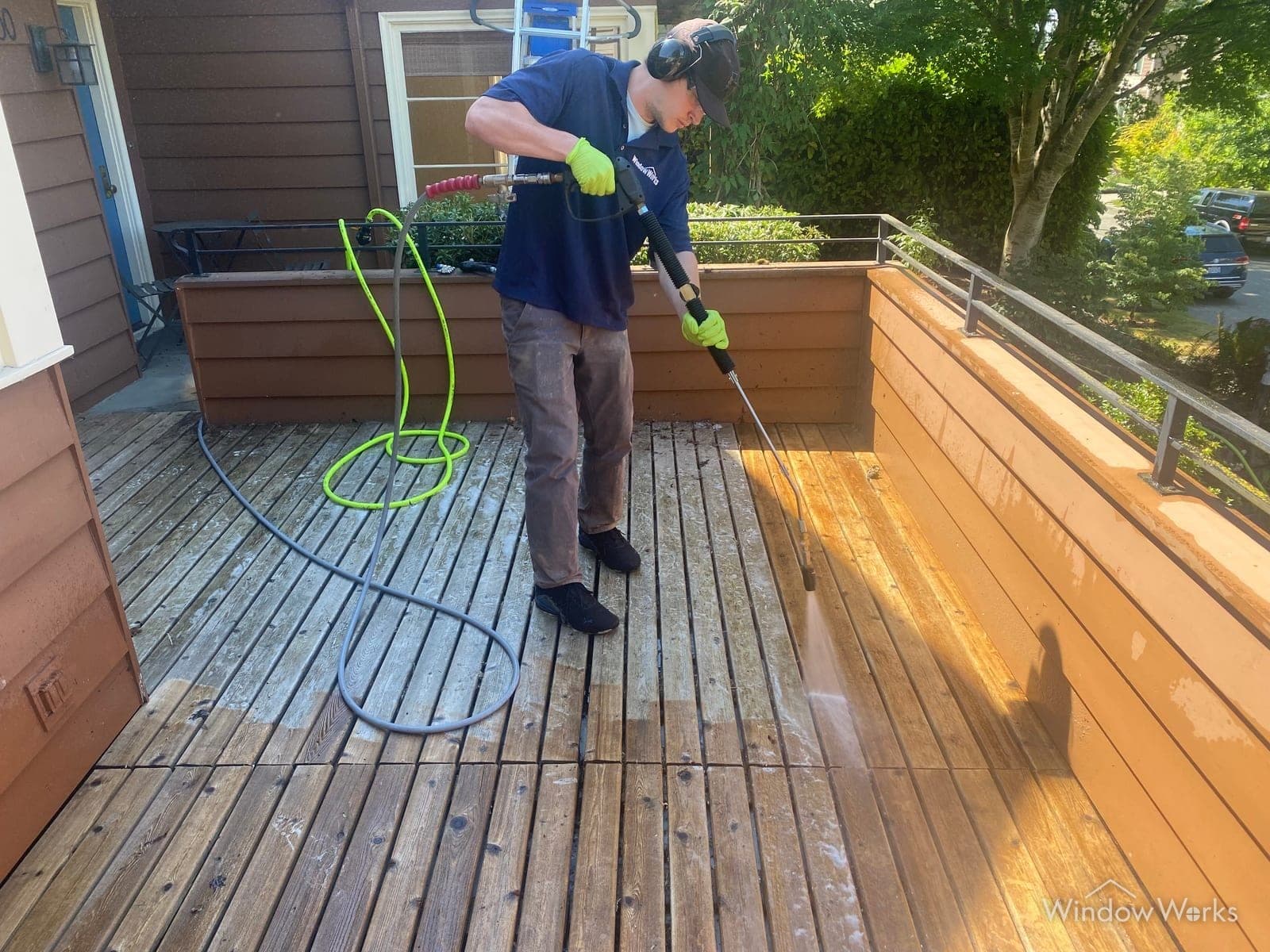
Deck and Fence Washing
Once the new finish is on, regular material-matched washes are what keep it alive years longer. Same crew, gentle on wood, never pressure.
See the full service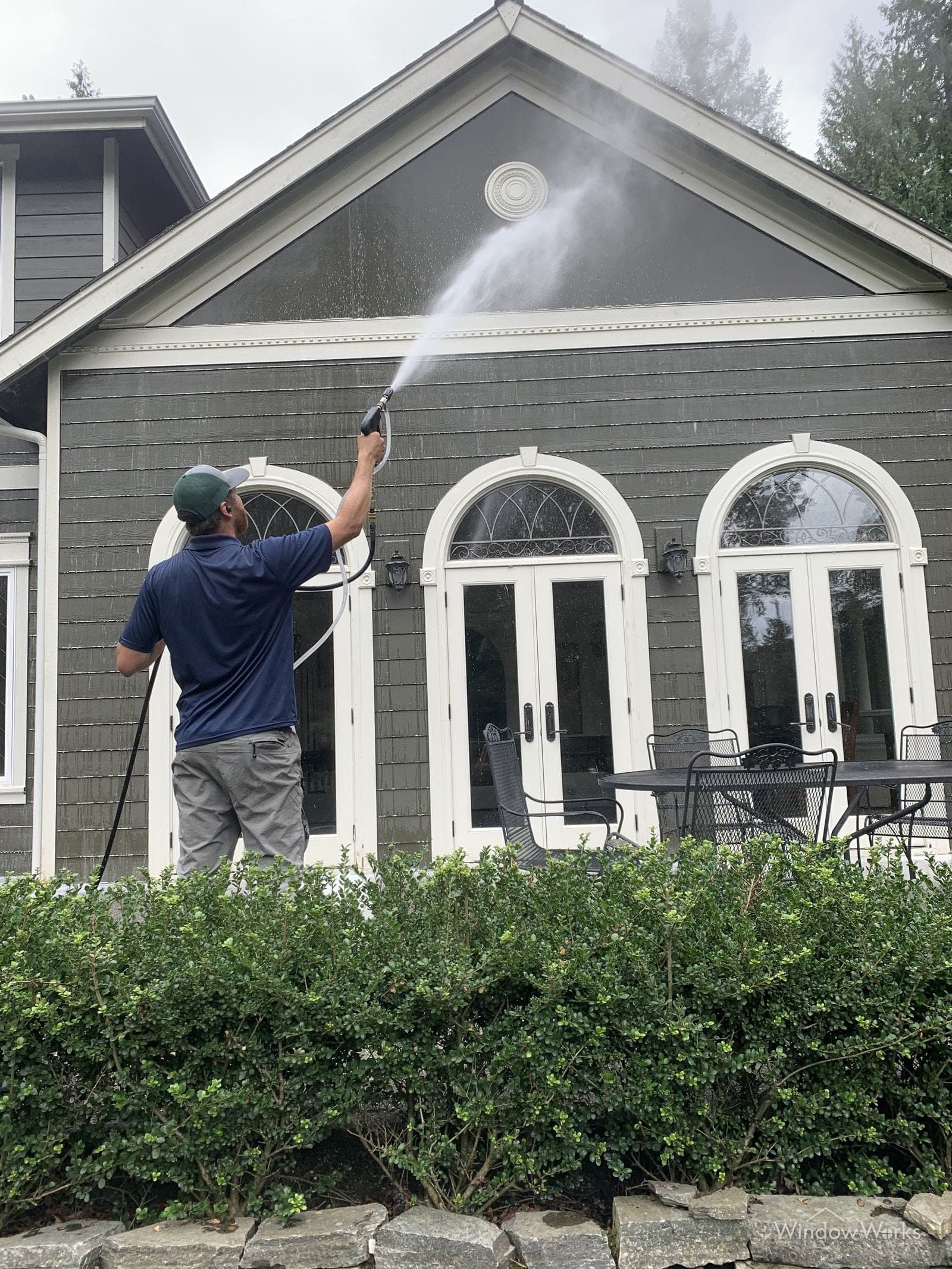
House Washing
Restored siding sits next to everything else on the wall. A soft wash brings the rest of the exterior up to meet the new wood.
See the full service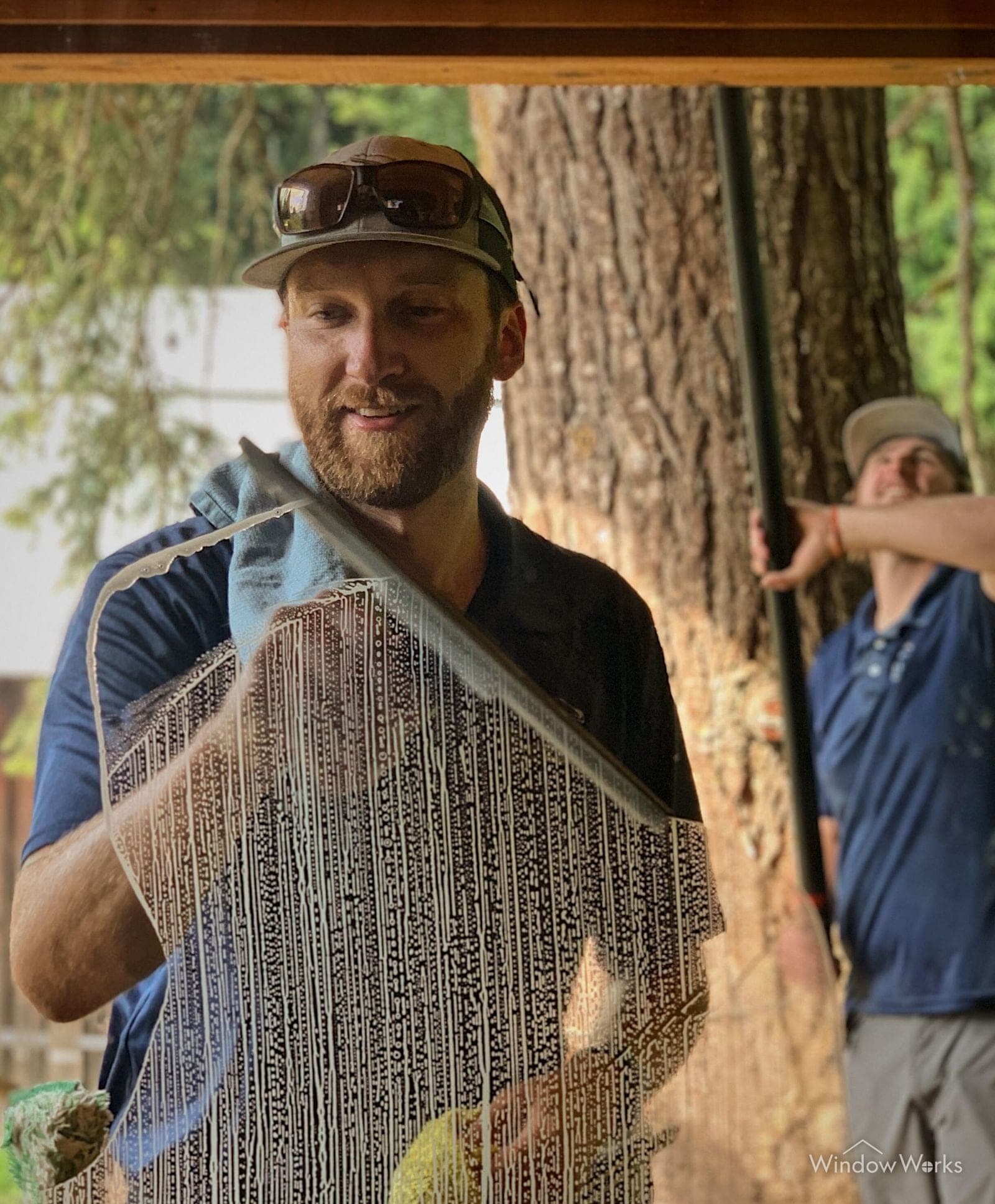
Exterior Window Cleaning
The strip and rinse run right over the masked glass, so the visit ends with the exterior windows cleaned. Restored wood looks better through clean windows.
See the full service
Why WindowWorks
Who shows up matters.
Anyone can rent a pressure washer. After 20+ years on Eastside exteriors, and a 4.9 rating across 300+ reviews, we can tell you the real difference is the person holding the wand: what they know, how they were trained, and whether the company behind them takes care of them. We take care of our techs, so they take care of your property.
Background-checked
Every technician is background-checked before they ever step onto a customer's property.
Certified, skill by skill
Our crews earn certification across 369 individual skills in 10 categories, each one signed off by an evaluator, never just by clocking time.
Paid like professionals
A living wage, healthcare, and dental. People who are treated well do careful work, and they stay, so you see the same faces.
Licensed, bonded, and insured
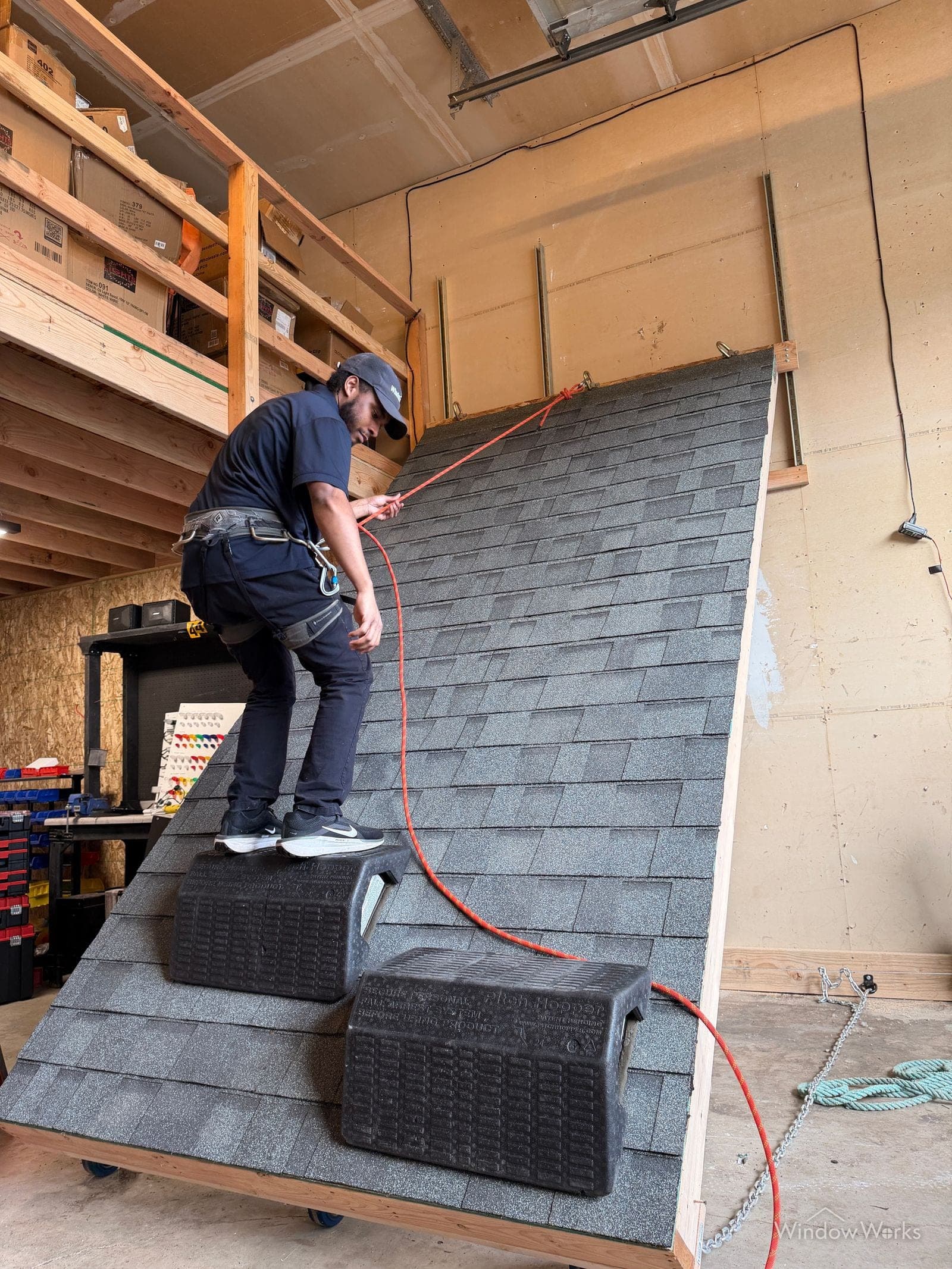
With OSHA-aligned safety training for the at-height work. If someone is on your roof, they are trained and covered for exactly that.
Method matched to the surface
Soft wash where pressure would damage, hot water where cold cannot lift, the right chemistry for the stain. The method follows the surface, not the other way around.
Documented before and after
Every job is photographed before and after, so you can see exactly what changed and keep it on file.
Common questions
Good to know.
Can old, dark-stained wood really go lighter?
Yes. That is the point of the process: strip the old stain fully, neutralize the chemistry in the wood, and it can take a light-bodied stain evenly, even after decades under a dark finish.
Why not just let the painting crew pressure wash it?
Painters are great at painting. But the pre-wash is a different trade, and done with high pressure and the wrong chemicals it leaves old paint that bubbles under the new coat and can drive water behind siding, where it turns up later as moisture and mold. Prep is our trade, so the paint can do its job.
What does pH have to do with paint?
Strippers push the wood alkaline. Put stain or paint on wood whose chemistry is still off and it cures wrong, adheres badly, and fails early. We neutralize and rebalance the wood after stripping, so the finish behaves the way the manufacturer designed it to.
Do you apply the new stain or paint?
No. Our job ends at a clean, neutralized surface that will take the finish evenly, and your painter or stain crew takes it from there. That split is deliberate: prep is our trade, finishing is theirs.
Serving Woodinville and the whole Eastside
Wood Restoration & Paint Preparation near you.
- Wood Restoration & Paint Preparation in Issaquah
- Wood Restoration & Paint Preparation in Sammamish
- Wood Restoration & Paint Preparation in Bellevue
- Wood Restoration & Paint Preparation in Redmond
- Wood Restoration & Paint Preparation in Kirkland
- Wood Restoration & Paint Preparation in Newcastle
- Wood Restoration & Paint Preparation in Mercer Island
- Wood Restoration & Paint Preparation in Snoqualmie
- Wood Restoration & Paint Preparation in North Bend
- Wood Restoration & Paint Preparation in Fall City
- Wood Restoration & Paint Preparation in Carnation
- Wood Restoration & Paint Preparation in Duvall
- Wood Restoration & Paint Preparation in Renton
- Wood Restoration & Paint Preparation in Seattle
Wood Restoration & Paint Preparation in Woodinville
Ready for a real estimate?
Answer a few quick questions and get a real number in minutes. No pressure, no obligation.