

November 17, 2026 · 5 min read
Deck Cleaning: Pressure Wash Or Soft Wash?
What The Deck Makers Allow, And What We Do Instead
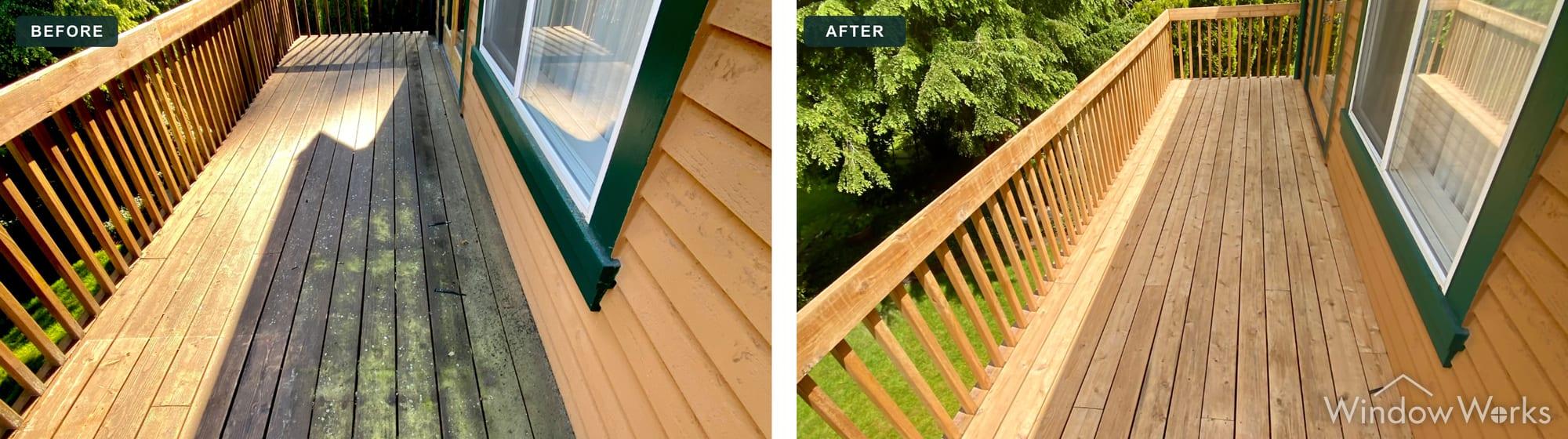
Soft wash it. A cleaner matched to your deck kills the algae and loosens the grime, then a low-pressure rinse carries it off. A pressure washer can tear up the surface of a wood deck, and the composite makers either cap the pressure or say not to use one at all. We never pressure wash decks.
Our deck cleaning starts at $300 when it is added to another service, or $400 on its own. Most of our 33 deck jobs since January 2025 paid $350 to $750 for the deck, and the one in the middle was about $425.
What Is The Difference?
Pressure washing cleans with force. A narrow, hard stream of water knocks the dirt off, along with whatever else on the surface is loose enough to go.
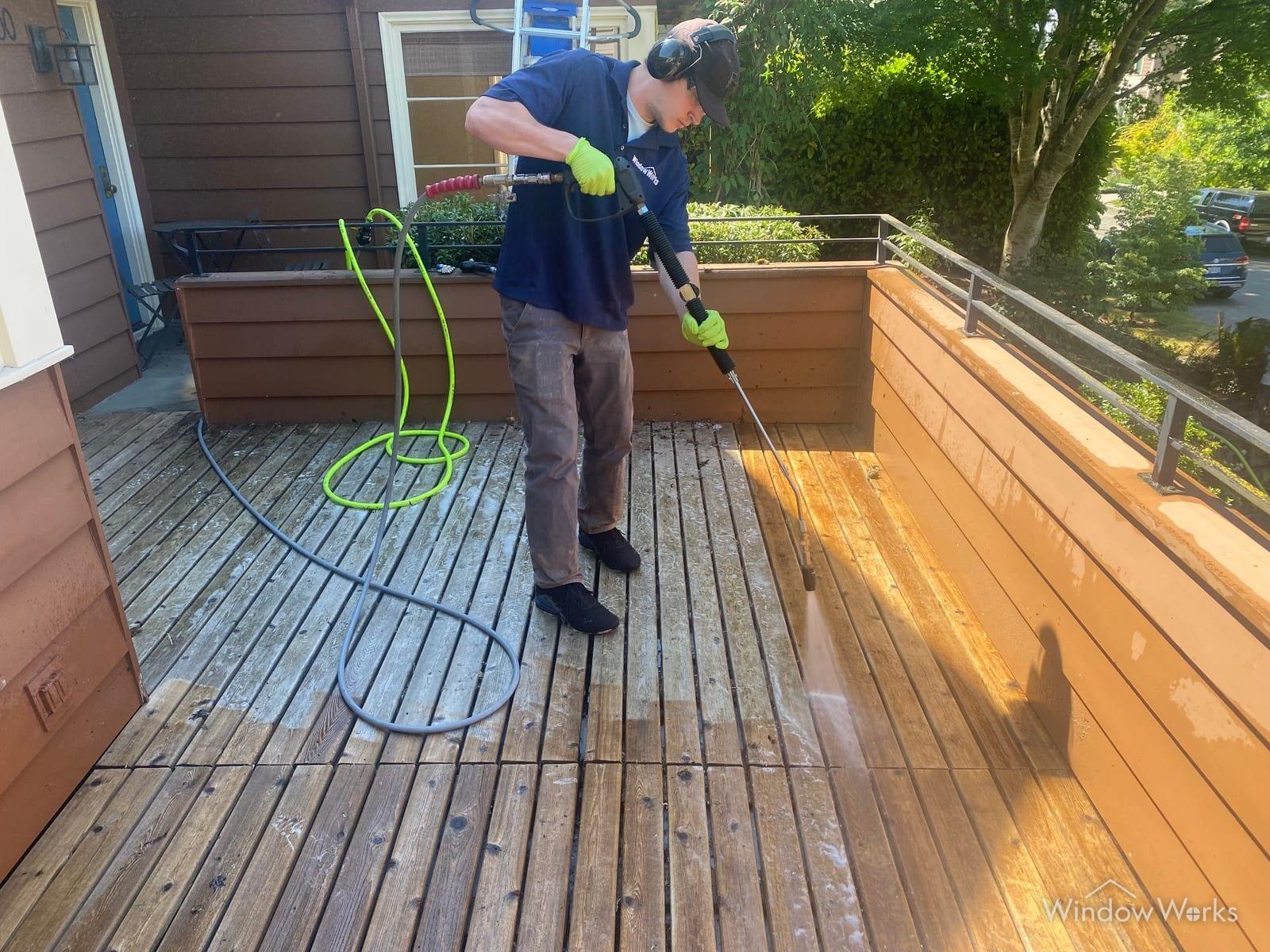
Soft washing cleans with a solution. It goes on, sits long enough to kill the algae and mildew and loosen the dirt, gets a soft brush where the growth is heavy, and then rinses off at low pressure. The cleaner does the work, so the water does not have to.
What Pressure Does To A Wood Deck
The USDA Forest Products Laboratory, the federal lab that studies wood, says power washing can strip wood off the surface of a deck, especially soft woods like western redcedar.
The damage shows up as fuzz. The spray tears up the soft wood fibers, and once the boards dry, those fibers stand up. A guide on the site of Viance, a company that makes the preservatives in pressure-treated lumber, warns about the same thing: etching, splintering and fuzzing.
The lab also says the silver, weathered fibers left after a cleaning should stay, because they soak up stain well. A pressure washer is what takes them off.
What Do Composite Deck Makers Say?
Composite makers allow a pressure washer on some boards, but they set limits, and on some boards they rule it out. Fourteen of our 33 deck jobs were composite.
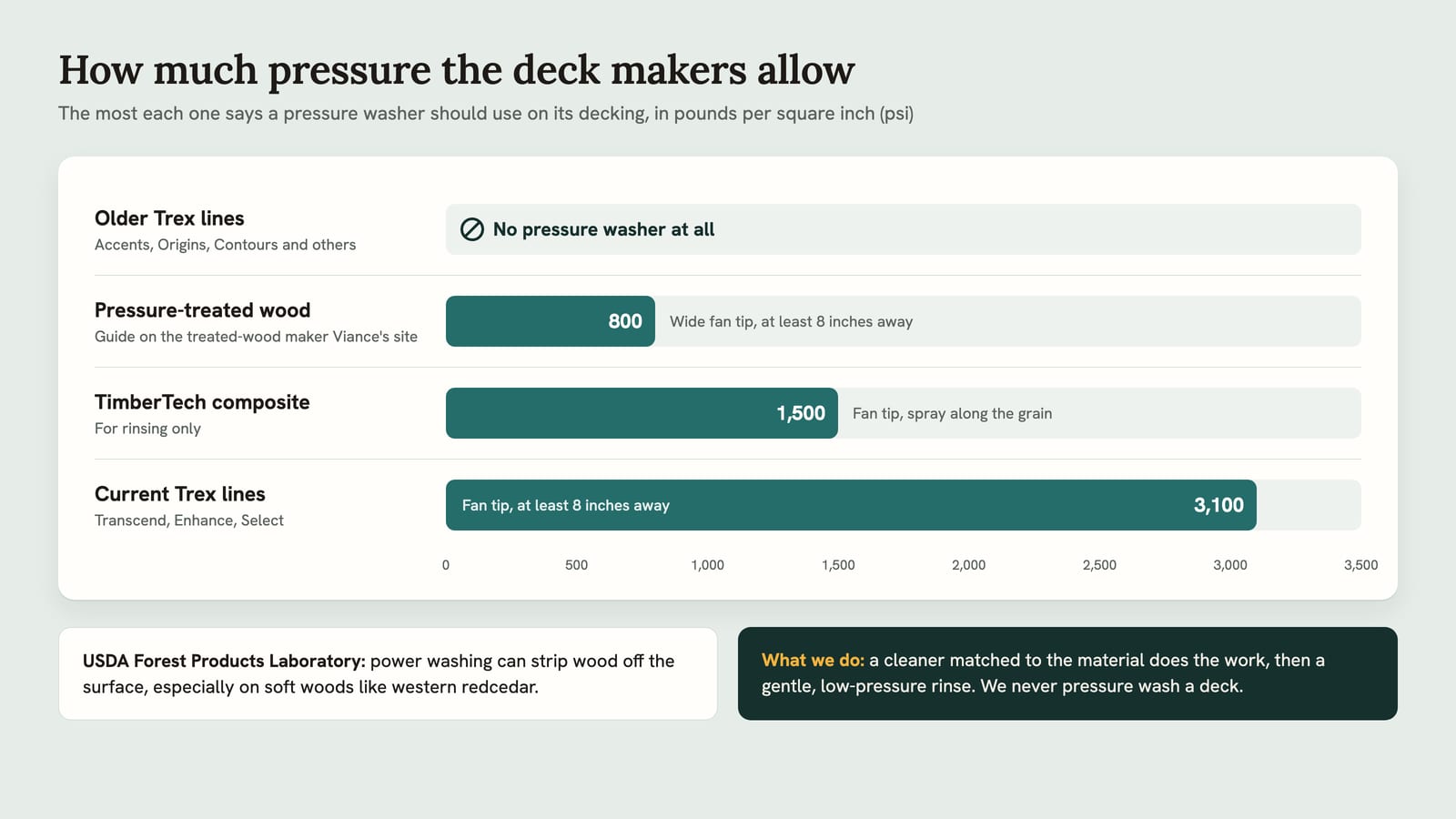
- Trex allows up to 3,100 psi on its current lines, Transcend, Enhance and Select, with a fan tip held at least 8 inches from the boards. It says more than that could damage them and void the warranty.
- On its older lines, including Accents, Origins and Contours, Trex says not to use a pressure washer at all.
- TimberTech says to use a pressure washer for rinsing only, with a fan tip, no more than 1,500 psi, and always along the grain.
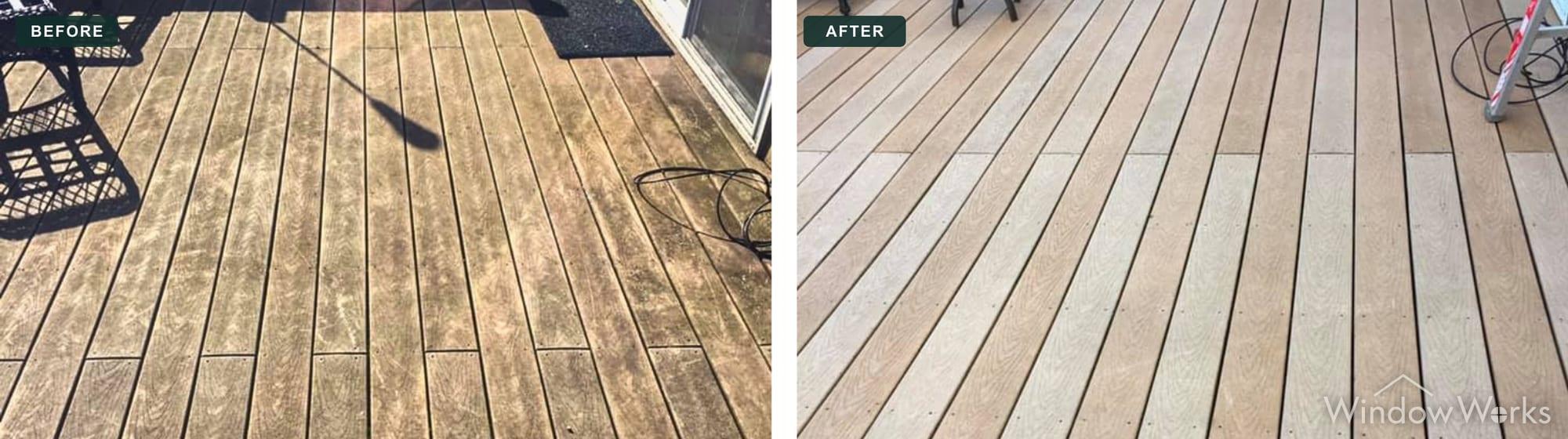
Trex's own first choice for cleaning is warm soapy water and a soft brush. On composite, too, we let the cleaner do the work.
Which Soft Wash Does Your Deck Need?
We ask two things before we quote: how old the stain or paint is, and whether you are keeping it or putting on a new coat.
- Maintenance Wash. The gentlest cleaner for your material. It takes off the algae and dirt and leaves a sound stain or paint finish in place. This is the yearly wash for most decks.
- Stain and Paint Prep Wash. A stronger cleaner that sits longer, with brushing, and a brightener at the end so new stain or paint bonds. It strips a failing finish on purpose, which is right before a recoat and wrong if you are not recoating.
Neither one is refinishing. We do not sand, stain or seal, and a wash cannot bring back stain that is already failing. If cleaning shows the deck is ready for a new coat, we tell you.
What Deck Cleaning Costs
Our deck cleaning starts at $300 as part of a bigger visit, or $400 on its own. Across our 33 deck jobs since January 2025, a quarter paid under about $350 for the deck, a quarter paid more than $750, and the job in the middle was about $425.
The size of the deck and what it is made of set most of the price. Railings are priced on their own, and a second-story deck costs a little more. The prep wash costs more than the maintenance wash.
Thirty-one of the 33 were done on the same visit as something else, most often a house wash, gutter cleaning or windows. The crew and equipment are already there, which is why a deck costs less as part of a bigger job.
Price your deck online, or call (425) 957-7403:
Can You Clean A Deck Yourself?
Yes. For wood, the Forest Products Laboratory points to store-bought deck cleaners and brighteners. For mildew it suggests household bleach mixed with 3 parts water and a little detergent, then a good rinse. Never use a detergent with ammonia in it, because ammonia and bleach make a toxic gas. If you plan to stain afterward, give the deck at least two warm, windy days to dry.
For composite, start with what the maker says, usually warm soapy water and a soft brush. If you do reach for a pressure washer, stay under your maker's limit, use a wide fan tip, keep it at least 8 inches off the boards and spray along the grain. Try it first on a spot nobody will see.
How Often Should A Deck Be Cleaned?
Every year, whatever it is made of. Algae makes a wet deck slick on wood and composite alike, and around here a deck is wet most of the year. Stained decks need the cleaning before every new coat anyway. Shaded decks under firs and cedars can green up again within six months.
Both washes, what each material can expect, and fences:
Concrete is a different story, and gets a different wash:
About these numbers: prices are before sales tax. The range and the middle job cover the deck cleaning portion of 33 jobs we completed between January 2025 and November 2026. The pressure limits are what each maker publishes on its care pages, read in November 2026. The photos are from our own crews.
Sources
- USDA Forest Service, Forest Products Laboratory, "Finishes for Wood Decks," FinishLine, Mark Knaebe (fpl.fs.fed.us, revised July 2013)
- Trex, "How to Clean a Trex Deck" (trex.com/care)
- TimberTech, "Care & Cleaning Guide: Decking and Railing" (timbertech.com)
- Treated Wood, "Is pressure washing bad for my deck?" (treatedwood.com, Viance)
See what it would cost.
Get a free estimate in minutes, or call and talk it through with a real person.