

October 21, 2026 · 7 min read
What Lichen and Algae Do to a Metal Roof
How a crusty gray patch turns into a rust spot, and how to stop it
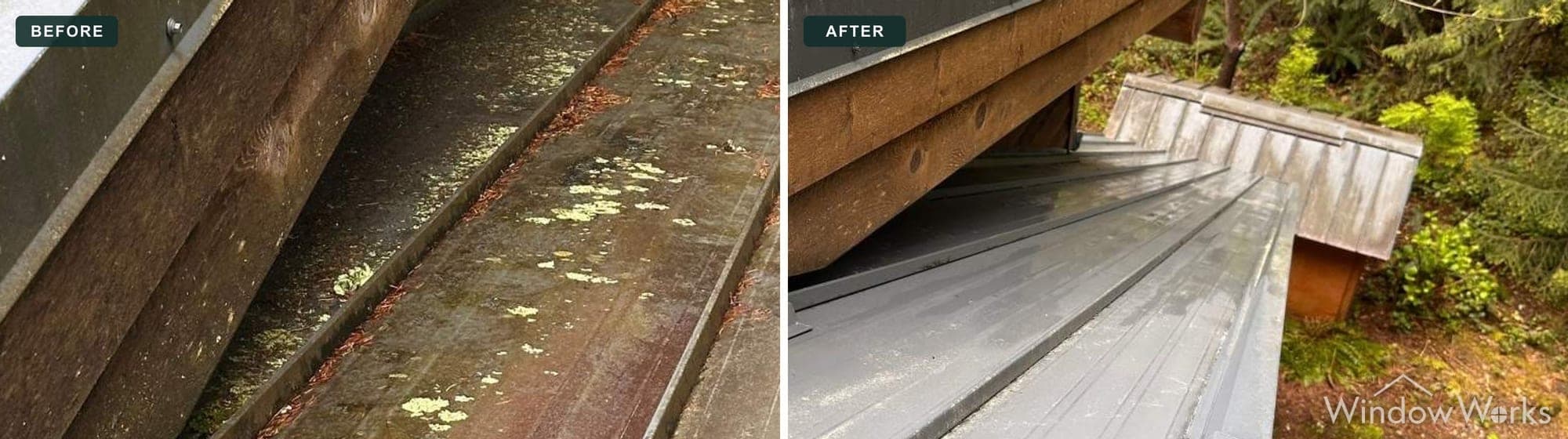
Homeowners on the Eastside pay a premium for metal roofs because they last. A good painted steel roof can go 40 years or more. What most people don't hear at the sale is that the steel isn't what keeps it going that long. The paint is. Everything under it, the metal coating and the steel itself, depends on that thin top layer staying whole.
Moss rarely takes hold on smooth metal. Lichen and algae do, especially on shaded, low-slope sections under trees. Both look like a cosmetic problem. Both are working on the paint.
What Is Actually on the Roof
Algae is the dark green or black film that shows up first, usually on the north side and under trees. Lichen is the flat, crusty patch, pale green to gray, that looks almost painted on. They are related: a lichen is a fungus and an alga living together as one organism. The alga makes food from sunlight, and the fungus builds the body and anchors it. That's why a roof that grows algae today tends to grow lichen in a few years. The conditions that feed one feed the other.
How Lichen Damages the Paint
Lichen has no roots in the garden sense, but the fungus grows fine threads down into whatever it sits on to hold itself in place. On rock, those threads and the acids the lichen gives off slowly break the surface apart. Painted metal is a much softer target than rock.
“Lichen and mould ... are acidic, and have tiny roots that can penetrate a paint coating.”
The same guide notes that lichen holds moisture, too. Between them, that's three ways lichen gets through. The threads work into the paint and open tiny paths through it. The acids soften and etch the paint, and the color fades and chalks first. And the lichen body works like a sponge, holding water against the same spot long after the rest of the roof has dried.
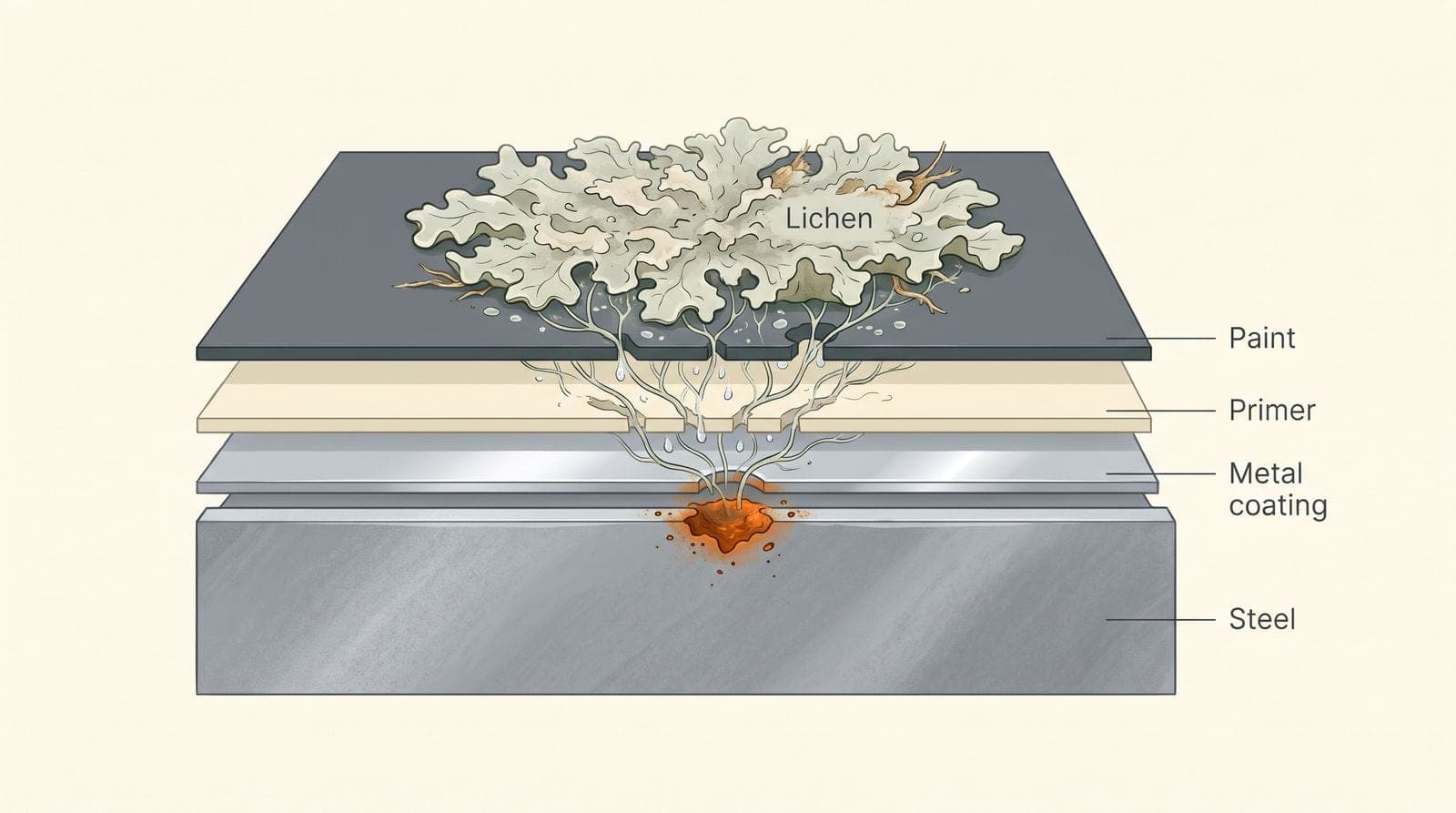
Under the paint, most residential metal roofs have a thin metallic coating of zinc or a zinc-aluminum blend, with the steel under that. That metallic layer is there to protect the steel. Once the paint is breached and the spot stays wet, the coating starts to corrode. When it's gone, the steel rusts. On a roof, a pinhole of rust is a leak in waiting.
Don't scrape lichen off a metal roof. It is anchored into the paint, so pulling it off takes paint with it and leaves bare spots right where the damage already started. Kill it first, then let it let go.
How Algae Damages the Paint
Algae doesn't root into the paint the way lichen does. Its damage is slower and comes mostly from water. A living algae film traps moisture and dirt against the surface, so the roof stays wet for hours or days longer after every rain. Coatings engineers call that time of wetness, and it is the single biggest driver of corrosion on a metal roof.
A wet paint film breaks down faster. It chalks, loses its color, and over years can blister and crack. The weak points go first: the screw heads on exposed-fastener panels, scratches from foot traffic or a dropped tool, cut edges at the eaves, and the laps where two panels overlap. Those are the places where metal is already exposed or the paint is thinnest, and they are exactly where algae and dirt collect.
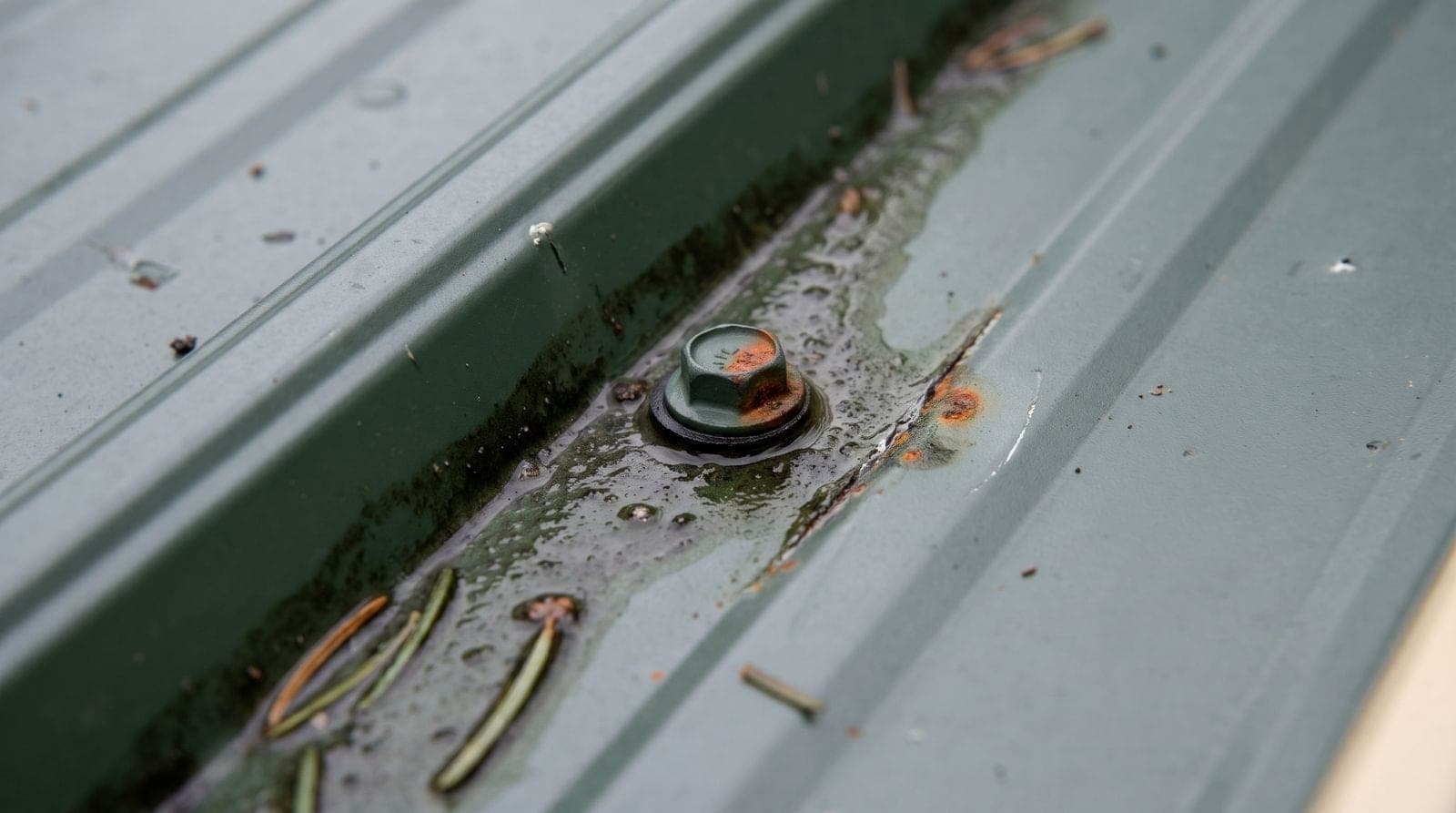
The streaks matter too. Algae and lichen growing on a metal roof make the whole thing look older and duller than it is, and dark growth on a light roof shows from the street. If you plan to sell, buyers and inspectors notice it.
How Fast It Happens
Nobody can put an exact date on it. Shade, slope, trees, the paint system and the age of the roof all change the pace. The pattern we see on Eastside roofs runs in stages, and the earlier you catch it, the less it costs.
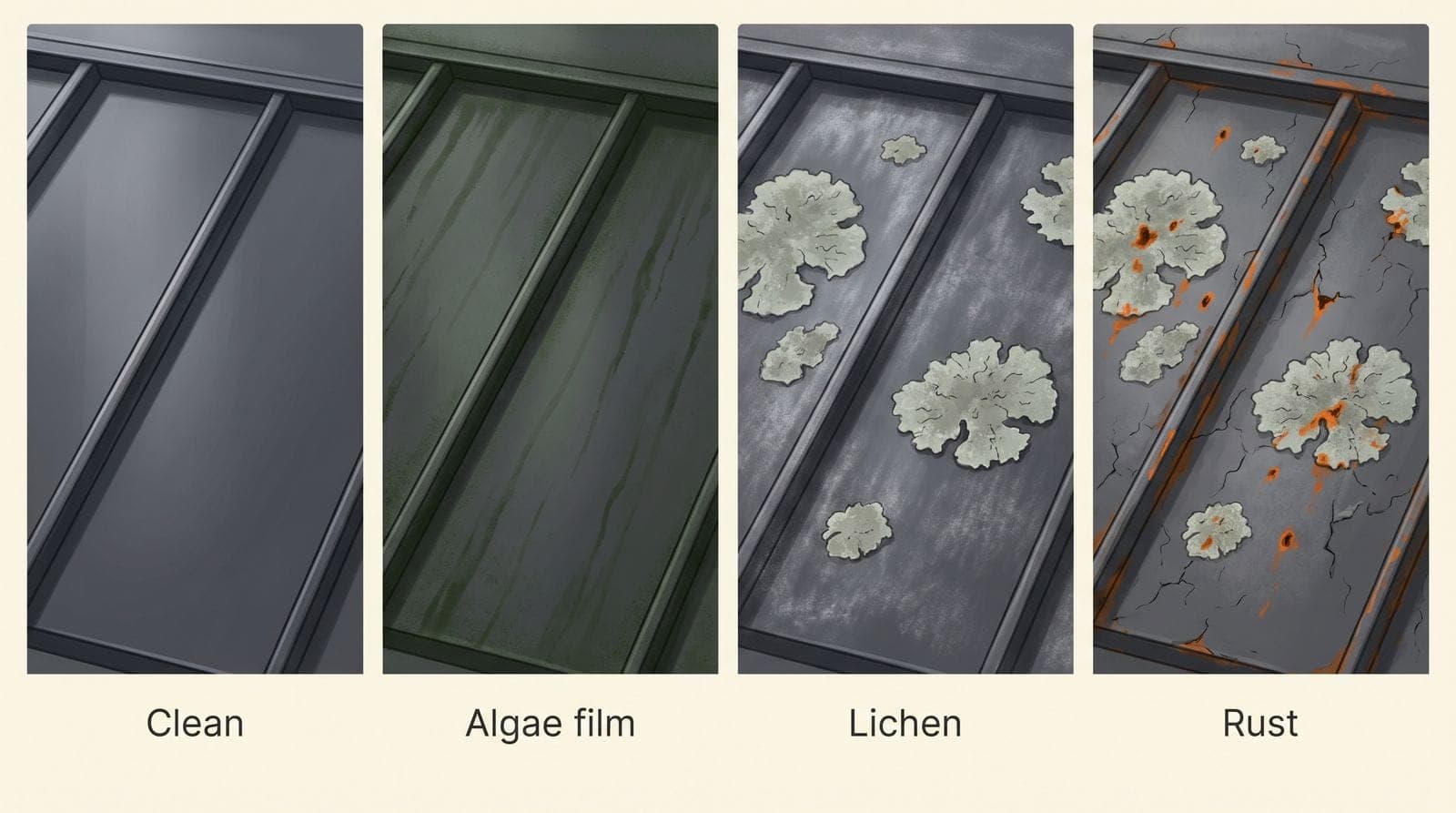
- Clean paint. Nothing to do but keep the roof clear of needles and debris.
- Algae film. Cosmetic so far, but the roof is staying wet longer. This is the cheap time to clean it.
- Lichen patches, faded or chalky paint under them. The paint is being worked on. A cleaning now still saves the coating in most spots.
- Rust spots through the paint. Cleaning stops the growth, but the damaged spots need a roofer to treat and touch up the metal.
What Not to Do
- Don't pressure wash it. High pressure can strip the paint, force water under the laps and seams, and void the paint warranty.
- Don't use a wire brush, a scraper, or an abrasive pad. They scratch through the paint and give rust a starting point.
- Don't use strong bleach or acid cleaners. The mix that's right for an asphalt roof is too strong for painted metal, and acid rust removers can strip paint too.
- Don't rely on copper or zinc strips. They work only on the strip of roof just below them, and some metals react badly with each other on a roof.
How We Clean a Metal Roof
Metal roofs get a soft wash, but not the same one a shingle roof gets. We use a much weaker mix, matched to painted metal, apply it at low pressure, give it time to kill the growth, and finish with a light, low-pressure rinse. Lichen dies in place and loosens over the following weeks instead of being torn off with the paint underneath it. There's one safe way to clean these roofs, so there's one option, not a menu.
We're straight about two things. First, algae comes back faster on metal than on shingles, and the gentle mix that protects your paint can't promise every spore is gone. That's why we recommend cleaning metal roofs every year, and never longer than every two, and why we don't offer a moss-free warranty on them. Second, cleaning can't undo rust or fading that's already there. It stops the cause so a roofer's touch-up lasts.
One more reason to stay on schedule: some metal roof manufacturers make keeping the roof free of organic growth a condition of the paint warranty. Check the paperwork for your roof, and keep a record of every cleaning.
Want to know how far along your roof is? We'll look at it and tell you honestly.
Sources
- New Zealand Metal Roofing Manufacturers Inc., Code of Practice, section 16.7, "Washing" (metalroofing.org.nz), on lichen and mould penetrating paint coatings and on low-pressure cleaning
- New Zealand Metal Roofing Manufacturers, "Lichen" (metalroofing.org.nz), on lichen roots infiltrating painted surfaces and increasing time of wetness
- Journal of Coatings Technology and Research (2025), on biofilm growth and premature failure of roof coatings where water sits
- Sheffield Metals, "How to Clean Bio-Growth From Your Metal Roof" (2023), on algae, lichen and moss holding moisture on metal roofs
See what it would cost.
Get a free estimate in minutes, or call and talk it through with a real person.