

September 12, 2024 · 3 min read
Moss, algae, or lichen? What's actually growing on your roof
Black streaks, green fuzz, and crusty gray patches are three different organisms, and each one damages your roof in its own way. Here's how to tell them apart.
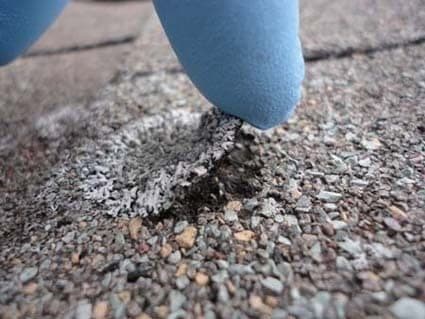
Live in western Washington long enough and something is going to start growing on your roof. The question is what. Most homeowners lump it all together as moss, but there are usually three different things at work up there, and they are not the same. Telling them apart helps you know how worried to be.
Algae: the black streaks
Those dark streaks running down the shaded side of your roof are not dirt and they are not a stain. They are algae, a single-celled organism that feeds on the filler in asphalt shingles. It loves shade and moisture, which is why it shows up first on the slopes that get the least sun.
Algae is mostly cosmetic early on, but it holds moisture against the shingle and is usually the first sign that conditions are right for moss and lichen to follow.
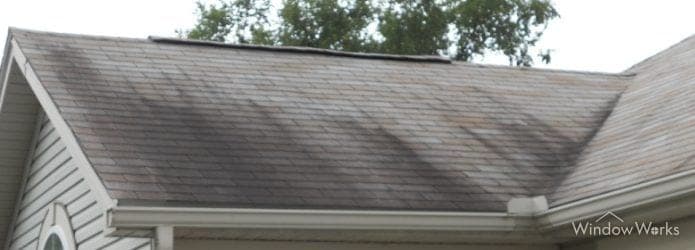
On the urgency scale, algae is a schedule-it item, not a drop-everything item. It will not lift a shingle this winter. What it does is hold moisture, creep along the shaded slopes, and set the table for the other two.
Moss: the green carpet
Moss is the thick green growth you can see from the street, packed into the gaps between shingles and along the shaded edges. It acts like a sponge. It soaks up rain and holds it against the roof, and as it grows it lifts the edges of the shingles, which lets water underneath and shortens the life of the roof.
Moss is the one that does real structural damage if you let it go. Left alone for a few years, it can take a roof from healthy to needing replacement.
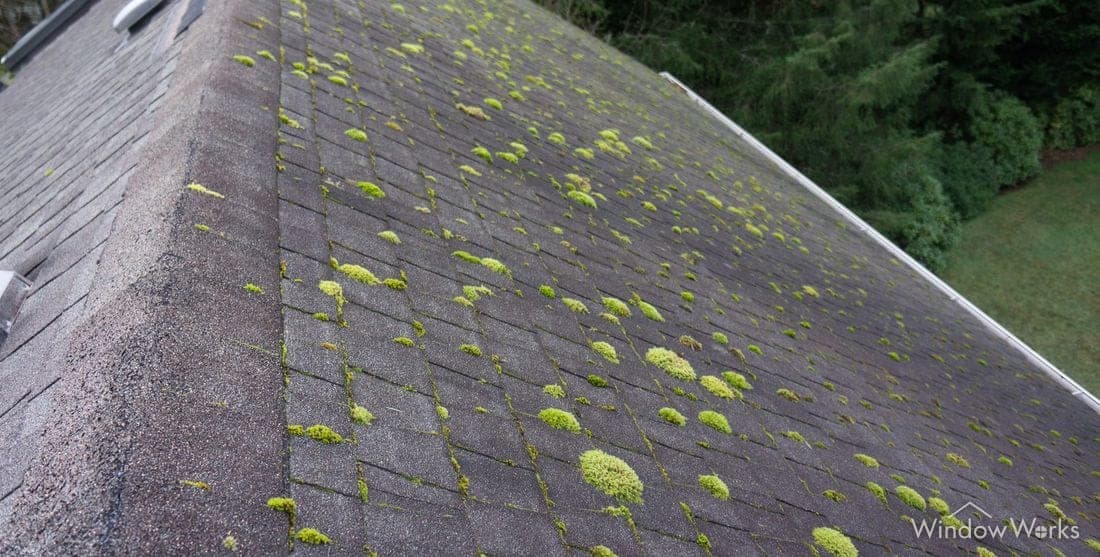
Moss is also the growth insurers photograph. Carriers in western Washington run aerial and drive-by inspections, and a green roof is one of the conditions that gets a policy flagged for non-renewal.
We wrote up what carriers look for and how to stay off their list:
Lichen: the crusty patches
Lichen is the flat, gray-green, crusty growth that looks almost painted on. It is the most stubborn of the three because it roots into the shingle surface and pulls granules off as it spreads. Those granules are what protect the shingle from the sun, so losing them ages the roof fast.
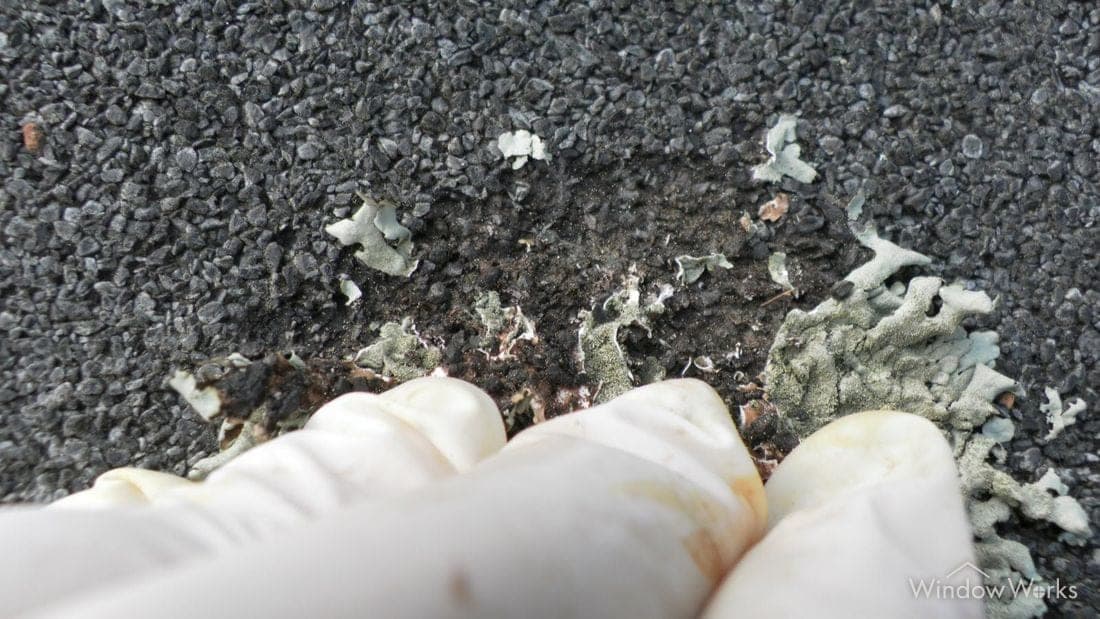
Lichen is also the slowest to let go. After a soft wash treatment it dies in place, loses its grip, and weathers off over the following weeks instead of peeling away the same day. Slower is the point: scraping or blasting it off would take the granules along with it.
Here is the key thing: all three are made worse by pressure washing. Blasting them off strips the protective granules right along with the growth. The safe way to remove them is a low-pressure soft wash that kills the growth at the root and lets it rinse away.
What to do about it
A soft wash clears all three and treats the surface so it stays clear longer, without the damage a pressure washer would do. If you are seeing any of these on your roof it is worth getting ahead of, especially the moss. We are happy to take a look and tell you honestly how urgent it is. Get a free estimate online or give us a call.
Seeing something up there that isn't one of these three? Our full guide covers everything we find on a roof, and whether a wash removes it:
See what it would cost.
Get a free estimate in minutes, or call and talk it through with a real person.