

October 16, 2026 · 13 min read
Why we use bleach on roof moss
The chemistry, and why zinc and pressure washing can't do the job
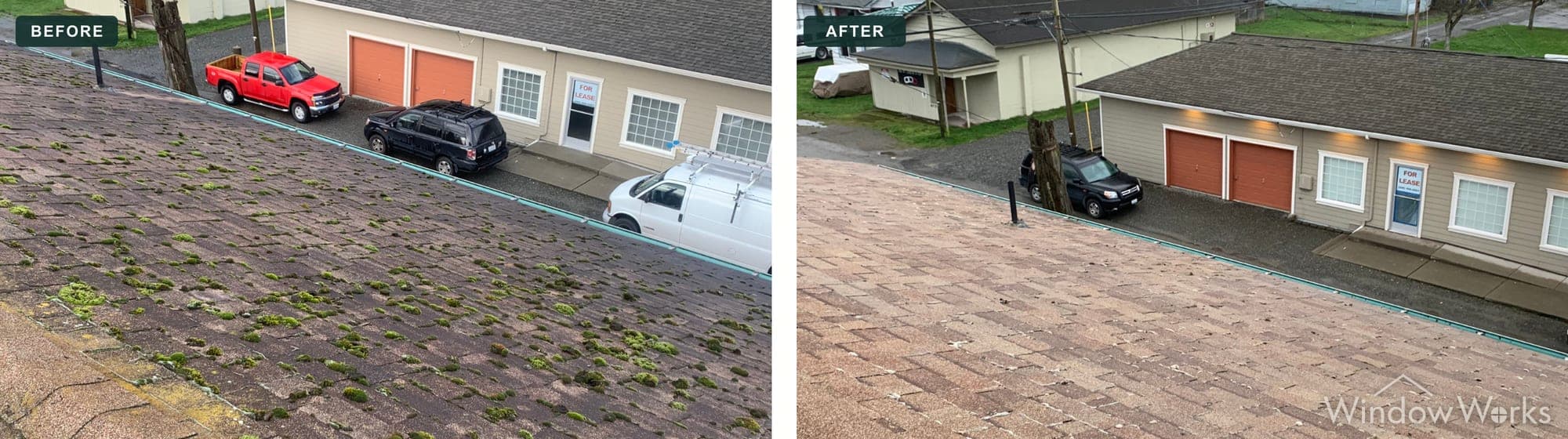
Walk the roof-care aisle at any Eastside hardware store and you'll find a shelf of moss killers: zinc powders, spray-and-walk-away jugs, soap-based concentrates, metal strips for the ridge. Most of them do something. What matters is what each one does to the moss, how much of the roof it reaches, how long it lasts, and where it ends up after the next rain.
We soft wash roofs with sodium hypochlorite, the active ingredient in chlorine bleach. Below is why, starting with how moss lives on a roof and ending with what happens to the bleach once it's done its job.

“The most effective method of cleaning algae and moss from a roof is with a 50:50 mix of laundry strength liquid chlorine bleach and water.”
How moss lives on a roof
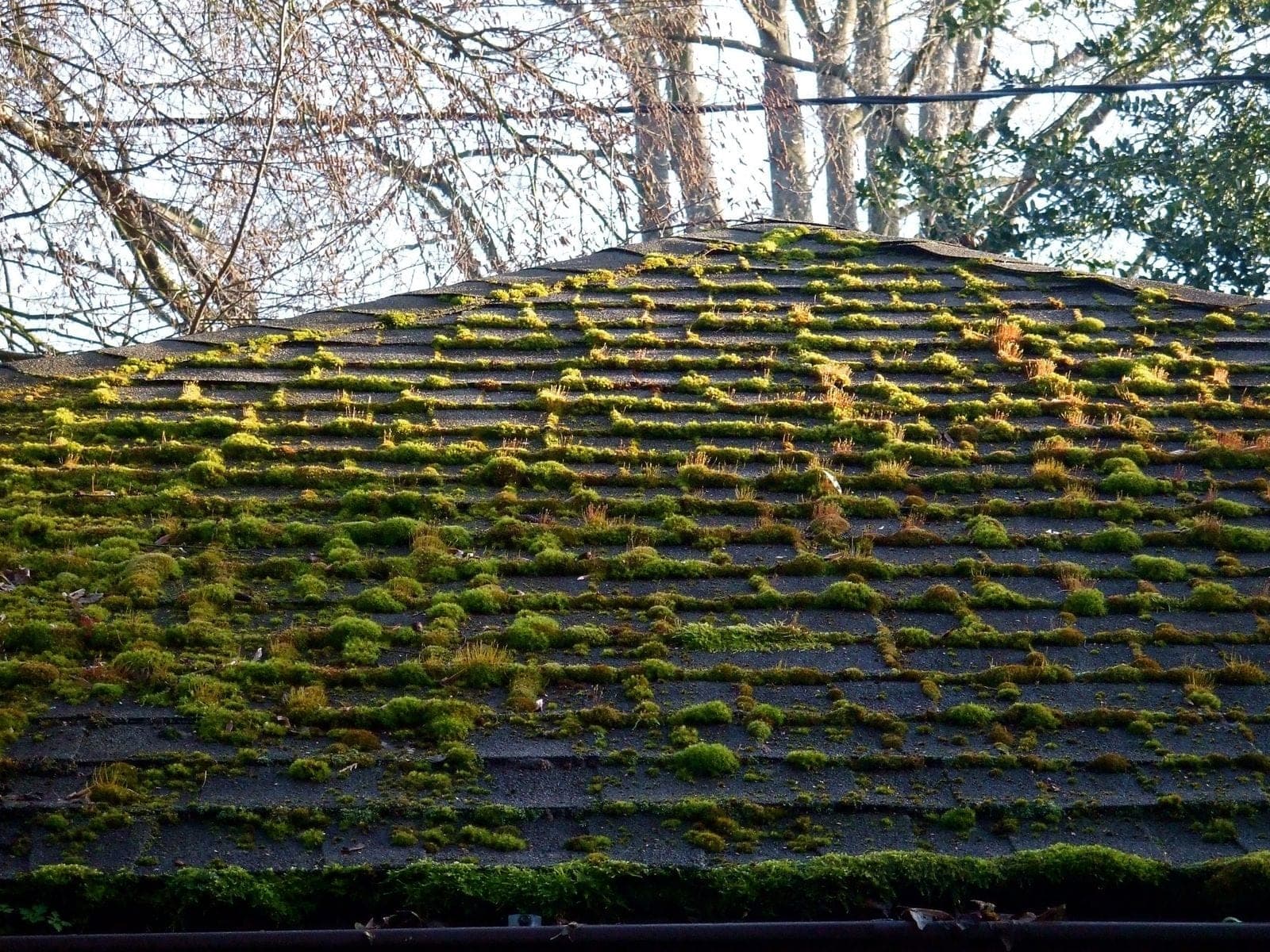
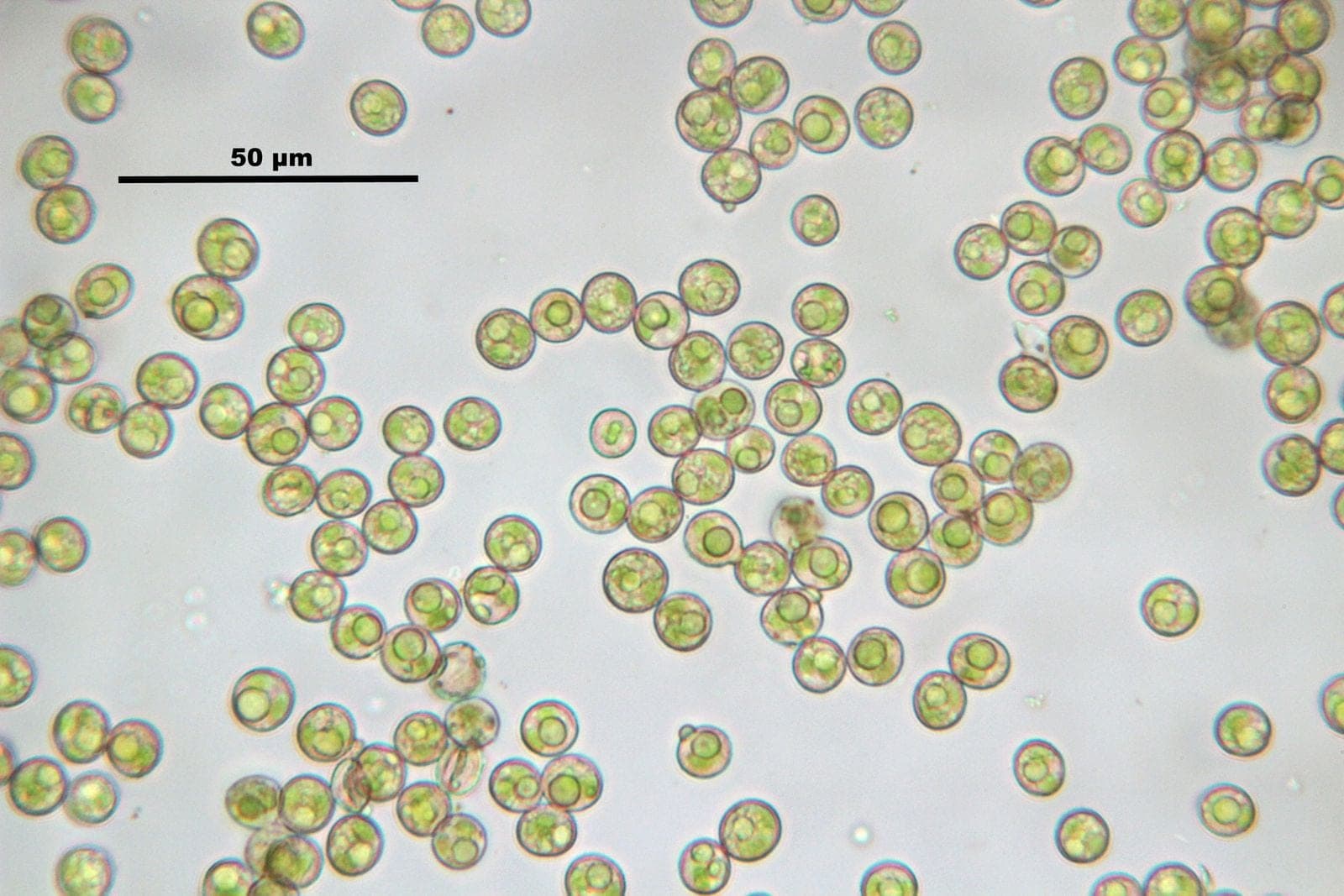
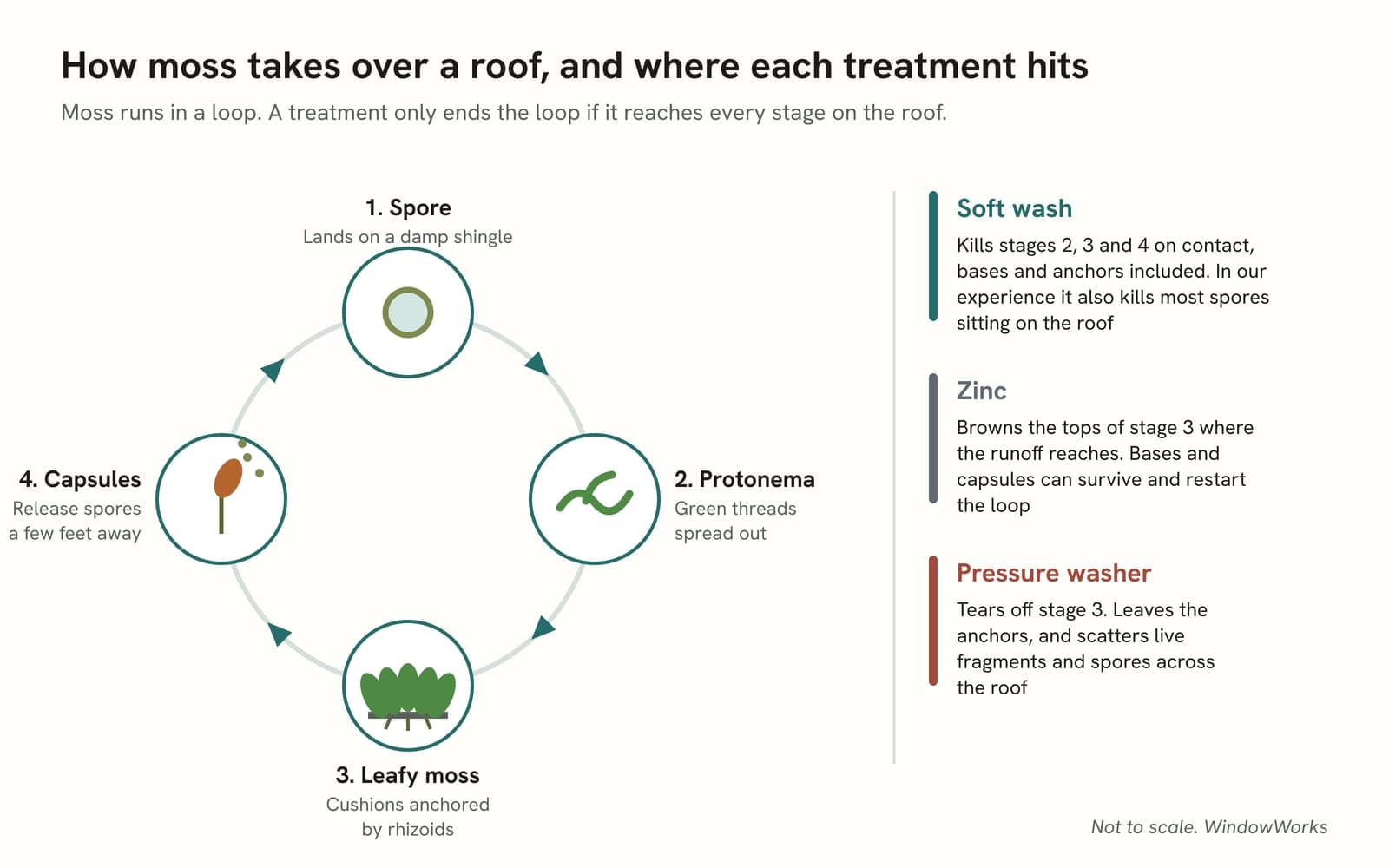
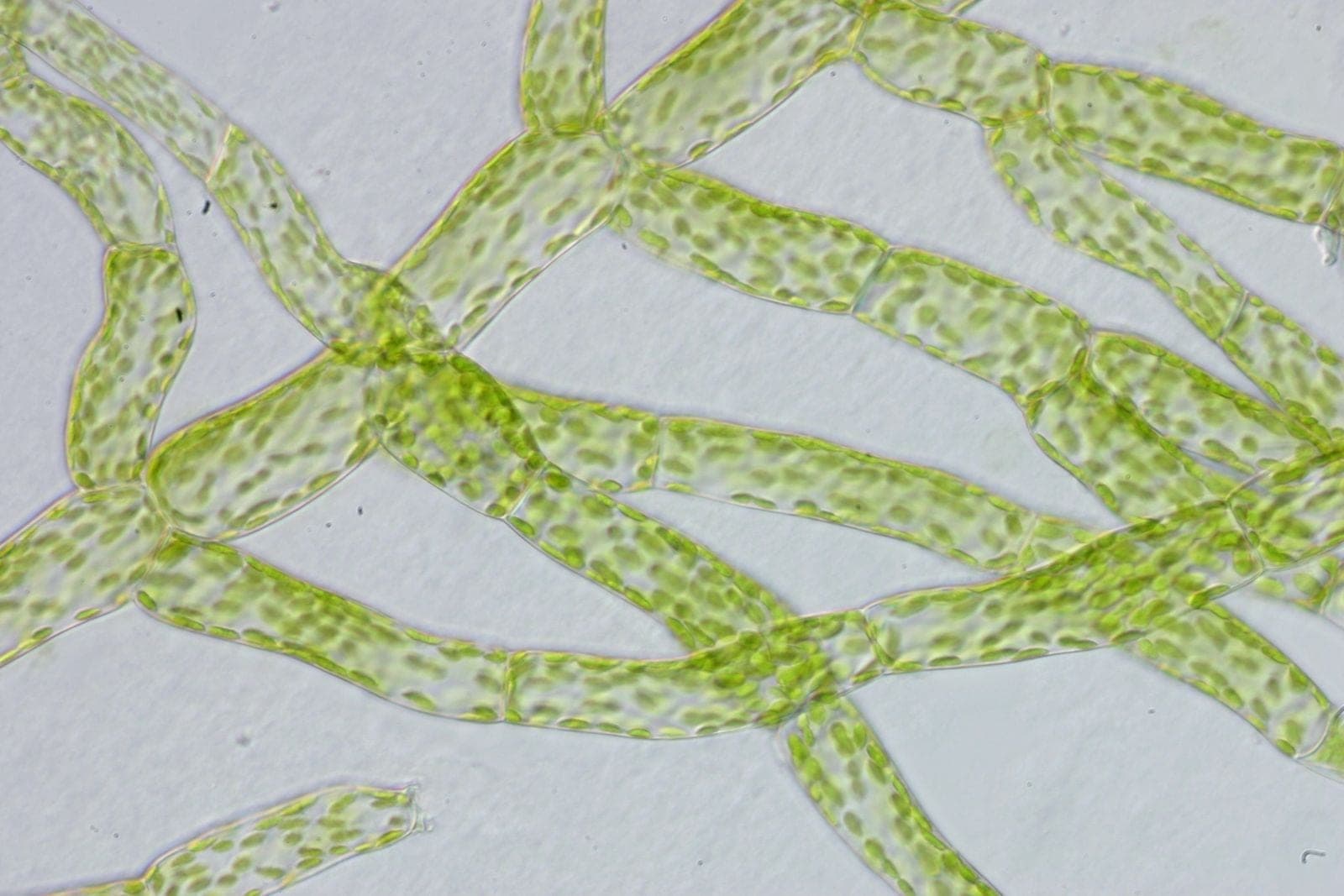
Moss starts as a spore, a single cell somewhere between 5 and 50 micrometers across. A human hair is about 70. Spores ride the wind, and western Washington air is full of them. When one lands somewhere that stays damp, like the shaded side of a roof, it sprouts into fine green threads called protonema. Those grow into the leafy cushions you see from the street, held to the shingle by rhizoids, thin root-like anchors that grip the surface.
Once the cushions mature, they grow capsules on short stalks, and each capsule releases thousands of new spores. Most of them land within about 30 feet of the plant that made them. A mossy roof is its own best seed source.
Moss is also hard to kill by neglect. It can dry out completely through a hot August and turn green again within hours of the first fall rain. Broken bits regrow into new plants, and Dicranoweisia cirrata, one of the most common roof mosses in the Northwest, grows tiny buds that snap off and start colonies of their own.
What about the spores?
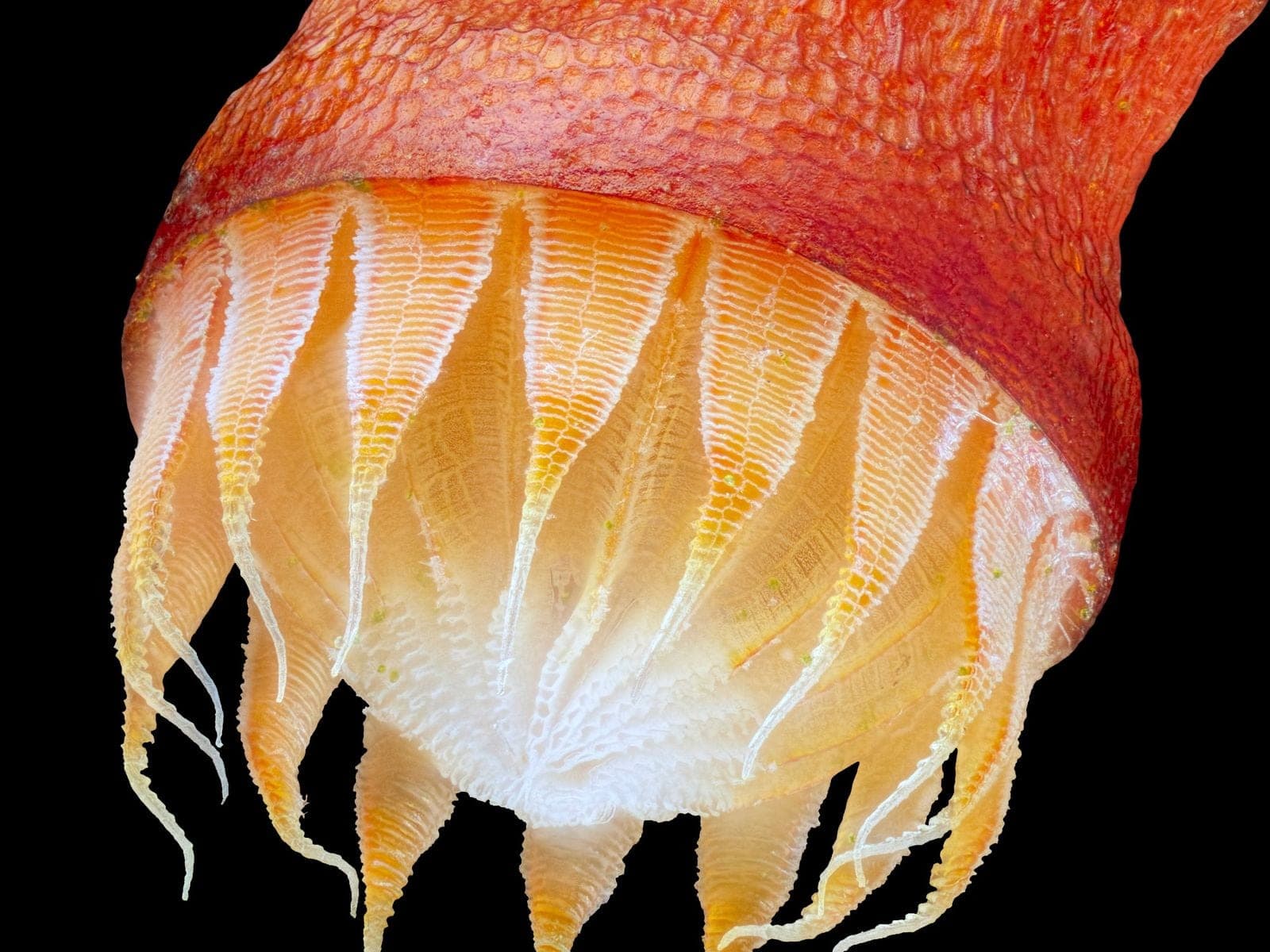
A moss spore is wrapped in sporopollenin, which researchers have called the toughest material in the plant kingdom. It shrugs off strong acids. Its weak point is oxidation, which is exactly what bleach does.
Nobody has tested moss spores at roof-wash strength, so no one can say for certain that a roof wash kills every spore. The lab work that exists is much gentler than what we do. Fern spores held in 2 percent bleach, less than half our strength, for 15 minutes still sprouted. Moss growers dip spore capsules in bleach for a minute or less to clean the outside, with the spores sealed inside. On a roof, we apply a 4 to 5 percent solution directly to the moss and leave it to work.
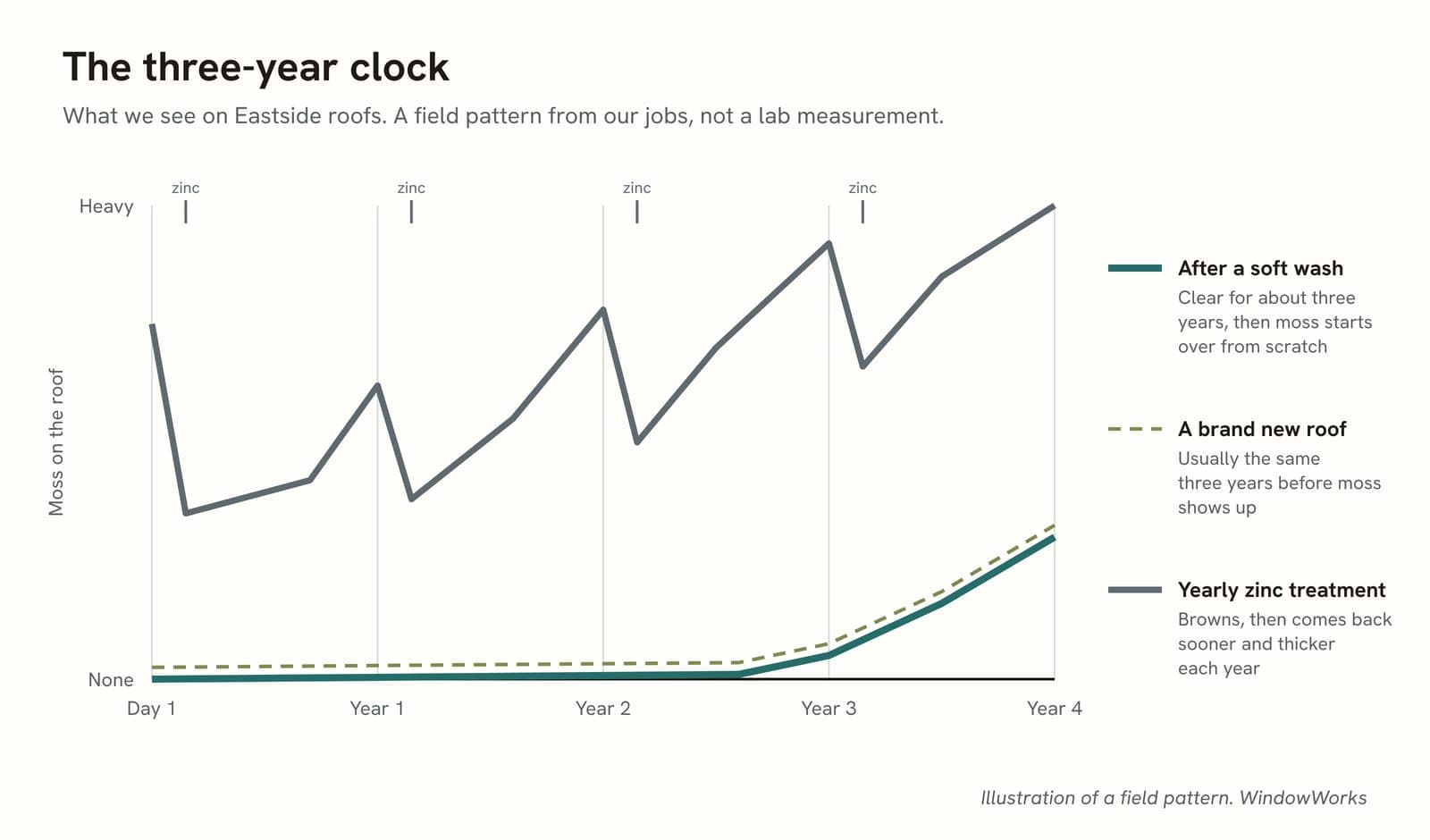
Our read, from years of roofs: a soft wash at our strength kills most of the spores sitting on the roof, not just the moss you can see. A roof we wash typically stays moss-free for about three years, the same three years a brand new roof usually goes before moss shows up. A new roof has no spores on it. For a washed roof to follow the same clock, it has to be starting from nearly the same place.
That three years is how long it takes for new spores to blow in from the neighborhood, land, sprout, and build up enough of a colony to see from the ground. Spores will always keep arriving. What a soft wash removes is the colony on the roof and the spores it already left there, which is the biggest local source by far.
How bleach kills moss
Moss is unusually exposed. Most moss leaves are a single layer of cells thick, and mosses take in water straight through the leaf surface. That's how they live on a bare shingle, and it's why they soak up whatever lands on them so quickly.
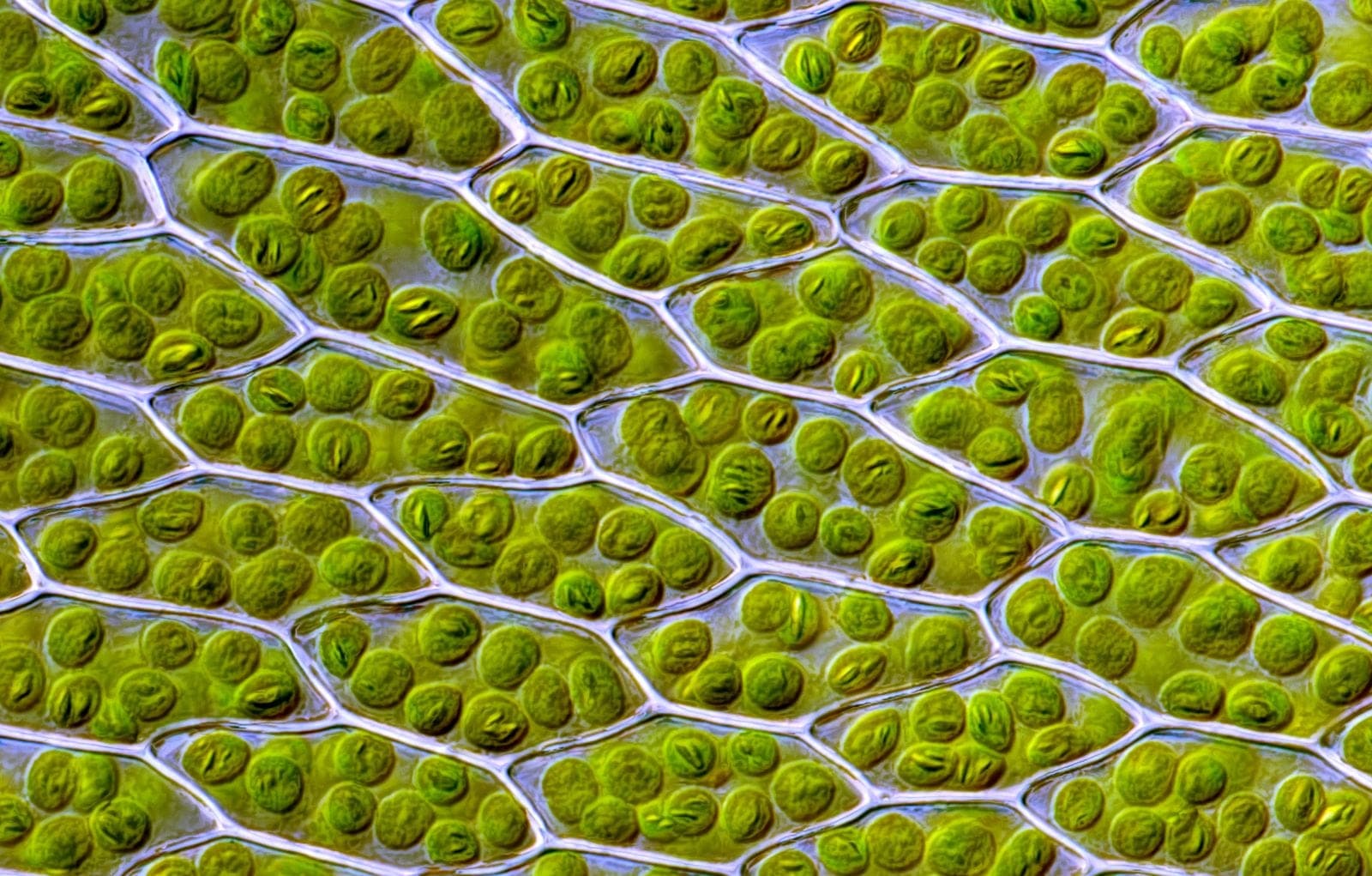
Mixed with water, sodium hypochlorite forms hypochlorous acid, the same compound that disinfects a swimming pool or a city water supply. It's a strong oxidizer: it pulls electrons away from the molecules it touches and breaks them apart. Inside a cell it attacks proteins, damages DNA, and breaks open the membrane that holds everything in. The contents leak, the green chlorophyll bleaches out, and the cell dies.
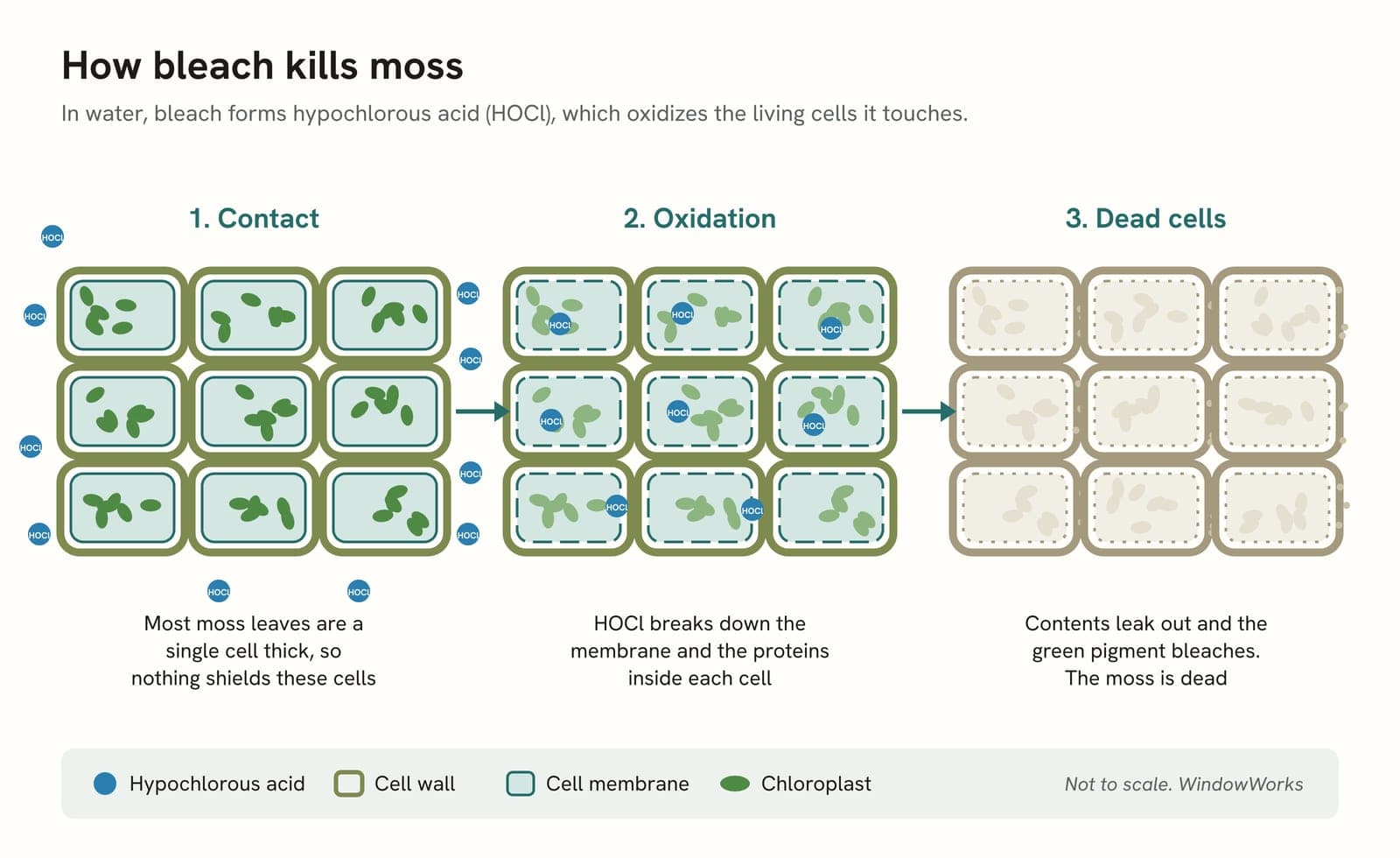
Treated moss turns pale, then orange or brown, within days. Lichen dies in place and weathers off over the following weeks. Algae streaks lighten quickly. Because the solution soaks the whole plant, it reaches the stem bases and anchors too, the parts moss regrows from. The dead growth then rinses away or weathers off, taking the damp organic layer it was rooted in with it.
What the other moss killers do
- Zinc sulfate powder. Burns moss where the rain carries it. Corrosive, labeled toxic to fish, and reapplied every year. More on zinc below.
- Quaternary ammonium sprays, the spray-and-walk-away kind. These break down cell membranes slowly, with months of rain. Their labels warn of serious eye damage, and they bind tightly to soil and stream sediment.
- Soap-based moss killers, made from potassium salts of fatty acids. They break down quickly and don't corrode, but they're short-acting.
- Laundry detergent. A popular DIY shortcut, and a bad one. A Washington State University Extension agent warns it strips the protective finish off shingles.
Oregon State University Extension makes a point that covers all of them: moss killers are short-acting, and they leave dead moss behind that still has to come off the roof. A soft wash does both jobs, killing the moss and clearing it.
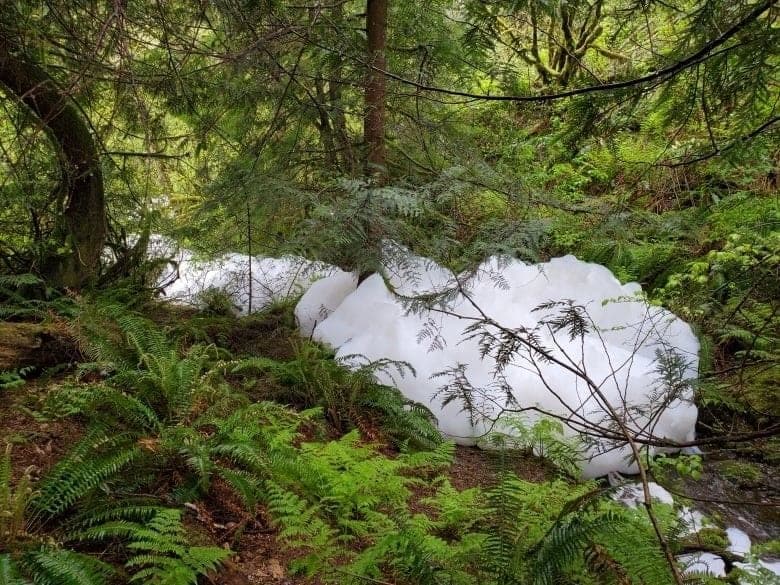
More on the detergent spill, and what metal moss treatments do to salmon streams:
Why zinc can't do the same job, powder or strip
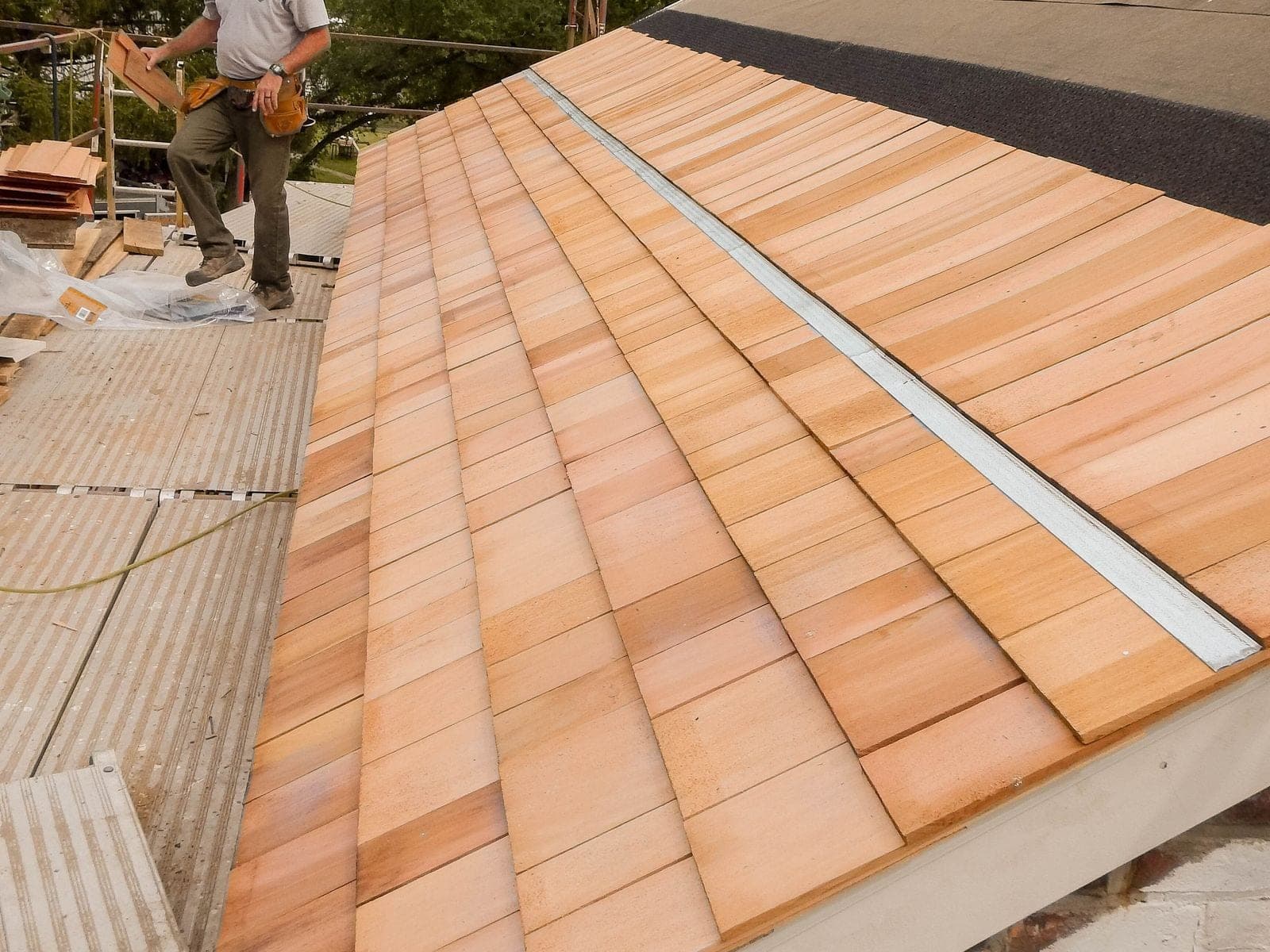
Zinc comes two ways. Zinc sulfate powder is shaken along the ridge and the rain carries it down. A zinc or copper strip is nailed at the ridge and sheds a little metal with every rain for years. The idea is the same either way: zinc ions are toxic to moss, so let the rain deliver them.
The powder is about 99 percent zinc sulfate in the common brands, and the label carries a danger warning: corrosive, can cause permanent eye damage, toxic to fish and aquatic insects. It only treats the paths the rain takes, it rinses off in a season or two, and it corrodes copper flashing and gutters.
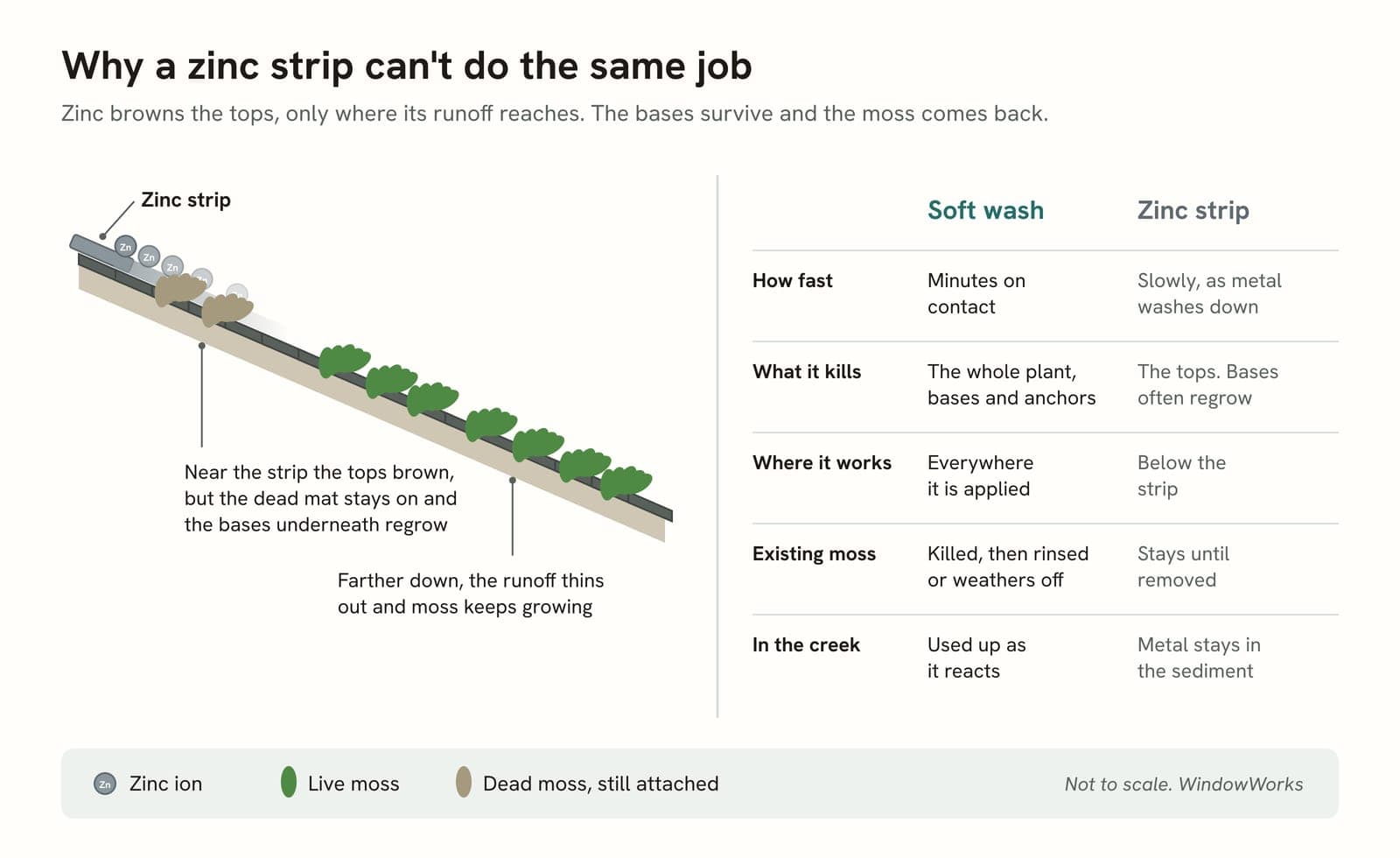
- Reach. Oregon State University Extension says a zinc strip stops moss immediately below the strip. The lower courses of a long roof are on their own.
- It browns the tops. Zinc works by slow, steady exposure, not a fast kill, and the stem bases and anchors underneath are what regrow.
- The dead moss stays. Nothing removes it, so it sits on the roof holding water like a seedbed.
- Some moss tolerates it. Zinc is a weaker poison for moss than copper, and some mosses lock zinc up in their cell walls.
On roofs that have had zinc powder or strips for a few seasons, we see the same pattern: the moss browns, comes back, and each year it returns sooner and thicker. The surviving bases, the dead mat, and a colony that keeps seeding itself a few feet away all point the same direction. The Asphalt Roofing Manufacturers Association recommends against adding zinc or copper strips to an existing roof at all.
Why pressure washing doesn't work either
Blasting the moss off looks great for a week. It fails for two reasons, one about the moss and one about the roof.
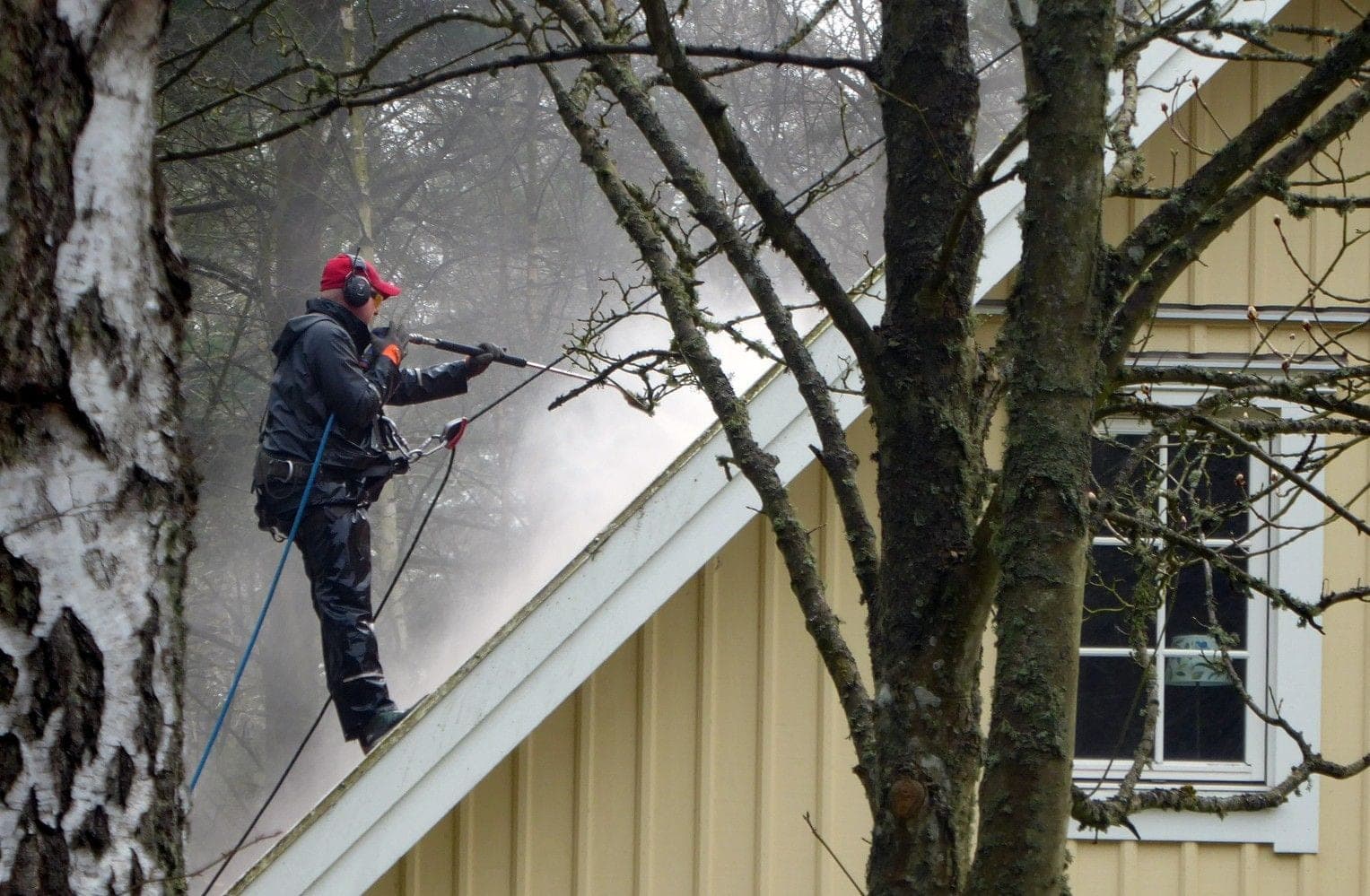
A pressure washer removes what it can see. It tears off the leafy cushions and leaves the rhizoids and stem bases wedged in the gaps between shingles, then scatters live fragments and spores across the rest of the roof. Moss regrows from all of it. Nothing has been killed, only trimmed, and the green comes back the next wet season, often more evenly than before.
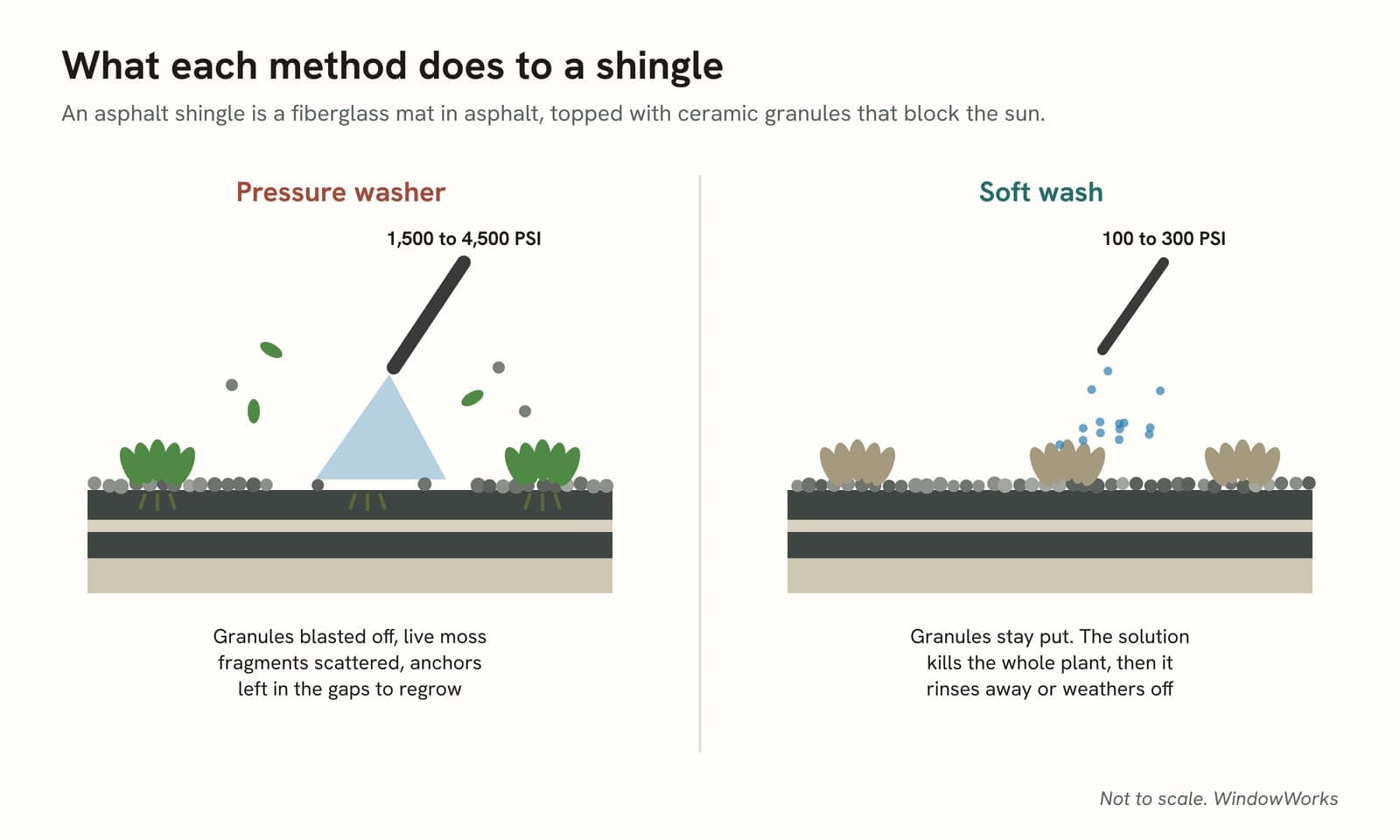
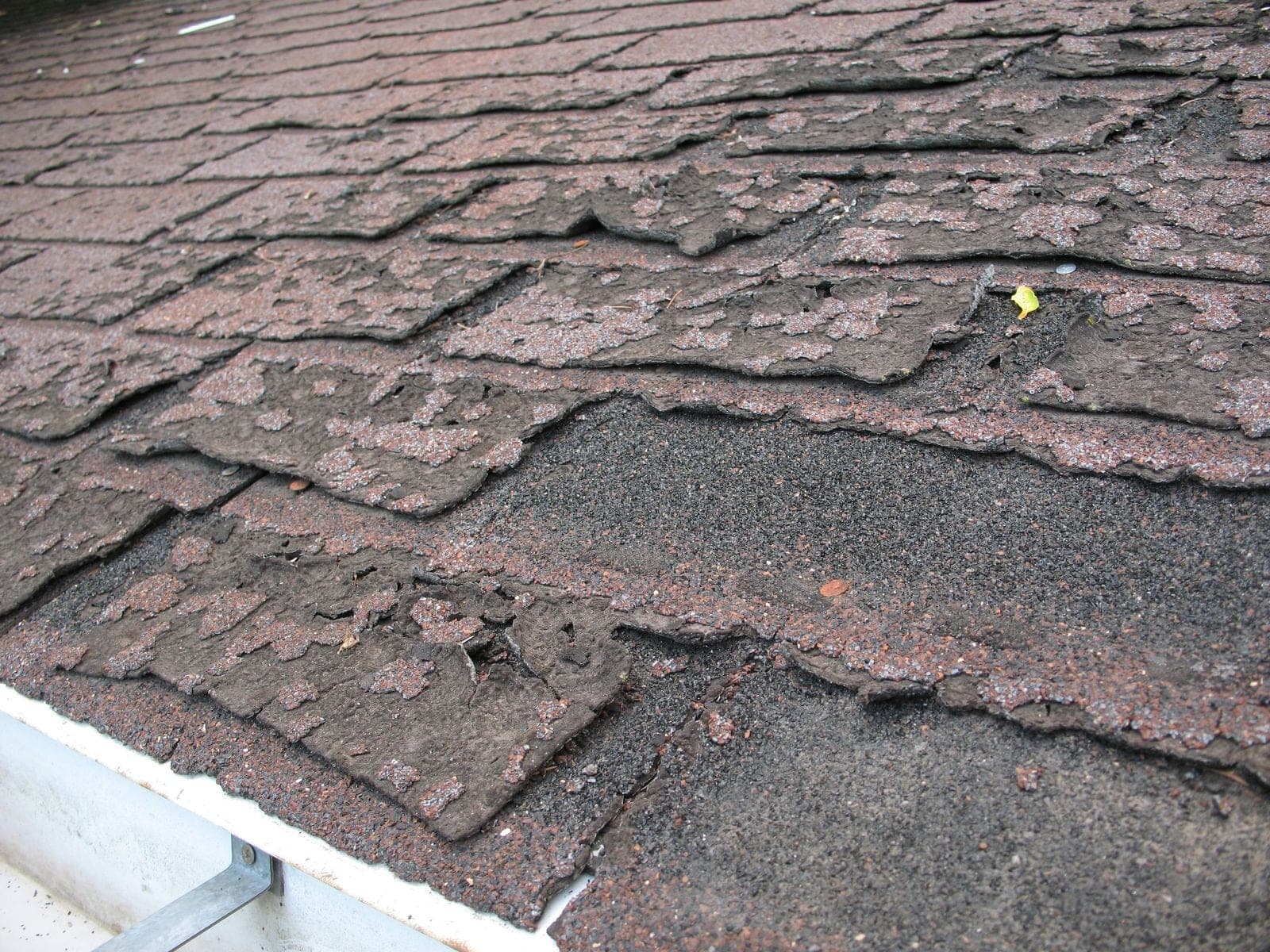
Meanwhile, the shingle takes the hit. An asphalt shingle is a fiberglass mat coated in asphalt and topped with ceramic granules, and the granules are its sunscreen. At 1,500 to 4,500 PSI, against 40 to 60 for a garden hose, a pressure washer strips them off and sends them down the downspout. You can see it from the ground as pale wand marks and find it in the gutter as a line of grit. Granules don't grow back. The Asphalt Roofing Manufacturers Association says never to use a pressure washer on an asphalt roof, and most shingle warranties treat it as abuse.
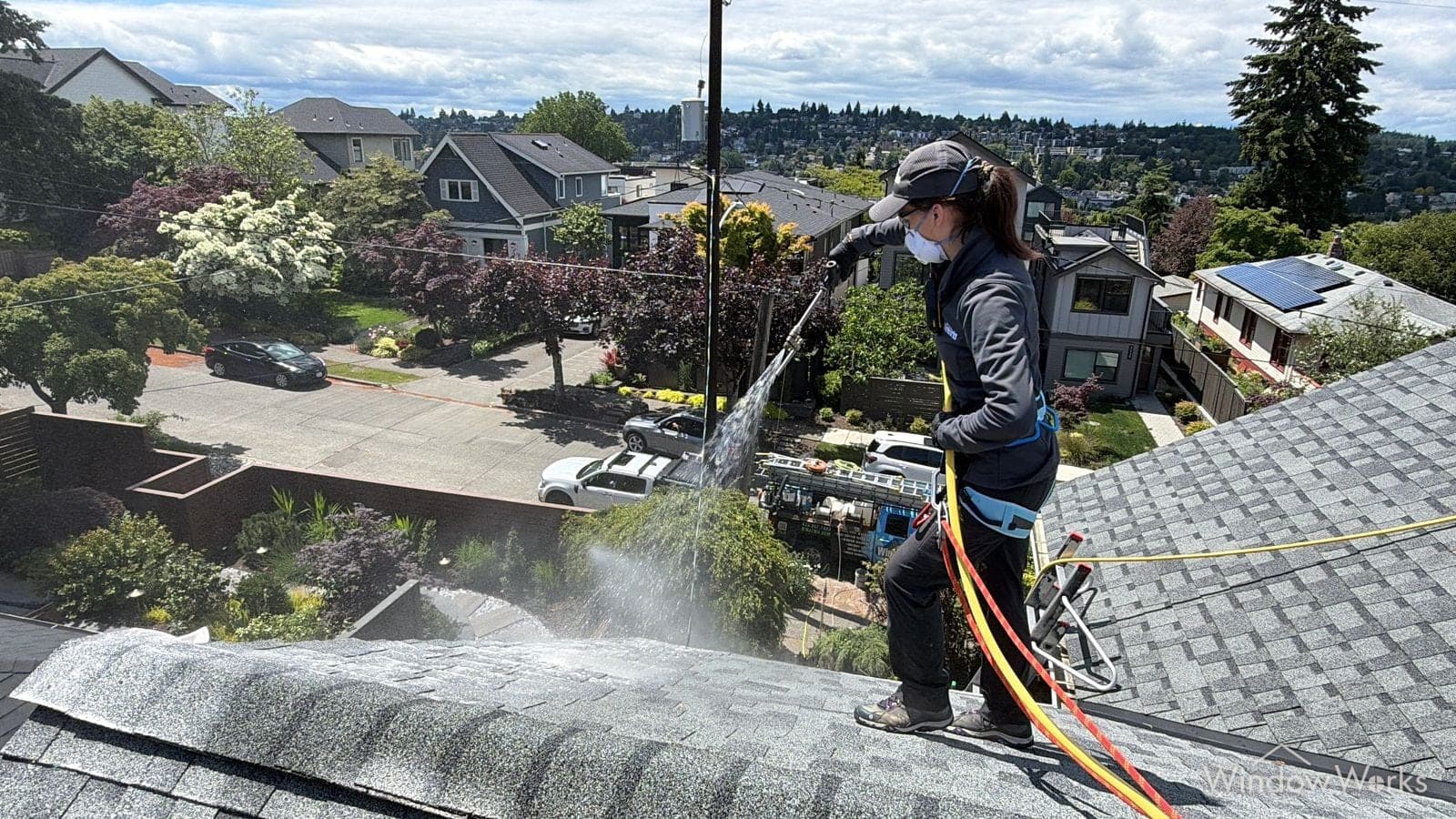
High pressure also drives water up under the shingles and makes for dangerous footing on a wet roof. A soft wash runs at about 100 to 300 PSI, close to a garden hose, because the chemistry does the work.
Bleach, handled right, is gone before it reaches the creek
Bleach doesn't last. In sunlit water, chlorine loses half its strength in about 12 minutes on a clear summer day, and within about an hour in more acidic water. It reacts just as fast with the dead moss, dirt, and soil it meets on the way down. What's left is mostly salt and water. Zinc is a metal and an element. Nothing breaks it down, so every rain adds a little more to the mud at the bottom of our creeks and lakes.
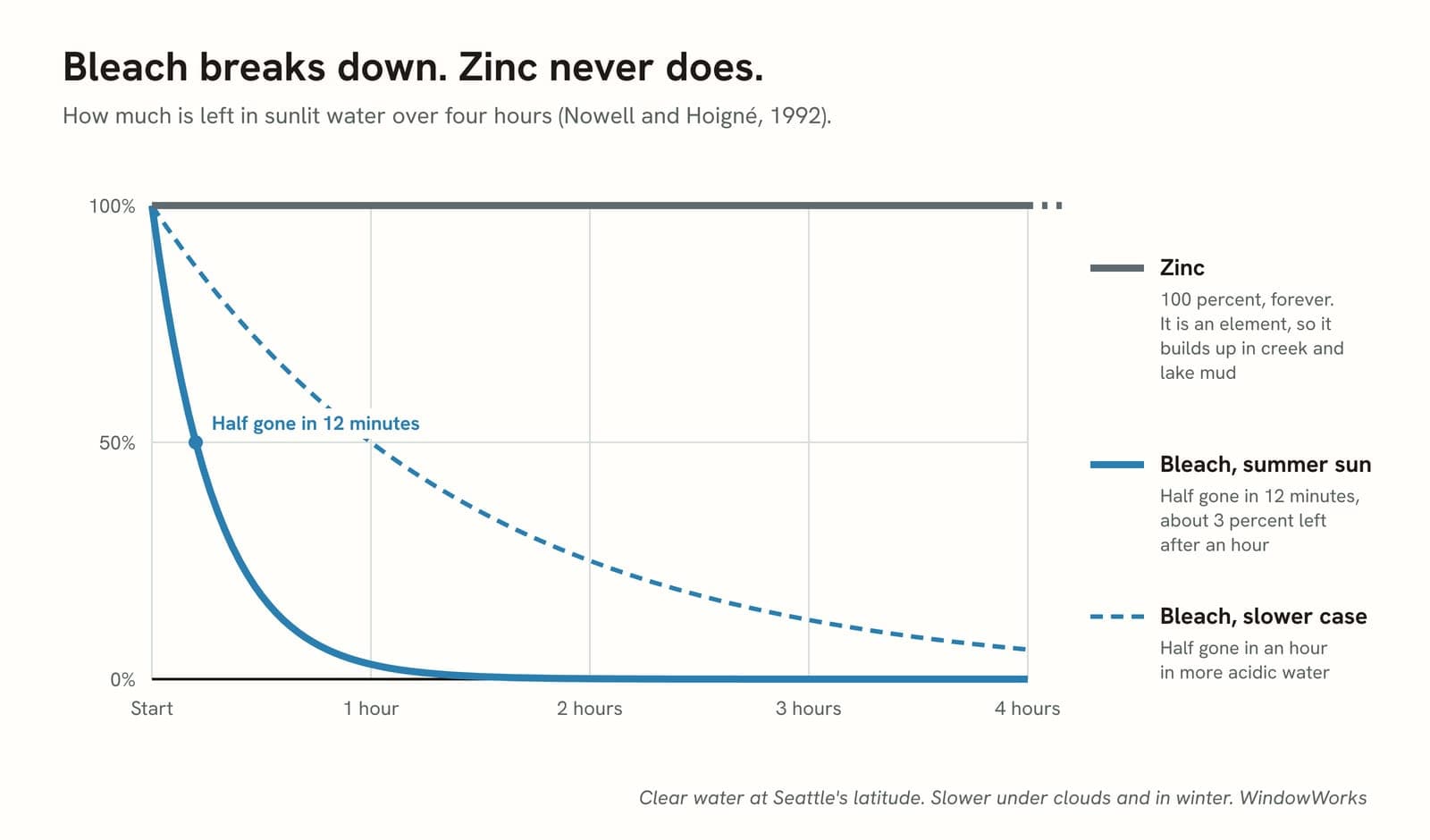
That difference matters here. Washington's Department of Ecology found zinc moss treatments were the largest estimated source of zinc in runoff in a 2017 study of Lacey, about 43 percent of the total. Zinc is especially hard on fish in our soft Northwest water: one study found it more than five times as toxic to young rainbow trout, the same species as steelhead, in soft water than in hard. Mayflies and other stream insects that salmon eat are among the most sensitive animals of all. Under Washington's current water quality standards, zinc's long-term limit for aquatic life in soft water is lower than chlorine's.
Handled right, bleach does its work on the roof and is gone. On every roof we pre-wet and cover the beds and plantings below, note where each downspout lets out, and rinse the plants and hard surfaces when we're done. We also keep the runoff out of storm drains and send it onto soil and landscaping, where it breaks down.
What this means for your roof
If your roof is green, kill the whole plant, clear it off without damaging the shingles, and keep it from rebuilding. A soft wash handles the first two and buys you about three years. Spores never stop landing in our climate, so the last part is a schedule. Our three-year moss-free warranty is tied to a yearly or twice-yearly gutter cleaning and roof debris removal, because needles and debris left on a roof hold the moisture new moss needs.
Our roof washing page walks through how we soft wash and what it protects. If you'd like someone to look at your roof and tell you honestly how urgent it is, get a free estimate online or give us a call.
Sources
- Asphalt Roofing Manufacturers Association, "Algae Discoloration of Roofs" (2024) and "Algae and Moss Prevention" (asphaltroofing.org), including its warning against pressure washing
- US EPA pesticide label for Moss Out (zinc sulfate monohydrate, EPA Reg. No. 802-591)
- Oregon State University Extension, "How to control roof moss and prevent long-term damage" (2023), and OSU Solve Pest Problems, "Moss" (2026)
- Australian National Botanic Gardens, bryophyte dispersal and vegetative reproduction (anbg.gov.au)
- Lönnell et al., "Dispersal of Discelium nudum spores," PLoS ONE (2012), on how far moss spores travel from the parent plant
- Proctor et al., "Desiccation-tolerance in bryophytes: a review," The Bryologist (2007)
- Ishikawa et al., The Plant Cell (2011), on moss regrowing from surviving leaf cells
- Grienenberger and Quilichini, "The Toughest Material in the Plant Kingdom: An Update on Sporopollenin," Frontiers in Plant Science (2021)
- de Vargas and Droste, Revista de Biología Tropical (2014), on fern spores and dilute bleach
- Pandey et al., "In vitro culture of moss Bryum coronatum," International Journal of Pharmacy and Pharmaceutical Sciences (2014)
- McDonnell and Russell, "Antiseptics and disinfectants: activity, action, and resistance," Clinical Microbiology Reviews (1999)
- Fukuzaki, "Mechanisms of actions of sodium hypochlorite in cleaning and disinfection processes," Biocontrol Science (2006)
- Lang and Wernitznig, on zinc tolerance in the moss Pohlia drummondii (2011)
- Nowell and Hoigné, "Photolysis of aqueous chlorine at sunlight and ultraviolet wavelengths," Water Research (1992)
- Washington State Department of Ecology, "Copper and Zinc in Urban Runoff: Phase 1," Publication 17-03-018 (2017)
- Washington State Department of Ecology and King County, "Assessment of Selected Toxic Chemicals in the Puget Sound Basin, 2007-2011," Publication 11-03-055 (2011)
- Alsop and Wood, on zinc toxicity to rainbow trout in soft and hard water, Environmental Toxicology and Chemistry (1999)
- Mebane et al., US Geological Survey (2020), on the sensitivity of mayflies to zinc
- Washington Administrative Code 173-201A-240, surface water toxic substances criteria (2024)
- Washington State University Extension, Ask Extension, on detergent as a roof moss treatment (2020)
- CBC News (2021), on the detergent moss treatment that foamed Clayburn Creek in Abbotsford, BC
See what it would cost.
Get a free estimate in minutes, or call and talk it through with a real person.