

November 18, 2026 · 5 min read
Soft Wash Or Pressure Wash: Which Is Safe For Your Siding?
What Each One Does To A Wall, And What To Use On Yours
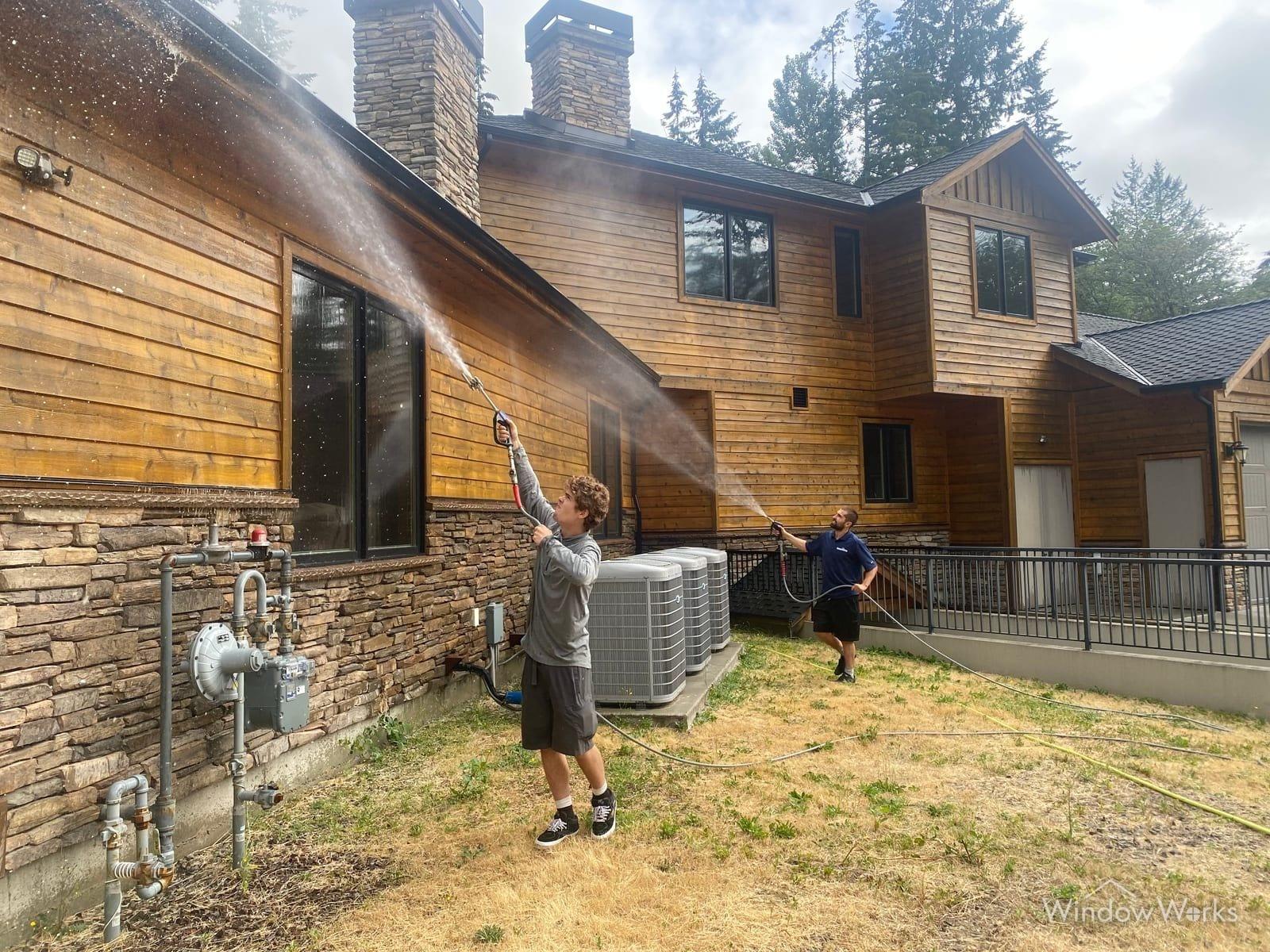
Soft washing is the safe one. A pressure washer can drive water behind siding and strip the finish off it, and the siding makers we checked either cap the pressure or say not to use one. A soft wash puts a cleaner on at garden-hose pressure, lets it kill the algae and mildew, and rinses it off gently.
We did 56 house washes between January 2025 and November 2026, and every one was at low pressure. A pressure washer is the right tool for the concrete, not the walls.
What Is The Difference?
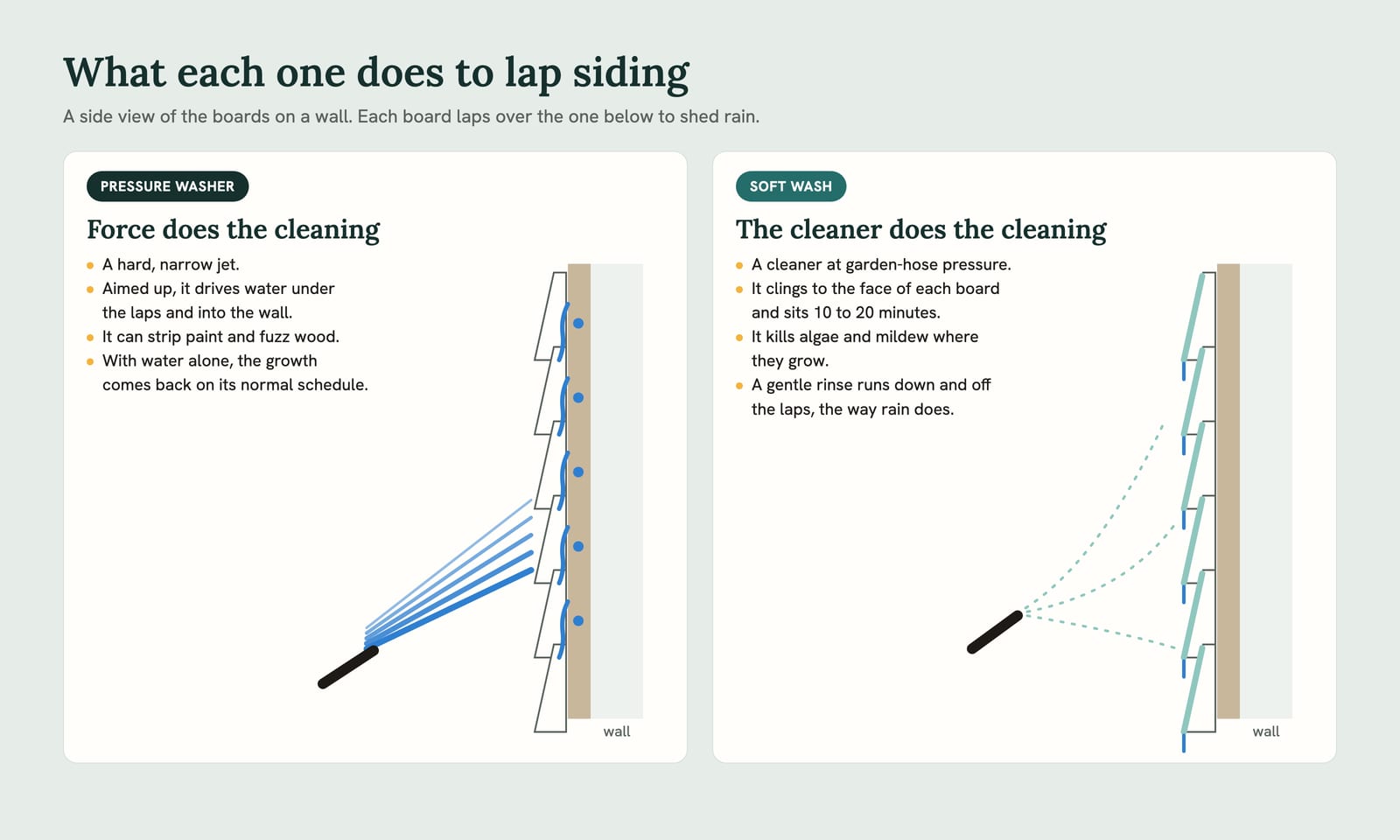
A pressure washer cleans with force. A hard, narrow jet knocks the dirt off, and anything else loose enough to go with it.
A soft wash cleans with a solution. The active ingredient is the same as household bleach, at a professional strength, with a soap that helps it cling to a vertical wall instead of running straight off. It sits for 10 to 20 minutes, which is when the cleaning happens, and then a low-pressure rinse carries it away.
What Can A Pressure Washer Do To Siding?
- Drive water behind it. Siding laps downward to shed rain, and a jet aimed up pushes water under the boards and into the wall, where you will not see the problem for a while. Ply Gem warns that water collecting behind vinyl siding can cause leaks, streaks and decay.
- Strip the finish. High pressure can take paint and stain off with the dirt, and it can release paint that was already failing.
- Tear up soft wood. The USDA Forest Products Laboratory warns that power washing can strip wood off soft woods like western redcedar.
- Etch stucco. Sto, a stucco maker, says more than 500 psi can destroy its acrylic finishes.
We wrote up what each siding, window and roof maker says about pressure washers in a separate article.
Why Does Soft Washed Siding Stay Clean Longer?
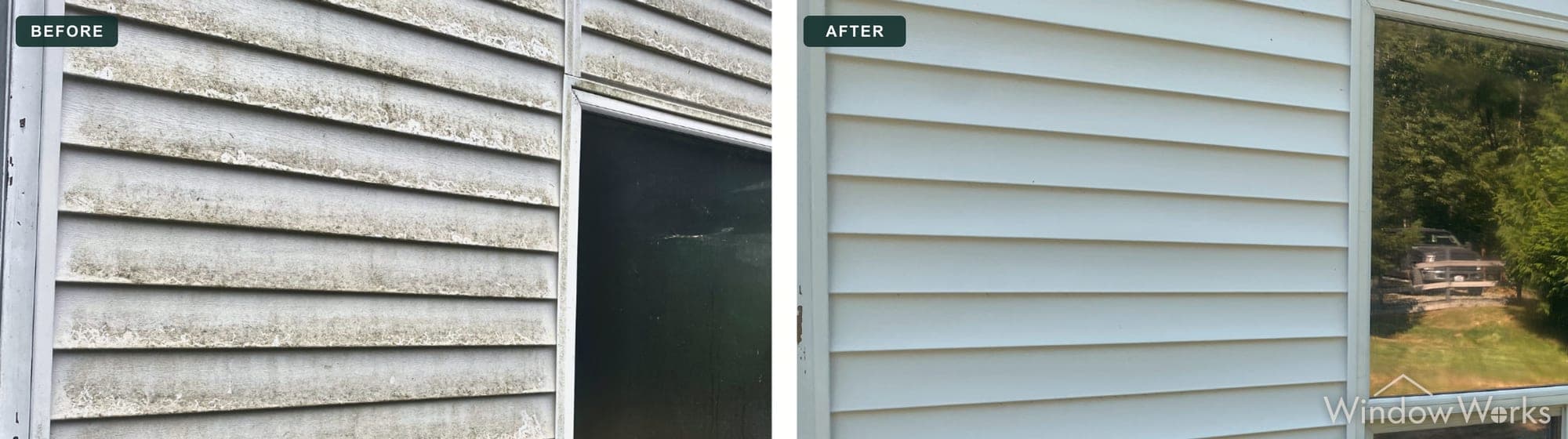
Because the growth is dead, not just knocked loose. What looks like dirt on shaded siding is mostly algae, mold and mildew. The cleaner is an oxidizer: it breaks down their cells where they sit, so the clean holds instead of washing off with the next storm.
Water alone, at any pressure, does not do that. Our own water-only rinse is a light clean between full washes, and we tell people plainly that growth comes back on its normal schedule after it.
What Does Each Kind Of Siding Need?
- Vinyl and metal. A soft wash every one to two years. Ply Gem does allow a pressure washer within limits, but never aimed upward. A white, chalky film is oxidation, and a wash will not fix it.
- Fiber cement, like HardiePlank. A soft wash every two to three years. James Hardie says a pressure washer can damage the surface.
- Painted wood. Every two to three years, gently. Cleaning can lift paint that was already chipping, and we point that out on the walk-through.
- Cedar shake and stained wood. A soft wash every year, with a re-stain about every three. Old stain can look uneven once the grime is off.
- Stucco, brick and stone. A soft wash, not pressure. White powder on brick or stucco is efflorescence, mineral salt that water carries to the surface, and it needs an acid treatment, not a wash.
Heavy tree cover shortens every one of those. A wall under firs and cedars greens up faster than one in the sun.
What Will A Soft Wash Not Take Off?
A soft wash removes growth: algae, mold, mildew, moss, and most of the dirt, webs and bird droppings with it. It does not remove oxidation, rust, efflorescence or soot, which each have their own treatment. Lichen and bird droppings can leave a faint outline after the growth is gone. We tell you which is which before we start.
Is Soft Washing Safe For Plants?
Yes, with care. We soak the beds around the house before we start, cover what needs covering, and rinse everything down again when we finish. Tell us what you are most careful with out there and we will plan around it.
When Is A Pressure Washer The Right Tool?
On concrete. Driveways, walkways and patios take pressure well, and that is where we use it. Thirteen of our 56 house washes had pressure washing on the same visit, each surface with its own method.
What Does A Soft Wash Cost?
Our house washing starts at $300 for a water-only rinse, or $600 for a full soft wash on its own. Most Eastside homes pay $750 to $1,150, and the one in the middle paid about $900.
The full price breakdown, from 56 house washes:
Price your house online, or call (425) 957-7403:
How soft washing works, step by step, and the chemistry behind it:
About these numbers: prices are before sales tax and cover the house wash part of 56 jobs we completed between January 2025 and November 2026. What each maker allows comes from its own care page or guide, read in November 2026. The photos are from our own crews.
See what it would cost.
Get a free estimate in minutes, or call and talk it through with a real person.