

Dryer Vent Cleaning in Redmond
Dryer Vent Cleaning in Redmond, WA
Slow dry times get blamed on the machine. Usually it is airflow, and a restricted vent shows itself faster in the damp air along the Sammamish River and down in Idylwood. We measure the airflow after the cleaning instead of guessing.
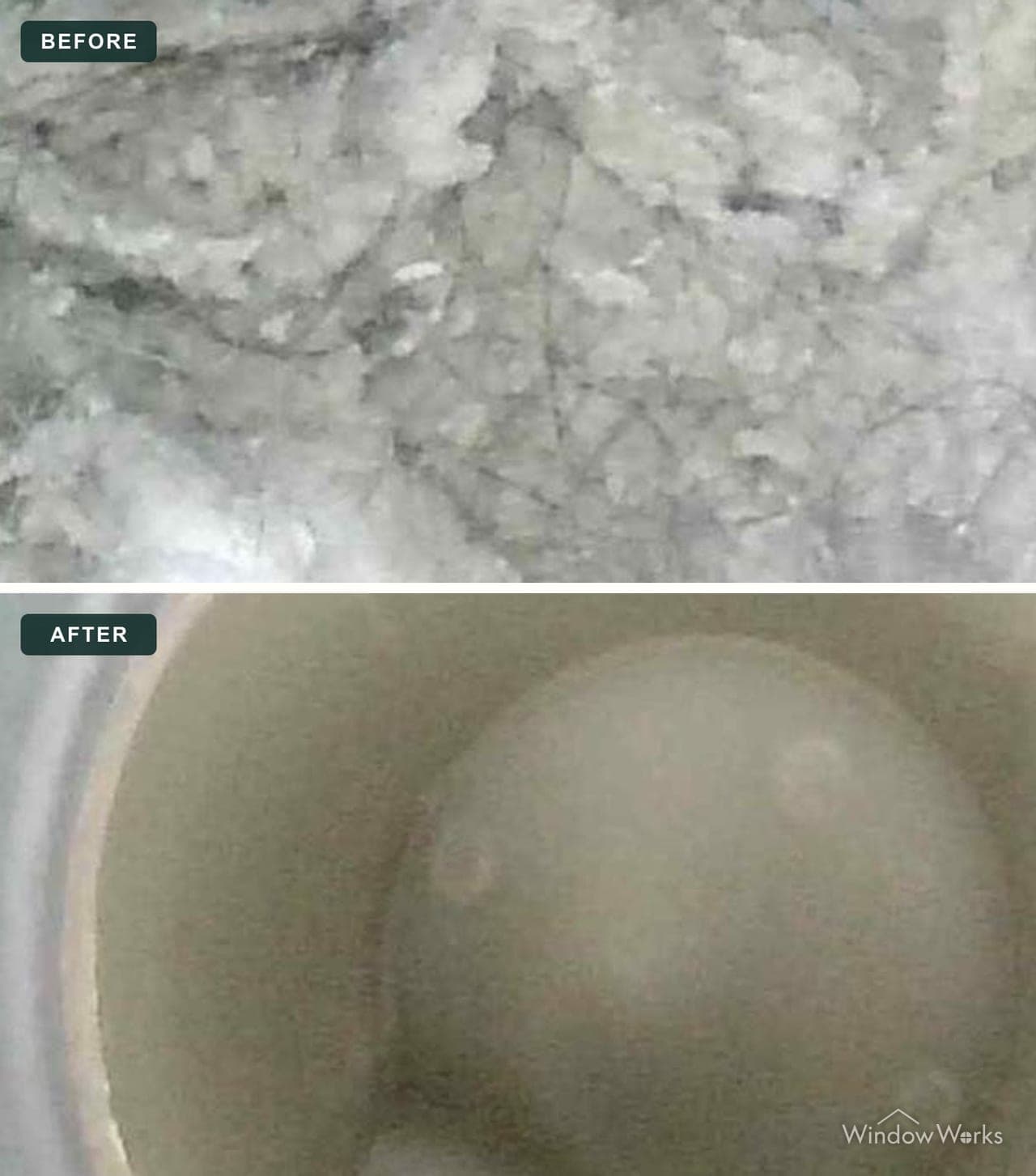
Education Hill and Grass Lawn are full of 1980s and 1990s houses still running their original vent lines, and thirty years of lint does not sit in a tidy layer. Newer places near Overlake, Union Hill and Bear Creek have shorter histories and the same physics. The camera finds the restriction first, so the work goes where the problem is.
Everything comes out through the exterior, elbows included, so the laundry room stays clean. A second camera pass and the airflow check show the line is genuinely open rather than just disturbed. If the duct is kinked, crushed or disconnected, you get the photo and a plain recommendation.
Areas we serve in Redmond
- Education Hill
- Grass Lawn
- Idylwood
- Union Hill
- Bear Creek
- Overlake
Redmond questions
- Will this fix my dryer?
- It restores airflow, which is what slow dry times usually are. It does not repair damaged ducting or anything inside the machine. If we find duct damage, you get photos and a straight recommendation.
- How much of the run can you actually see?
- On most homes the camera covers the run from the dryer connection out to the termination. A tight chase or finished construction can limit how far it reaches, and we tell you where the picture stops. We do not describe a section we could not see.
Before and after
The difference, on real jobs.
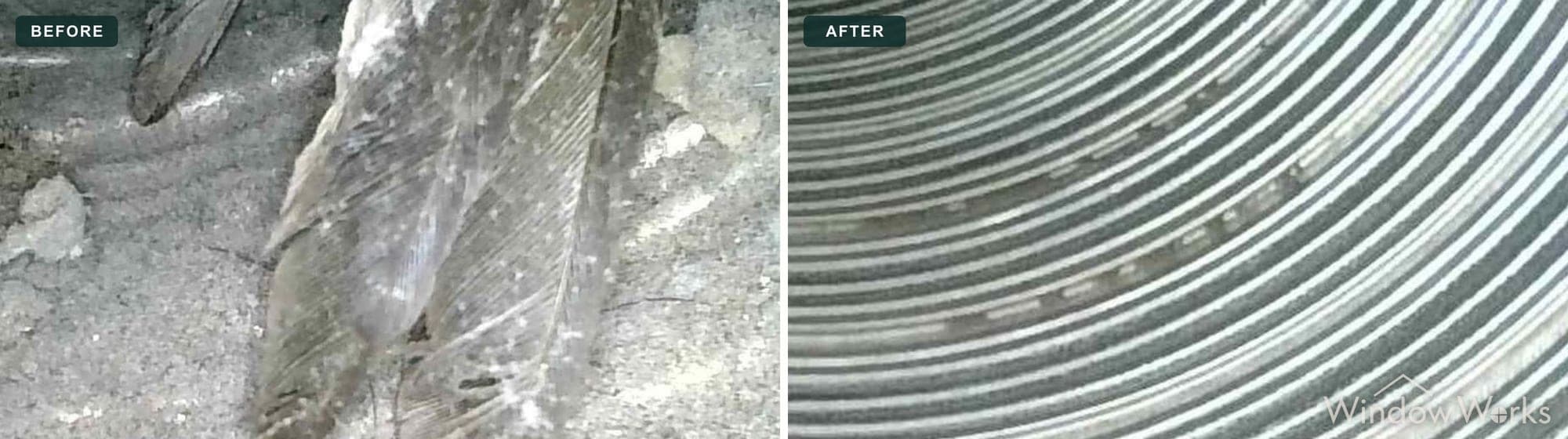
A bird got into this vent and died in it. The duct came back to bare metal. 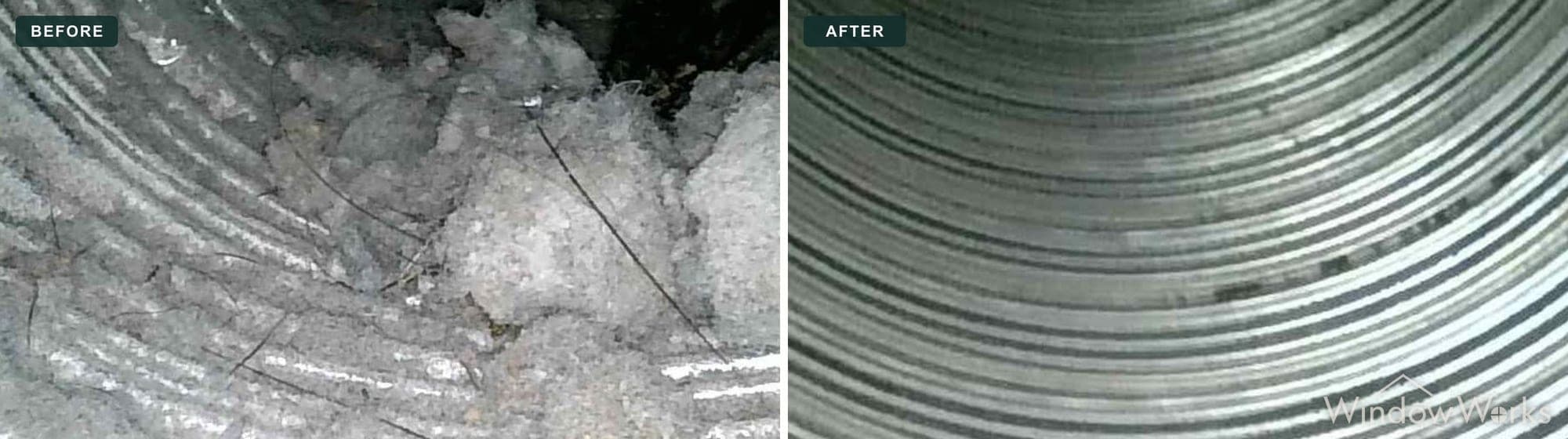
Matted lint packed along the duct wall. That is the fuel, and it is what the lint screen never catches. 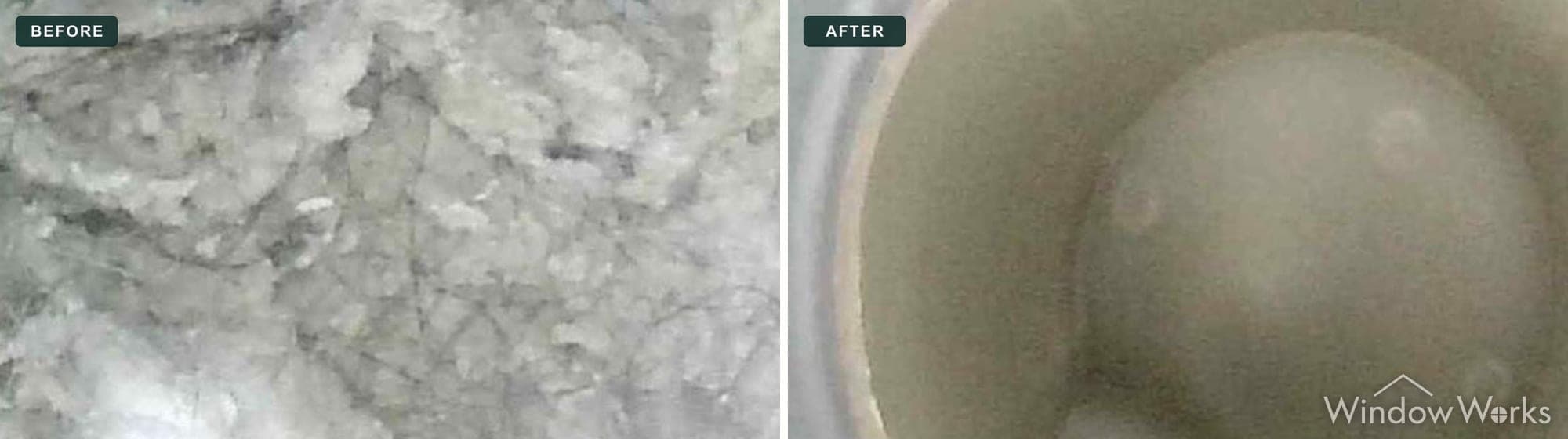
A lint-fouled dryer duct cleared to bare metal.
See it up close
Real jobs, up close.
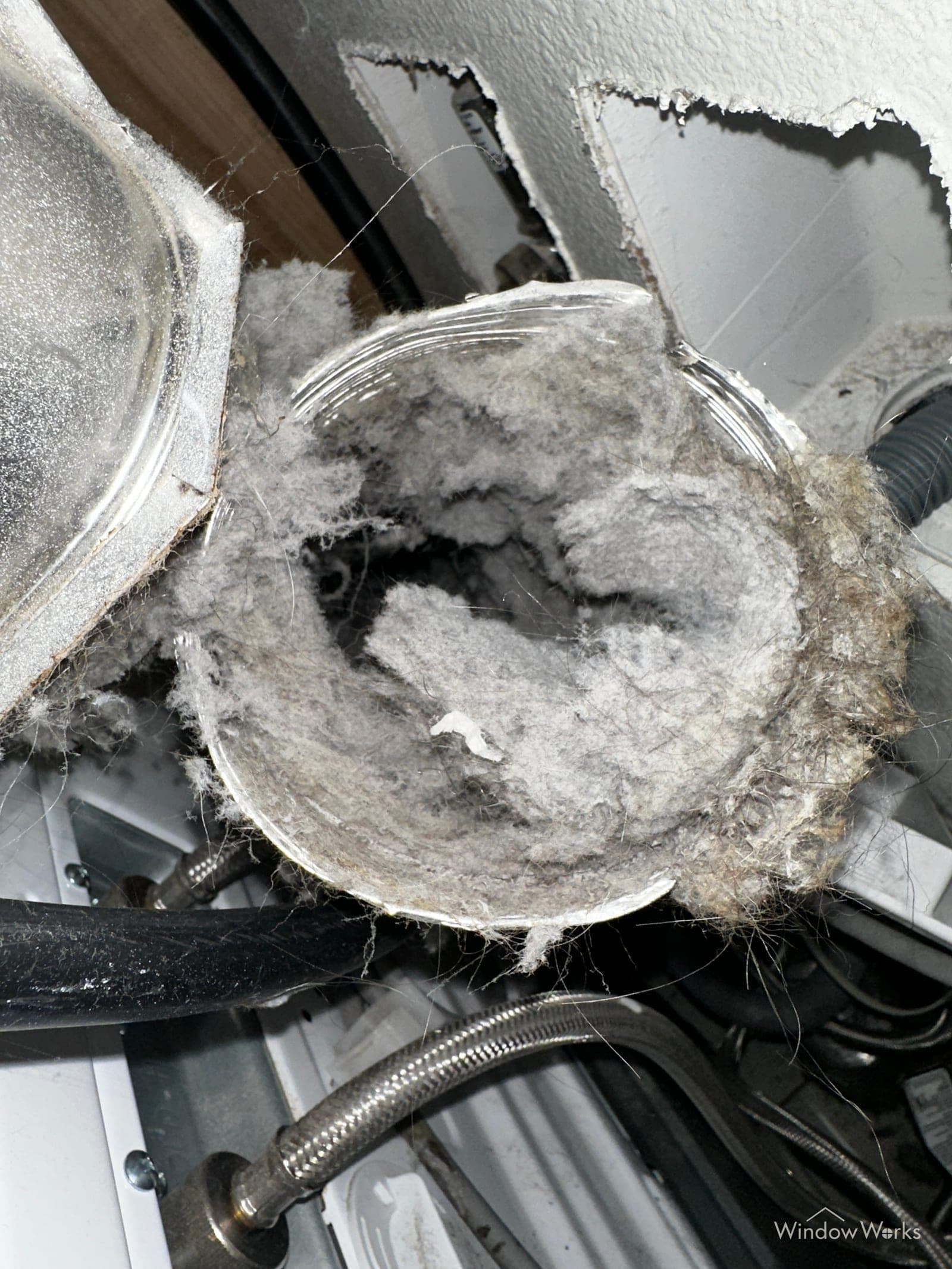
The transition duct behind the dryer, packed solid. This is the part the lint screen never catches.
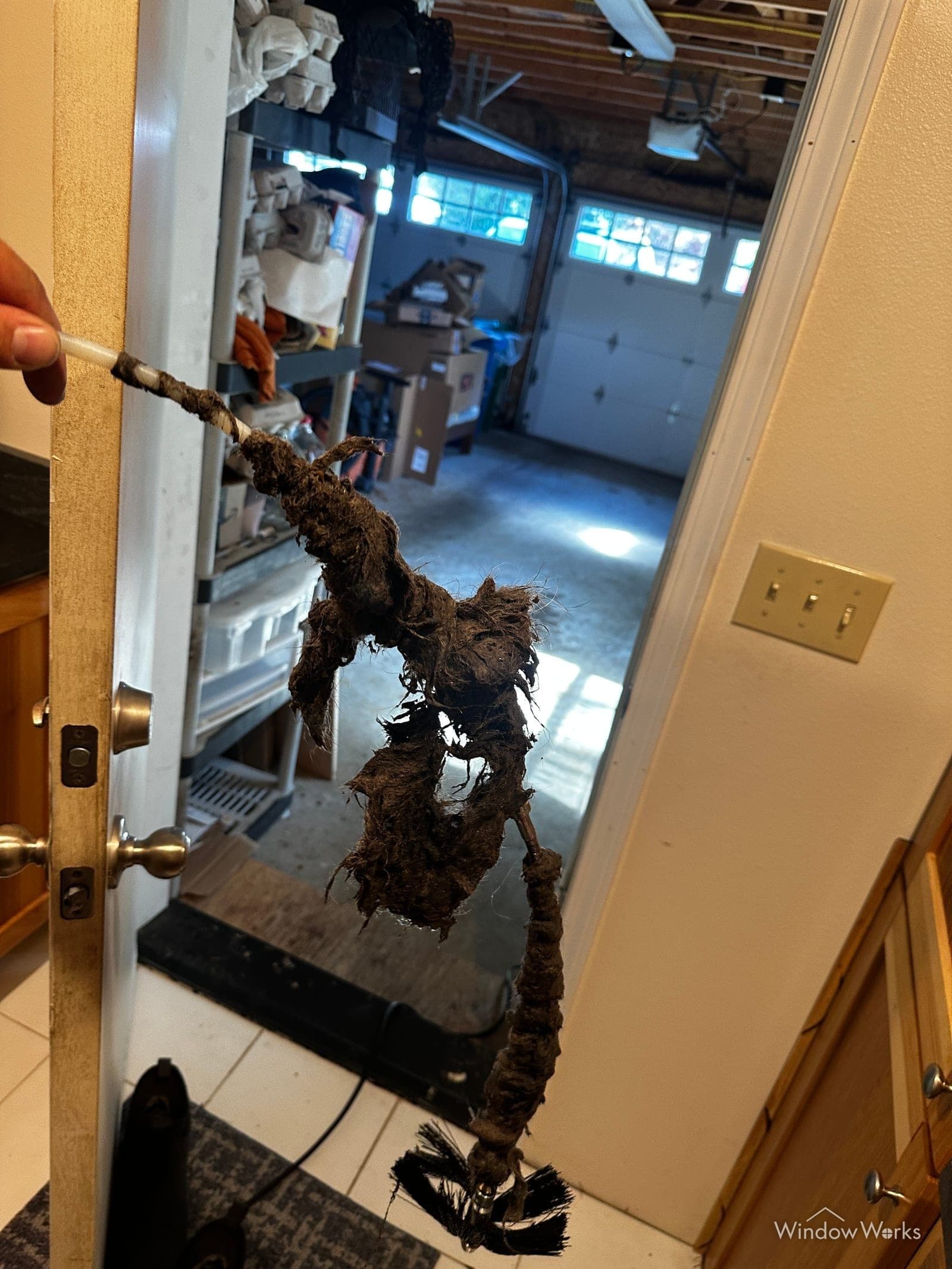
Wet, matted lint on the brush. The airflow was so choked that the moisture had nowhere to go, so it piled up damp inside the duct.
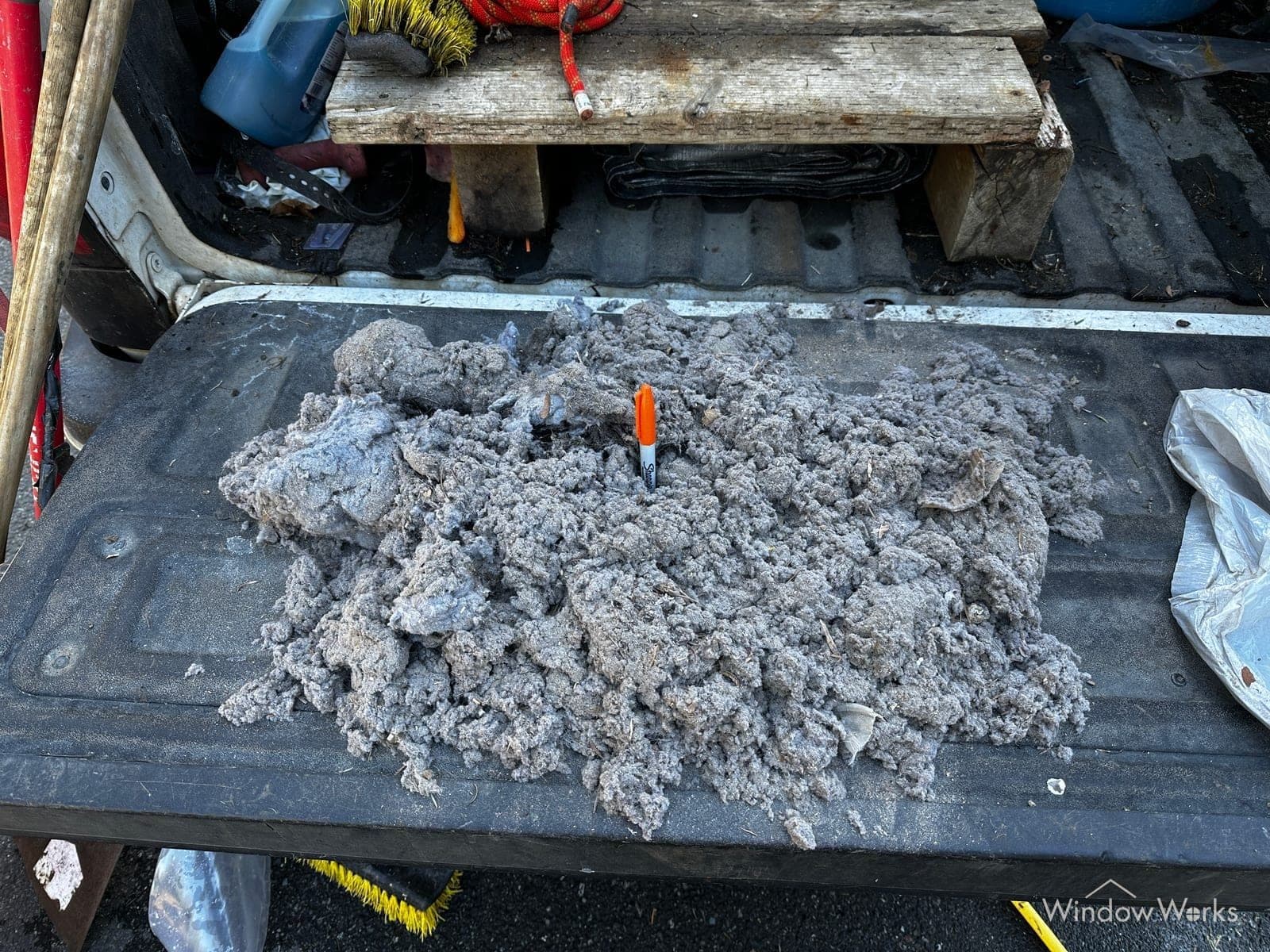
What came out of one vent, in the truck with a marker for scale. All of it was fuel sitting in the line.
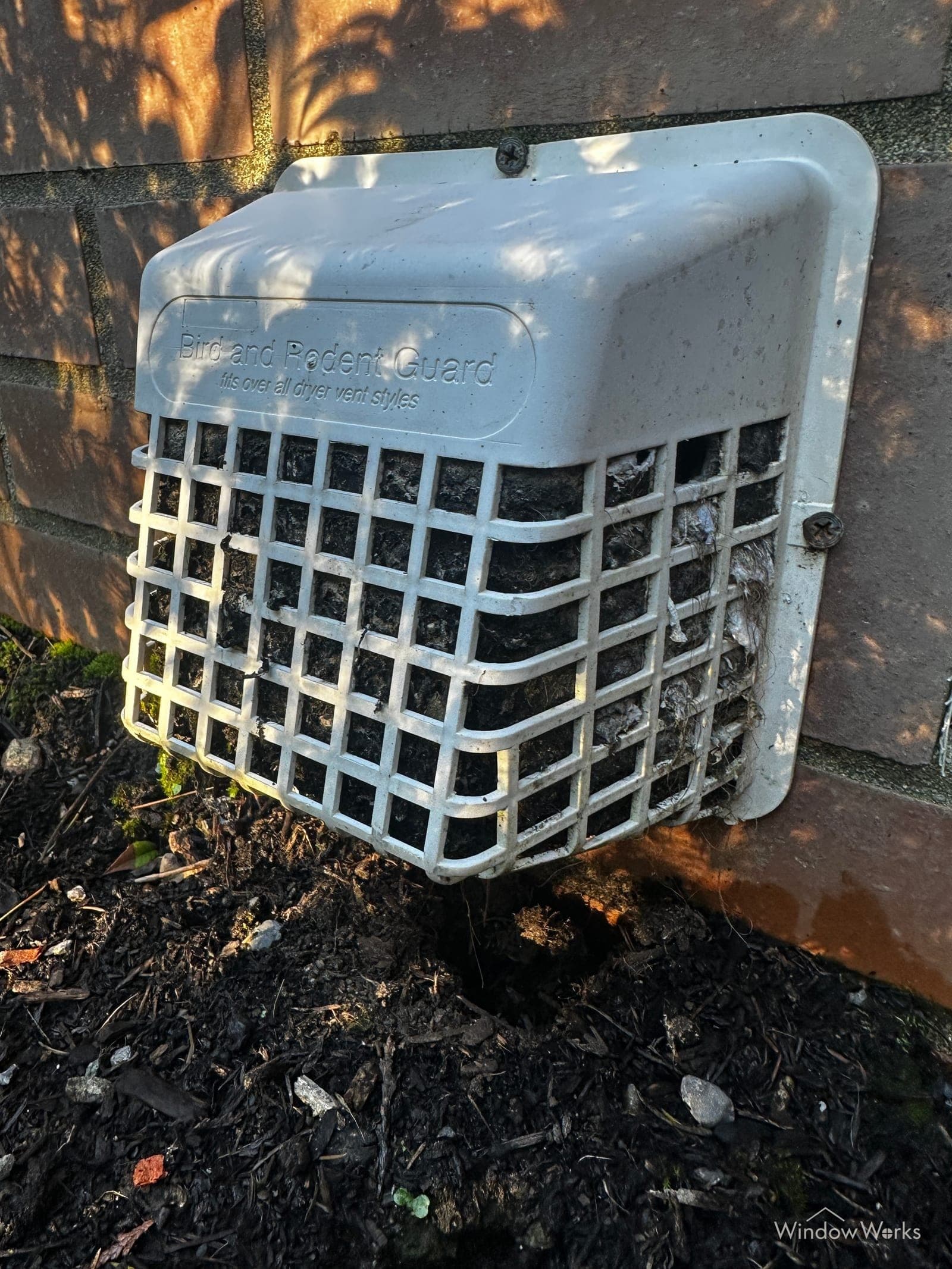
The exterior guard, clogged. A damaged or missing cover is an open invitation for birds and rodents, so we can fit a screened guard.
Why it matters
The problem this solves.
Lint packs into the duct you never see, so the dryer runs longer, hotter, and wears out early. Slow dry times are usually airflow, not age, and packed lint is a leading contributor to dryer fires.
National Fire Protection Association
The NFPA is the U.S. nonprofit behind the fire codes and standards used across the country. It counted an average of 13,820 home fires a year involving clothes dryers from 2014 to 2018, and it recommends clearing lint from the dryer vent at least once a year, or having a dryer lint removal service do it.
What the data says
Thousands of dryer fires a year, and the top cause is lint.
This is not a scare number, it is a maintenance number. Federal estimates put residential dryer fires in the thousands every year, and the single leading factor is the one thing a homeowner can actually control.
5,600
residential dryer fires a year, averaged across 2018 to 2021.
Residential structure fires, clothes dryers only. These estimates exclude confined fires and intentionally set fires, which is why they run lower than the National Fire Protection Association's figure of 13,820 home fires a year for 2014 to 2018: that one counts confined fires too. The two are different measures of the same problem, not a disagreement.
Averaged from US Consumer Product Safety Commission, Residential Fire Loss Estimates (2018-2020 edition, August 2023; 2019-2021 edition, July 2024).
What matters more than the count is the cause. The US Fire Administration found failure to clean was the leading factor in home dryer fires from 2018 to 2020, at 31 percent. Not a faulty machine, not bad wiring. Lint nobody removed.
How we do it
Our approach.
A camera inspection first shows the line's condition and locates the restriction. We open the run at both ends, then a rotating brush and compressed air work the lint out toward the exterior, never back into your laundry room. An airflow check and a second camera pass verify the result, documented with photos.
- Camera inspection before and after
- Airflow verified after cleaning
- Pest cage and vent flap inspected
- Duct checked for kinks, crushes, disconnections, wear
- Blockage severity and location assessed
- Photo documentation of findings
New service
Catch the plastic before it leaves your house.
We fit a filter to your washing machine drain and clean it out once a year, so the synthetic fibers your clothes shed end up in a bag you can empty instead of in Puget Sound. We are already in your laundry room for the dryer vent, and the washer is the other half of the problem.
135 Grams a Year
What a household in the US or Canada can send down the drain in a year. Most of a modern wardrobe is plastic: fleece, activewear, swimwear, most sheets and towels, and the lining of almost every jacket. Every wash shakes fragments loose.
Vassilenko et al., PLOS ONE, 2021
73% of What's In the Sound
Share of the microplastics found in Puget Sound sediment in a 2025 survey that were fibers rather than fragments. Nothing downstream of your house was built to stop a fiber twelve microns wide.
Eshom-Arzadon et al., Journal of Marine Science and Engineering, 2025
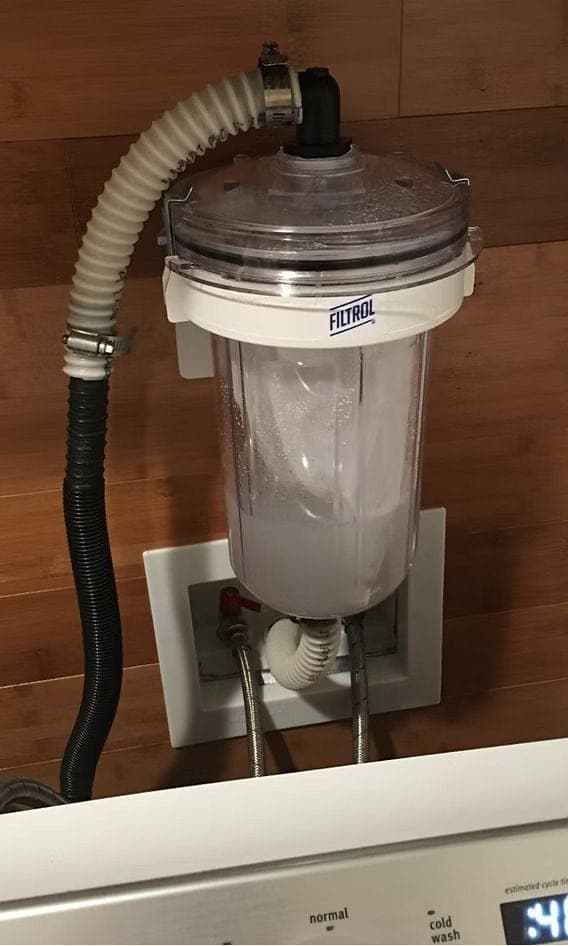 Manufacturer's photo.
What We Install
A 100 micron laundry filter that mounts on the wall beside your machine, made in the USA by Wexco of Milaca, Minnesota. No electricity, no batteries, no app.
It clamps onto the discharge hose your machine already has, so nothing is cut and it comes off without a trace. Rated to 25 gallons a minute, far above what a residential washer discharges, so the drain cycle does not slow down. Limited lifetime warranty on the housing, two years on our workmanship, and we test a full drain cycle before we leave.
 Manufacturer's diagram.
Will It Fit Your Laundry Room?
You need roughly 8 inches of clear wall above the mounting point so the lid lifts off, a reachable standpipe, wall box or laundry sink, and enough room to stand at the machine and empty a bag.
In the largest field study of these filters, about one home in five could not be fitted. We check first, and there is no charge if yours will not take one. Send a photo of the space behind your washer and we will tell you.
The honest answer
How well does it work, and what we won't claim.
Independent testing has measured capture anywhere from about 25 to 90 percent by weight. Anyone quoting you one number has picked the test that flatters it. The high end is polyester through a fine mesh, and nylon has measured as low as 19 percent. The rest comes down to whether the filter gets cleaned, because a full one keeps draining but stops catching, and nothing looks wrong. That is why we sell the service and not just the hardware.
Your treatment plant is good at this, removing more than 90 percent and often well over 99. Two things still get through. Volume first: one Glasgow plant discharged an estimated 65 million particles a day after removing 98.4 percent of them. Then destination, because the fibers a plant does catch are not destroyed. Between 63 and 80 percent settle into sludge, which becomes biosolids and goes onto farmland.
One last thing, because you will see it claimed elsewhere. Microplastics have been found in human blood and tissue, but nobody has established that they harm people, and the World Health Organization found no apparent risk from those in drinking water at current levels. We will not tell you otherwise to sell you a filter. Keeping the fibers out of the water is reason enough.
Ask us about the filter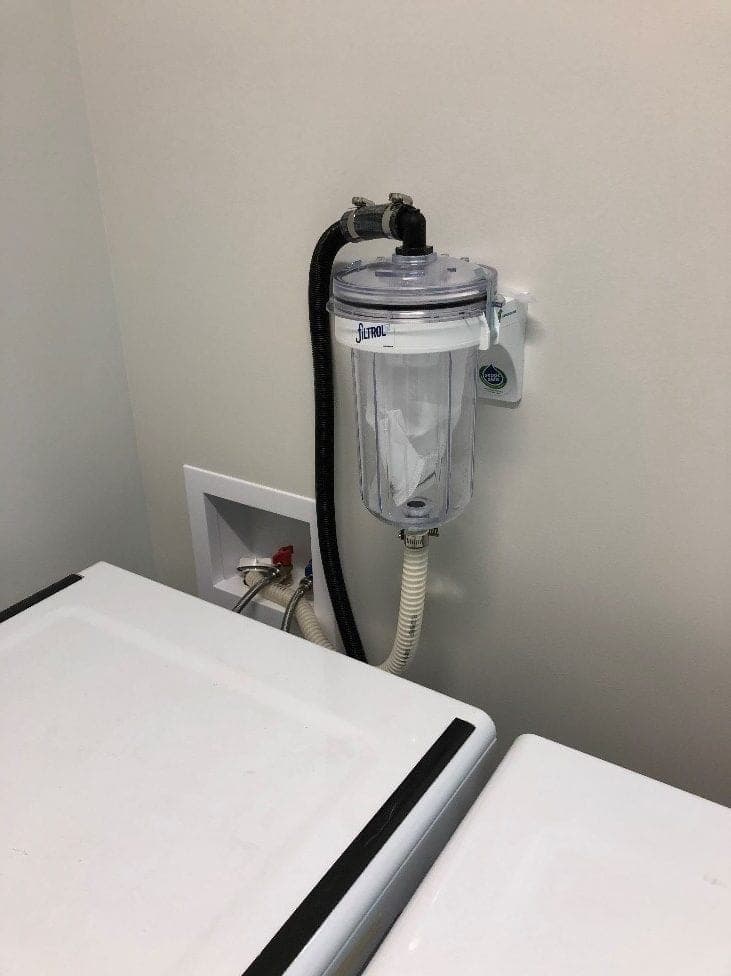
Add-ons
Add it while we're there.
The crew and equipment are already on site, so these attach to your visit.
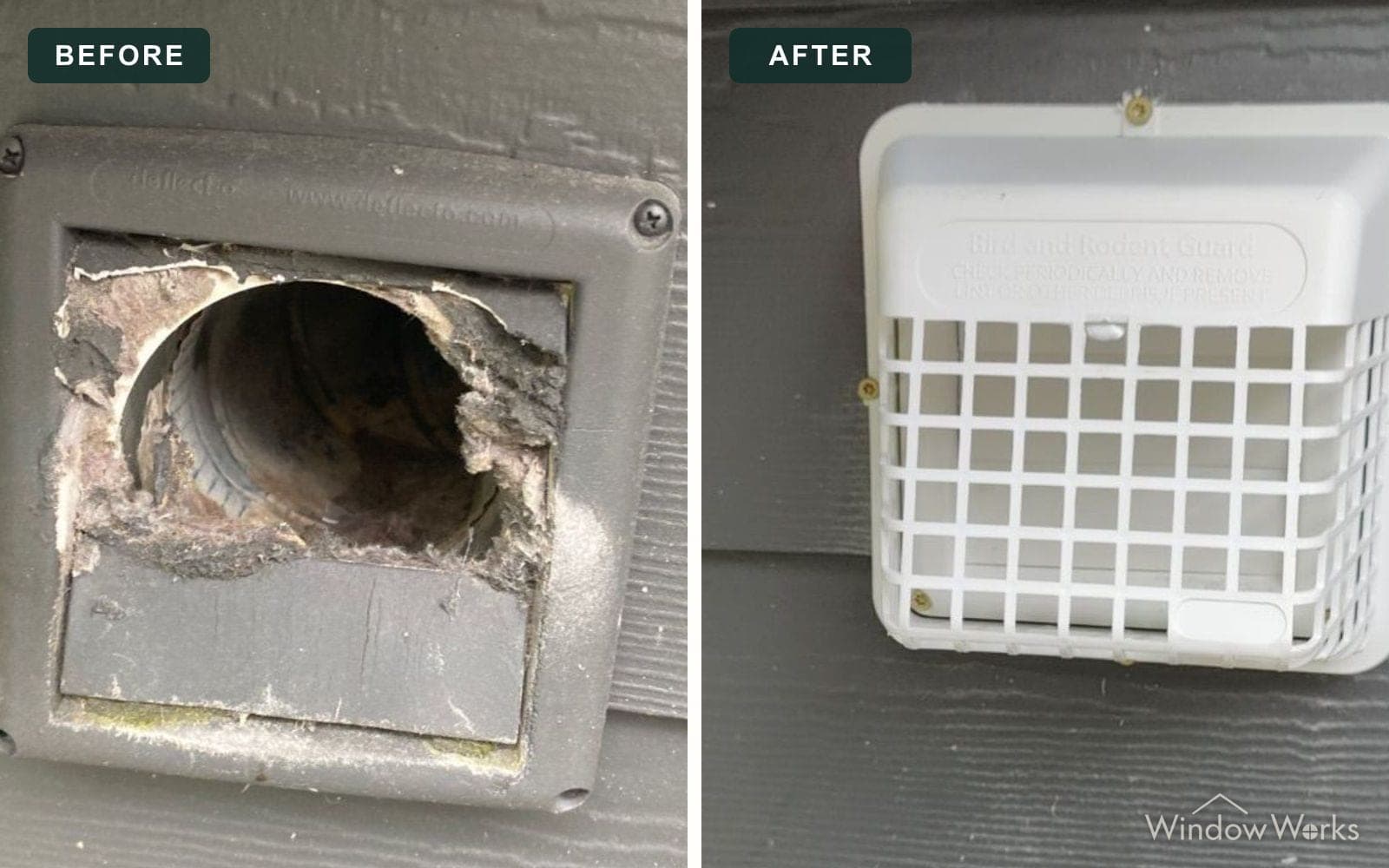
Pest Mitigator Installation
A broken or missing vent hood is an open door. This guard keeps birds, squirrels, and rodents out while the exhaust flows freely. Active nest removal is quoted separately.
Washing Machine Microfiber Filter
A 100 micron filter that clamps to your washer's existing discharge hose, so the plastic fibers your clothes shed end up in a bag instead of Puget Sound. No cutting, no plumbing changes, and we clean it out once a year.
See the full service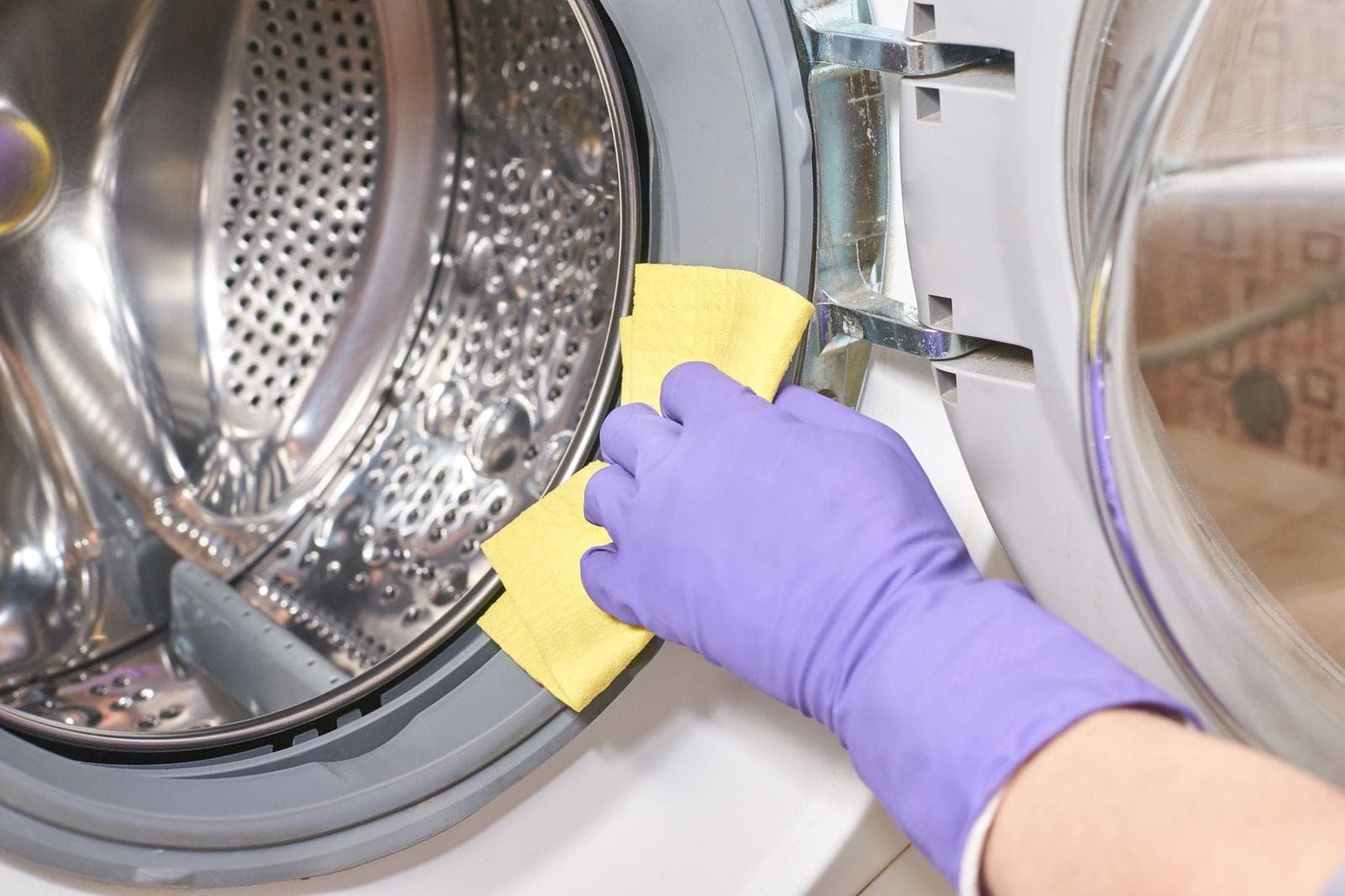
Exterior Washer and Dryer Cleaning
We clean the lint and dust off your washer, dryer, and the surrounding area while we're already there, door seal included.
Why WindowWorks
Who shows up matters.
This service happens inside your home. Who we send matters as much as what they clear out of the duct.
Anyone can rent a pressure washer. After 20+ years on Eastside exteriors, and a 4.9 rating across 300+ reviews, we can tell you the real difference is the person holding the wand: what they know, how they were trained, and whether the company behind them takes care of them. We take care of our techs, so they take care of your property.
Background-checked
Every technician is background-checked before they ever step onto a customer's property.
Certified, skill by skill
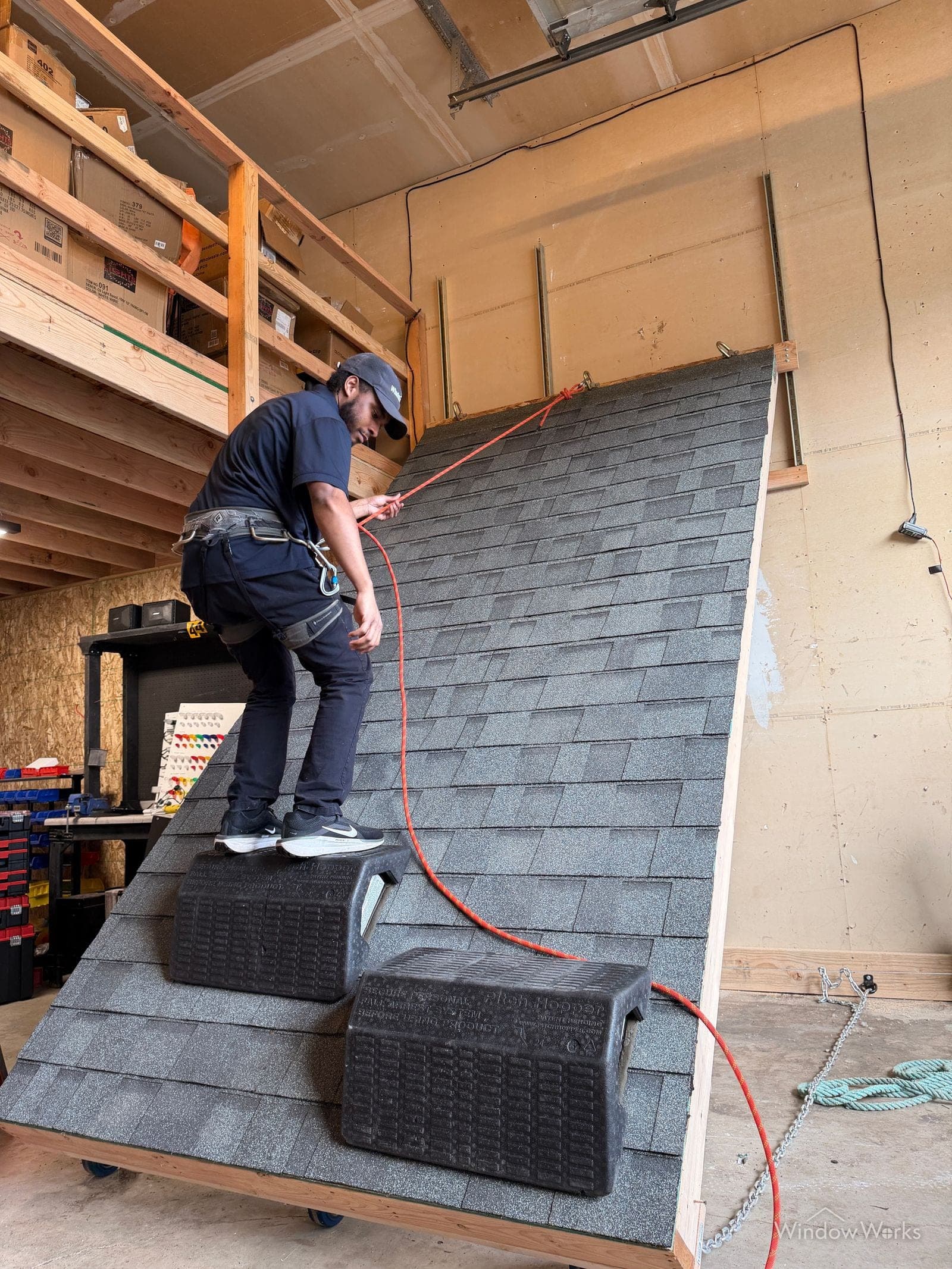
Our crews earn certification across 369 individual skills in 10 categories, each one signed off by an evaluator, never just by clocking time.
Paid like professionals
A living wage, healthcare, and dental. People who are treated well do careful work, and they stay, so you see the same faces.
Licensed, bonded, and insured
With OSHA-aligned safety training for the at-height work. If someone is on your roof, they are trained and covered for exactly that.
Method matched to the surface
Soft wash where pressure would damage, hot water where cold cannot lift, the right chemistry for the stain. The method follows the surface, not the other way around.
Documented before and after
Every job is photographed before and after, so you can see exactly what changed and keep it on file.
Common questions
Good to know.
Isn't emptying the lint trap enough?
No. Lint packs the vent line, the lint trap housing below the screen, and the flexible duct behind the dryer, the part that crushes and wears fastest; Premium deep cleans the housing and exhaust port and replaces that duct.
What is the difference between Deluxe and Premium?
Deluxe is camera inspection plus full cleaning of the vent line, ductwork, and exterior termination. Premium adds deep cleans of the exhaust port and lint trap housing, light cleaning around the dryer, and a new transition duct; non-standard fittings get confirmed with you first.
Will this fix my dryer?
It restores airflow, which is what slow dry times usually are. It does not repair damaged ducting or internal dryer problems; any duct damage gets documented with photos and a recommendation.
What do you inspect on every visit?
The whole system: pest cage, vent flap, duct condition, and any blockage's severity and location, all photographed. A stuck flap means pests and moisture or blocked airflow; a broken cage is an open door for nesting.
What if you find a nest or damaged duct?
Severe blockages can take extra work or a repair visit, and active nest removal is quoted separately. You get a photo report either way, and if the exterior cage is broken or missing, we can install a pest mitigator.
Can you reach a rooftop or second-story vent?
Usually, yes; rooftop and high-wall vents are the same trained, insured at-height work our crews do daily. Ladder access above the ground floor adds to the price, and tight chases or finished construction can limit how far the inspection reaches.
Will the microfiber filter slow my washing machine's drain?
No. It is rated to handle up to 25 gallons per minute, far above what a residential washer discharges. What does cause slow draining is a filter nobody has cleaned in six months, which is what the annual service is for.
Do you have to cut into my plumbing to fit it?
No. It clamps onto the discharge hose your machine already has and drains into your existing standpipe, wall box, or laundry sink. Nothing is cut, nothing is permanent, and it comes off without a trace.
Will a filter fit my laundry room?
You need roughly 8 inches of clear wall above the mounting point so the lid lifts off, a reachable standpipe or sink, and room to stand and empty a bag. In the largest field study of these filters about one home in five could not be fitted. We check first, and there is no charge if yours will not take one.
How often does the filter need cleaning?
Rinse the bag every 8 to 10 loads, which is every one to three weeks for most households, and the bag itself lasts one to two years. Liquid fabric softener leaves a film that blinds the mesh, so if you use it expect to clean more often. We tell people that before we install, not after.
We're on septic. Does the filter help?
A septic system has no step designed to capture synthetic microfiber, and there is very little research on what happens to it in a drainfield. Catching it at the machine is the only certain way to keep it out. We are not going to claim it will save your drainfield, because nobody has shown that.
What we found, and when to do it.
What a clogged dryer vent really looks like
A recent Eastside job had wet lint, a duct packed solid, and an exterior vent the birds had found. Here is what came out, and what the fire numbers say about why it matters.
Read the articleHow much plastic does your laundry actually shed? The data
Counting the fibers one wash sends down the drain, what a year adds up to, where it all ends up, and the honest numbers on what a filter catches.
Read the article
What to clean and when: a Pacific Northwest home maintenance calendar
Out here the weather works on your house year-round. The season-by-season schedule, plus the interval every service actually runs on.
Read the article
Serving Redmond and the whole Eastside
Dryer Vent Cleaning near you.
- Dryer Vent Cleaning in Issaquah
- Dryer Vent Cleaning in Sammamish
- Dryer Vent Cleaning in Bellevue
- Dryer Vent Cleaning in Kirkland
- Dryer Vent Cleaning in Newcastle
- Dryer Vent Cleaning in Woodinville
- Dryer Vent Cleaning in Mercer Island
- Dryer Vent Cleaning in Snoqualmie
- Dryer Vent Cleaning in North Bend
- Dryer Vent Cleaning in Fall City
- Dryer Vent Cleaning in Carnation
- Dryer Vent Cleaning in Duvall
- Dryer Vent Cleaning in Renton
- Dryer Vent Cleaning in Seattle
Dryer Vent Cleaning in Redmond
Ready for a real estimate?
Answer a few quick questions and get a real number in minutes. No pressure, no obligation.