

House Washing in Fall City
House Washing in Fall City, WA
A Fall City job starts with a walk of the property, not the house. Out here that means the well head, the drain field, the beds you care about, and which buildings belong on the estimate. Where the Snoqualmie meets the Raging River the low ground holds damp long after the sky clears, and decades-old trees keep the walls shaded. Siding in that setting grows algae, mold, and mildew.
Not sure what that is on your siding? The guide names it and tells you whether a wash takes it off.
What's on my siding?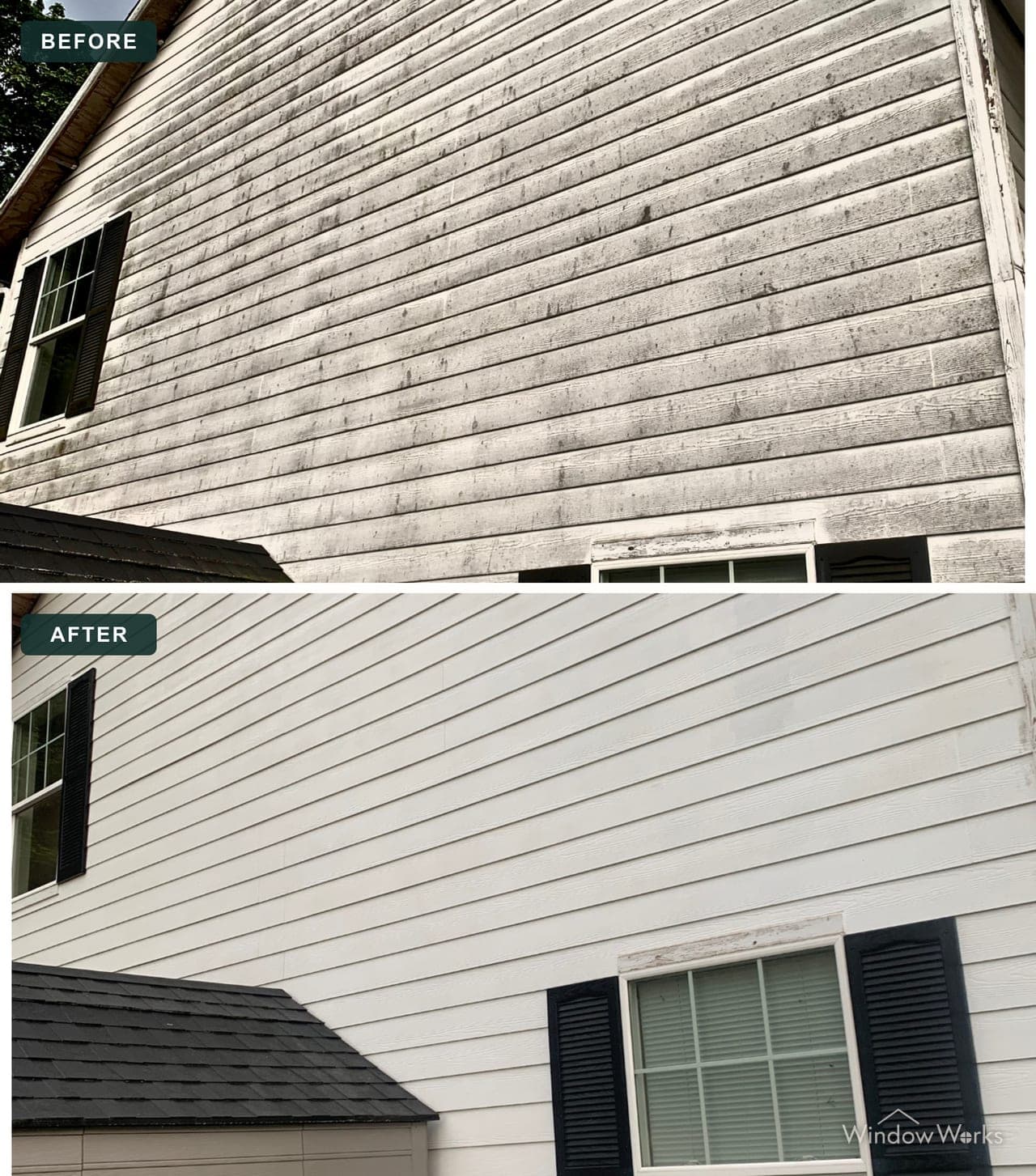
The wash is low pressure, and the solution does the work, so nothing is driven behind the boards. Siding and trim both get it, rinsed from the top down. Places around Lake Alice, Aldarra, and Neal Road often have a shop or a garage that wants the same.
Along the Fall City Riverfront and up Upper Preston Road, the trees near the water keep those walls in shade most of the day. Windows, doors, and outlets are closed and checked before anything is applied. If a stain turns out to be rust or mineral rather than growth, you hear it before we start, not after.
Areas we serve in Fall City
- Lake Alice
- Aldarra
- Fall City Riverfront
- Upper Preston Road
- Neal Road area
Fall City questions
- We are on a well and septic. What do you need from us?
- Show us the well head and the drain field at the walk-through and we plan the day around them. That is also the time to point out any outbuilding you want included. If there is anything else on the property you want protected, say so then.
- Will it take the moss off the north wall?
- Yes. The wash kills algae, mold, mildew, and moss on siding. A house wash covers siding, soffits, fascia, and trim, so moss on the roof is not part of it, but we will tell you if we see it up there.
What we cover
Every siding we wash.
The chemistry and the touch change with the material, so we identify yours before we quote it.
- Vinyl siding
- Painted wood and lap siding
- Cedar shake and cedar siding
- HardiePlank and fiber cement
- Stucco and EIFS
- Brick and stone
- Metal and aluminum siding
- Composite and engineered wood
- Soffits, fascia, and trim
- Gutter exteriors, decks, and fences
A wash takes off what is alive: mold, mildew, algae, moss, lichen, pollen, sap, and bug residue. It does not take off oxidation, rust, efflorescence, or soot. Those are their own treatments, and we will tell you which one you have before we start.
Before and after
The difference, on real jobs.
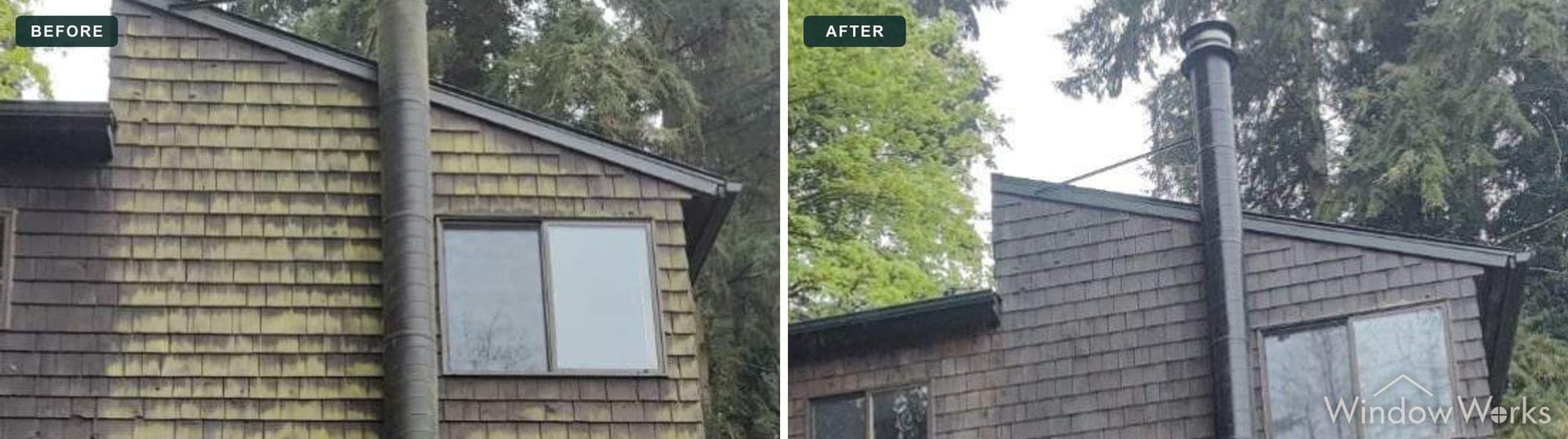
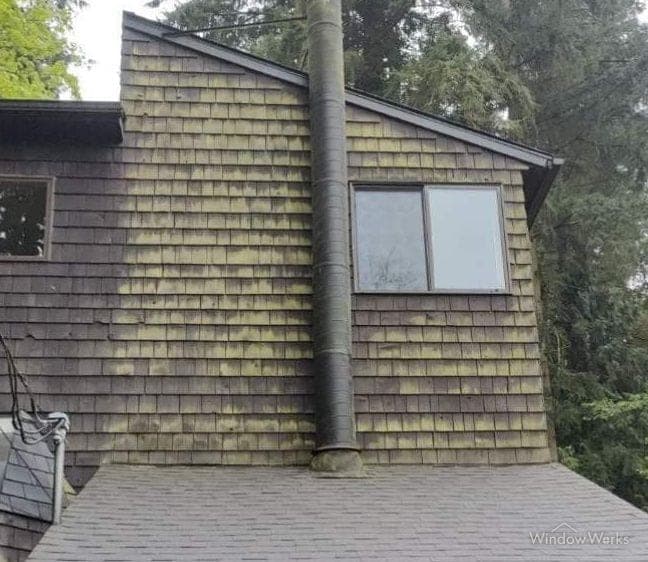
Cedar shake under firs, the algae gone and the wood back to its own color. 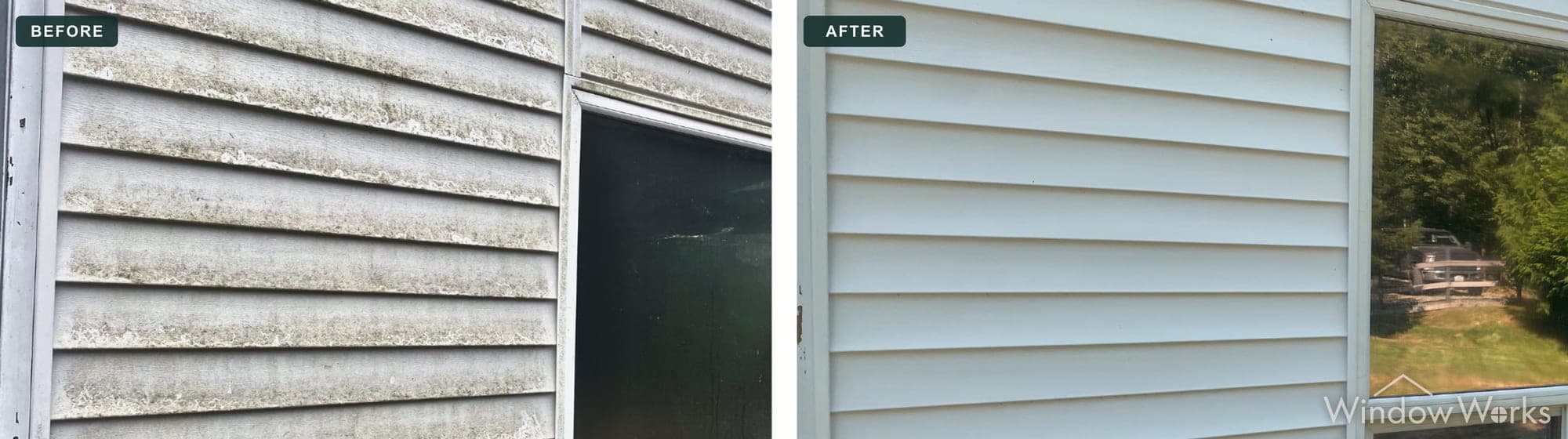
Soft washing algae off vinyl siding. 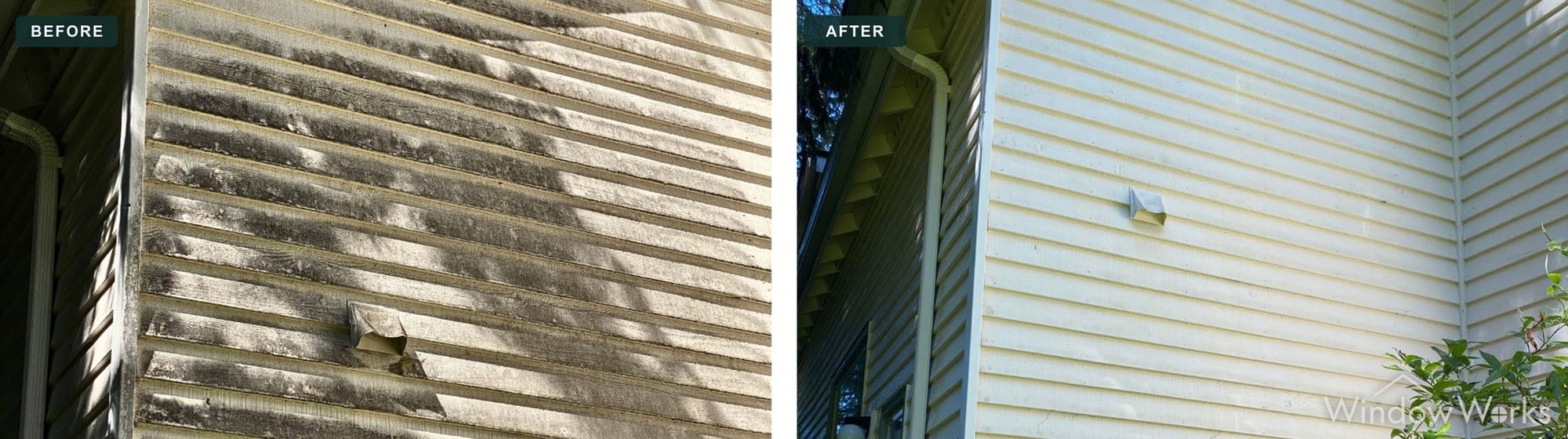
Soft washing heavy algae off siding. 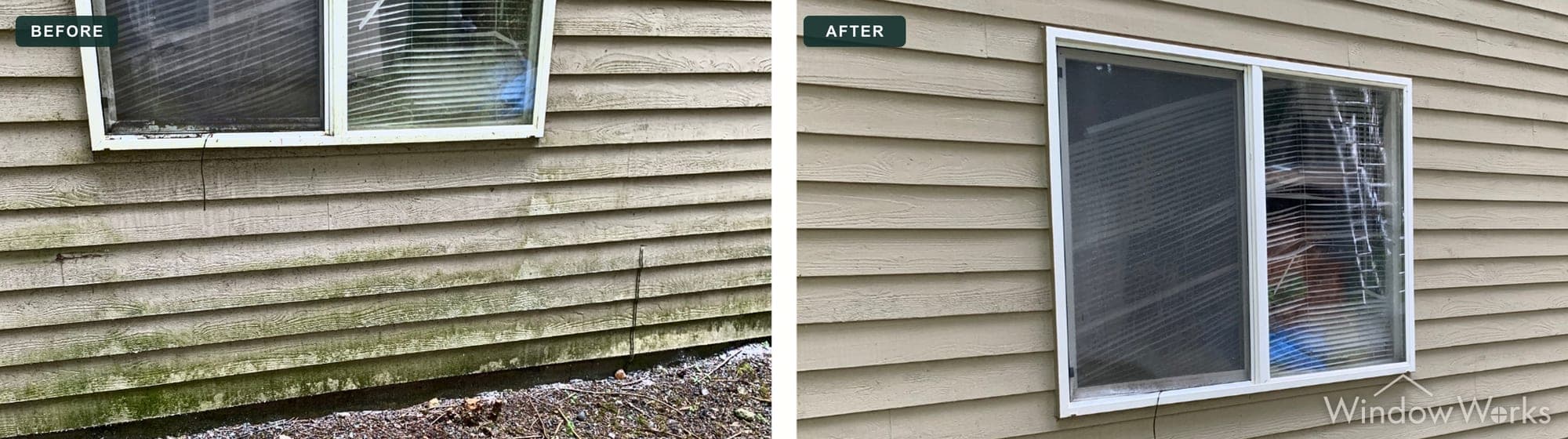
Removing green algae streaks from siding. 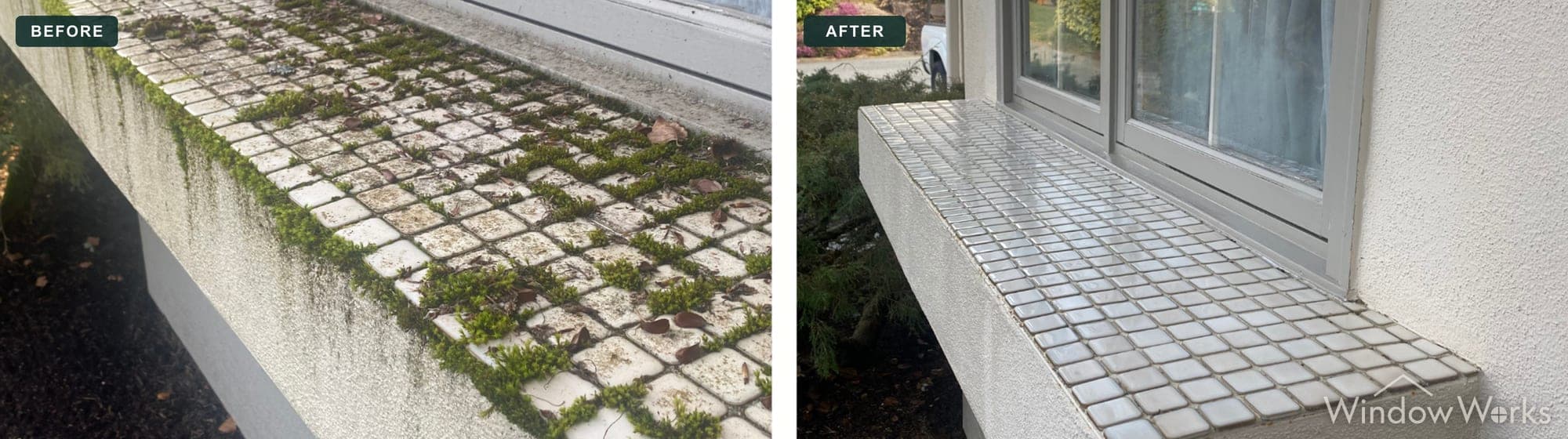
Clearing moss off a tiled windowsill. 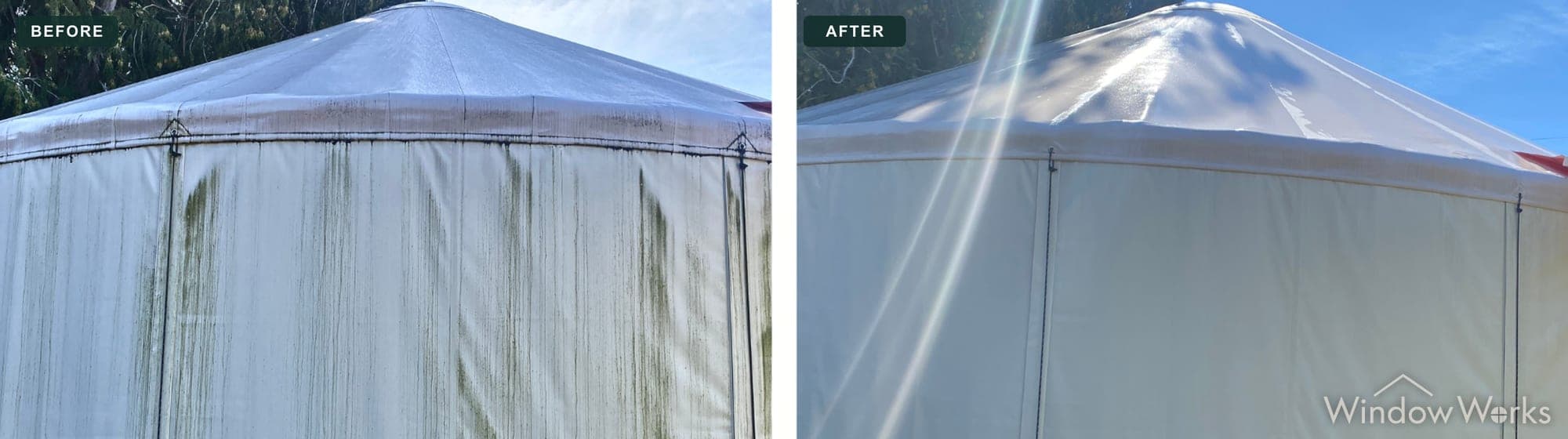
Soft washing algae streaks off a yurt.
See it up close
Real jobs, up close.
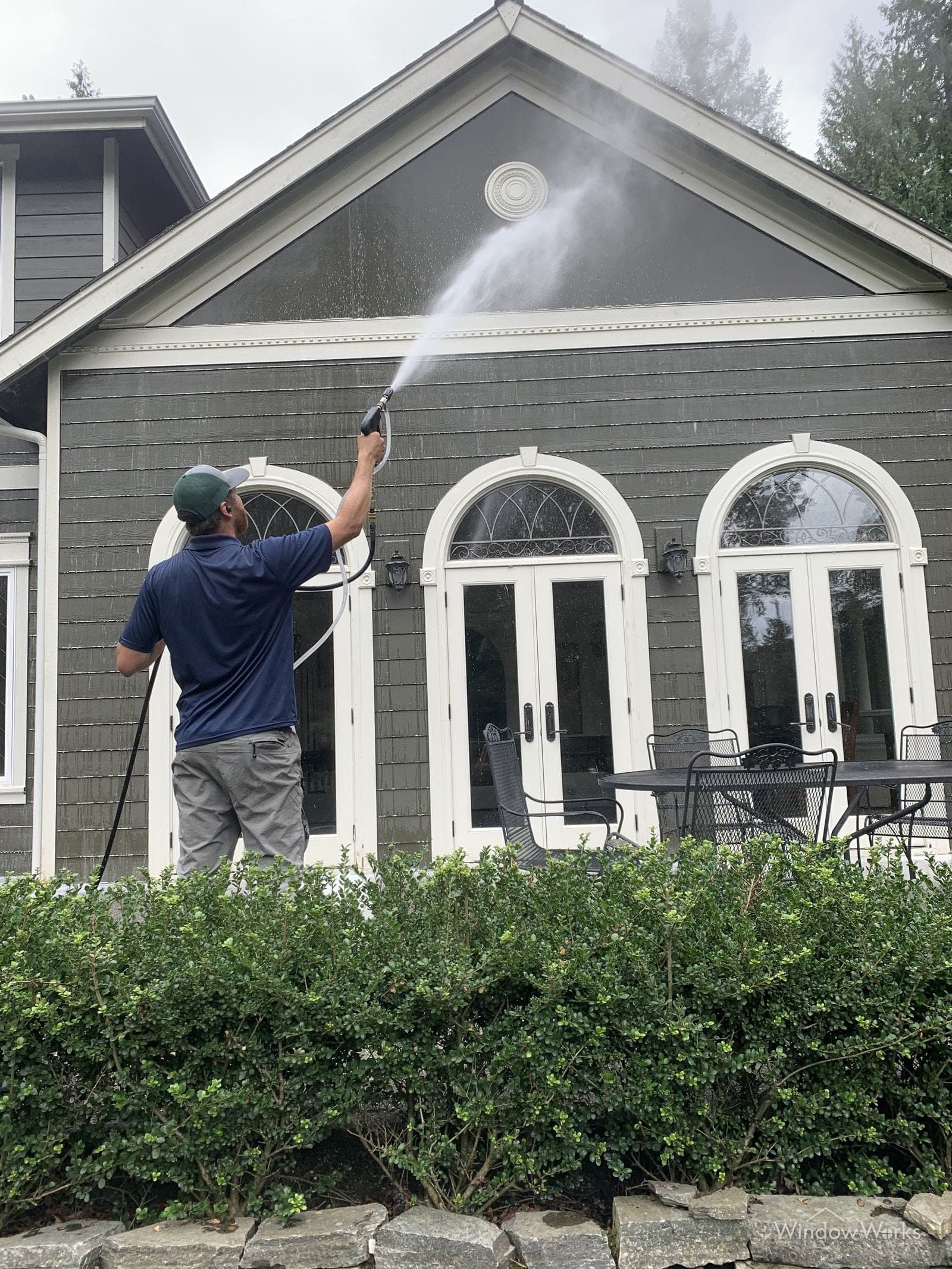
Reaching a two-story gable from the ground. No ladders leaned against your siding, no pressure driven into the laps.
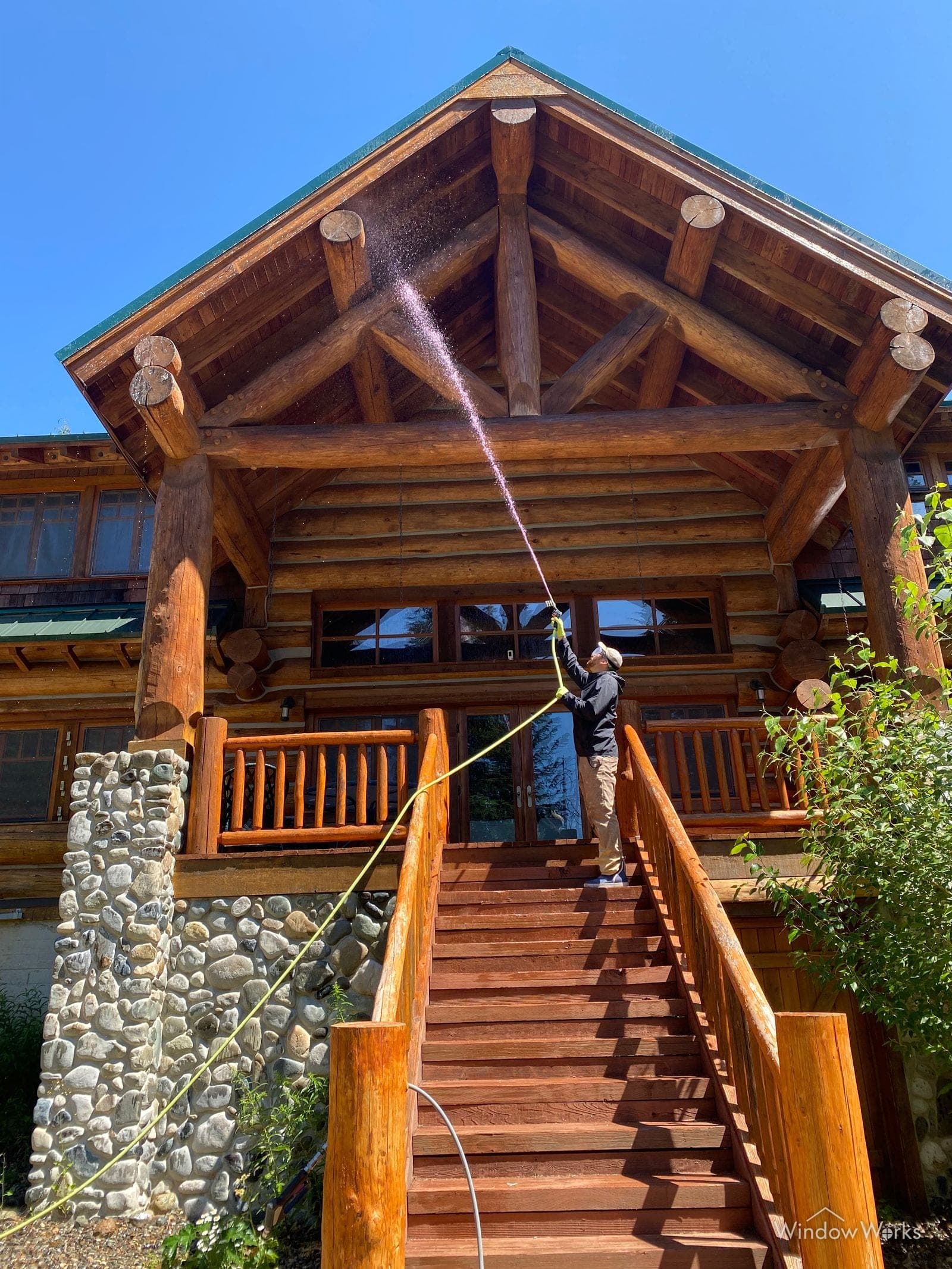
A log home gets the same low pressure. On wood, the chemistry does the work and the finish stays where it is.
Why it matters
The problem this solves.
What looks like dirt on shaded siding is mostly algae, mold, and mildew, shortening the life of finishes you already paid for. Insurers now audit exteriors with aerial imagery, and visible algae is one of the conditions they flag most.
How we do it
Our approach.
We soft wash at garden-hose pressure, never high pressure that forces water behind siding or strips finishes. The solution treats algae, mold, and mildew at the root, so the clean holds instead of rinsing off with the next storm. House washing removes organic growth; oxidation, rust, and soot have their own treatments below.
- Walk-through first: siding, problem areas, landscaping
- Windows, doors, and outlets closed and checked
- Low pressure only, never high pressure
- Final walk-through with you when you're home
- Before-and-after photos available on request
- A straight answer on anything a wash will not take off
What it is actually doing
The green is not dirt. It is eating your paint.
Dirt sits there. What grows on a shaded Northwest wall is alive, and it is feeding on the finish you paid for.
It eats the paint.
Mold and mildew are fungi. They break down the binder that holds a paint film together and the pigment that gives it color, so the wall goes chalky and flat years early. Kill the growth and you stop the clock.
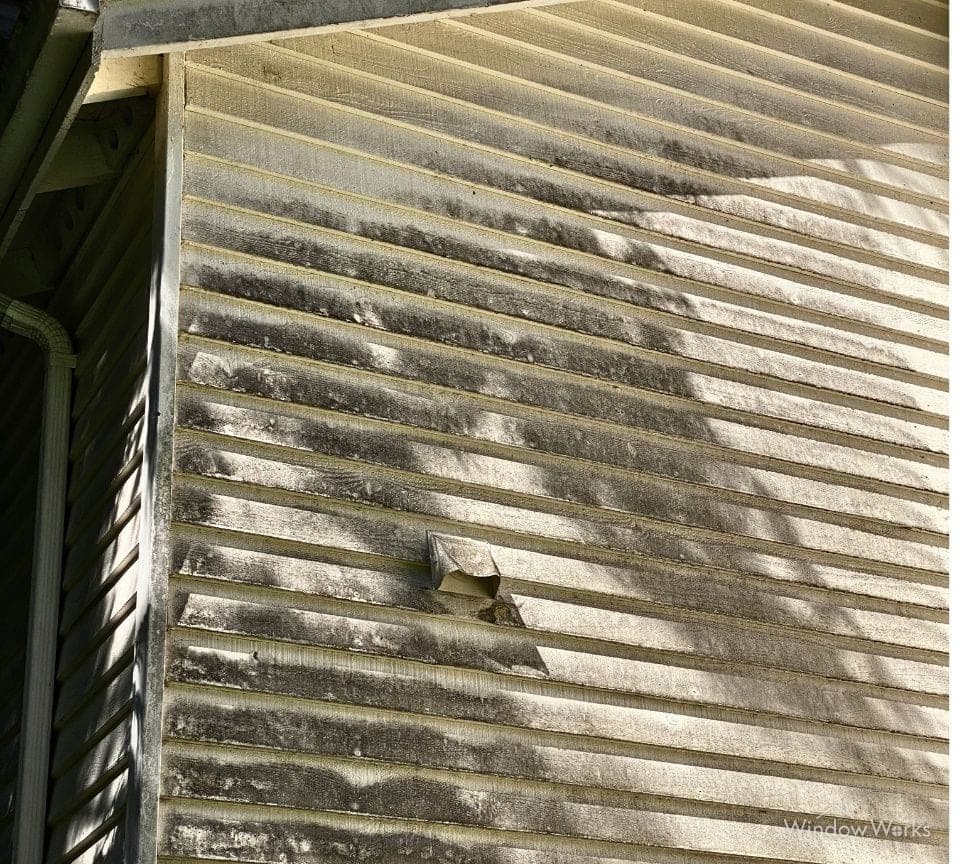
It holds water against the wall.
Growth acts like a sponge, so the siding stays damp long after the rain stops. Moisture that cannot dry works under the paint film and lifts it into blisters. Once you see bubbling, a wash is no longer the fix.
It starts where you never look.
Soffits and the north side go first, because they stay shaded and damp. We treat soffits, fascia, and trim on every wash for that reason.
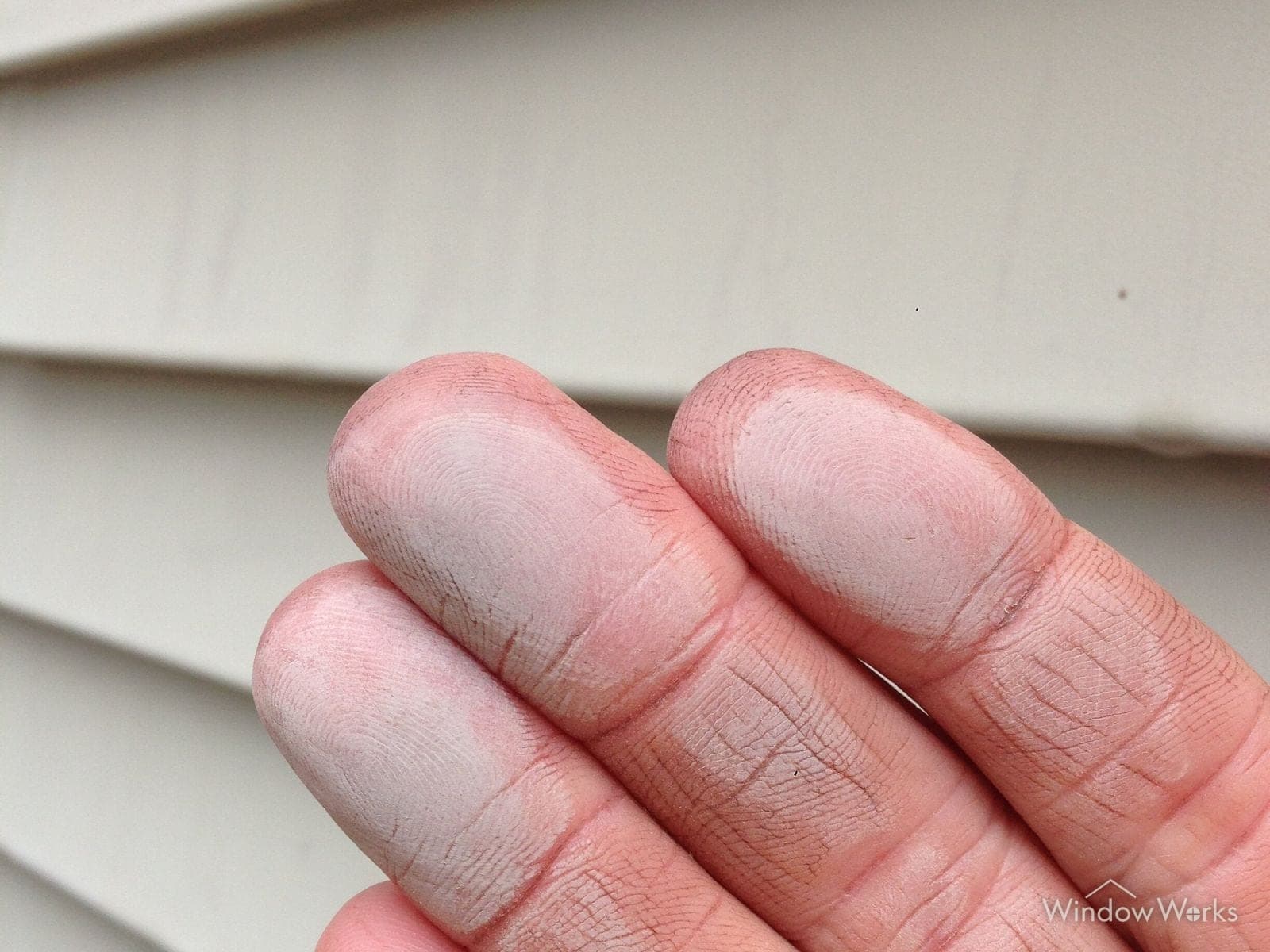
Chalky and faded? That is not growth.
Run your hand down the wall. If it comes back white, that is oxidation: the coating itself breaking down under UV, not something living on top of it. No wash touches it, and any company that tells you otherwise is going to hand back a clean wall that still looks dead.
We remove it as its own job. A specialty compound pulls the chalked layer off and brings the color back, on siding and on the aluminum and vinyl window frames that chalk right alongside it. It starts with a test area you approve, it is quoted after we see it, and we will tell you plainly when the coating is too far gone and paint is the better spend.
How the two compare
Soft wash or pressure wash. It is not close.
Both get the wall wet. Only one kills what is growing, and only one leaves your finish alone.
| Pressure washing | Soft washing, our method | |
|---|---|---|
| What does the work | Force, at pressure that knocks the top layer off | Chemistry, then a low-pressure rinse |
| Does the growth die | No. It takes off what you can see | Yes. It dies at the root |
| Water behind the siding | High pressure drives it into laps and seams | Garden-hose pressure, where rain already goes |
| Your finish | Can etch paint and raise the grain on cedar | Left alone |
| How long it holds | Back within a season on a shaded wall | One to three years, set by siding and shade |
Nothing else changes a house this fast.
Most people book a wash for the paint and then stand in the driveway surprised. Twenty years of gray comes off the front of the house in an afternoon and it reads as newer, brighter, and cared for. For what it costs next to painting or new siding, it is the best curb appeal money you can spend, and it is protecting the finish while it does it.
See maintenance plansAdd-ons
Add it while we're there.
The crew and equipment are already on site, so these attach to your visit.
Exterior Window Cleaning
The wash spots the glass, so we put exterior windows on every estimate by default. You can take it off, and we will tell you honestly why we think you shouldn't. Screens, tracks, and frames come with our window cleaning packages.
See the full serviceOxidation / Chalking Removal
Chalky, faded siding is the coating failing, and no wash fixes it. We take the chalked layer off siding and off the aluminum and vinyl window frames that go with it. Test area first, quoted after we see it.
See the full serviceRust Stain Removal
House washing will not touch rust. Acid-based treatment, test spot first, and the stain returns unless the source is fixed.
See the full serviceSoot / Smoke Stain Removal
Soot and smoke will not wash off. A separate specialty job, quoted after assessment; porous or long-set stains get a straight answer.
See the full service
Why WindowWorks
Who shows up matters.
The difference between a safe soft wash and damaged siding is judgment, and judgment is trained.
Anyone can rent a pressure washer. After 20+ years on Eastside exteriors, and a 4.9 rating across 300+ reviews, we can tell you the real difference is the person holding the wand: what they know, how they were trained, and whether the company behind them takes care of them. We take care of our techs, so they take care of your property.
Background-checked
Every technician is background-checked before they ever step onto a customer's property.
Certified, skill by skill
Our crews earn certification across 369 individual skills in 10 categories, each one signed off by an evaluator, never just by clocking time.
Paid like professionals
A living wage, healthcare, and dental. People who are treated well do careful work, and they stay, so you see the same faces.
Licensed, bonded, and insured
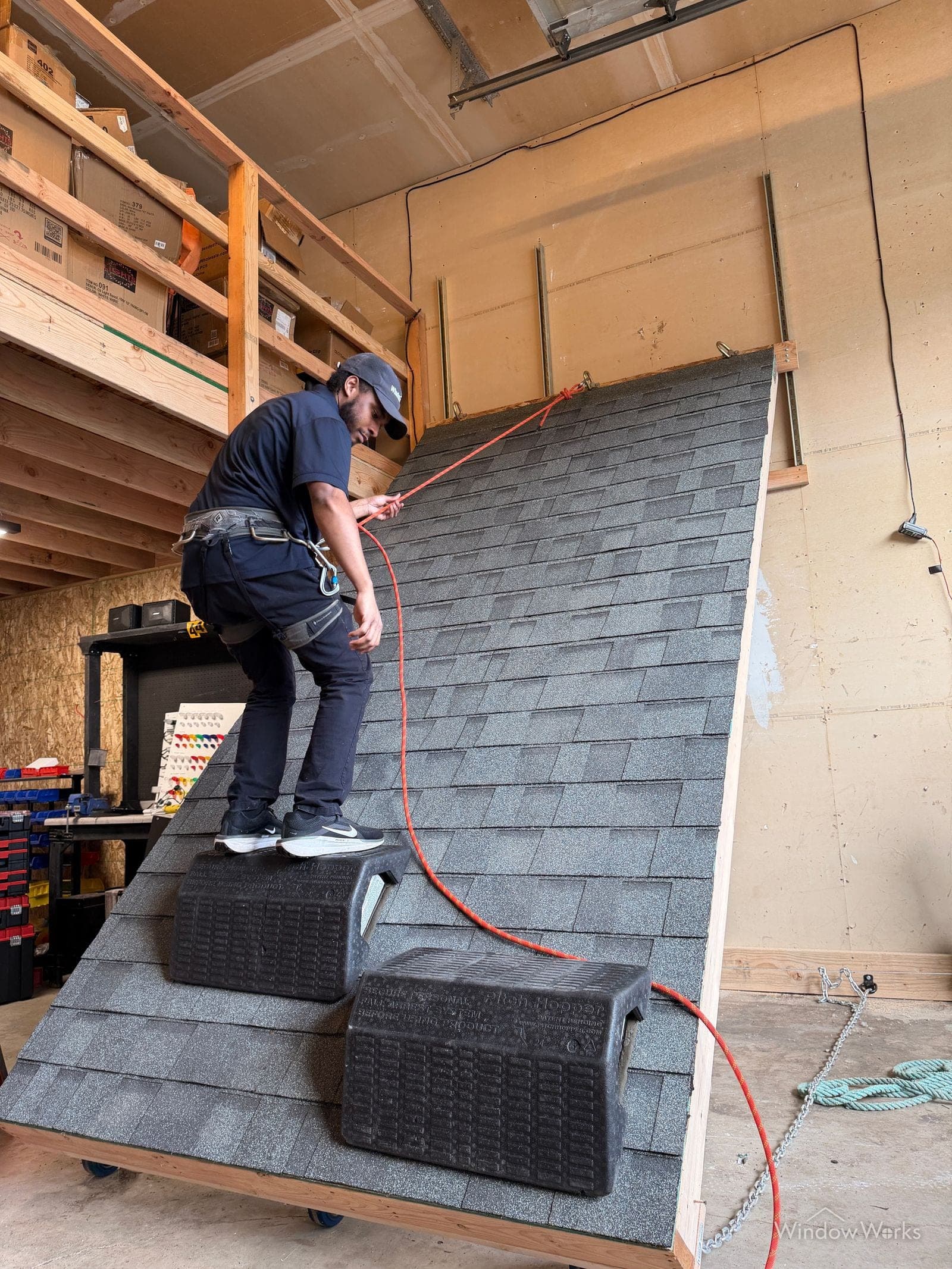
With OSHA-aligned safety training for the at-height work. If someone is on your roof, they are trained and covered for exactly that.
Method matched to the surface
Soft wash where pressure would damage, hot water where cold cannot lift, the right chemistry for the stain. The method follows the surface, not the other way around.
Documented before and after
Every job is photographed before and after, so you can see exactly what changed and keep it on file.
Common questions
Good to know.
Will the cleaning solution hurt my plants?
No. We soak the beds around the house before we start, cover what needs covering, and rinse everything down again when we finish. Tell us what you baby out there and we will plan around it.
Will house washing remove every stain?
It removes organic growth, not inorganic stains like oxidation, rust, efflorescence, or mineral deposits, which can show more once surrounding grime is gone. Oxidation, rust, and soot each have their own treatment, and the What's On My Siding guide covers what comes off before we start.
Will a wash fix chalky, faded siding?
That's oxidation, the coating breaking down from UV, and a normal wash doesn't touch it. Our removal starts with a test area, is quoted after assessment, may require a signed waiver, and sometimes repainting is the better investment.
Can washing damage my paint or stain?
The wash itself is gentle, but cleaning can release paint that's already chipped or failing, and degraded stain on cedar can look uneven once grime is off. We flag those conditions during the walk-through, and sometimes the right call is repainting or re-staining after.
How does this help with my insurance?
Insurers in western Washington audit exteriors with aerial imagery, and siding algae is one of the three maintenance conditions they flag most, sometimes with only 30 days notice before non-renewal. A house wash addresses what they look for, and we can send you before-and-after photos on request for your carrier.
Go deeper
More on keeping the outside right.
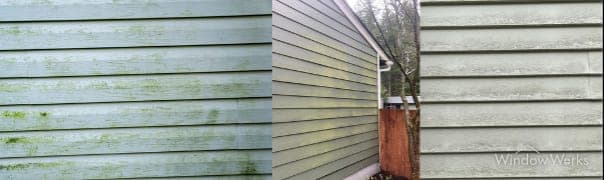
What's on my siding?
And will it come off with a wash? Every stain and growth we find on a wall, and which ones a soft wash actually removes.
Read the guide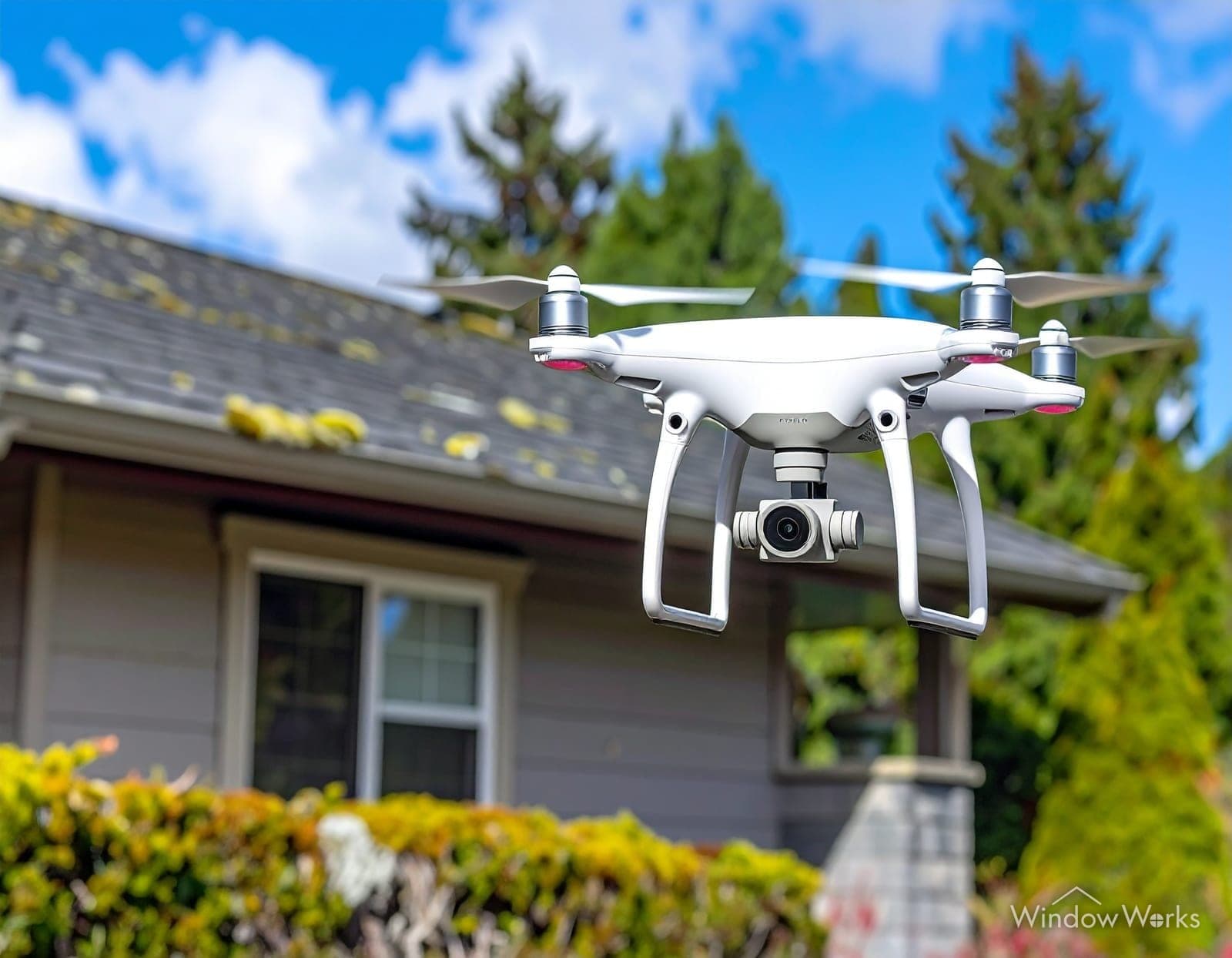
How keeping your roof and siding clean could save your home insurance policy
The bad news: the state of your roof and siding could cost you your homeowners insurance. The good news: it's not too late to safeguard your policy, and your roof.
Read the article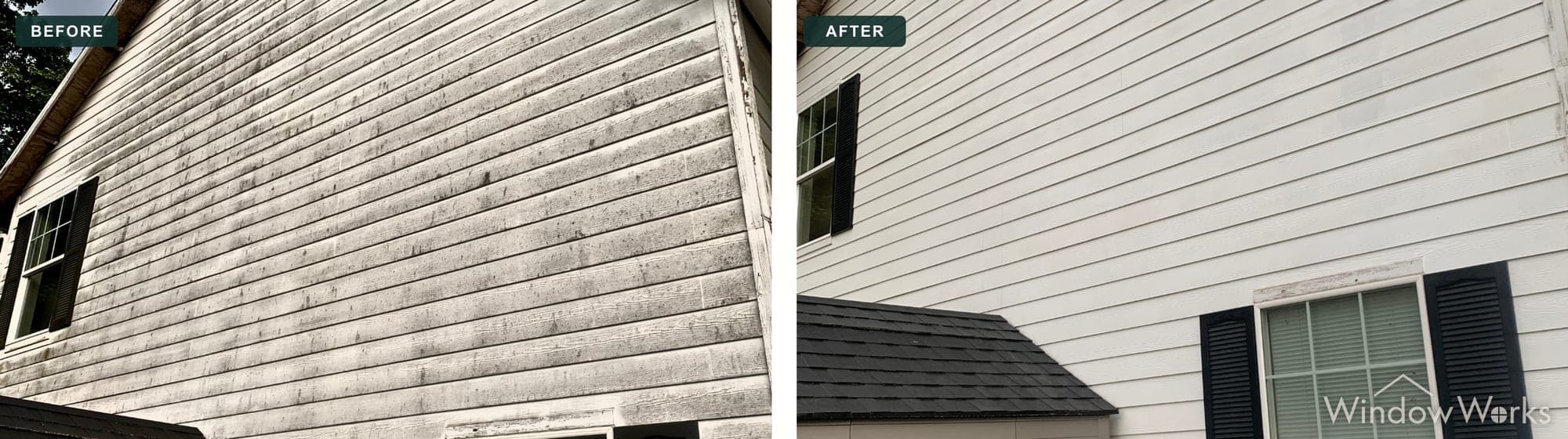
What curb appeal is actually worth when you sell
Sellers stall on exterior spending because it feels cosmetic. The research puts it at about 7 percent of the sale price. Here are the numbers, with every source named.
Read the article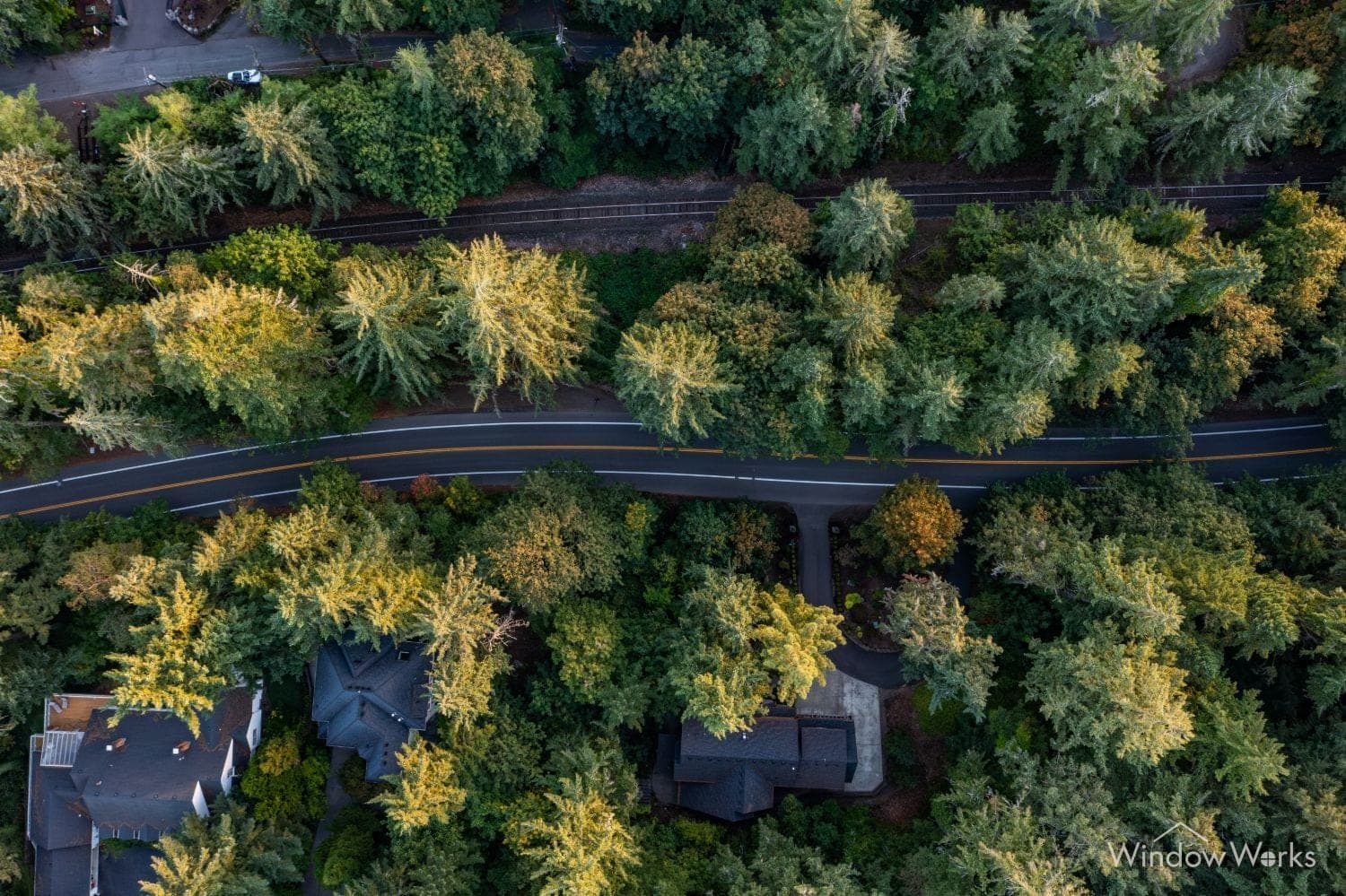
What to clean and when: a Pacific Northwest home maintenance calendar
Out here the weather works on your house year-round. The season-by-season schedule, plus the interval every service actually runs on.
Read the article
Serving Fall City and the whole Eastside
House Washing near you.
- House Washing in Issaquah
- House Washing in Sammamish
- House Washing in Bellevue
- House Washing in Redmond
- House Washing in Kirkland
- House Washing in Newcastle
- House Washing in Woodinville
- House Washing in Mercer Island
- House Washing in Snoqualmie
- House Washing in North Bend
- House Washing in Carnation
- House Washing in Duvall
- House Washing in Renton
- House Washing in Seattle
House Washing in Fall City
Ready for a real estimate?
Answer a few quick questions and get a real number in minutes. No pressure, no obligation.