

November 18, 2026 · 4 min read
Why Is One Side Of My House Green?
Shade, Trees, And Where The Water Lands
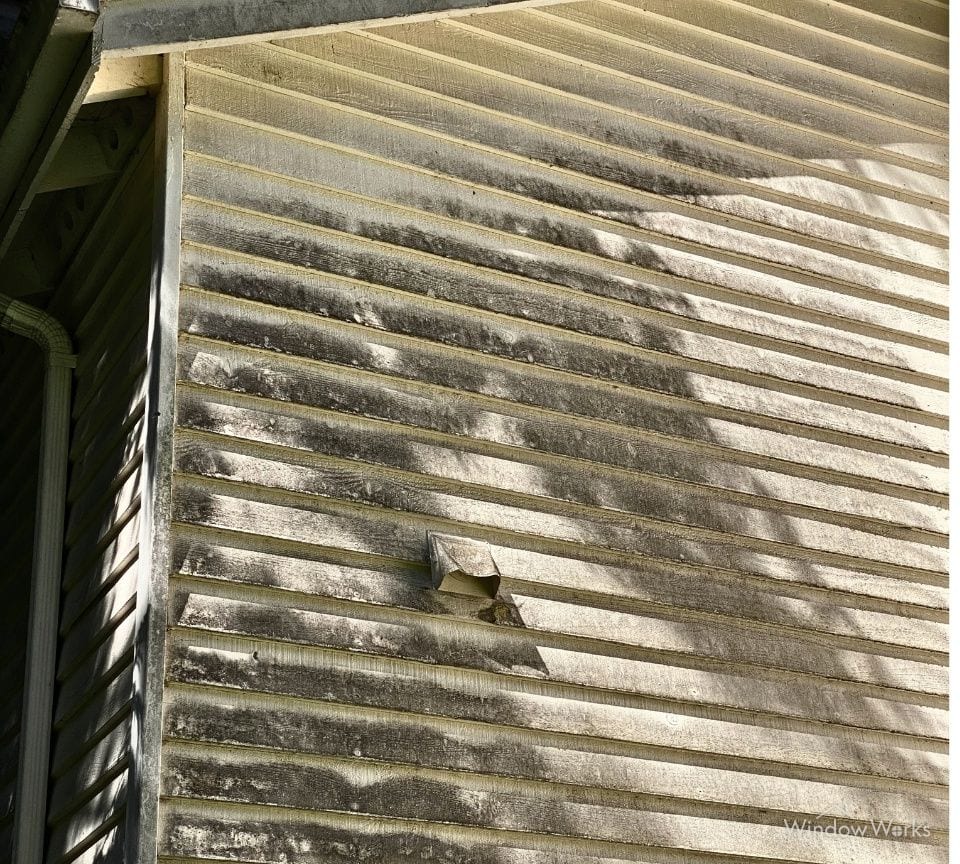
Because that side stays damp the longest. Most of the time it is the north wall, which gets no direct sun from fall to spring, or a wall that sits in the shade of trees. The green is algae, and it grows wherever siding cannot dry out between rains.
The other walls get the same rain. They just dry faster. On its own, a green wall usually means nothing is wrong with the house.
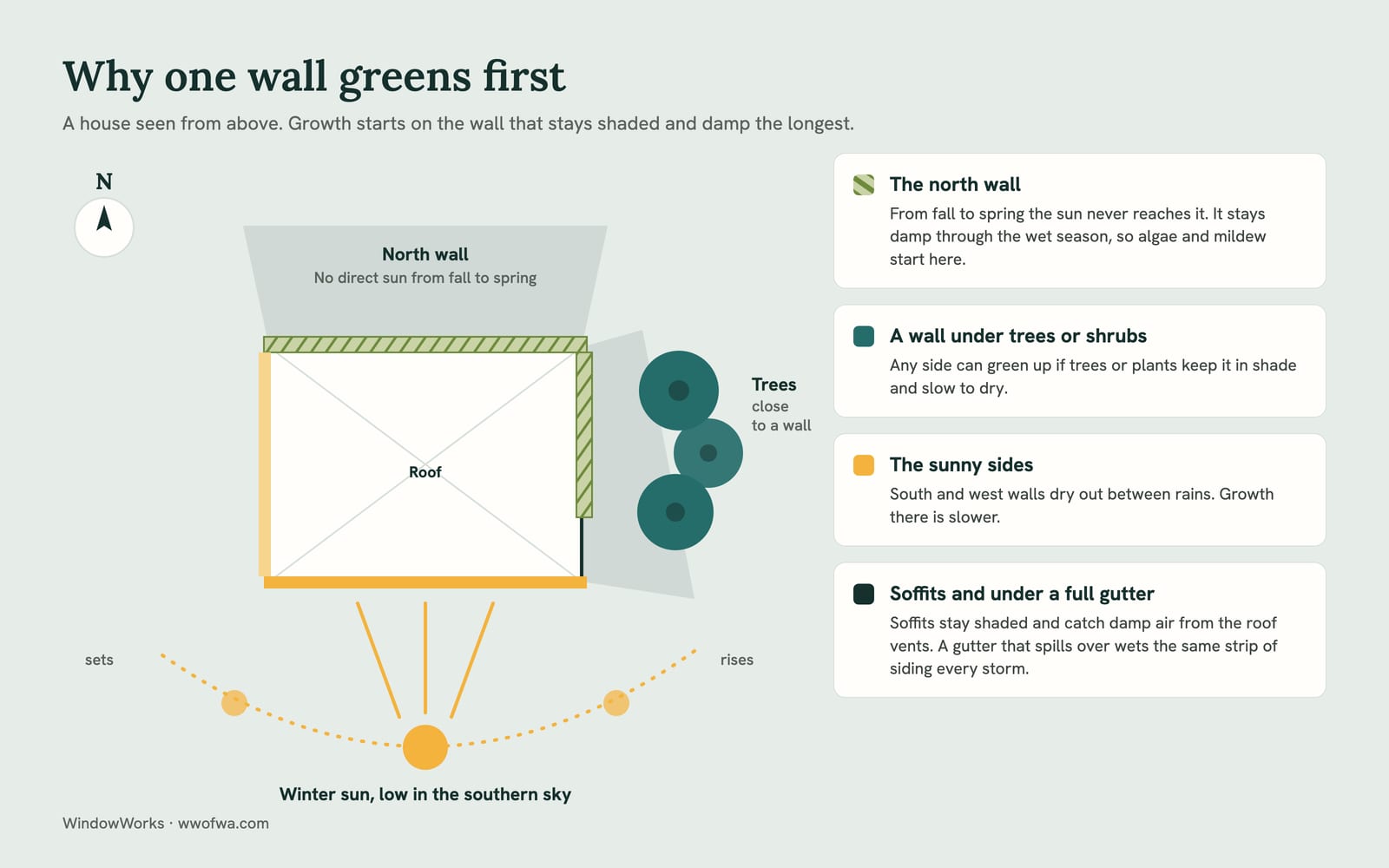
Why Does The North Side Go First?
From late September to late March, the sun rises and sets south of due east and west here. A wall that faces north gets no direct sun for that whole half of the year, and that half is our wet season. The wall gets wet and stays wet.
Algae and mildew start where the water stays. That is why the north side and the soffits are where we see growth first.
What Else Turns One Wall Green?
- Trees and shrubs. A wall under firs or behind a hedge stays shaded and slow to dry, whatever direction it faces. Trimming plants back so air and sun reach the wall is the best thing you can do for it.
- An overflowing gutter. When a gutter spills over, it washes the same strip of siding with dirty water every storm, and that strip greens up and streaks first.
- Soffits. The underside of the eaves is shaded, and it catches warm, damp air from the roof vents. If mold comes back on the soffits within six months of a wash, have the attic checked, because mold up there is likely.
- Dust. Mold cannot grow on clean paint. It needs something to feed on, and the film of dust on a wall is enough.
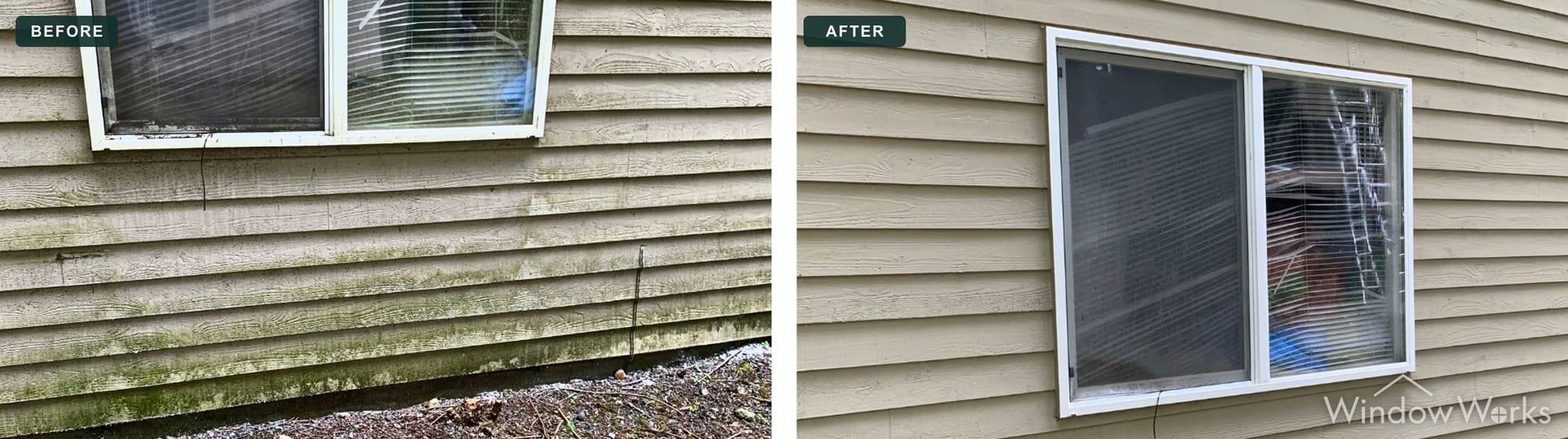
Is The Green Hurting My Siding?
Slowly, yes. Mold and mildew break down the binder that holds paint together, so the wall goes flat and chalky years early. The growth also holds water against the siding like a sponge, and water that cannot dry works under the paint and lifts it. Once the paint is blistering, a wash is no longer the fix.
Insurers notice too. Carriers in western Washington now check homes from the air, and algae on the siding is one of the conditions they flag most.
Can I Just Hose It Off?
A garden hose will not touch it. The growth is alive and holding on. A pressure washer will knock some off, but it can drive water behind the siding and strip the finish, and what is left grows back.
A soft wash kills it. A cleaner goes on at garden-hose pressure, sits long enough to work, and rinses off gently. We wash the whole house, soffits and trim included, because the north side is only where it shows first.
Why a pressure washer is the wrong tool for siding:
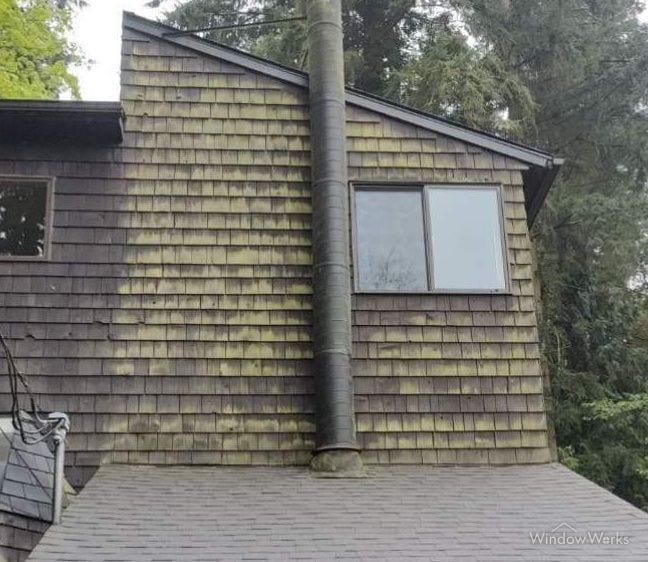
Will It Come Back?
Yes, on the same wall first. Washing does not change which side is shaded. Most houses here need a full soft wash every one to three years, set by the siding and the shade, and a heavily shaded house sits at the short end.
- Trim back trees and shrubs that touch or crowd the wall.
- Keep the gutters from overflowing.
- Rinse the house once a year between full washes. It takes off the dust that mold feeds on.
How often each kind of siding needs a wash:
What If It Is Not Green?
- Black or gray spots, mostly on the soffits: mold and mildew. A soft wash takes them off.
- Flat, crusty patches, pale green to gray: lichen. It comes off with the wash, but its pigment can leave a faint stain.
- A white, chalky film that comes off on your hand: oxidation. That is the paint breaking down, and no wash fixes it.
- White powder on brick or stucco: efflorescence, mineral salt carried out by water. It needs an acid treatment, not a wash.
Photos of what grows on siding and how each one comes off:
What Does A House Wash Cost?
Our house washing starts at $300 for a water-only rinse, or $600 for a full soft wash on its own. Most Eastside homes pay $750 to $1,150, and the one in the middle paid about $900.
The full price breakdown, from 56 house washes:
Price your house online, or call (425) 957-7403:
About these numbers: prices are before sales tax and cover the house wash part of 56 jobs we completed between January 2025 and November 2026. The photos are from our own crews. The diagram is ours.
See what it would cost.
Get a free estimate in minutes, or call and talk it through with a real person.