
AGS, Cedar Shake & Concrete Tile Roof Washing in Redmond
Roof Washing in Redmond, WA
The treed hillsides that make Education Hill and Bear Creek so livable also keep Redmond roofs shaded and damp, which is where moss, algae, and lichen take hold. Our roof wash is a low-pressure soft wash that kills all three at the root, on shingle, tile, and cedar shake, backed by a 3-year moss-free warranty on eligible roofs.
Not sure what you are looking at up there? The guide names it and tells you whether a wash takes it off.
What's on my roof? 3-Year Moss-Free Warranty
Redmond runs from 1980s and 1990s roofs on Education Hill and Grass Lawn to newer construction near Overlake and Union Hill, much of it under heavy canopy. Closer to Lake Sammamish, Idylwood lots pick up extra shade and humidity off the water, and shaded valleys collect the needles that keep shingles wet.
On roofs into their second or third decade, moss does real damage by lifting shingle edges and holding water against the roof. The soft wash kills the growth and its spores where they sit, results build over four to twelve weeks, and the gutter cleanings that keep the warranty active double as inspections that catch regrowth early.
Areas we serve in Redmond
- Education Hill
- Grass Lawn
- Idylwood
- Union Hill
- Bear Creek
- Overlake
Redmond questions
- How often should I wash my roof in Redmond?
- Every 2 to 3 years for most roofs. Shaded, tree-lined lots on Education Hill or near the lake in Idylwood tend to grow moss back faster, and a sunnier, more open roof can go longer between treatments.
- Is a soft wash safe on my older shingles?
- Yes, and it is the only method we would put on them. The pressure stays low, so the aging shingles common in Grass Lawn and Bear Creek keep their protective granules while the chemistry kills the growth at the root.
- Do you remove the dead moss, or just kill it?
- The kill is immediate, and the cleanup is gradual: dead moss loosens and releases with rain and wind over the following weeks, which Redmond gets plenty of. If you want the roof looking its best the day we leave, our Premium option adds a full rinse.
What we cover
Roofs we soft wash.
Soft washing is safe across the roof types common on Eastside and Greater Seattle homes, and the 3-year moss-free warranty covers every material listed here. If yours isn't listed, ask.
- Asphalt granule shingle (AGS)
- Concrete and Spanish clay tile
- Cedar shake
- Composite and synthetic shake
Cedar shake roof? Ask about our cedar cleaning and restoration add-on: a brightening treatment after the wash that preserves the wood's natural color.
Before and after
The difference, on real jobs.
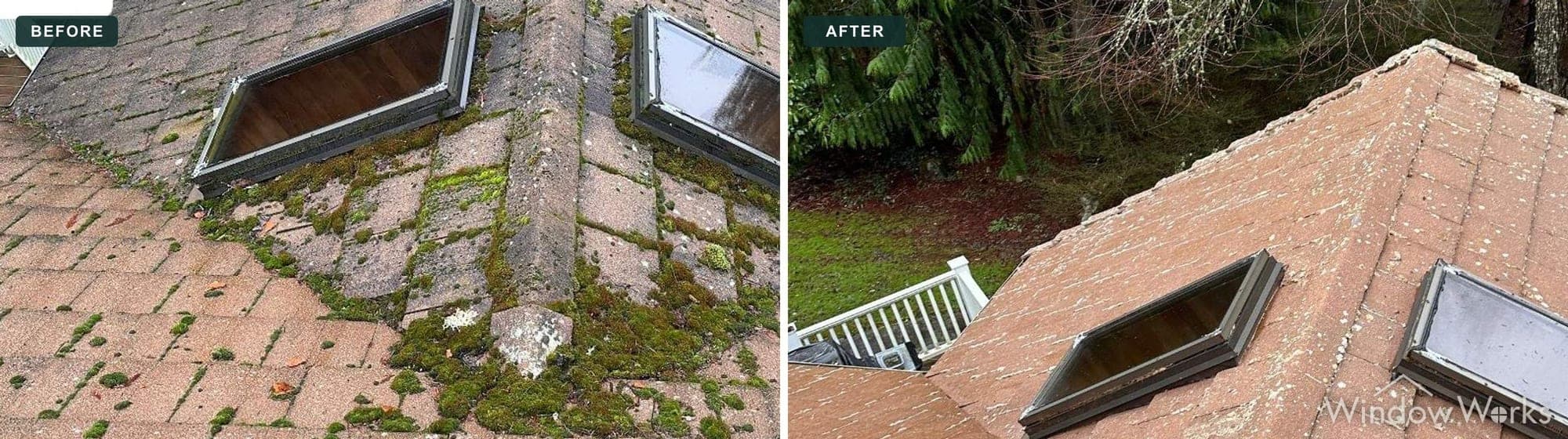
Soft washing a moss-covered concrete tile roof. 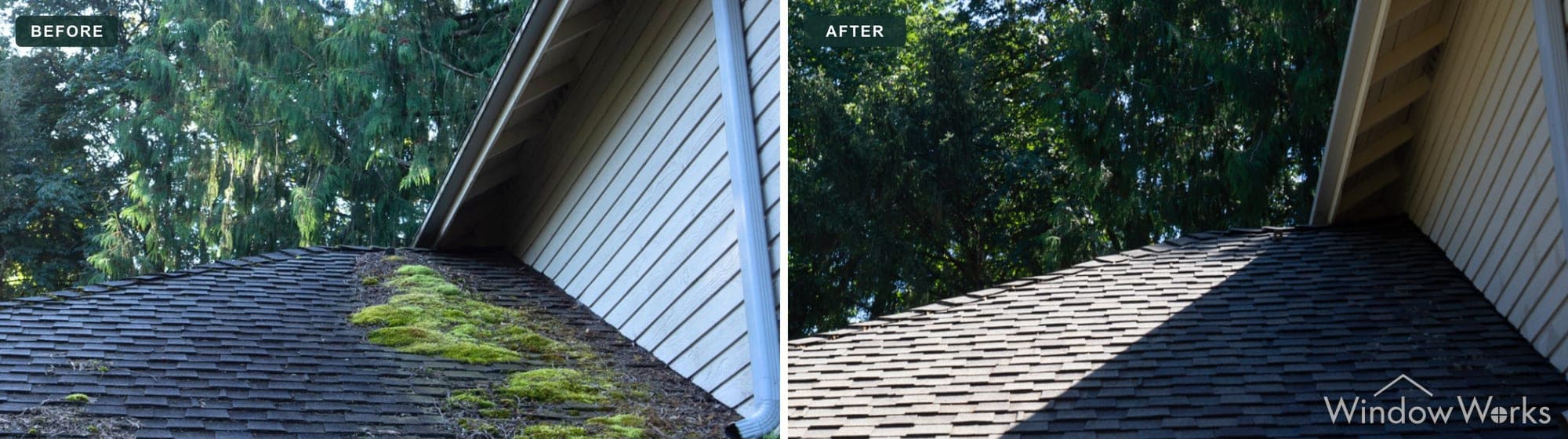
Clearing a heavy moss streak from a roof valley. 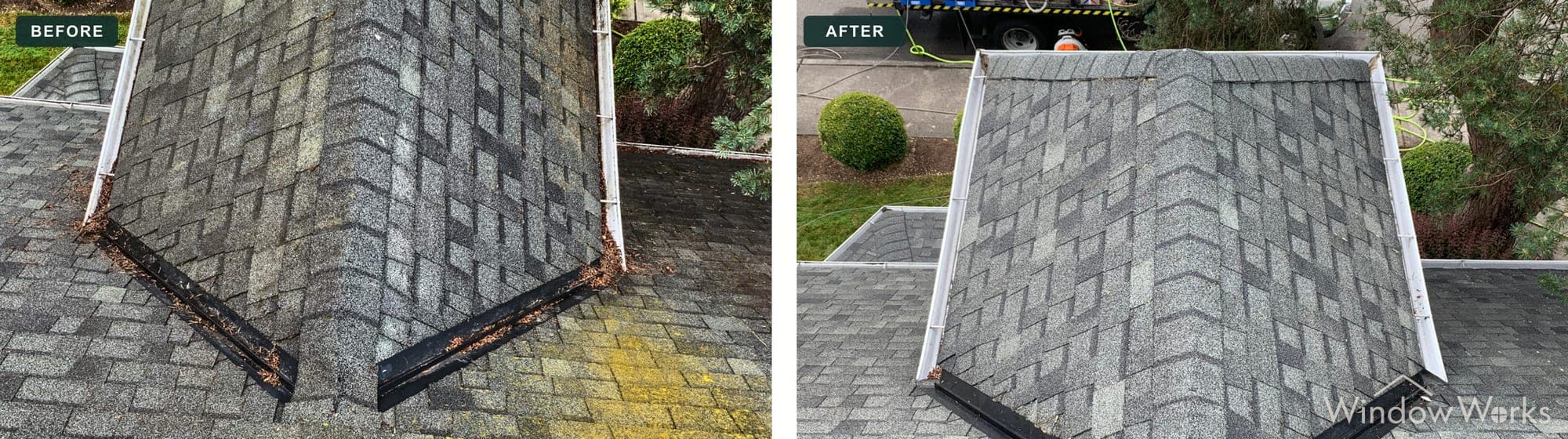
Cleaning moss and stains from a dormer roof. 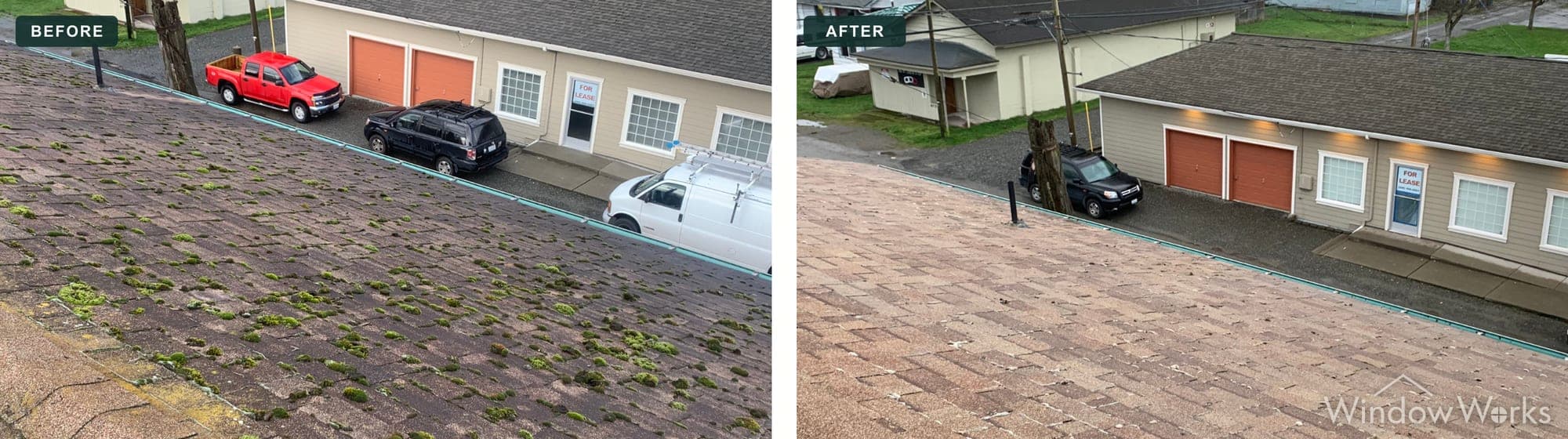
Soft washing a moss-covered asphalt roof. 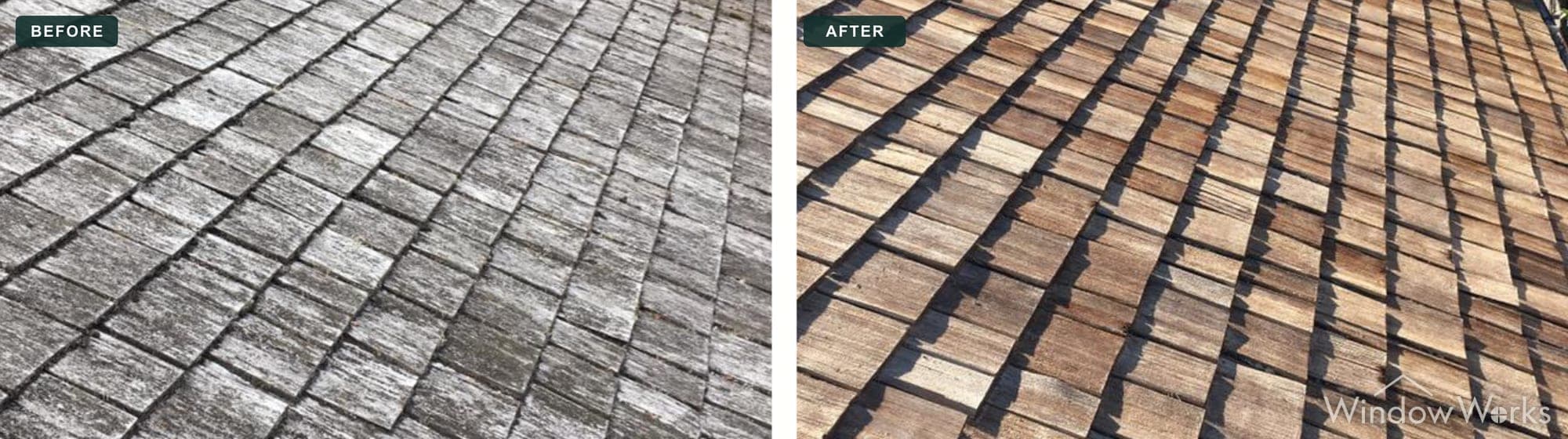
Restoring a weathered cedar shake roof. 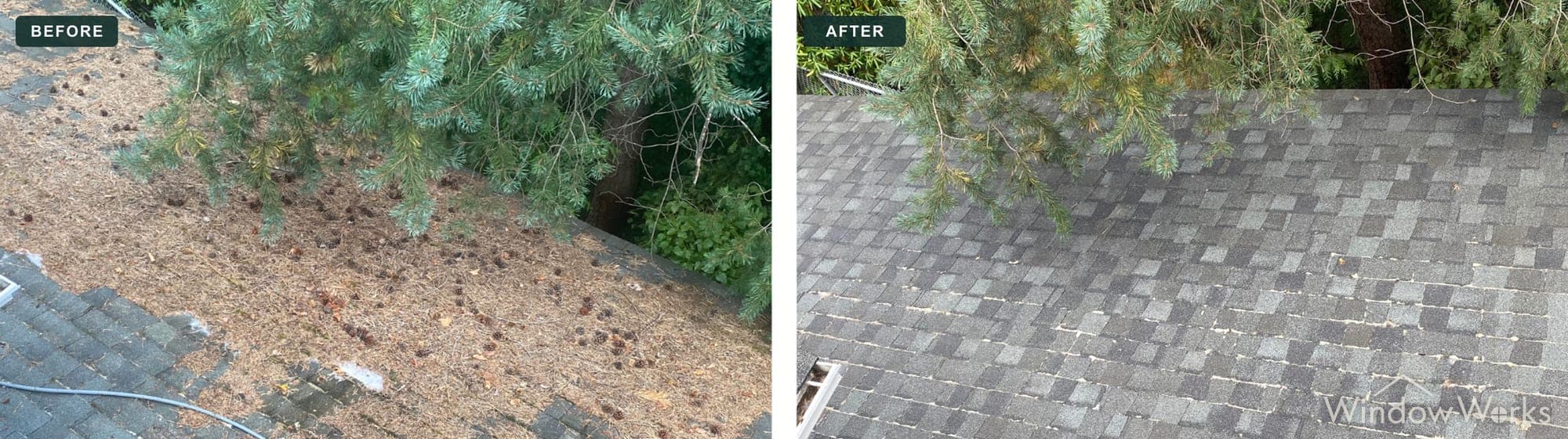
Cleaning pine debris and stains off a roof.
Why it matters
The problem this solves.
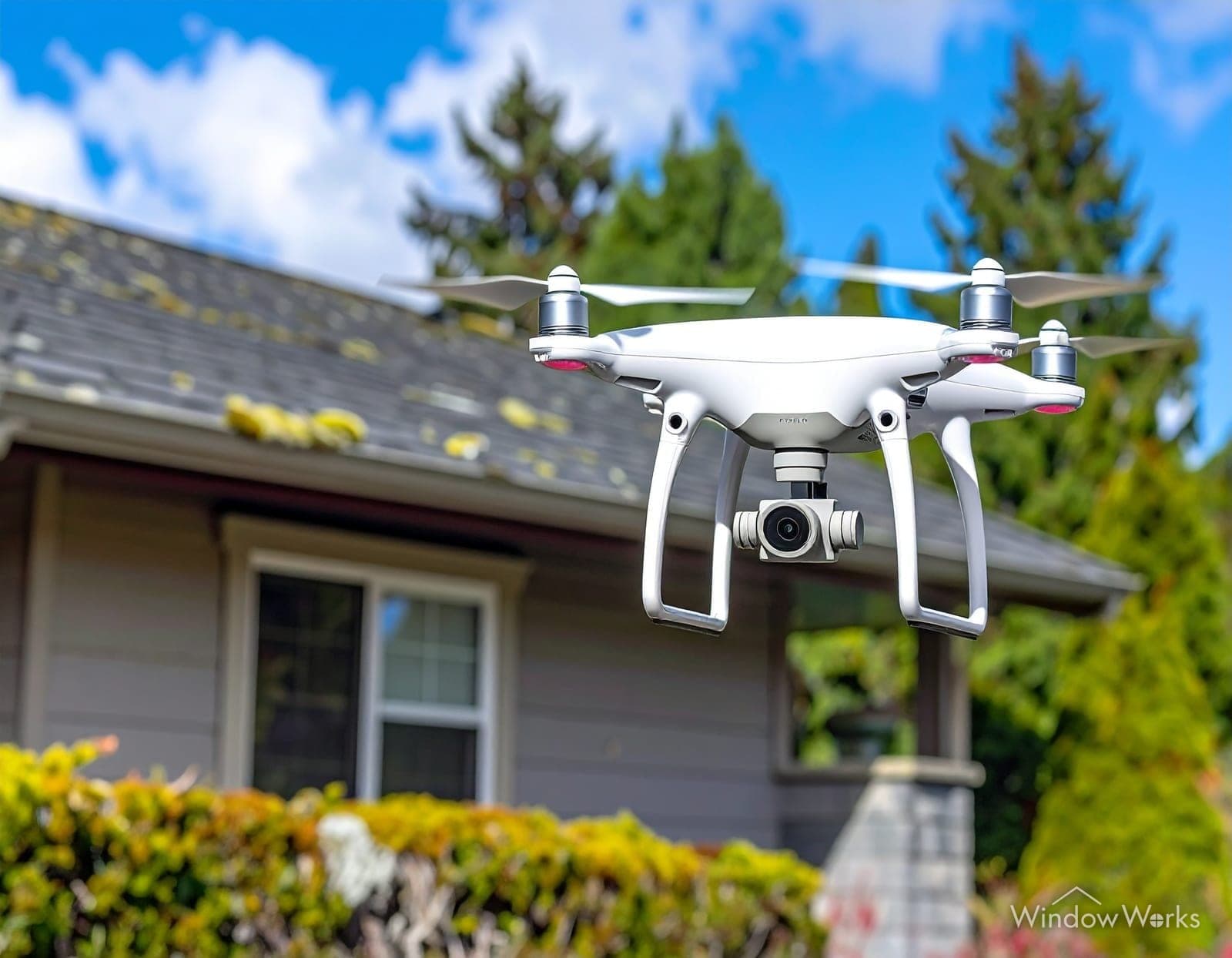
Moss holds water against the most expensive surface on your house, and insurers flag it most: western Washington carriers now audit roofs from the air. Blasting it off with high pressure damages the roof and voids most manufacturer warranties.
 From the blogHow keeping your roof and siding clean could save your home insurance policyRead the article
Asphalt Roofing Manufacturers Association
ARMA is the trade association for North America's shingle manufacturers, and it sets the care guidance their warranties reference. ARMA names a low-pressure sodium hypochlorite soft wash the most effective way to clean algae and moss from an asphalt roof, and specifically warns against pressure washing or scrubbing, which strips the protective granules. Our roof wash follows that guidance.
How we do it
Our approach.
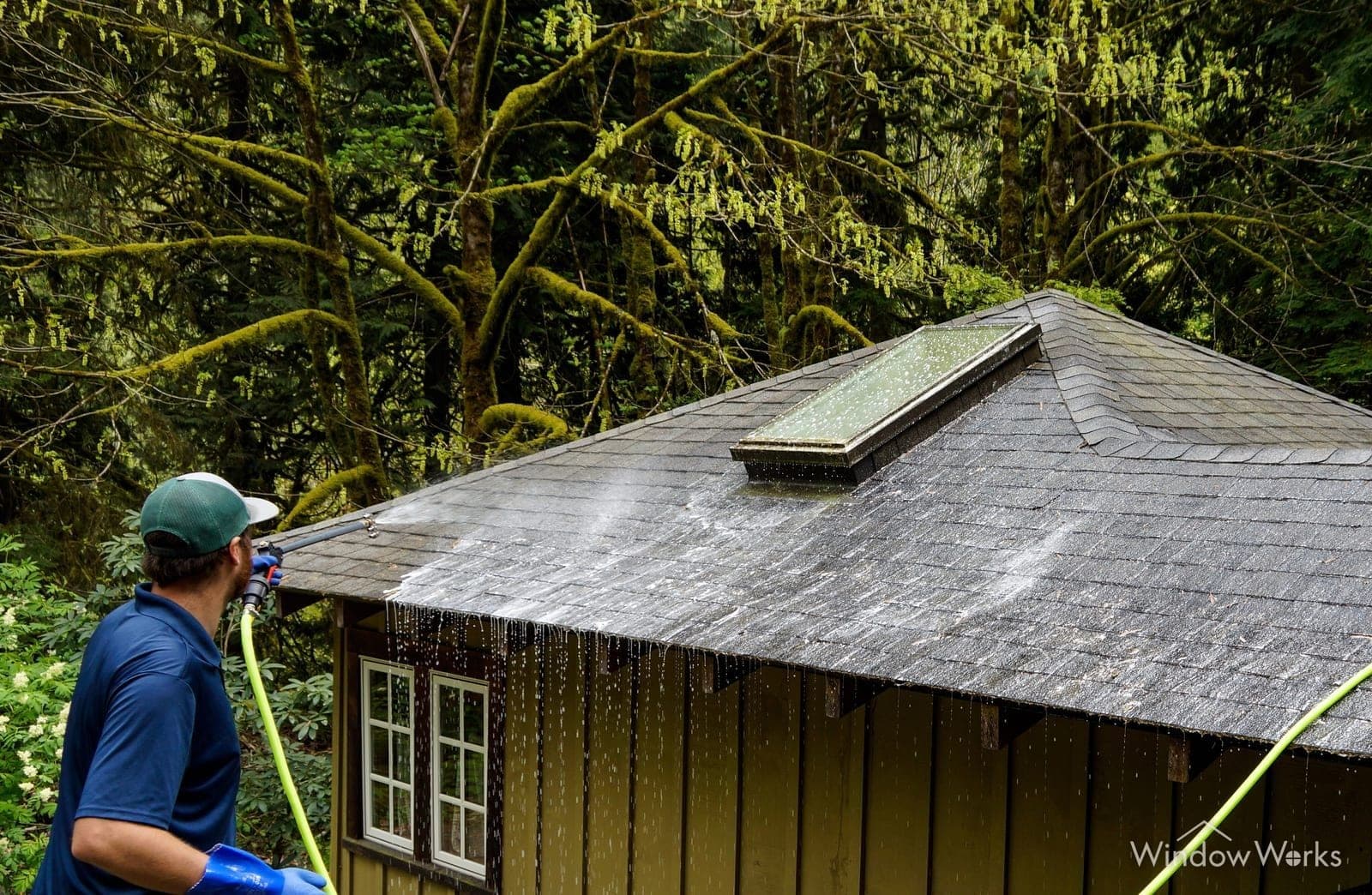
Every roof material takes different chemistry and a different rinse, so we identify yours first. Then we clear debris, protect the landscaping, and apply a low-pressure soft wash across the full roof plane. The soak time is what kills moss, algae, and lichen at the root.
- Chemistry and rinse matched to roof material
- Debris cleared from roof and valleys first
- Landscaping and hard surfaces protected and rinsed
- Low pressure only, never damaging high pressure
- Before-and-after photos for your insurance file
The science of a lasting roof wash
Why a clean roof doesn't stay clean.
In the maritime Northwest, three things colonize a roof: algae, moss, and lichen. None of them just sits on top. Each one anchors into the surface, and each one is constantly reseeded by cells drifting in on the air. That is why a cleaning that only lifts off what you can see never lasts, and why the method matters far more than the muscle.
It anchors in, and it holds water.
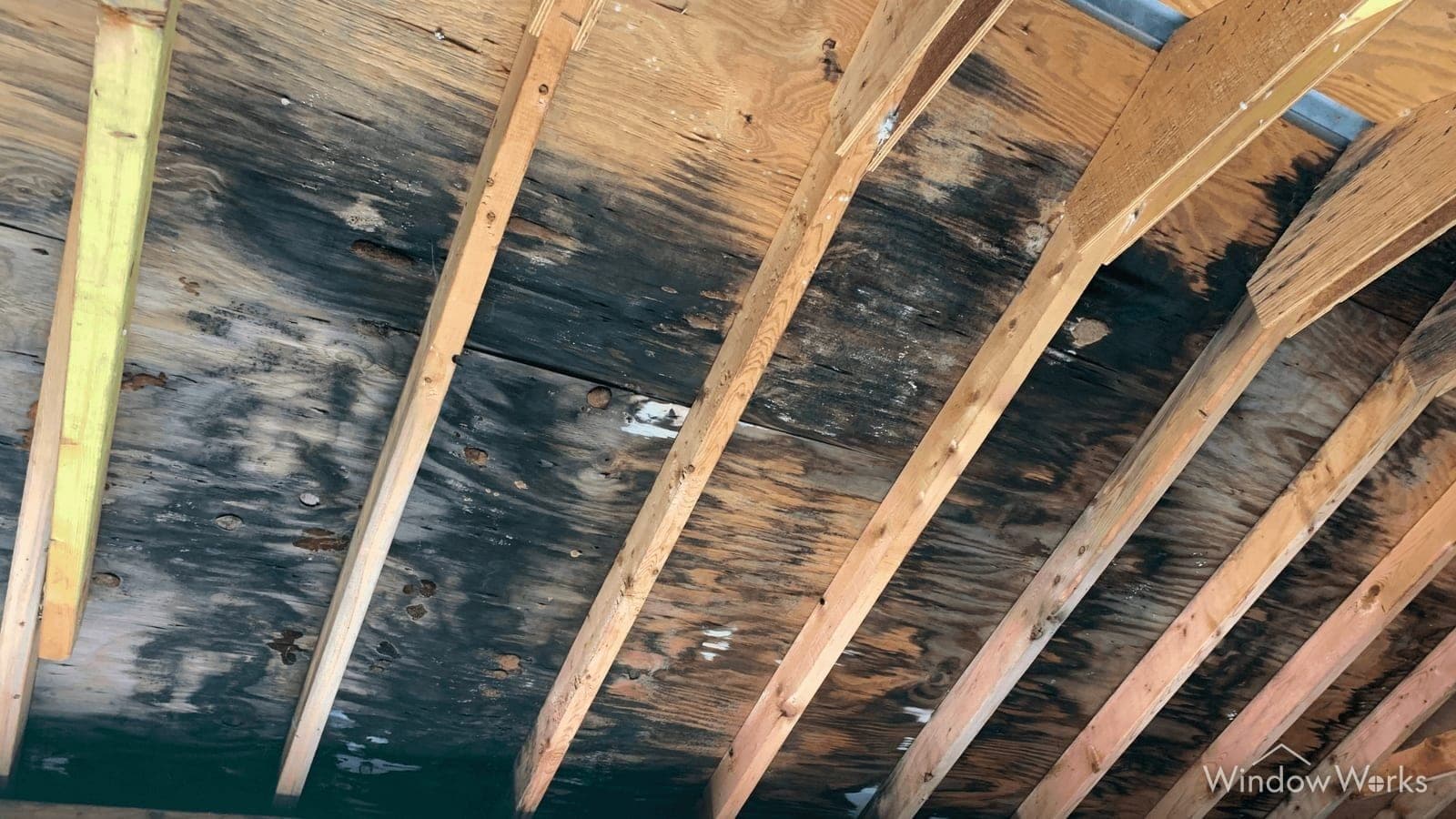
The black streaks are algae, usually a blue-green cyanobacterium called Gloeocapsa magma. It feeds on the mineral filler in asphalt shingles and wraps itself in a dark, sticky sheath that shields it from sun and drying. Moss is the thick green growth in the shingle gaps. It anchors into the granule layer with root-like rhizoids, and as it swells and dries through our wet seasons it loosens and lifts the ceramic granules and holds water against the roof.
Held there long enough, that moisture lifts and curls the shingle edges until water works underneath. Once water gets past the shingles it finds the sheathing, and in our climate it does not dry back out. That is how a cosmetic problem turns structural: rot and mold in the attic, and a roof that fails years early.
Lichen takes the roof with it.
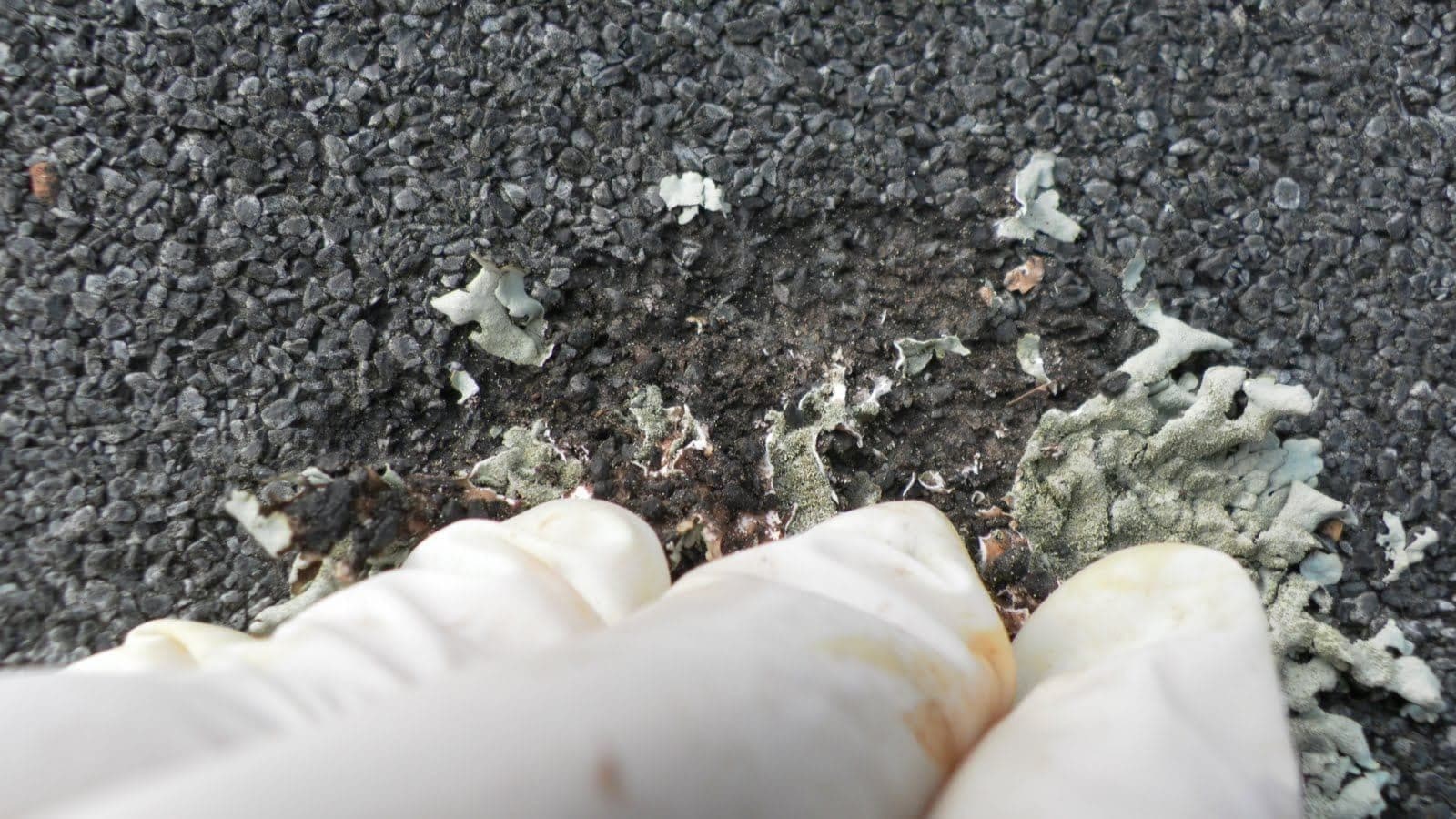
Lichen is the crusty gray-green growth that looks almost painted on, and it is the most destructive of the three. It is a fungus and an alga living as one organism, bonded tightly to the shingle. The fungal partner secretes organic acids, including oxalic acid, that slowly etch the mineral surface. Over time the lichen works into that surface and grips the loosened granules, pulling them into its own body.
Because it holds onto those granules, tearing or scraping lichen off takes the shingle's protective granules with it, and they do not grow back. The same organism goes after other roofs its own way. On cedar shake it traps moisture that lets decay fungi rot the wood. On metal it holds damp and mild acid against any scratch or seam, which is where corrosion starts. Lichen should only ever be soft washed, never scraped or pressure blasted.
And it is built to come back.
Kill the surface and leave the rest, and the roof simply reseeds. Gloeocapsa magma is the most common roof alga and it travels by air, so every roof in the neighborhood is constantly being reseeded, and it can form thick-walled resting cells that ride out a dry summer. Roof fungi harden their spores with melanin that shrugs off sun and drying. Scraping and blasting take off what you can see but leave those microscopic cells behind, and zinc only suppresses growth in the narrow path the rain carries the metal down.
This is why surface fixes are temporary. ARMA, the shingle manufacturers' association, is direct about it: cleaning that does not actually kill the organism only works for a while, and the discoloration comes back.
How a soft wash actually kills it.
A soft wash floods the whole roof with a professional sodium hypochlorite solution at low pressure, the exact chemistry ARMA names the most effective way to clean algae and moss. The active chlorine oxidizes the cell membranes and internal proteins of the algae and cyanobacteria, so the colony dies where it sits instead of being scraped off to grow back. Because the treatment covers the entire surface, it reaches the cells that pressure washing and brushing skip.
That is the difference between removing a stain and killing the growth. A complete kill resets the roof, and a quick roof check at each of your one to two gutter cleanings a year stops new airborne growth before it takes hold. Together, that is what makes a three-year moss-free warranty possible on asphalt, tile, and cedar shake.
How the methods compare
Three ways to deal with a mossy roof. Only one both works and protects the roof.
Not all roof cleaning is the same, and two of the three common approaches trade a short result for a shorter roof life. Here is how they actually stack up.
| Pressure washing | Zinc powder & strips | Soft washing (our method) | |
|---|---|---|---|
| What it does | Blasts the surface growth off with high-pressure water | Leaches metal ions that suppress growth where the rain carries them | Treats the whole roof with a low-pressure solution that kills the living growth |
| Does it kill the growth? | No. It removes only what is visible | No. It slows new growth below the strip and does not kill established moss | Yes. It kills the living colony where it sits, across the whole roof |
| Effect on the roof | Strips the protective granules and drives water up under the shingles | Metal runoff streaks the roof and stains fixtures over time | Safe at about garden-hose pressure, and the granules stay put |
| Shingle manufacturer warranty | Voids it. Manufacturers prohibit pressure washing their shingles | Not a manufacturer-recommended cleaning method | Follows ARMA's recommended method and stays warranty-safe |
| How far it reaches | Only where the wand is aimed | Only the wash path below the strip | The entire roof, evenly |
| How long it lasts | Weeks to months, then it regrows from airborne cells | Must be reapplied, and never clears what is already growing | About three years on asphalt, tile, and cedar shake, backed by our warranty |
| Downstream on the water | Drives loose biomass and debris into the storm drains | Adds zinc, a metal that never breaks down and is toxic to fish | Uses chemistry that degrades instead of building up in the water |
The Asphalt Roofing Manufacturers Association recommends a low-pressure sodium hypochlorite soft wash as the most effective way to clean a roof, and warns that pressure washing is likely to strip the granules and damage asphalt shingles. Oregon State University Extension is equally blunt about zinc: strips do not kill established moss, and metal strips on their own are rated Not Recommended.
The three-year math.
On an eligible roof, one soft wash holds for about three years, so asphalt, tile, and cedar shake come around once every three years, not every season. Zinc has to be topped up again and again and never clears what is already growing. Pressure washing looks cheap until you count the years it takes off the roof and the granules it sends down the gutter. One thorough wash every three years, backed by a moss-free warranty, is the lowest-cost way to keep a roof sound.
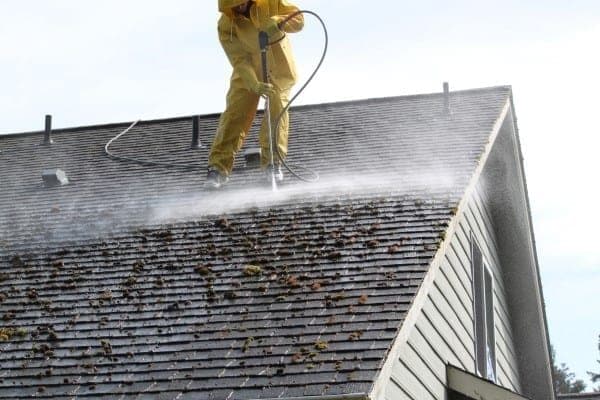
Pressure washing a roof. ARMA warns it strips the protective granules and damages asphalt shingles, it drives water up under them, and it voids most shingle warranties. It also puts a person on a steep, slick roof.
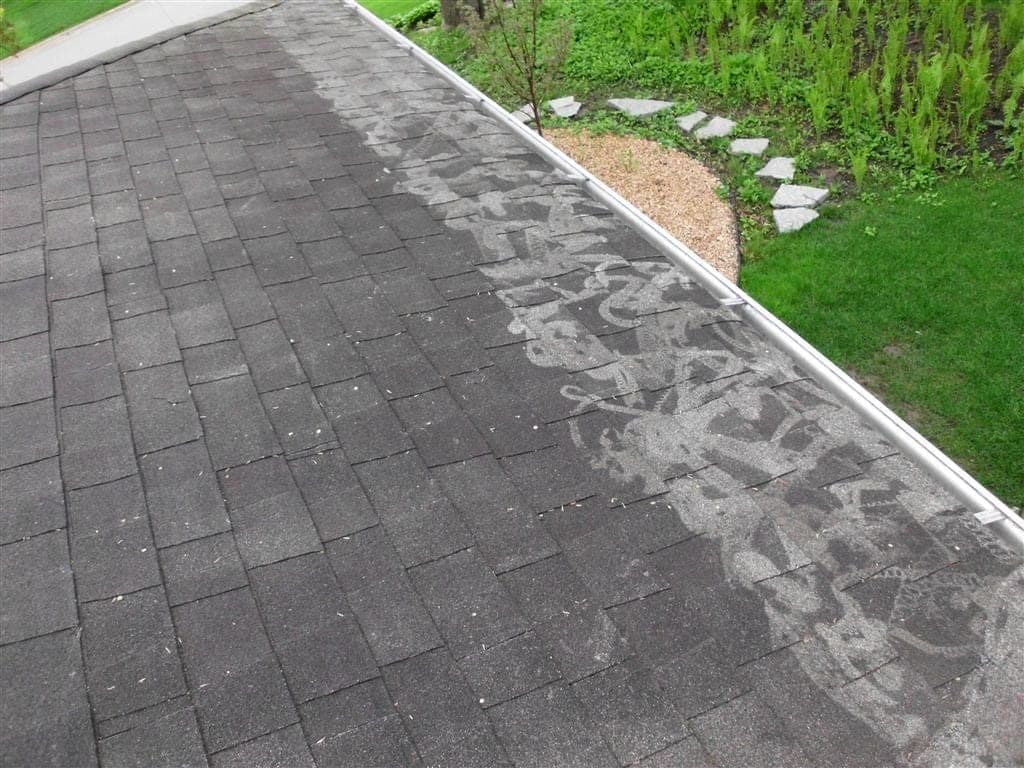
The aftermath: wand marks and granules stripped off and flushed into the gutter. The clean lasts a season. The granule loss is permanent.
Add-ons
Add it while we're there.
The crew and equipment are already on site, so these attach to your visit.
Gutter Cleaning
Keeps the warranty active and doubles as a roof inspection; warranty-period moss is treated free.
See the full serviceExterior Window Cleaning
Roof rinsing leaves spots on glass. A clean roof over spotted windows is not the finish you want.
See the full serviceCedar Wood Brightening
After a cedar wash, brightening rebalances the surface and preserves the wood's natural color instead of graying unevenly.
See the full service
Why WindowWorks
Who shows up matters.
Your roof is the most expensive surface on your home. The person on it should be certified for exactly that work.
Anyone can rent a pressure washer. After 20+ years on Eastside exteriors, and a 4.9 rating across 300+ reviews, we can tell you the real difference is the person holding the wand: what they know, how they were trained, and whether the company behind them takes care of them. We take care of our techs, so they take care of your property.
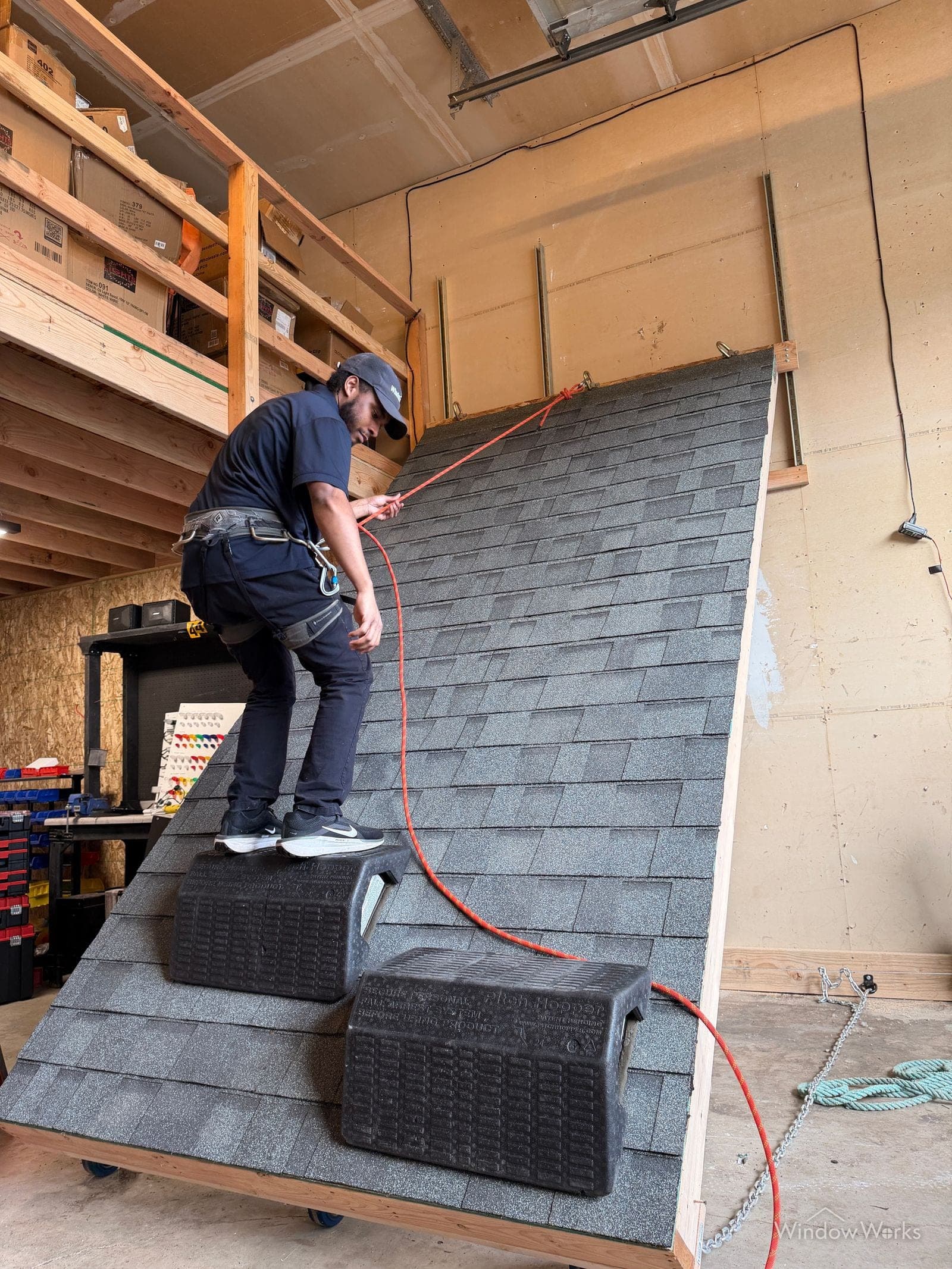
Background-checked
Every technician is background-checked before they ever step onto a customer's property.
Certified, skill by skill
Our crews earn certification across 369 individual skills in 10 categories, each one signed off by an evaluator, never just by clocking time.
Paid like professionals
A living wage, healthcare, and dental. People who are treated well do careful work, and they stay, so you see the same faces.
Licensed, bonded, and insured
With OSHA-aligned safety training for the at-height work. If someone is on your roof, they are trained and covered for exactly that.
Method matched to the surface
Soft wash where pressure would damage, hot water where cold cannot lift, the right chemistry for the stain. The method follows the surface, not the other way around.
Documented before and after
Every job is photographed before and after, so you can see exactly what changed and keep it on file.
Common questions
Good to know.
What does the 3-year moss-free warranty require?
One to two gutter cleanings per year by WindowWorks, set by your tree cover and debris load. Each visit doubles as a roof inspection, early moss is treated at no extra charge, and if moss returns we retreat the affected areas per the warranty terms.
Why do gutter cleanings keep the warranty valid?
The visit is your roof inspection, gutters are a damp moss nursery that reseeds the roof, and debris left in valleys stays wet and shelters regrowth. Removing all three is what makes a 3-year warranty possible.
Why is there no warranty on metal and membrane roofs?
We keep treatment strength low to protect coatings, seams, and fasteners, and algae returns faster on these surfaces, so we cannot guarantee full elimination the way we can on shingle, tile, and cedar.
Will my roof look clean the day of service?
On Premium, yes. On shingle and tile, Deluxe is left to work, so results build over four to twelve weeks and some debris may keep releasing after.
What will a roof wash not fix?
Anything that is not living growth: rust, mineral, paint, and chemical stains stay, along with granule loss, oxidation, and faint ghosting where lichen was attached. We do not do roof repairs, so missing shingles, failing flashing, and leaks need a roofer.
Why does roof condition matter for my insurance?
Insurers in western Washington audit homes with aerial imagery, and roof moss is one of the top three triggers for a non-renewal notice. Every job includes before-and-after photos you can keep on file for your carrier.
Go deeper
More on protecting your roof.
How keeping your roof and siding clean could save your home insurance policy
The bad news: the state of your roof and siding could cost you your homeowners insurance. The good news: it's not too late to safeguard your policy, and your roof.
Read the article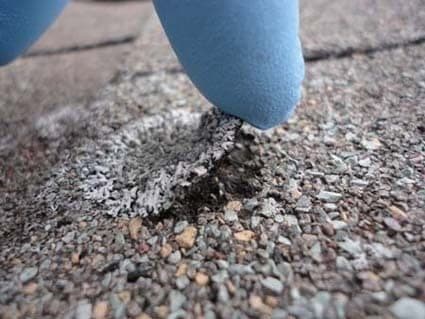
What's on my roof?
And will it come off with a roof wash? The full guide to the growth, debris, and damage we find up there, and what a wash removes.
Read the guide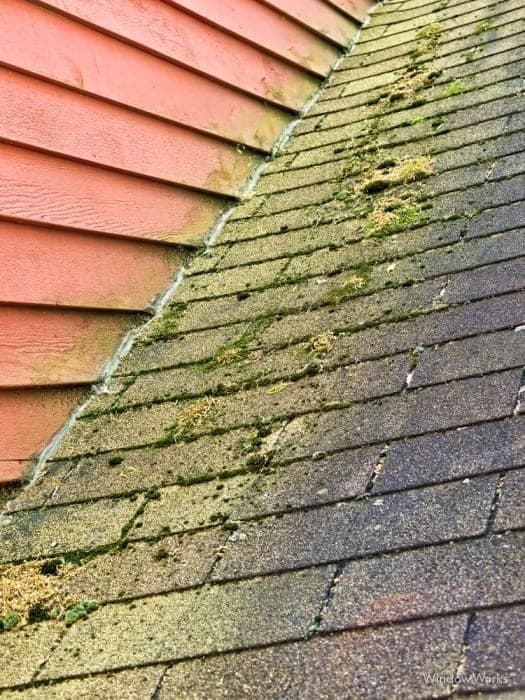
What roof moss treatment leaves behind: zinc and copper vs. soft washing
Out here, whatever you put on your roof ends up in a salmon stream. Metal moss treatments add zinc and copper that never break down. Here's the difference that makes.
Read the article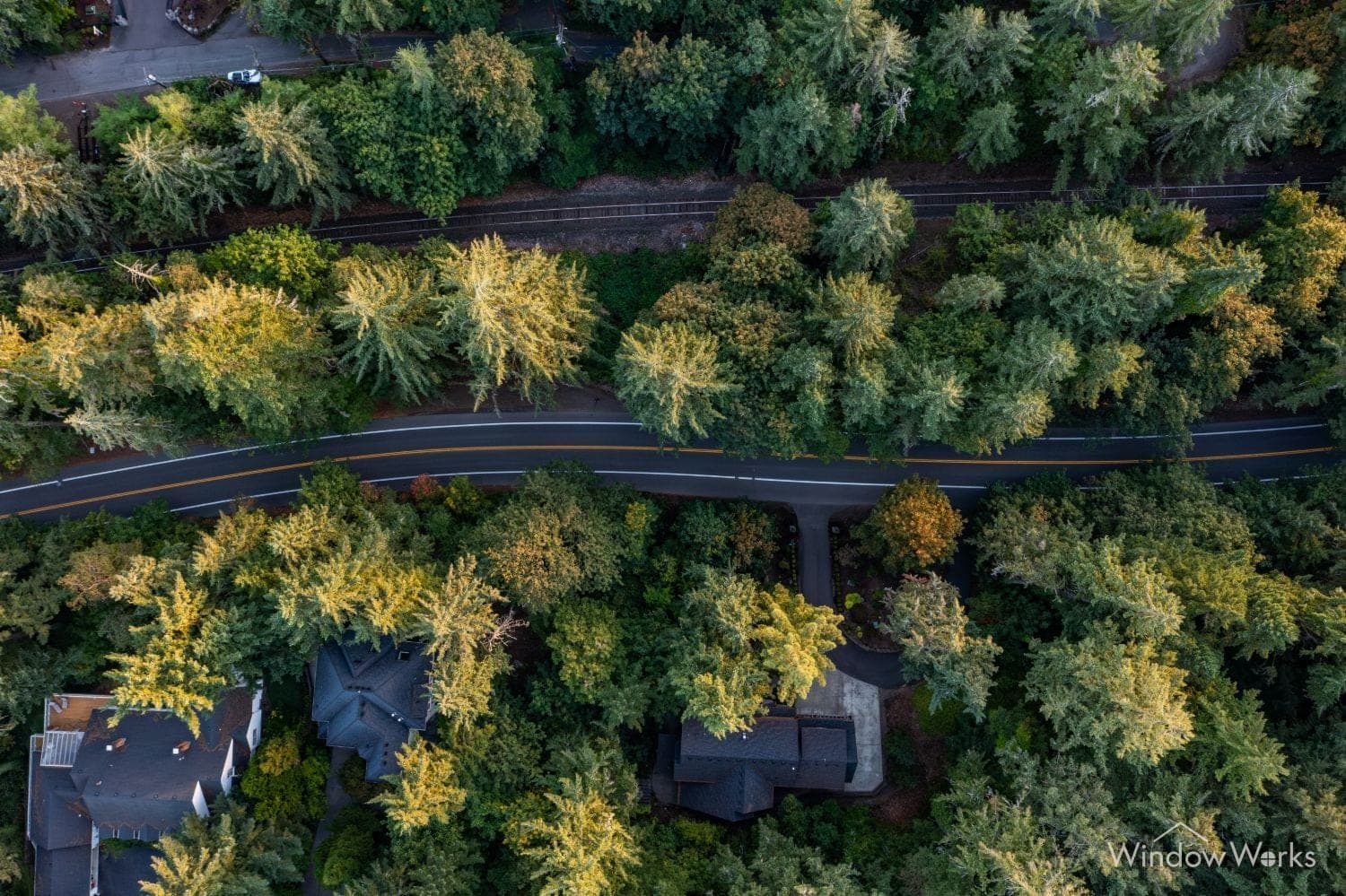
What to clean and when: a Pacific Northwest home maintenance calendar
Out here the weather works on your house year-round. The season-by-season schedule, plus the interval every service actually runs on.
Read the article
Serving Redmond and the whole Eastside
AGS, Cedar Shake & Concrete Tile Roof Washing near you.
- AGS, Cedar Shake & Concrete Tile Roof Washing in Issaquah
- AGS, Cedar Shake & Concrete Tile Roof Washing in Sammamish
- AGS, Cedar Shake & Concrete Tile Roof Washing in Bellevue
- AGS, Cedar Shake & Concrete Tile Roof Washing in Kirkland
- AGS, Cedar Shake & Concrete Tile Roof Washing in Newcastle
- AGS, Cedar Shake & Concrete Tile Roof Washing in Woodinville
- AGS, Cedar Shake & Concrete Tile Roof Washing in Mercer Island
- AGS, Cedar Shake & Concrete Tile Roof Washing in Snoqualmie
- AGS, Cedar Shake & Concrete Tile Roof Washing in North Bend
- AGS, Cedar Shake & Concrete Tile Roof Washing in Fall City
- AGS, Cedar Shake & Concrete Tile Roof Washing in Carnation
- AGS, Cedar Shake & Concrete Tile Roof Washing in Duvall
- AGS, Cedar Shake & Concrete Tile Roof Washing in Renton
- AGS, Cedar Shake & Concrete Tile Roof Washing in Seattle
AGS, Cedar Shake & Concrete Tile Roof Washing in Redmond
Ready for a real estimate?
Answer a few quick questions and get a real number in minutes. No pressure, no obligation.